



Top-rated welders.

Get matched with top welders in York, NE

Enter your zip and get matched with up to 5 pros

Need a pro for your welding project in York, NE?

Select your specific project to find the pro for you.

Find Welders in York

Avatar for Epp Foundation Repair
Epp Foundation Repair
5.0(
337
)

Serving York, NE and surrounding areas

In business since 1994

Free estimates

Warranties offered

"Dakota and his team did an awesome job. Very professional through the whole time they were here. We actually had two companies bid the project and the other company was 2-3x higher then EPP. Their mason will be out in a couple of days to do crack repair but have total confidence due to the workmanship of the pier lifting."
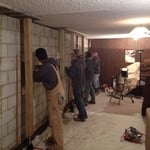
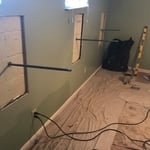
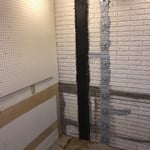
Wall Stabilization
Wall Plate Anchors
Carbon Fiber Straps
Carbon Fiber Straps & Drain Tile
Wall Plate Anchors

+8

Response time1 day
Recommended by51%of homeowners
Johnson Fabrication & Repair LLC
5.0(
2
)

Serving York, NE and surrounding areas

In business since 2019

Credit card accepted

Offers commercial services

Customer satisfaction is what determines our success, which is why we take a hands-on approach. When interacting with Johnson Fabrication & Repair LLC, you'll notice that we're particularly focused on the principles of quality workmanship, timely completion, competitive pricing and integrity in all our business dealings. We combine knowledge and research with our extensive practical experience to ensure a specialized approach for your project needs. Contact us today for a fair and accurate estimate of your project. We look forward to adding you to our long and growing list of happy customers.\n

Response time9 hrs
Recommended by100%of homeowners
Showing 1-10 of 19
Welding questions, answered by experts

Yes, you can use a saw to cut metal pipes. The best saw to use is a reciprocating saw, but even a fine-tooth hacksaw can get the job done. No matter which saw you use to cut metal pipes, wear protective gear, like work gloves, safety goggles, and ear plugs. Apply a firm, steady pressure to the tool, and always ensure the pipes are secured so they don't move while you make the cuts.

Cutting rectangular ductwork requires careful measurements and the right technique. Use a measuring tape and pencil to mark the cutting lines accurately. Tin snips are excellent for straight cuts on smaller ducts. For more extensive or thicker rectangular ducts, a reciprocating saw with a metal-cutting blade is effective. 

Ensure the duct is well-supported and secure while cutting to prevent wobbling and maintain precision. After cutting, use a metal file to smooth any sharp edges, ensuring safety during installation. 

The average cost for a welding project is about $300, with typical costs ranging from $125 to $490. However, prices can be as low as $125 for very small jobs or exceed $1,200 for large or complex projects. Welders typically charge an hourly rate between $65 and $150, depending on their experience, and many charge a minimum fee to cover overhead and travel expenses. The total cost is influenced by several factors, including labor, the cost of materials like metal rods and shielding gas, the type of metal being welded, the project's size and complexity, and your geographic location. For a precise quote, it's best to ask a local welder for an estimate based on your specific project.

Cutting round ductwork requires precision and the right tools. A duct cutter, specifically designed for circular ducts, is ideal. First, mark the cutting line on the duct using a measuring tape and pencil. Then, position the duct cutter's blade on the marked line. Apply steady pressure, rotating the cutter around the duct. The sharp blade creates a clean, precise cut. Alternatively, a reciprocating saw with a metal-cutting blade can be used for larger round ducts. Ensure the duct is securely held in place while making the cut to prevent slips and maintain accuracy.

Professional metal fabricators typically charge around $70 per hour, but the total cost of your project will depend on several factors. The largest cost drivers are the size, complexity, and design of the project, as well as the price and type of metal used. A good way to estimate the total cost is to multiply the cost of raw materials by four; typically, one-quarter of the total goes toward materials and three-quarters toward labor. Your geographic location can also influence costs, as labor and material prices vary by region.

The York, NE homeowners’ guide to welding services

From average costs to expert advice, get all the answers you need to get your job done.