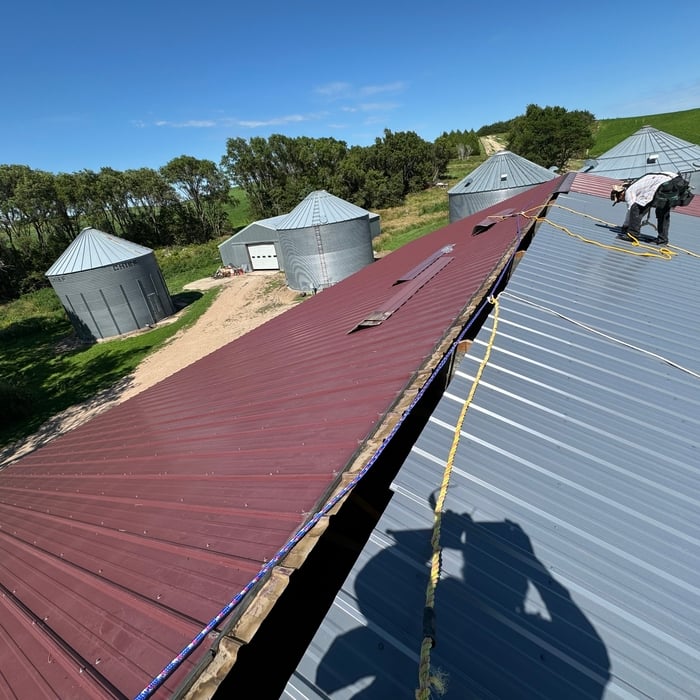
"Antonio's crew did a great job on our roof. They were able to complete the job quickly, even with some unexpected issues in the old sheeting and with pressure from incoming weather. Clean-up was good and they were quick to attend to some minor issues well after completion. AVL is top on our list!"
We're a locally owned and operated company with over 22 years of industry experience. We value honesty and integrity in all aspects of our business. We offer a variety of Home Improvement services that are customizable to each individual project. We specialize in handyman/carpentry work and a variety of related service and repair projects. We pride ourselves on the quality of our work as well as our commitment to outstanding results. We look forward to building lasting relationships with our clients and guarantee your satisfaction!
Deck stairs should have at least three stringers rather than two. The recommended minimum width for stairs is 36 inches, and the International Association of Certified Home Inspectors recommends at least three cut stringers to provide sufficient support on wood decking stairs of this width. Generally, stringers should be a maximum of 16 inches apart for wood decking and 12 inches apart for more flexible composite decking.
Deck skirting shouldn’t touch the ground, especially if you have a wood deck, which is vulnerable to moisture. Ideally, you should leave at least 3/4 of an inch of space between the deck skirting and the ground for more ventilation. Pros also recommend that you incorporate about 1 square foot of space for ventilation for the underside of the deck to every 150 square feet of decking. Proper ventilation prevents mold growth and rot that can damage your deck.
When sourced responsibly, the most sustainable wood decking options are timber trees like redwood, pine, Douglas fir, Nootka cypress, and Western red cedar. These tree species are fast-growing with low carbon emissions. Plus, most timber woods make durable deck materials because of their resistance to rot and decay over time.
In most cases, sanding an old deck before staining it is necessary to achieve a decent finish. If your old deck has a relatively new stain finish on it and you're only doing touch-ups, you can generally skip the sanding part. However, if your goal is to make the deck look and function better, sanding first is a must.
To maximize the utility of space under a deck, it’s important to keep this area dry and clean. One way to prevent the area from becoming too wet is to install an under-deck draining system. This affordable home upgrade channels water away from the deck and provides usable space for storage or a functional area below a second-story deck. Not only will this be a useful maintenance upgrade, it can boost your home’s property value.
The Stuart, NE homeowners’ guide to deck repair services
From average costs to expert advice, get all the answers you need to get your job done.
Deck replacement costs depend on materials, any structural damage you need to fix, and more. This guide explores how much it costs to replace or repair a deck.
Refinishing your deck is a great way to restore its appearance and fall in love with your outdoor space. Use this guide to learn how much it costs based on factors like size and type.
Old and run-down porch railings can be an eyesore and pose a risk of falling. Find out how much it costs to replace your worn out porch railings with new materials.
If your deck is in bad shape, this deck repair checklist will help you inspect, clean, maintain, and repair it without missing any vital steps in the process.