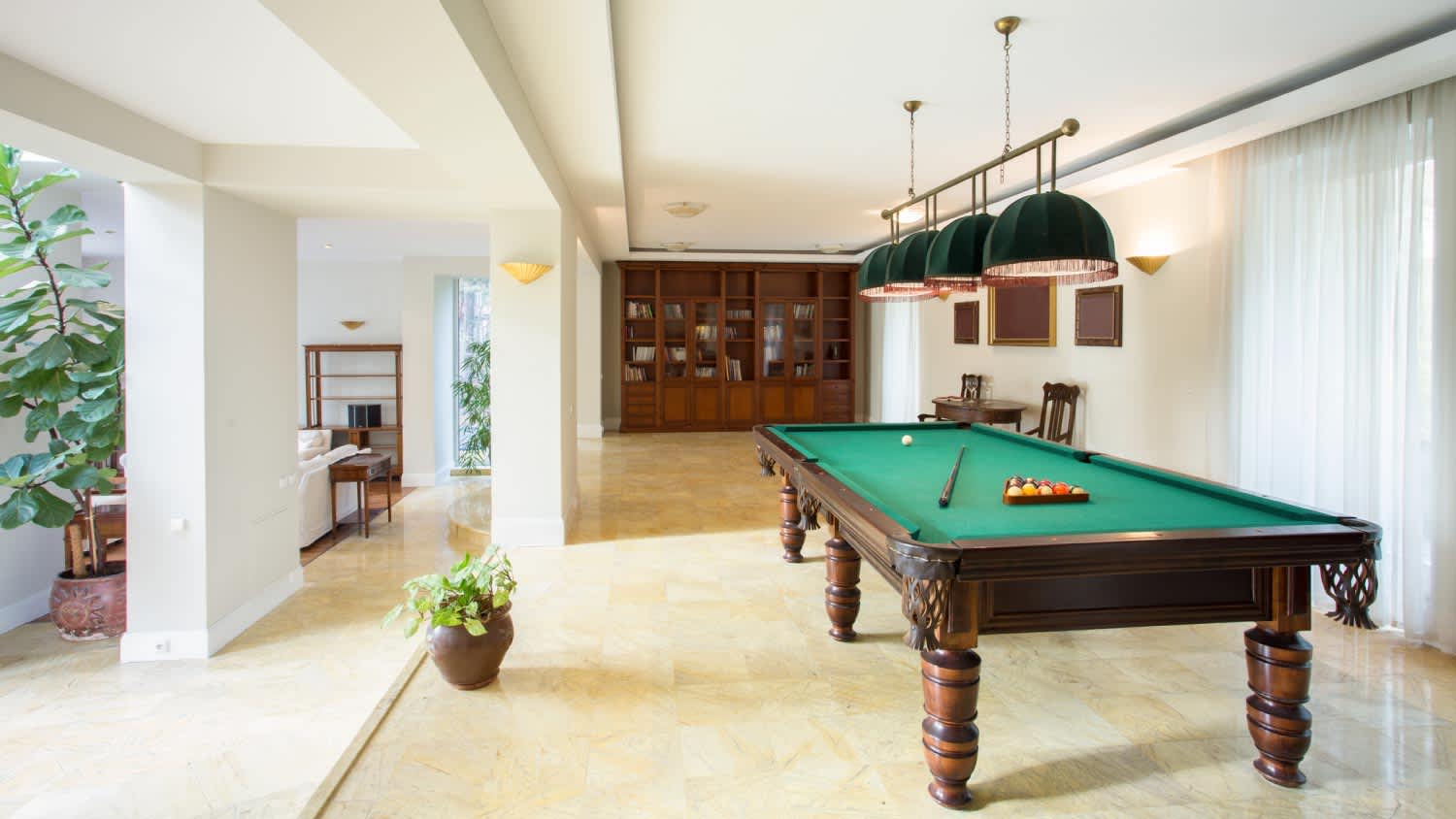





Top-rated pool table assembly pros.

Get matched with top pool table assembly pros in Louisville, NE

Enter your zip and get matched with up to 5 pros

Need a pro for your pool table assembly project in Louisville, NE?

Select your specific project to find the pro for you.

TRUSTED BY LOUISVILLE, NE HOMEOWNERS

  • Average homeowner rating star icon4.7
    Average homeowner rating
  • Verified reviews icon42
    Verified pool table assembly services reviews

Find Pool table assembly pros in Louisville

Avatar for Stile Construction Services
Stile Construction Services
4.1(
27
)
Handyman for Multiple Small Projects

Serving Louisville, NE and surrounding areas

Approved

In business since 2006

Free estimates

Customers say: True professional

"Ryan is very responsive, but a lot of the details (trim, corners, clean up) in the the job were poorly done for the tiles and carpentry. There were some significant mistakes around executing the asked for design that ended up causing delays and costing more money. If you hire him, you should check his crew work routinely so mistakes can be corrected. He is really good at fixing the mistakes while the job is ongoing. Unfortunately, I have been finding things a month later and fixing them now would be cost prohibited."
Response time12 hrs
Response rate100%
Recommended by94%of homeowners
CJC Construction LLC
4.2(
5
)
Handyman for Multiple Small Projects

Serving Louisville, NE and surrounding areas

In business since 1999

Free estimates

is committed to excellence in every aspect of our business. We uphold a standard of integrity bound by fairness, honesty, and personal responsibility. Our distinction is the quality of service we bring to our customers. Accurate knowledge of our trade combined with ability is what makes us true professionals. Above all, we are watchful of our customers' interests, and make their concerns the basis of our business.

Response time3 days
Recommended by50%of homeowners
Showing 1-10 of 44
Pool Table Assembly questions, answered by experts

Shipping container pools last up to 25 years. On average, they’re more durable than the standard aboveground pool, which only lasts 10 to 20 years. Their durability is similar to fiberglass in-ground pools. Concrete pools, on the other hand, outlive almost any other type of pool. They can last indefinitely as long as you resurface them as needed.  

Whether or not a pool needs a dedicated circuit depends on the electrical needs of the motor, lights, and pump. Keep in mind that pool motors can use a lot of electricity. A dedicated circuit can prevent the breaker from tripping whenever you use the pool. A small motor for an equally small pool may only need a GFCI outlet. It’s best to plug it directly into the outlet rather than using an extension cord. You should also consult an electrician to ensure your pool’s electrical system is in accordance with local regulations.

Yes, you will need building permits for an inground pool, and your pool installation company should pull them for you. The permit filing fee will usually sit between $400 and $1,800, and it should appear on your contract or invoice. You may want to confirm with your contractor that they will pull all necessary permits. You might also need a permit for a new fence, as many municipalities have special fencing requirements for properties with pools. A fence permit costs between $50 and $500. This expense may not be included in your pool installation estimate.

You should add one 3-inch chlorine tablet for every 5,000 gallons of water in your pool. If you have a smaller pool, it’s better to use 1-inch chlorine tablets so you don’t accidentally add too much chlorine. Alternatively, you can add two to three ounces of powdered chlorine or half a gallon of liquid chlorine for every 5,000 gallons of water.

Yes, pool pumps use a significant amount of electricity, making them one of the biggest energy consumers in a home. A pool pump can use up to three times as much electricity as a refrigerator. Typically, a residential pool pump consumes about 1 kilowatt-hour (kWh) for every hour it runs. Because pumps often need to run for about eight hours a day to properly filter the water, this can add up to an annual consumption of 3,000 to 5,000 kWh, which can cost between $480 and $800 per year based on average electricity rates.

The amount of electricity your pump uses depends on its size, energy efficiency, and daily run time. To lower your energy consumption, you can choose an energy-efficient or variable-speed pump, ensure it is correctly sized for your pool, and run it only for the minimum time required to keep the water clean.

The Louisville, NE homeowners’ guide to pool table assembly services

From average costs to expert advice, get all the answers you need to get your job done.