"Great value job was done professionally and on time. Guys working were respectful and professional. Sis exactly what was asked and even added some on. Would recommend would use again."
Here at Gold De Laux Residential Modifications, we specialize in many types of home improvement. We pride ourselves in doing quality work at a reasonable price. We have the expertise to handle a wide variety of projects with quality workmanship and service.
Burns Construction, is a full service general contracting firm operating in the greater SW NE area for many years. We pride ourselves in our attention to detail and our unsurpassed customer service. The quality of our work speaks for itself and we look forward to working with you on your next project.
The proper and most comfortable height for a deck stair riser, also called a step, is between four and seven inches. A height of seven inches is often considered ideal for a strain-free step that minimizes the risk of trips and falls. While it is possible to have risers up to 12 inches, this height can be challenging for children, pets, or individuals with mobility issues. For optimal safety and comfort, pair a seven-inch riser with a tread depth (or run) of at least 10 to 12 inches. Always check your local building codes, as they may have specific requirements that differ from these general recommendations.
In general, you need a footing at each corner of your deck, and within 8 feet of each other. So, how many you need depends on the size and shape of your deck, plus any local building codes. It also depends on factors like the load capacity of your soil and the weight of your deck. You can find a footing calculator online or contact a pro for support.
Before installing a new railing, check the condition of the deck frame and joists, especially around the perimeter where posts attach. If boards are loose, soft, or show signs of rot, the structure may need repair. A deck pro can inspect your framing to confirm it meets load-bearing requirements.
Although composite decking is extremely durable, it’s also susceptible to extreme heat. Prolonged exposure to sunlight can cause fading, warping, and cracking. Composite also retains heat more than wood, which makes it dangerous to walk on in the summer. You can help prevent heat damage by only building with composite in shaded areas or using rugs to cover the hottest spots.
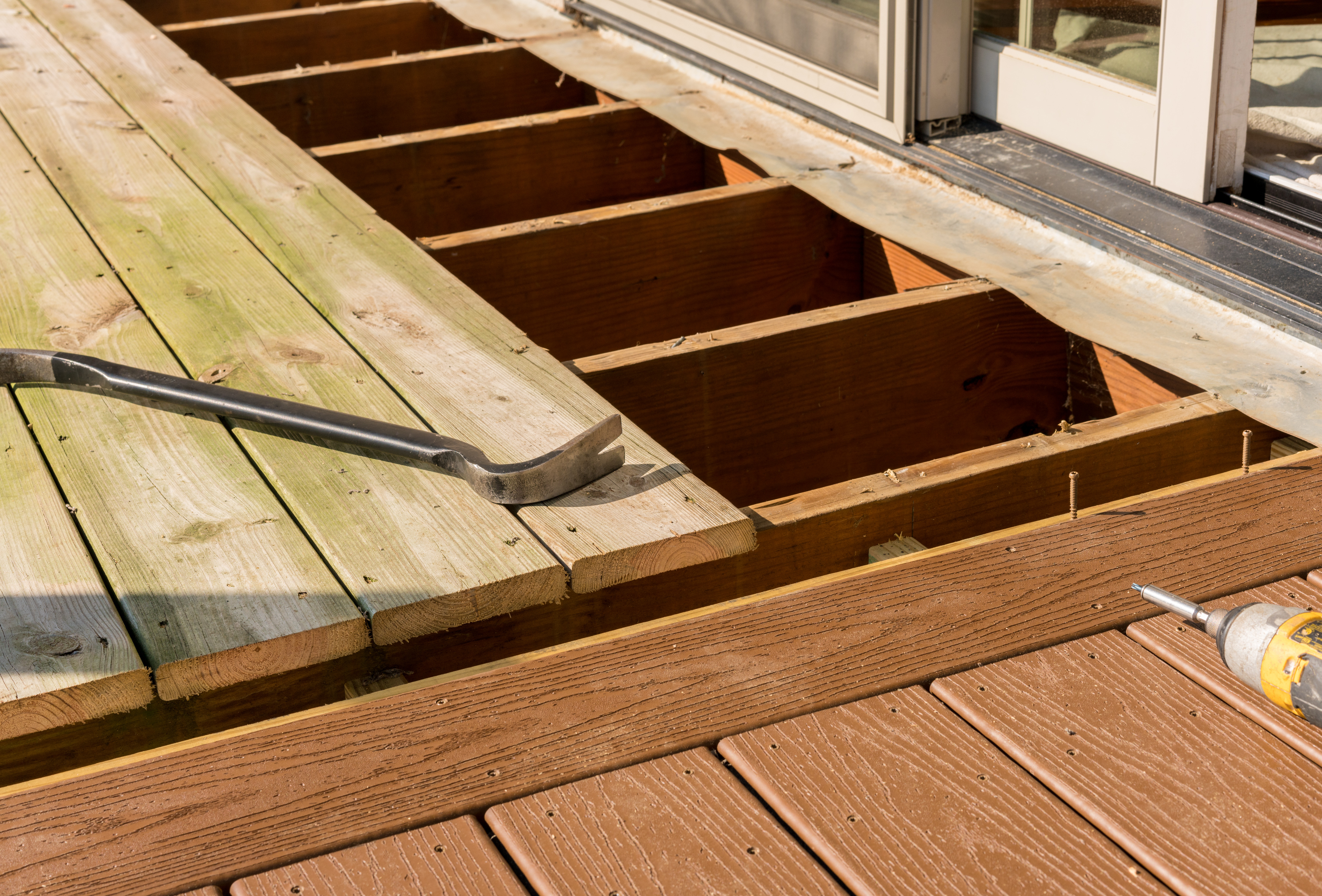
When installing deck boards, screws are generally a better option than nails. Screws offer superior holding strength over time, keeping the boards securely in place. In contrast, nails are more likely to pop out, which can create a tripping hazard. While you can use either, we recommend using 3-inch galvanized deck screws. To minimize the risk of cracking the wood, it's a good practice to drill small pilot holes before driving the screws into the deck joists.
The Callaway, NE homeowners’ guide to deck repair services
From average costs to expert advice, get all the answers you need to get your job done.
Deck replacement costs depend on materials, any structural damage you need to fix, and more. This guide explores how much it costs to replace or repair a deck.
Old and run-down porch railings can be an eyesore and pose a risk of falling. Find out how much it costs to replace your worn out porch railings with new materials.
The cost to paint a pool deck depends on the dimensions and material, the type of paint, and whether you DIY. Read on to help determine a project budget.
If your deck is in bad shape, this deck repair checklist will help you inspect, clean, maintain, and repair it without missing any vital steps in the process.