

Top-rated deck cleaning pros.

Best deck cleaning pros near Bellwood, NE

Enter your zip and get matched with up to 5 pros

Need a pro for your deck cleaning project in Bellwood, NE?

Select your specific project to find the pro for you.

Top-Rated Deck cleaning pros in Bellwood - Updated Nov 2026

Avatar for Koby's Lawncare
Koby's Lawncare
5.0(
4
)
Deck, Fence, Patio or Porch - Clean and SealDeck, Fence, Patio or Porch - Clean and Seal - For Business

Serving Bellwood, NE and surrounding areas

Approved

In business since 1998

Free estimates

Small jobs welcome

"Greg did a great job removing 3 large bushes in the front of my house. He was very professional and thorough. Did an excellent job Cleaning everything up. He was also nice enough to remove and install a new mail box post in for me."
Response time8 hrs
Recommended by100%of homeowners

Showing 1-10 of 35
Deck Cleaning FAQs, answered by experts

In most cases, your deck will need some form of deck footing to hold it in place, preventing moisture from rotting your wood and decreasing your deck’s lifespan. Concrete deck blocks are the most common type of footing for floating decks. Some homeowners use ground-level deck footings. For added security, consider digging and laying your ground-level footings below ground.
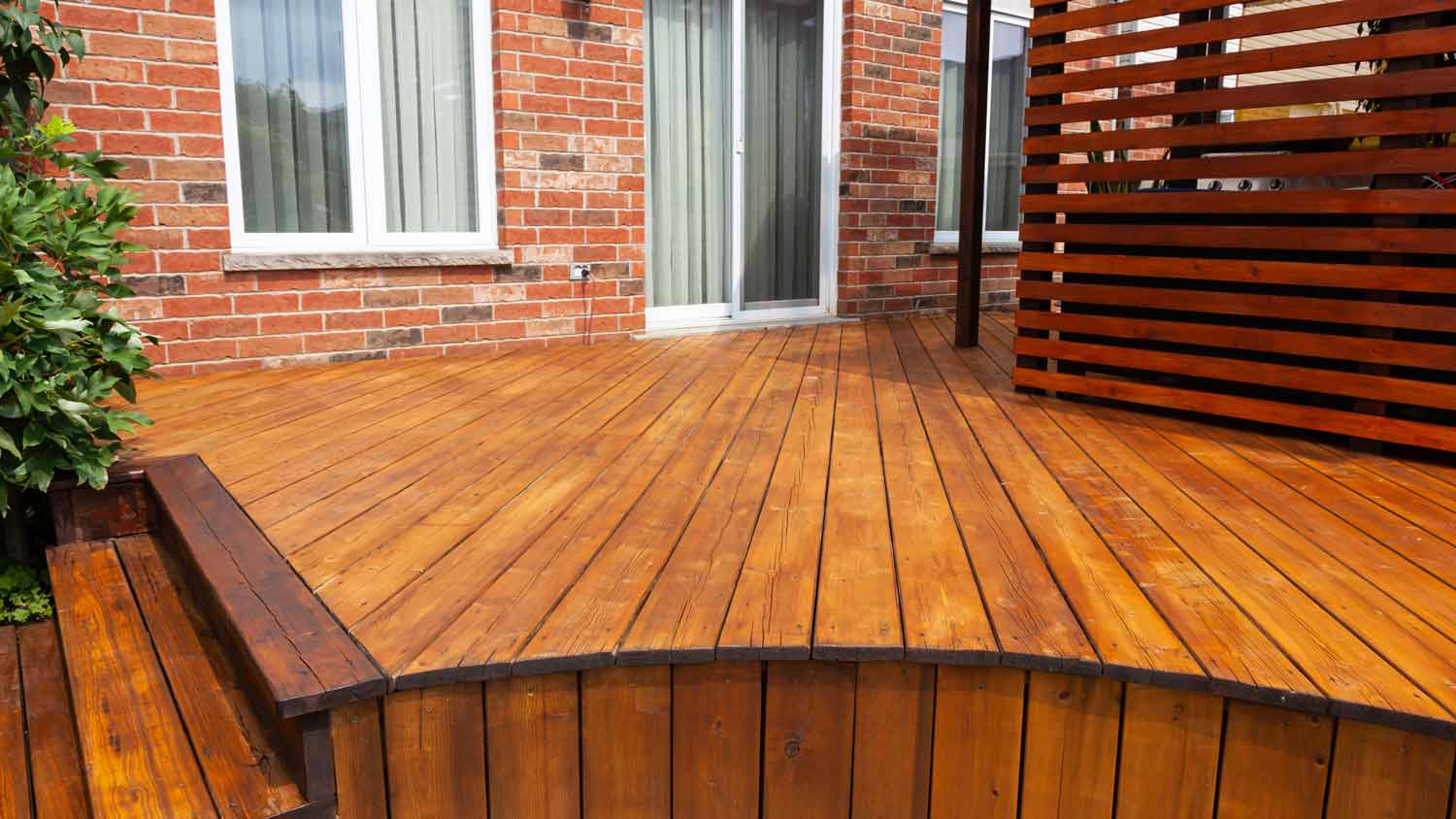
Yes. Freestanding or floating decks are exactly what the name implies—structures with their own support beams. You can build a deck yourself and place it next to a house for the illusion of a connected deck without the hassle. Or you can construct it in a separate part of your yard for a dedicated outdoor entertainment space. For the purpose of removing a freestanding deck, the steps are the same as an attached deck, but you don’t have to cut the deck away from the home.

Yes, an elevated deck can increase a home's resale value. Homeowners can expect a 65% return on investment from the cost of a second-story deck installation. For example, if you spend $5,000 to install a second-story deck, that deck will add $3,250 to the value of your home.

Ideally, a gate should be able to swing both in and out. However, if it can only open in one direction, it is generally best for it to swing inward. This is often the safest option, especially for deck gates near steps, as you'll want the gate to swing away from the stairs. An inward swing also prevents the gate from opening into a public space, like a sidewalk, and can be more convenient when carrying heavy items like a wheelbarrow into a garden.

There are exceptions, however. The layout of your property may require a different approach. For example, if your property is on a slope, the gate may not be able to swing inward. You should also ensure the gate can open fully without colliding with any objects or blocking access to other areas. For a backyard garden gate where public access isn't a concern, the direction it swings is largely a matter of personal preference. Finally, always check your local building codes, as they may have specific requirements for which way a gate must swing.

The best base materials for a ground-level or floating deck are typically gravel and crushed stone (also known as landscaping rocks). These options are inexpensive, provide excellent drainage, prevent weeds, and help minimize moisture buildup, which reduces shifting and rotting. For added stability and to evenly distribute the weight, you can use concrete deck blocks or pavers. While more expensive, concrete blocks and pavers offer a sturdier base than gravel or crushed stone alone.

The Bellwood, NE homeowners’ guide to deck cleaning services

From average costs to expert advice, get all the answers you need to get your job done.