We provide residential and commercial solar power options, and provide support services for industry partner companies. We offer no cost consultations and $0 down financing. Please contact our office for a consultation at (931)922-8258.
"I was very impressed with the installer who was sent. He mounted the dish without drilling through my new roof, which might have voided my roof warranty, Also, he mounted the dish in a location where it is easy for me to brush the snow off it in winter. I appreciate his knowledge and thoughtfulness. Also, they didn't charge me to re-install the dish."
"The last was a rental company that we have and we used them for an air conditioning and heating system. It was Bototach Mechanical. It’s been a good program for us. They’re very responsive. I don’t know what the thought process was. My husband said, well let’s try these guys and so we did. We have an older home and it’s proved to be a very good deal. The quality has been pretty good, so I would give them an A for the quality. I will give you one helpful hint though. If the company decides they want to replace an appliance, you need to call them and negotiate with them because you can upgrade, but you need to talk to them in person not just do it over the internet."
Wind & Solar World is dedicated to providing our customers with the best quality and craftsmanship. We are here to build relationships with our customers and communities and to provide our employees with a great place to work. Our pledge is to create successful relationships with our customers, employees and community by building trust, treating every project with the utmost integrity and exceeding expectations.
\n
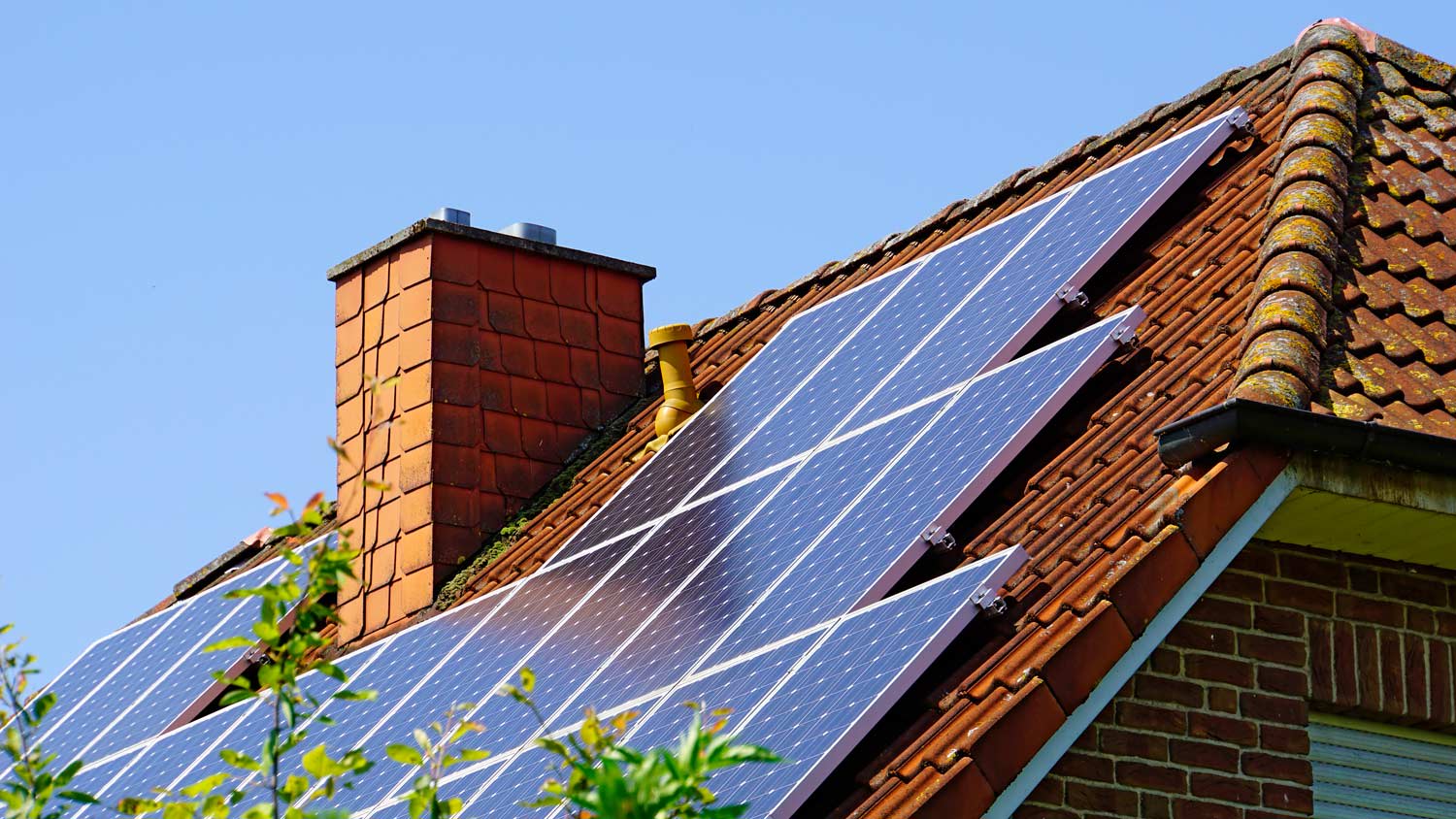
The best way to save money on solar panels is to take advantage of federal and state solar incentives. For example, the solar investment tax credit (ITC) offered by the federal government can save 30% of your total—if you can take the entire credit, which is based on income taxes owed—or an average of around $9,000. You can check the Database of State Incentives for Renewables and Efficiency (DSIRE) for state and local incentives that could save you even more.
Solar panels have a life span between 10 and 40 years, depending on the type of panel. For example, monocrystalline panels can last up to 40 years, while thin-film ones only last between 10 and 20 years. The longevity also comes down to keeping up with solar panel repairs and their related costs .
Yes, you should tell your home insurance company about your solar panels. Even if you believe they’re covered by your existing policy, installing a solar panel system is a significant change to your home. This can affect coverage and premiums. By discussing your new solar panel installation with your insurance provider, you can be sure you have enough coverage and that the policy completely covers the panels against damage.
Homeowners replace their solar panels after 25 years. That said, you don’t necessarily need to replace them at the 25-year mark. You’ll notice a declining ability to produce electricity over time. Most homeowners spring for a replacement when they notice their energy bills creeping up to regular levels or when solar panel repairs are extensive, frequent, and no longer economical.
Ideally, you want to place them facing true south. This is different from what a compass shows, which is called the magnetic south. You can find true south by using an online calculator as long as you know the longitude and latitude of your property. Solar panel placement is key to maximizing the energy you generate, so this is an important step.
The Napoleon, ND homeowners’ guide to solar panel services
From average costs to expert advice, get all the answers you need to get your job done.
Find out how much it costs to remove solar panels, including average prices, key cost factors, and tips to save money on your solar panel removal project.
Discover solar panel maintenance costs, including average prices, cost factors, and tips to save, empowering you to keep your solar system running efficiently.
There are three types of solar panels: monocrystalline, polycrystalline, and thin-film. Before choosing one for your home, here are the pros and cons of each.
If you’re making the switch to solar energy, you’ll want to know the difference between solar panels versus solar shingles. Here are the pros and cons of each.