We work extremely hard for the owner and always have the owner's best interest at heart. Our long term vision is for us to become a go to general contractor with capabilities to do multiple types of projects.
\n
At, Mose Miller Builders, we pride our company on reliability, great communication, integrity, and quality work that customers can believe in. We are experts in our trade and will do our best to keep you as educated as we can on your particular task or project. We look forward to earning your business and working with you!
We are a locally owned and operated company that values honesty and integrity in all aspects of our business. Our major focus is on the quality our work and producing outstanding results. We are committed to creating a level of value unmatched by any of our competitors. We look forward to building lasting relationships with our clients and guarantee your satisfaction!
\n
We pride our company on reliability, great communication, integrity, and quality work. We are experts in our trade and will do our best to keep you as educated as we
\ncan on your particular task or project. We look forward to earning your business! Book with us online or feel free to give us a call today!
We take great pride in our experience, expertise, quality, and customer service that we provide to meet the consumers needs. It is our mission to provide excellent workmanship, and complete customer satisfaction from start to completion of a project. In order to understand the needs, and expectations of our customers, we take great care to work, and communicate with every customer in a professional manner. Our reputation is based on service, safety, and quality, regardless of how large or small the job.
Yes, deck footings typically require an inspection before laying down concrete. While not all local building codes require footing inspection, proper placement ensures a safe and structurally sound deck. An inspector will verify that the deck can adequately hold what you put on top of it., and that the footings have been dug to the correct dimensions.
Deck boards should be spaced no more than three-eighths of an inch apart. This is enough space to allow water and small debris to pass through without collecting on the surface, but not enough to create a tripping hazard. Certain materials, like pressure-treated wood, shrink over time, so they may need less space at installation.
A deck doesn’t have to be perfectly level. Many pros even recommend a gentle slope to ensure proper drainage and increase longevity. The ideal gentle slope is about 1/8 to 1/4 inch per foot away from the property, leading water away from the home to prevent pooling and reduce the risk of damage. It also minimizes rot, mold, and other moisture-related problems.
The most likely causes of a deck leaning to one side are damaged deck posts, soil erosion, and inadequate deck footings. If you’re not sure about the exact cause, the best option is to call a contractor who can build a deck to inspect the damage and recommend the best way forward.
While you can use various materials like sand or even just soil, gravel is widely considered the best option to put under a deck. It provides excellent drainage and is resistant to water, fire, and pests. Gravel also helps anchor the soil to prevent erosion during heavy rain and acts as a built-in weed blocker, reducing regular upkeep. Furthermore, it is simple to spread, available in various textures and tones, and adds a polished look that complements any deck design.
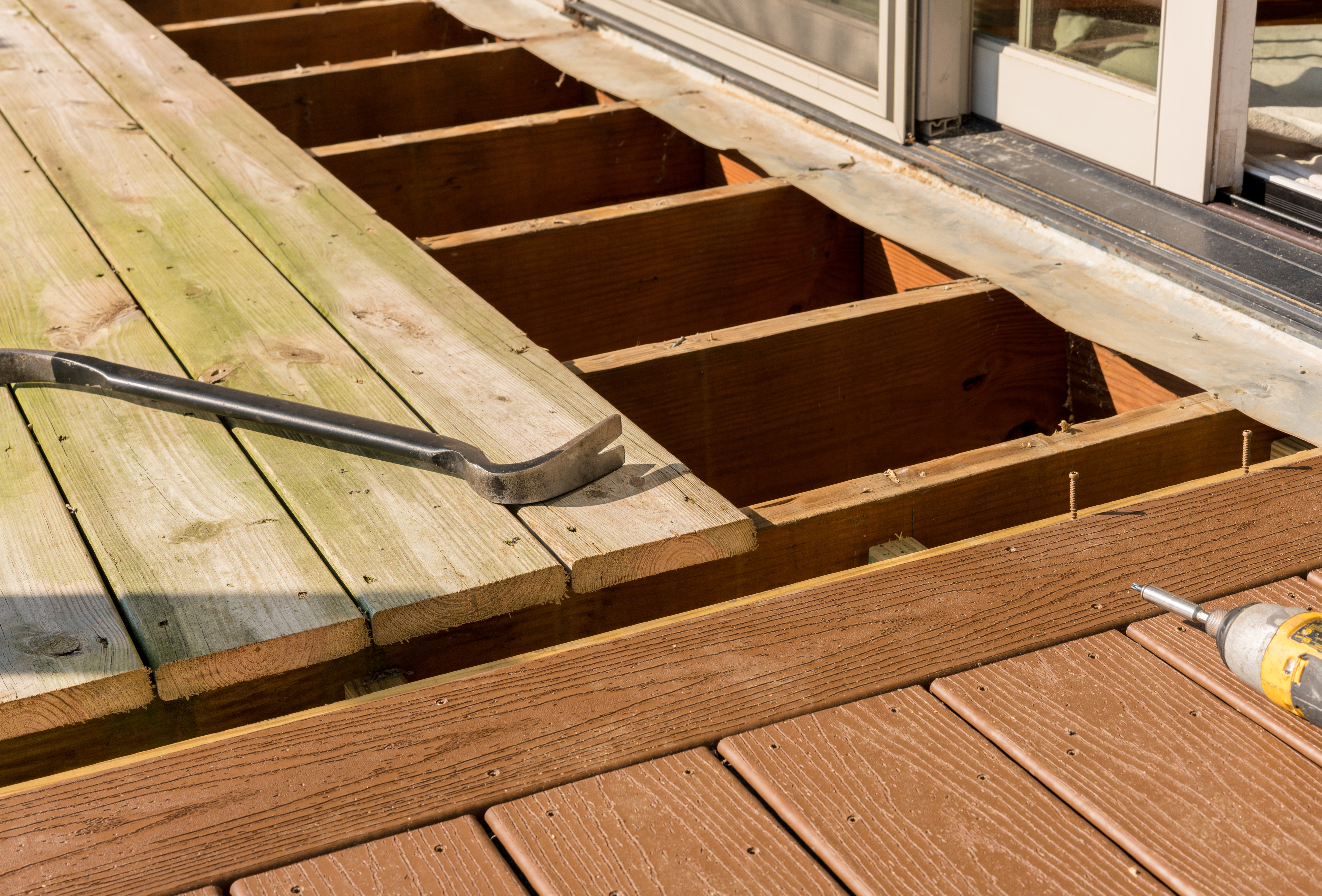
The Center, ND homeowners’ guide to deck repair services
From average costs to expert advice, get all the answers you need to get your job done.
Deck replacement costs depend on materials, any structural damage you need to fix, and more. This guide explores how much it costs to replace or repair a deck.
Old and run-down porch railings can be an eyesore and pose a risk of falling. Find out how much it costs to replace your worn out porch railings with new materials.
The cost to paint a pool deck depends on the dimensions and material, the type of paint, and whether you DIY. Read on to help determine a project budget.
If your deck is in bad shape, this deck repair checklist will help you inspect, clean, maintain, and repair it without missing any vital steps in the process.