Groundworks is the North America's leading and fastest-growing foundation repair and water management solutions provider. Groundworks is a vertically integrated company with its own manufacturing operations and a world-class software solution, allowing us to serve our customers more effectively. From the first phone call to the annual maintenance offered, our customers have peace of mind knowing we're there with one mission to repair, protect and improve their home. For state licenses visit Groundworks.com/licensing
"A few months ago, I had dug a hole beneath my foundation in pursuit of a plumbing issue I knew was near the edge of the foundation. In hindsight, I should have just busted up the concrete to expose the issue (which turned out to be a lot less of an issue than I'd imagined). Nevertheless, here was, with a hole beneath my house big enough for me to crawl inside, and I called Redeemers to get an opinion on refilling the hole in a manner that would restore integrity to the foundation and the earth beneath it. Mike came out and gave me his opinion, gratis. I don't know if he'd do that for everyone, but he was very cool and suggested a "pier." Ultimately, I decided to try a different tack, but he showed me how he'd do it and explained the benefits. I decided to go a different route that was a little more DIY friendly--I burmed up the undisturbed earth surrounding the hole with mud-packed cinderblocks and filled the void with even more mud-packed cinderblocks to create complete displacment of any water. Nevertheless, I thought Mike was a cool guy and very friendly, and if my foundation cracks as a result of the way I went about it, I'll probably call Redeemers and ask for Mike. "
D's Concrete Works has over 19 years experience in the field. We pride ourselves on striving to complete your project on schedule and work hard to get the quality you need the first time around. D's Concrete Works provides free estimates. We also want you to know that our project motto is- "Big or Small we do them all!" D's Concrete Works looks forward to meeting with you and assisting with each and every concrete project you have for your home.
My name is Joseph Crum and I specialize in residential remodeling. I can do just about anything from, drywall, painting, trim work, flooring, tile, additions to your home, etc. i am always available to take on any project goal that you need accomplished.
We have over 40 years of experience in the business. Here at Lamar Construction, we pride our company on reliability, great communication, integrity, and quality work. We are experts in our trade and will do our best to keep you as educated as we can on your particular task or project. We look forward to earning your business!
\n
Tate Construction, LLC works hard to provide each customer with the best possible service and quality. We look forward to earning your business soon. Call us today!
Concrete Mudjacking questions, answered by experts
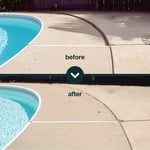
Concrete leveling is absolutely worth it if you have sunken concrete slabs and want to restore them to level, especially if the slab is part of your home foundation. Concrete leveling is less than half the price of replacing concrete sidewalks, patios, walkways, and pool decks, and it’s about a quarter of the cost of replacing a foundation. If you also treat the underlying problem, it can be a worthwhile and permanent solution.
Most projects take 1-3 hours, with immediate usability after completion.
Concrete leveling can last anywhere from five to 10 years or more, and in some cases, it can be a permanent solution. The longevity depends on the method used and whether the underlying cause of the sinking is addressed. For example, mudjacking typically lasts five to 10 years, while polyjacking can last for 20 years or more. It's best to consult a professional for an accurate timeline based on your specific situation and any factors that could cause the issue to recur.
The polyurethane used for polyjacking will expand and cure in 15 to 30 minutes. After that point, your slab will be safe to walk on and even drive on in the case of a sidewalk or concrete driveway. Double-check with your concrete lifting specialist to confirm a curing timeline, as products can differ.
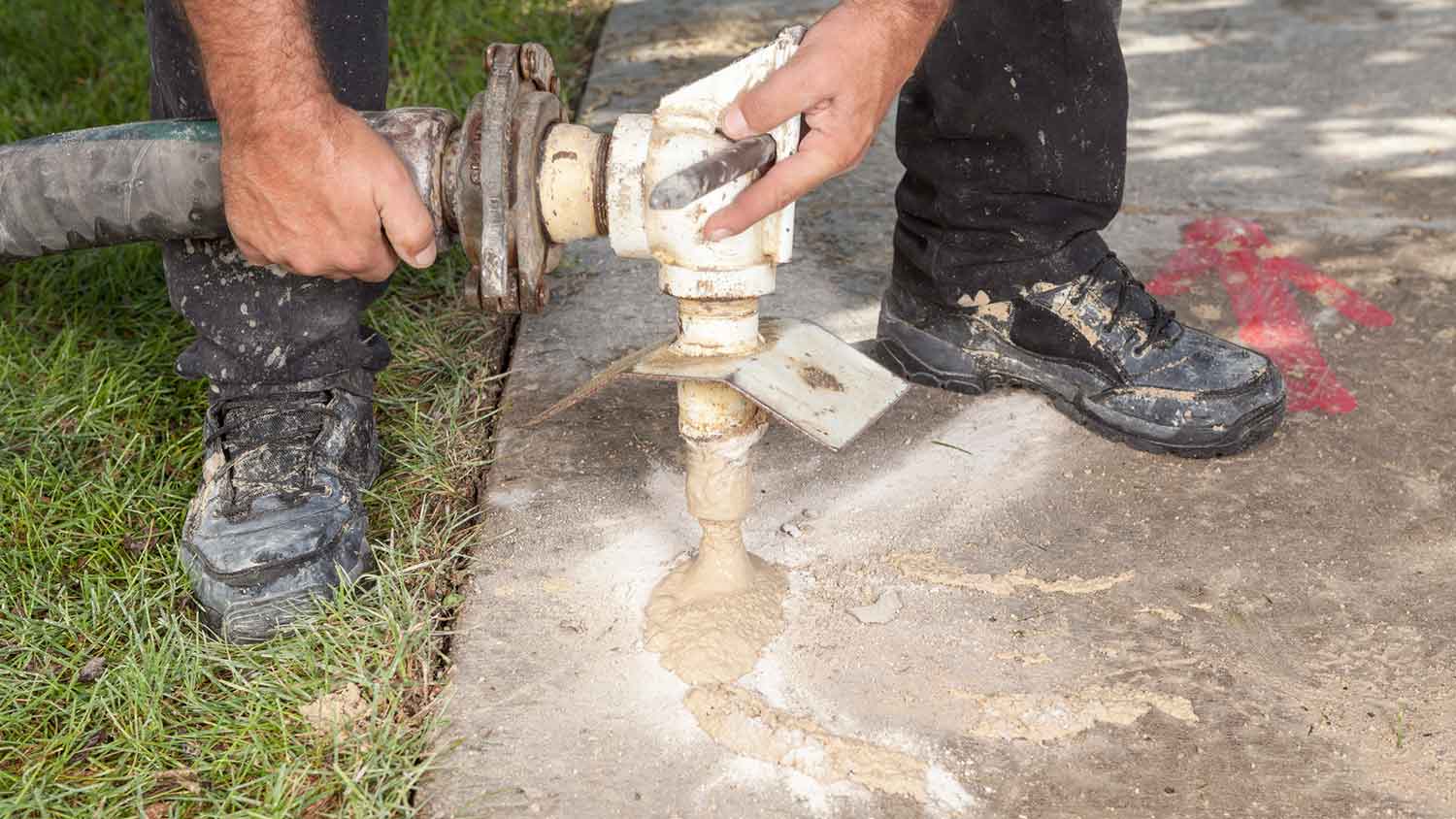
The method involves lifting settled concrete using pressurized cement slurry via drilled holes. This solves uneven surfaces and prevents further settling.
The Booneville, MS homeowners’ guide to concrete mudjacking services
From average costs to expert advice, get all the answers you need to get your job done.
DIY mudjacking is an advanced task, but learning how to raise a concrete slab is great to know for many scenarios. Let's take a look at how to DIY mudjack.