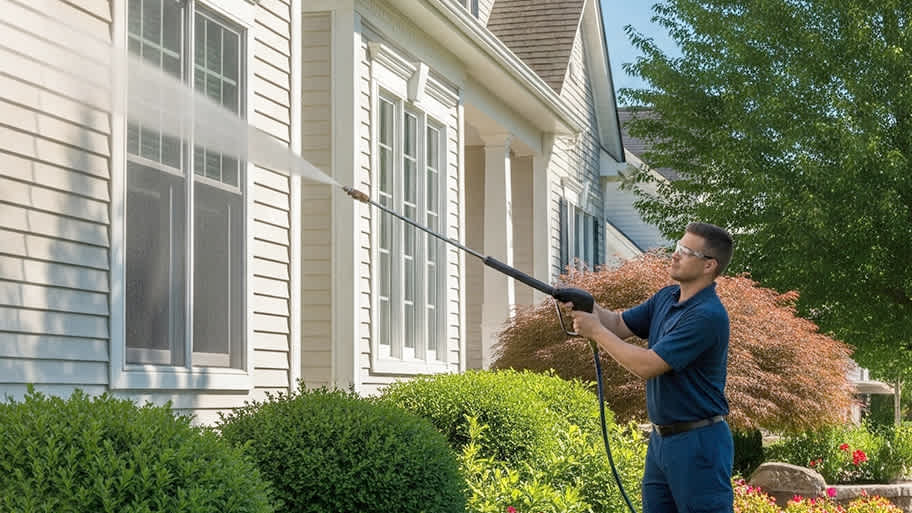




Top-rated pressure washers.

Best pressure washers near Lancaster, MO

Enter your zip and get matched with up to 5 pros

Need a pro for your pressure washing project in Lancaster, MO?

Select your specific project to find the pro for you.

Top-Rated Pressure washers in Lancaster - Updated Nov 2026

HH Wash
5.0(
2
)
Exterior Surfaces - PowerwashingExterior Surfaces - Powerwashing - For Business

Serving Lancaster, MO and surrounding areas

In business since 2023

Free estimates

Offers commercial services

We take great pride in our experience, expertise, quality, and customer service that we provide to meet the consumer's needs. It is our mission to provide excellent workmanship and complete customer satisfaction from start to completion of a project. In order to understand the needs and expectations of our customers, we take great care to work and communicate with every customer in a professional manner. Our reputation is based on service, safety, and quality, regardless of how large or small the job.

Response time10 mins
J & S Power Washing
5.0(
1
)
Exterior Surfaces - PowerwashingExterior Surfaces - Powerwashing - For Business

Serving Lancaster, MO and surrounding areas

In business since 2023

Free estimates

Offers commercial services

We provide results, not excuses! We pride our company on customer service, professionalism, great communication, efficiency, and superior quality work. We are experts in our trade and will do our best to keep you as educated as we can on your pressure washing project. We look forward to earning your business! Feel free to give us a call today!

Response time3 hrs
Recommended by100%of homeowners
Showing 1-10 of 34
Pressure Washing FAQs, answered by experts

Yes, you can pressure wash epoxy floors, but you must take precautions to avoid damaging the surface. While most epoxy floors can be cleaned with a mop, you might choose to pressure wash if the floor is stained, has ground-in dirt, or is covered with mold or mildew. To do so safely, first soak any stains or dirty areas with a gentle cleanser. Use a lower pressure setting with a gentle nozzle, such as a green, white, or black tip, or a 45-degree angled tip. Keep the spray nozzle at least 18 inches away from the floor to protect the surface. Using a surface cleaner attachment or a rotary scrubber can also help prevent overspray. Be cautious if using a power washer that heats the water, as the combination of heat and pressure may be too powerful and could damage the epoxy coating.

Generally 1-2 hours, depending on the area and level of dirt accumulation.

You should avoid using a pressure washer on any surface or item that could be damaged by the high-pressure spray, as some materials are too delicate to withstand the force.

Key items and surfaces to avoid include:

  • Electrical Components: Never pressure wash electrical systems, as water can cause short-circuits and create a safety hazard. This includes utility meters, breaker boxes, electrical outlets, generators, and HVAC or air conditioner units.

  • Delicate and Fragile Materials: Fragile items can crack, shatter, or be stripped by the pressure. Avoid pressure washing windows, glass, light fixtures, shingled roofs (especially asphalt), and stucco.

  • Painted, Stained, or Sealed Surfaces: Unless your goal is to strip the finish, do not pressure wash painted surfaces, stained wood (like decks), or anything with a protective seal that could be stripped away. Be especially cautious with older surfaces that may contain lead paint.

  • Soft Woods and Certain Decking: Delicate surfaces like softwood, composite decking, and antique or wooden patio furniture can be etched or damaged. If you must wash wood, use a lower-powered pressure washer with a wide-angle nozzle to prevent damage.

  • Living Things: Never use a pressure washer on people, pets, or plants. The force can cause serious injury and will destroy landscaping.

Much like wood siding, it can be dangerous to use a pressure washer on composite siding. While normally durable, composite siding isn’t made to stand up to higher pressure settings. It also makes it very easy to damage the paint or finish on the siding. Some professional power washing companies may take the job on, but we recommend avoiding it, especially as a DIY project with a rented pressure washer.

Pressure washers are better for residential use. Power washers are best suited for cleaning very hard surfaces (like concrete and cement) and removing tough stains or tacked-on grime. Meanwhile, pressure washers have more uses. For example, you can use one to deep clean a wooden fence, spray down your vinyl siding, or clear out your gutters.

The Lancaster, MO homeowners’ guide to pressure washing services

From average costs to expert advice, get all the answers you need to get your job done.