Zachary Vig Construction has been in business since 2026, with over 10 years of experience! We specialize in all your home improvement multiple small project needs, and guarantee you a job well done! Whether it be a ceiling fan that needs to be installed, or a door that needs repaired, we are your guys! We strive to exceed the homeowner's expectations each and every time, and get the job done the way you want it. We work in a timely fashion and always pay attention to detail. Proudly serving Hallock & surrounding areas. Free estimates. Call today!\n
Up to 2 Paur Roofing is committed to excellence in every aspect of our business. We uphold a standard of integrity bound by fairness, honesty, and personal responsibility. Our distinction is the quality of service we bring to our customers. Accurate knowledge of our trade combined with ability is what makes us true professionals. Above all, we are watchful of our customers' interests and make their concerns the basis of our business.\n \n\n
Yes, gutter cleaning methods without using a ladder are available, including:
A curved wand attachment for your hose
Gutter tongs on an extension pole
A leaf blower gutter cleaning kit
Vacuum designed for cleaning gutters
Just be sure that your downspouts are connected and can direct water away from the house if you’re using a water-powered method. This will keep the water from dumping next to the house.
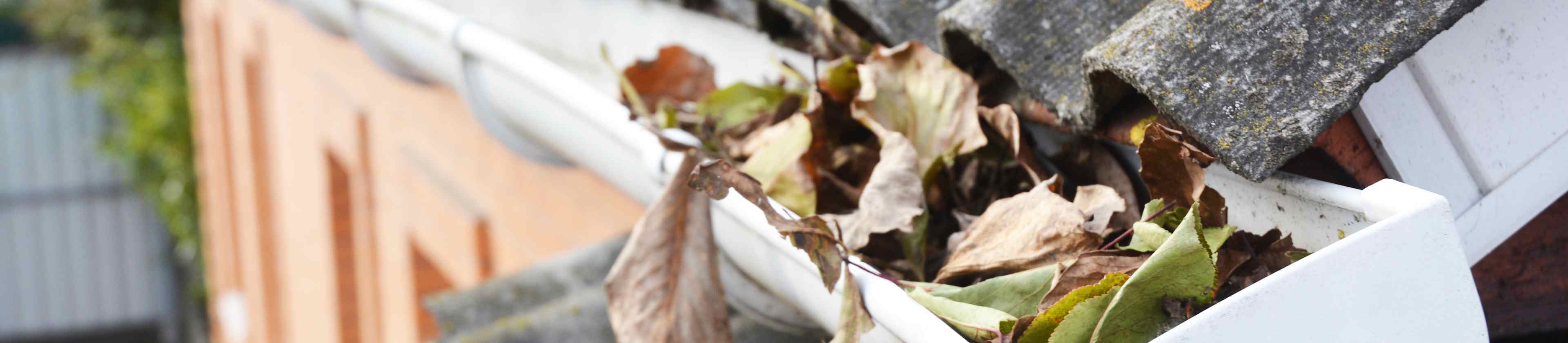
You may have a clogged gutter. Downspouts can also clog if your gutter collects too much debris. Hire a professional gutter cleaner, and if you still have problems, install a gutter guard (which prevents debris from entering your gutter system) and a downspout extension (which helps drain water further away from your foundation, so it doesn't pool near your house). Follow these tips to keep your gutter downspouts clean.
Whether or not you can use a pressure washer to clean your gutter guards depends on the type of gutter guard you have and the strength of the pressure washer. Most gutter guards can handle a low-pressure setting but check first. If you’re unsure if your gutter guard is designed for pressure washing, check your manufacturer’s instructions, ask a pro, or use a garden hose to clean the gutter guard instead. As gutter guards age, they become less resistant to the strong forces of a power washer, so treat older gutter guards with more care.
Regular cleaning, checking for leaks, and ensuring that downspouts direct water away from the foundation help prolong gutter life.
Regular cleaning, applying rust-resistant coatings, and checking for leaks help extend their lifespan.
The Stephen, MN homeowners’ guide to gutter cleaning services
From average costs to expert advice, get all the answers you need to get your job done.
This guide to gutter cleaning costs provides estimates for cleaning different types of gutters, tips for saving money on gutter cleaning, and answers to how to clean gutters.
This guide on how to clean the outside of gutters offers tips for how to remove debris, grime, black spots, and streaks from gutters to get them to last as long as possible.