STEAMAGIC is committed to excellence in every aspect of our business. We uphold a standard of integrity bound by fairness, honesty, and personal responsibility. Our distinction is the quality of service we bring to our customers. Accurate knowledge of our trade combined with ability is what makes us true professionals. Above all, we are watchful of our customers' interests, and make their concerns the basis of our business.
You should avoid using a pressure washer on any surface or item that could be damaged by the high-pressure spray, as some materials are too delicate to withstand the force.
Key items and surfaces to avoid include:
Electrical Components: Never pressure wash electrical systems, as water can cause short-circuits and create a safety hazard. This includes utility meters, breaker boxes, electrical outlets, generators, and HVAC or air conditioner units.
Delicate and Fragile Materials: Fragile items can crack, shatter, or be stripped by the pressure. Avoid pressure washing windows, glass, light fixtures, shingled roofs (especially asphalt), and stucco.
Painted, Stained, or Sealed Surfaces: Unless your goal is to strip the finish, do not pressure wash painted surfaces, stained wood (like decks), or anything with a protective seal that could be stripped away. Be especially cautious with older surfaces that may contain lead paint.
Soft Woods and Certain Decking: Delicate surfaces like softwood, composite decking, and antique or wooden patio furniture can be etched or damaged. If you must wash wood, use a lower-powered pressure washer with a wide-angle nozzle to prevent damage.
Living Things: Never use a pressure washer on people, pets, or plants. The force can cause serious injury and will destroy landscaping.
Most cleaning services take 2-5 days, allowing for thorough dry cleaning, steaming, or hand washing as needed.
Insulating windows without plastic is usually the better method. Outside of simply replacing your windows, you could buy cellular shades, which trap air between the window and the home, add a window film that blocks UV rays and traps heat, or cover your windows with a low-emissivity coating called “low-E.”
If you proactively avoid grime buildup and mold growth, you can clean the shower curtains as needed. However, if you forget to take preventive action, a good rule of thumb is to clean fabric curtains about every three months. And you’ll clean plastic liners and curtains every three to four weeks.
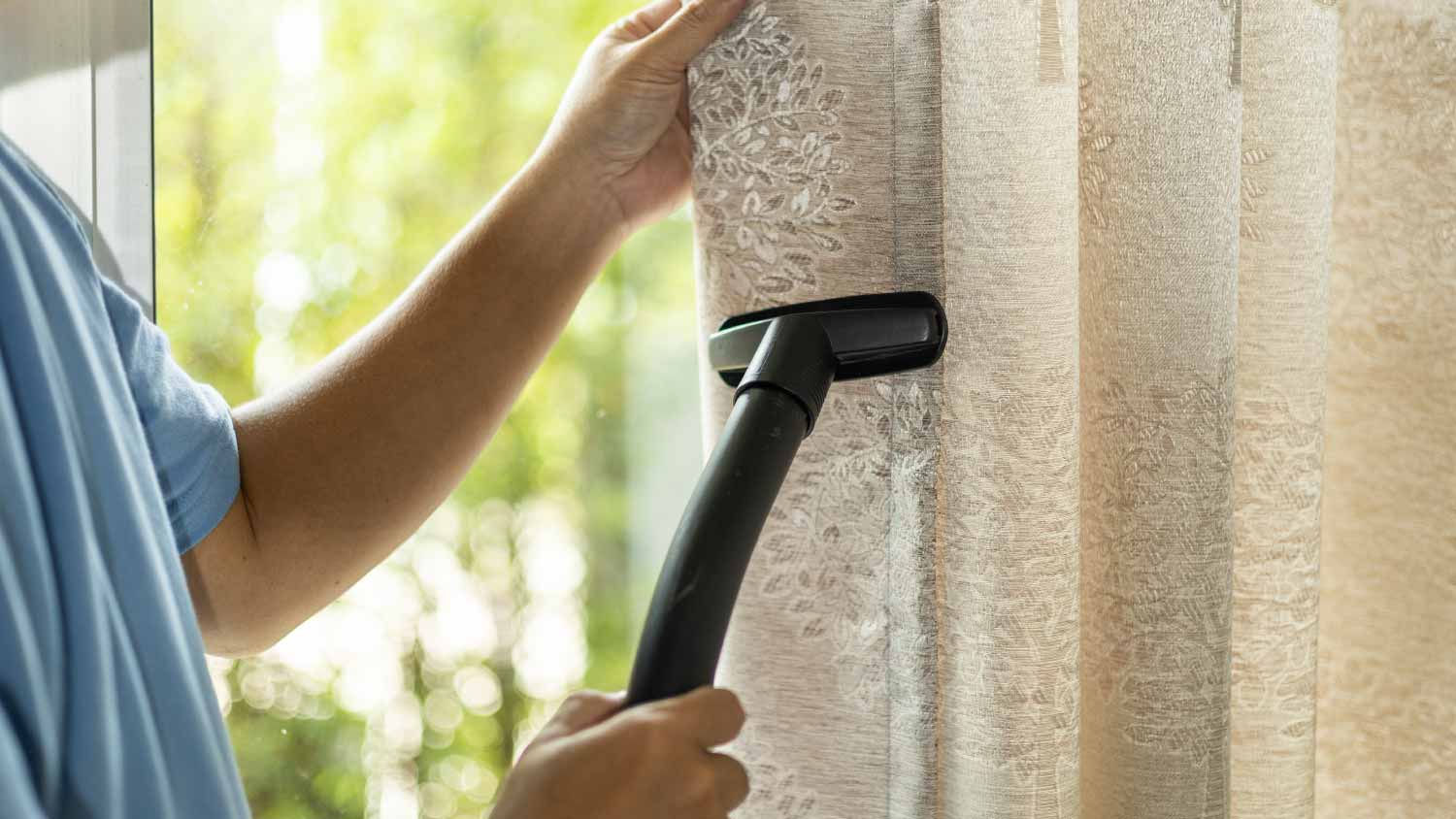
Regular vacuuming, professional dry cleaning, and avoiding direct sunlight prolong the curtain lifespan.
The Stephen, MN homeowners’ guide to drapery cleaning services
From average costs to expert advice, get all the answers you need to get your job done.
Call in the professionals when your delicate drapes need a deep clean. Let's take a look at drapery cleaning costs and which factors can sway the price tag.
Hiring a house cleaner frees up your schedule and keeps your home spotless. The cost to hire a house cleaner depends on the size of your house, your schedule, and who you hire. Use this guide to understand typical house cleaning prices better.
Oops! Did you find a paint stain on your clothes? Learn some different ways to remove paint from your garments depending on the type of paint that was used.