We provide residential and commercial solar power options, and provide support services for industry partner companies. We offer no cost consultations and $0 down financing. Please contact our office for a consultation at (931)922-8258.
"I was very impressed with the installer who was sent. He mounted the dish without drilling through my new roof, which might have voided my roof warranty, Also, he mounted the dish in a location where it is easy for me to brush the snow off it in winter. I appreciate his knowledge and thoughtfulness. Also, they didn't charge me to re-install the dish."
"The last was a rental company that we have and we used them for an air conditioning and heating system. It was Bototach Mechanical. It’s been a good program for us. They’re very responsive. I don’t know what the thought process was. My husband said, well let’s try these guys and so we did. We have an older home and it’s proved to be a very good deal. The quality has been pretty good, so I would give them an A for the quality. I will give you one helpful hint though. If the company decides they want to replace an appliance, you need to call them and negotiate with them because you can upgrade, but you need to talk to them in person not just do it over the internet."
The average homeowner needs around 22 solar panels, but the exact number depends on your monthly energy consumption. Your solar professional should size your array to offset your consumption, meaning you’ll need fewer panels if you use below-average amounts of electricity, or more than 22 if you use above-average amounts of electricity. The number of panels also depends on the output of each panel. The average is around 400 watts, but you might need more panels if you install less capable equipment. Since there are so many variables, you should have a professional size your system.
Rooftop solar panels supply energy to a single household, where a solar farm can power multiple homes at once with clean energy. Residential rooftop solar panels cost more per watt with a lower project total, and those panels only service the residence they are installed on (in most circumstances). With a solar farm, multiple households can buy into the project and share the overall cost.
You shouldn’t hook up a solar panel directly to a battery. That can damage the solar battery and your appliances over time. Instead, install a charge controller between your solar panel and solar battery. Charge controllers regulate voltage, prevent overcharging, and minimize the amount of electrical current to protect your battery from voltage spikes.
There are a few great questions to ask a solar contractor or inspector when you speak to them. You’ll probably want to find out about the energy yield and efficiency of your array, ensuring the actual output matches the amount you calculated when installing the array in the first place. It’s also a good idea to find out about any damage or wear and tear on the array and to inquire about how soon you need to make repairs or replacements to essential components.
Homeowners replace their solar panels after 25 years. That said, you don’t necessarily need to replace them at the 25-year mark. You’ll notice a declining ability to produce electricity over time. Most homeowners spring for a replacement when they notice their energy bills creeping up to regular levels or when solar panel repairs are extensive, frequent, and no longer economical.
The Greenbush, MN homeowners’ guide to solar panel services
From average costs to expert advice, get all the answers you need to get your job done.
There are a few factors to consider when it comes to solar panel repair costs. This guide breaks down the prices of solar panel removal, repair, and replacement.
Find out how much it costs to remove solar panels, including average prices, key cost factors, and tips to save money on your solar panel removal project.
Residential solar panel dimensions can vary slightly from brand to brand, but this guide can help you understand the basics and choose the best option.
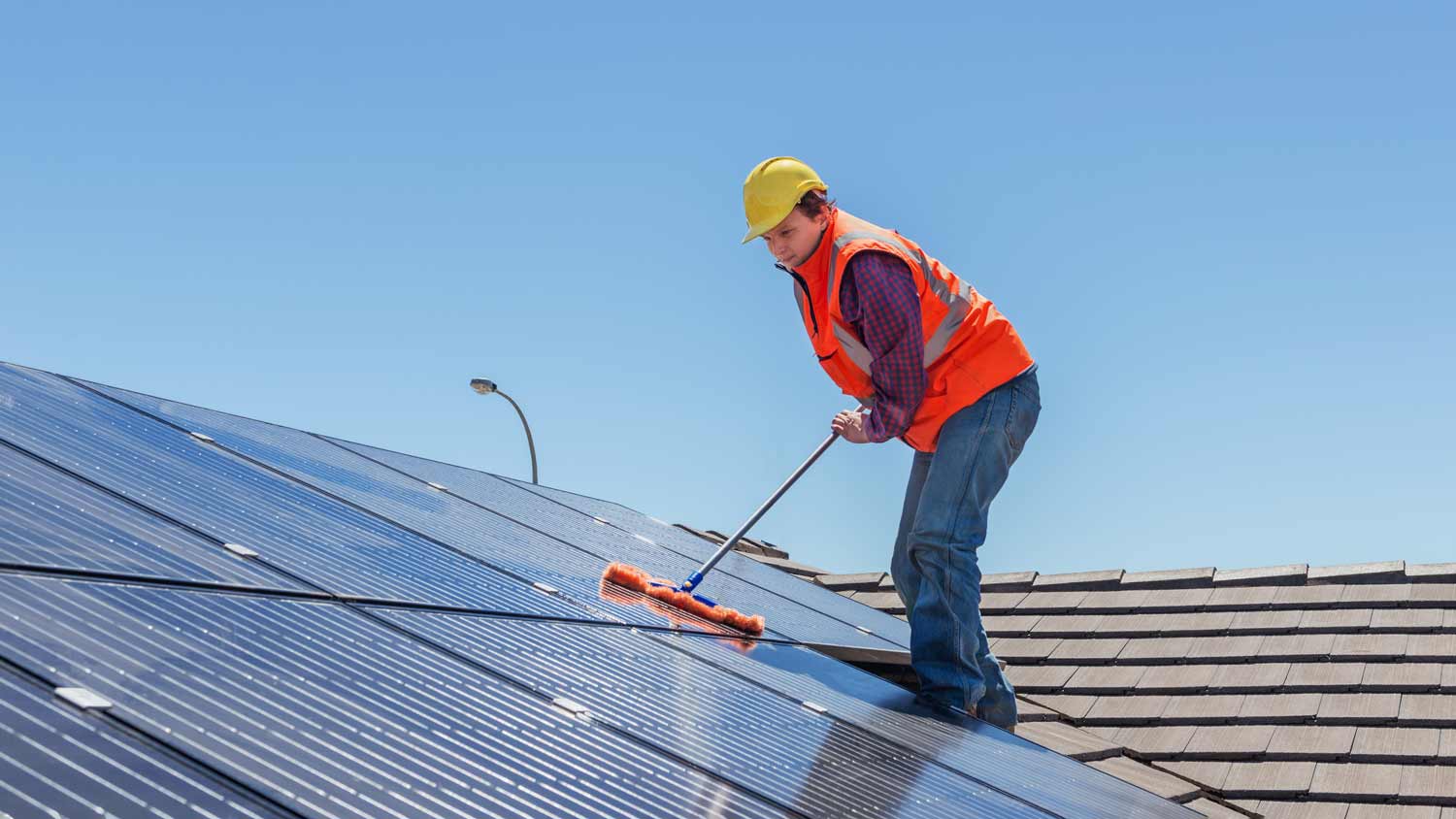
Solar panels are low-maintenance but occasionally require some elbow grease. This guide will help you learn how often solar panel maintenance is required.