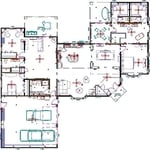
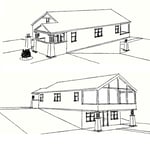
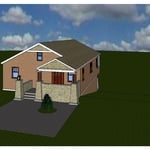
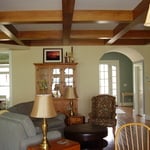
"We worked with Steven on our garage conversion project in San Francisco. With it being our first time embarking on a home renovation, we were so glad to have found Steven! He guided us throughout the process not only in the renovation details but also in selecting a GC for the job and finish material decisions. Steven was collaborative, organized, and very mindful of our goals, budget, and aesthetics. He proactively connected us with reps he works with for exterior doors and windows, tiling etc. and made us feel reassured that we were working with vetted vendors. If you're kicking off a new project and want someone collaborative, experienced, and easy to work with I highly recommend Bugge Plus. Steven and his structural engineering partner Jakob were a joy to work it!"
We have a single mission: Complete Customer Satisfaction! We have consistently focused on the needs of our customers, providing personalized attention and a stress-free experience.\nYou will find us to be competitively priced with close attention to the details.\nOur reputation is based on service, safety, and quality, regardless of how large or small the job.\nWe look forward to building a lasting relationship and guarantee your satisfaction!\n
Terraform Development & Design LLC, delivers expert permit-ready architectural plans and drafting services nationwide. With 8+ years of experience and hundreds of clients across all 50 states, we create code-compliant residential and commercial construction documents that get approved fast and built right.\nFrom site plans, floor plans, elevations, structural & foundation drawings to MEP coordination, full construction sets, 3D renderings, interior design, solar PV layouts, and precise material takeoffs - we handle it all. Fast 4-6 week turnaround, 3 design revisions included, free revisions for city redline changes, transparent pricing (starts at $2,000), and direct partnerships with licensed engineers for stamps in every state.
We take great pride in our experience, expertise, quality, and customer service that we provide to meet the consumer's needs. It is our mission to provide excellent workmanship and complete customer satisfaction from start to completion of a project. In order to understand the needs and expectations of our customers, we take great care to work and communicate with every customer in a professional manner. Our reputation is based on service, safety, and quality, regardless of how large or small the job.\n\nmonday - sunday 8 am - 9 pm\n\n
"I was really under the gun due to a prior Architectural firm not performing their duties per building plan codes. Not only were the plans incomplete but the City Plan Reviewer states(The Worst plans he’s ever seen) they will not make adjustments unless there is an additional charge for Thousands.
Evaluation’s saved my clients and drew our project per code, along with Engineering in less time then they quoted. I highly recommended them, Especially Kirsten. You went above and beyond trying to coordinate this project. The staff was very professional and I will use them on all my projects.
Sincerely,
Frank B
BCM Builders"
We are a locally-owned and operated design company that specializes in a wide variety of drafting, design, and planning projects. Our services are customizable for each specific project, and we take pride in our ability to consistently exceed customer expectations. We look forward to building long-term relationships with every client we serve. Don't hesitate to give us a call today to learn about all the ways we can help to meet your drafting and design objectives!
At TR Home Design, we can take care of all of your design needs. Our expertise extends to every room in your home and we will customize the plans to fit your needs. Call today for a free estimate and let us show you how to make your building dreams come true!
BL Grafx, LLC is a Professional Company. We have wide range of services and can help you with any project requiring a skilled Draftsperson/CADD. We have been in this industry for XXXX years. We welcome any size project. \n\nWe strongly believe in giving our customers the most for their money. We have consistently focused on the needs of our customers, providing personalized attention and a stress-free experience. This approach has set us apart from our competition and keeps our customers coming back! \n\nYou can be sure your project will be handled promptly and professionally. Call us today to schedule your appointment!\n
Structural Engineering questions, answered by experts
Yes, an LVL beam is more affordable than the cost of a steel I-beam, totaling between $50 and $200 per linear foot as opposed to the $100 to $400 per linear foot you’d pay for a steel I-beam. Not only is the wood material more affordable than steel, but it’s also more similar to traditional wooden beams and doesn’t require as much retrofitting to connect joists.
The National Association of Home Builders requires repair of any foundation crack of more than one quarter of an inch, although local regulations may vary. In general, any visible crack that is growing in size, allowing water through, or that you have just noticed, is a good reason to call a structural engineer. Cracks can be a sign of a sinking foundation, so an inspection is a good idea for your peace of mind.
A few hours for inspection, with a detailed report following in a week.
Yes, you can build over a stump if the roots are no longer alive. Living roots will continue to grow and may damage your new construction over time. Similarly, you should also remove rotting stumps because they may continue to attract pests and even cause new structures (especially those made from wood) to decompose as well.
Costs depend on unit complexity, labor, wall mounting needs, and additional accessories like floating shelves.
The Buhl, MN homeowners’ guide to structural engineering services
From average costs to expert advice, get all the answers you need to get your job done.
The cost of a structural engineer is easily justifiable given the value they bring to the table. Use this guide to see what hiring your professional will total.
Spotting deep foundation cracks or sagging floors? Learn about structural engineering costs, serious warning signs, and how to hire the right local pro.
It can be hard to choose the right pro for any job, but it matters. Learn how to hire a structural engineer who'll get the job done right from start to finish.