






Top-rated generator install pros.

Get matched with top generator install pros in Lakeview, MI

Enter your zip and get matched with up to 5 pros

Need a pro for your generator install project in Lakeview, MI?

Select your specific project to find the pro for you.

Find Generator install pros in Lakeview

Avatar for Electrical Innovations LLC
Electrical Innovations LLC
5.0(
5
)
Fixed Generator - InstallFixed Generator - RepairGenerator - Install+4 more

Serving Lakeview, MI and surrounding areas

Approved

In business since 2017

Free estimates

Credit card accepted

"Jarod did an excellent job. Completed an EV outlet install in a few hours. He came out to do an estimate and had all the supplies he needed in his truck and hired him on the spot. Fair pricing and very neat a clean work. EV outlet works like a charm. Will definitely hire him to do future work at my house."
Basement remodel
Landscape lighting
Network system
Local Landscape Lighting Project

+21

Response time2 days
23 neighbors recently requested a quote

Recommended by80%of homeowners
Avatar for PM Technologies
PM Technologies
5.0(
4
)
Fixed Generator - InstallGenerator - InstallGenerator - Install - For Business

Serving Lakeview, MI and surrounding areas

Approved

In business since 1999

Free estimates

Emergency services offered

"We just had the generator installed today and are so pleased with the guys from PM Technologies from the electricians, helpers, and Ken the salesman. We couldn't have asked for nicer people to do our job."
Additional Photos
Additional Photos
20KW Kohler
Response time1 day
Response rate95%
40 neighbors recently requested a quote
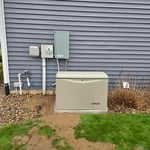
Edmore Electric Co., Inc.
5.0(
3
)
Generator - Install - For Business

Serving Lakeview, MI and surrounding areas

Approved

In business since 1989

Free estimates

Credit card accepted

Edmore Electric Co., Inc., is committed to excellence in every aspect of our business. We uphold a standard of integrity bound by fairness, honesty and personal responsibility. Our distinction is the quality of service we bring to our customers. Accurate knowledge of our trade, combined with ability, is what makes us true professionals. Above all, we are watchful of our customers' interests and make their concerns the basis of our business.

Response time4 days
Recommended by100%of homeowners
Avatar for Connection Electric LLC
Connection Electric LLC
4.9(
65
)
Portable Generator - Install

Serving Lakeview, MI and surrounding areas

In business since 2021

Free estimates

Credit card accepted

"Abe was very professional and was very good about keeping us informed as to when to expect each step of the process to install the generator would be done. Would highly recommend his company. We are very happy with everything he has done."
Living room lighting
Finished project
Response time11 hrs
Recommended by94%of homeowners
Showing 1-10 of 13
Generator Install questions, answered by experts

To determine the right size generator for your house, you should calculate the total wattage of the appliances and devices you want to power during an outage. List all essential items, note their start-up wattages, and add them together.

Here are some typical wattage requirements for common appliances:

  • Refrigerator: 600 watts

  • Large dehumidifier: 700 watts

  • Large window air conditioner: 1,400 watts

  • Water heater: 3,000 to 4,500 watts

  • Electric furnace: 5,000 to 25,000 watts

A 7,500-watt generator might be sufficient for essentials like a refrigerator, freezer, well pump, and lighting circuits. However, for high-demand items like a water heater or furnace, a whole-home generator is a better choice. A portable generator may be enough if you only need to power a few critical items.

While home square footage can offer a rough estimate, it is not always a reliable indicator. For reference, here are some typical generator sizes based on square footage:

  • 1,000 sq ft: 6–9 kW

  • 1,500 sq ft: 7–10 kW

  • 2,000 sq ft: 10–14 kW

  • 2,500 sq ft: 12–16 kW

  • 3,000 sq ft: 16–20 kW+

For the most accurate sizing, consult a professional who can calculate your home's peak and average power consumption and recommend the optimal generator.

Sizing a generator is a careful process that requires calculating the electrical load of your entire house. You have to take into account every device you want to use and their wattage requirements, plus the wattage needed to start them, and look for a generator that can safely run all that at around 80% capacity.

In more practical terms, a small home can run on a 10,000-watt generator (and if you only want to power a few key appliances, much less than that). A mid-sized home may need something between 15,000 and 22,000 watts. Larger homes require 25,000 watts or more. 

While natural gas generators are costly, they’re a great option for standby power due to the reliability of natural gas as a fuel source. Unlike other fuels, natural gas is delivered through underground pipes, making outages extremely rare and less likely to be affected by the elements. As long as the area isn’t prone to earthquakes, they offer an unlimited supply of natural gas that doesn’t degrade over time or require storage in tanks.

Yes, in most municipalities, you will need a permit to install a permanent home generator, including emergency backup, partial-home, and whole-home models. Because these installations involve significant alterations to your home's electrical system and produce exhaust fumes, local governments often require a permit or inspection for safety purposes. A generator permit typically costs between $50 and $250, depending on your location. Your electrician or certified installer can usually handle the permitting process for you, but you will be responsible for the cost. It's a good practice to confirm with your installer that they will pull all necessary permits before work begins.

The amount of time a standby generator can run continuously is around 3,000 hours on average. However, standby generators can generally run indefinitely as long as they have a continuous fuel supply. Generators hooked up to a home’s natural gas supply are the best option for extended usage, as these won’t rely on a finite fuel supply based on how much you have in storage. Generators running on liquid propane or diesel won’t last as long, as these require fuel storage and regular refueling to stay running.

The Lakeview, MI homeowners’ guide to generator installs

From average costs to expert advice, get all the answers you need to get your job done.