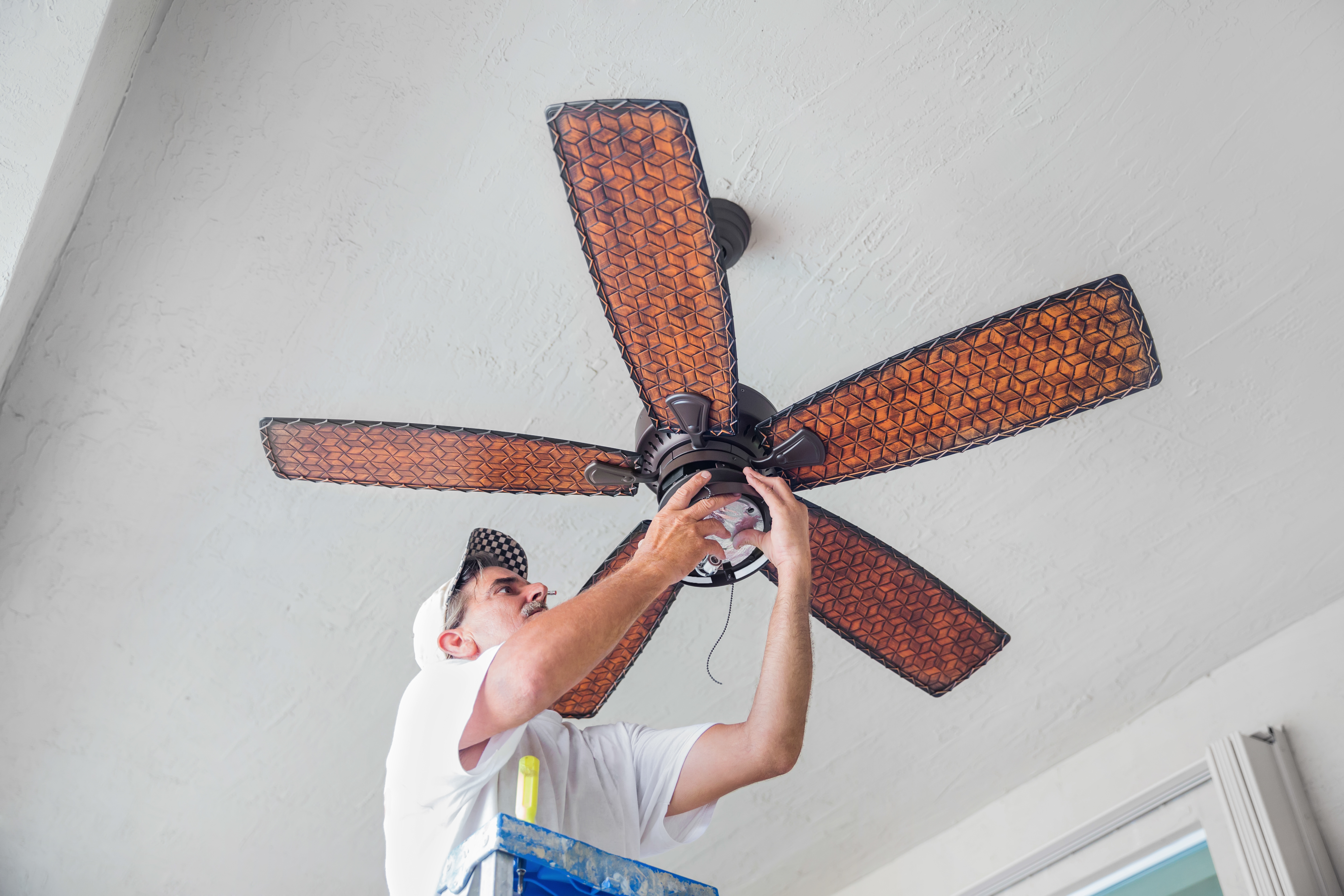



Top-rated ceiling fan pros.

Best ceiling fan pros near Monroe, ME

Enter your zip and get matched with up to 5 pros

Need a pro for your ceiling fan service project in Monroe, ME?

Select your specific project to find the pro for you.

Top-Rated Ceiling fan pros in Monroe - Updated Nov 2026

Avatar for New England Home Renovations LLC
New England Home Renovations LLC
4.0(
311
)
Ceiling Fan - InstallCeiling Fan - Repair

Serving Monroe, ME and surrounding areas

In business since 1983

Free estimates

Emergency services offered

"I had hired Richard's company to install a new fan in our bathroom.  They installed the fan but chipped the plaster around the edge of the fan and then left the plaster on the floor covering it with the bathmats.  I didn't intend to use NE Renovations again, but decided that all of the glowing recommendations from Angie's List must not be wrong.  I contacted Richard to install a new kitchen faucet the I had purchased. I told him about the plaster issue.  He came and installed my faucet when he said he would.  Several weeks later I emailed him to ask when he was going to send the invoice and he told me that he was not going to charge me because of the previous issue.  This kind of customer service is hard to find these days."
Before
After's
New boiler install
Removal of cast Iron to PVC.
Additional Photos

+37

Recommended by89%of homeowners
Avatar for American Home Shield – Home Warranty
American Home Shield – Home Warranty
3.5(
5,689
)
Ceiling Fan - InstallCeiling Fan - Repair

Serving Monroe, ME and surrounding areas

In business since 1971

Credit card accepted

"The furnace took 4 days to get approved( not counting a Sunday) the others were quick but the water heater had to be ordered so without hot water for a week. One ceiling fan was easy but within a year their policy changed and They would not install the one I purchased and had to get a new one approved and then ordered online and took several weeks to get straightened out. Not sure who was at fault, AHS, installer or scheduling with renter. Fee is usually $75 per visit"
Additional Photos
Additional Photos
Additional Photos
Additional Photos
Additional Photos

+2

Recommended by65%of homeowners
Ceiling Fans FAQs, answered by experts

If you’re removing a ceiling fan without visible screws, start by locating the fan canopy—a round cover placed above the fan blades and motor. There should be a thin ring that can be turned counterclockwise to remove the canopy and reveal the screws. After unscrewing the fan, you can disconnect the wires and remove the entire fan from the mounting hardware. For safety, make sure the fan switch is turned off before you remove the canopy. It may be easier to remove the fan blades first, too.

Many ceiling fan-rated electrical boxes tend to be made of metal. However, some electrical boxes may also be made of heavy-duty plastic that is reinforced with metal support structures. It may also have an attachment that connects directly to a ceiling joist. If you are ever ensure, consult with a licensed professional to get their insight on best practices and whether the installation is a safe one.

The square footage of your room will dictate the correct ceiling fan blade size. For example: 

  • Rooms smaller than 75 square feet require a fan that is 29 to 36 inches.

  • Rooms up to 175 square feet require 42- to 48-inch fans.

  • Rooms up to 350 square feet require 52- to 56-inch fans.

  • Expansive spaces over 350 square feet need a fan larger than 60 inches.

There are several telltale signs to let you know that your ceiling fan needs servicing or replacement. For instance, if it’s wobbling, rotating too slowly, or if your ceiling fan is making noise such as squeaks, buzzes, and thumps, it’s time to have it looked at by a professional. Not only may it indicate a potential problem with the fan itself, but it could also signal a red flag that it’s improperly assembled or there’s an issue with the wiring.

The direction your ceiling fan spins helps create comfortable airflow in your home and can also help cut down on energy costs. 

During summer, your ceiling fan should spin counterclockwise. This will push cooler air downward in a column and help lower your room’s air temperature. In the winter, set your ceiling fan to spin clockwise and at the lowest speed setting. This will pull cool air upwards, displacing the warm air that pools towards the top of your ceiling and bringing it down towards the floor.

The Monroe, ME homeowners’ guide to ceiling fan services

From average costs to expert advice, get all the answers you need to get your job done.