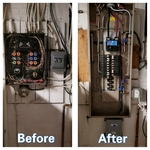
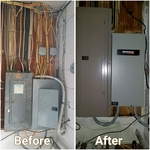
"Outstanding! Super professional. Offered advice on my electrical installation and did the work quickly. I was very pleased with the end installation."
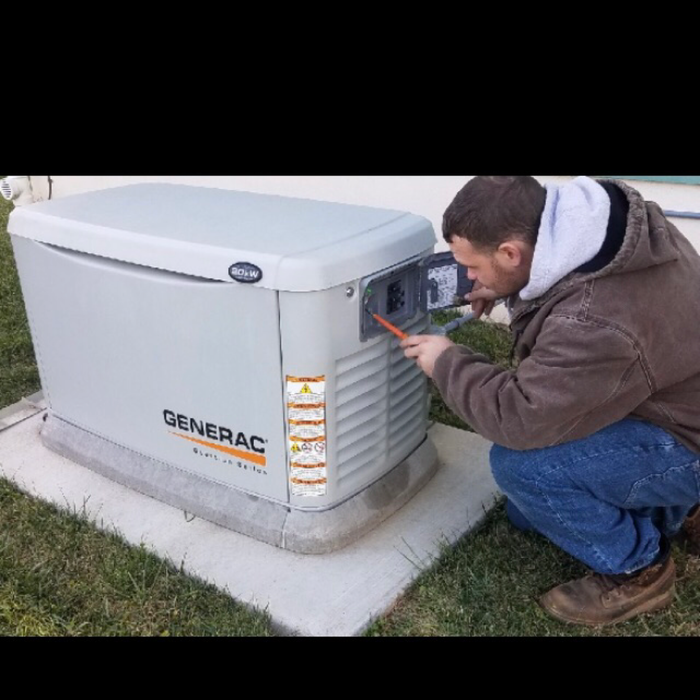
"Oupekkha showed up exactly on time, explained clearly what he was doing, what his annual service contract included and reassured me that our generator is good to go. He even topped off the oil for us. I signed up!"
"Great job helping sort out the open neutral I had. I was able to get the new wire, breaker, and outlets installed so the electronics are isolated on their own circuit. Thanks again."
"Anthony and his team do expert electrical work of all kinds. We are a 145 year old non-profit organization with buildings and grounds, and have contracted with Technician Engineers Group (TEG) on two large projects (and several small ones) over the last 15 years. One project rewired a large 125 year old building listed on the National Register of Historic Places, and one installed an extensive outdoor lighting system. In these two unusual situations TEG worked closely with us to find innovative solutions to our unique needs. We are very pleased with the results, enjoyed their can-do approach, and highly recommend this company for any electrical challenge. We found TEG reliable, honest, on time, and all the work was completed ahead of schedule."
Calvert Generator is committed to excellence in every aspect of our business. We uphold a standard of integrity bound by fairness, honesty, and personal responsibility. Our distinction is the quality of service we bring to our customers. Accurate knowledge of our trade combined with ability is what makes us true professionals. Above all, we are watchful of our customers' interests, and make their concerns the basis of our business.
\n
Electrical Service & Repairs - We guarantee your satisfaction, and we won?t leave until the job is done right. Our team has quality experience in this industry, and we make sure our customers are happy before we leave. Call or click to schedule an estimate today!
"Ron Ethridge (owner) did the work. He was friendly, helpful, knowledgeable, and experienced. He was available on the phone during the project - after hours and weekends. He is very familiar with permitting and licensing and working with Pepco and the inspectors."
"Anthony is a true professional. He is very personable which made him easy to talk to. The young men working for him were courteous and about their business. Thought the prices were reasonable. Excellent service. If you are thinking about upgrading, installing outlets or any of your electrical needs, I highly recommend calling this company first."
"Awesome! I wanted to do a heavy-up at my new home. I shopped around and got quotes from several companies incl Tim. I chose Paradise because of the price, responsiveness, and professionalism that Tim conducted himself. The job called for significantly more work than expected because of my desire to eventually add a backup generator, Tim made sure that I would not need to reinvent the wheel later and installed the right equipment to meet my future needs. During the course of his work I decided to add several additional outlets and discovered a mis-wired light. He took care of all of the work in short order. Tim is officially my go-to electrician."
Carbon monoxide emissions aren’t only dangerous to human life, but they also harm our planet. While natural gas generators emit lower levels of CO than other fuel sources, there are still ways to reduce emission levels. For example, shop around for an eco-friendly generator that complies with current emission standards. Also, make sure your generator is serviced regularly to avoid CO buildup.
The cost to install a whole-house generator averages $5,200, with a typical price range of $1,500 to $8,900. However, total costs can vary from $400 for a small portable unit to over $18,000 for a large-capacity system. The most significant cost factor is the generator's size and capacity, but other variables include the brand, fuel type, and labor for assembly and installation.
Generator costs can be broken down by type:
Portable or Emergency Backup Generators (1kW–7.5kW): $500 to $2,000
Partial-Home Generators (9kW–20kW): $2,000 to $6,500
Whole-House Generators (22kW–48kW): $5,000 to $18,000
To avoid paying for more power than you need, consider hiring an electrician to calculate the electrical load for your essential appliances. It is also recommended to get at least three quotes to find the best deal for your specific needs and budget.
If your home already has a grinder pump and you’re still noticing issues (like frequently clogged toilets and sinks), it could be time to upgrade your grinder pump. Start by checking your existing horsepower. If there are four or fewer people living in your home, using a 1/2-horsepower grinder pump should be sufficient. Larger households should consider investing in a 1-horsepower grinder pump to maximize wastewater removal efforts.
Energy output depends on turbine size, average wind speed at your site, and system efficiency. A 5 kW turbine in a good wind location can generate 8,000 to 12,000 kilowatt-hours per year, which may cover a large portion of an average home’s needs. Accurate output estimates require a professional wind assessment and a review of your household’s energy usage patterns.
The amount of time a standby generator can run continuously is around 3,000 hours on average. However, standby generators can generally run indefinitely as long as they have a continuous fuel supply. Generators hooked up to a home’s natural gas supply are the best option for extended usage, as these won’t rely on a finite fuel supply based on how much you have in storage. Generators running on liquid propane or diesel won’t last as long, as these require fuel storage and regular refueling to stay running.
The Capitol Heights, MD homeowners’ guide to generator installs
From average costs to expert advice, get all the answers you need to get your job done.
The cost to install a whole-house generator in Washington, DC varies based on factors like generator size, fuel type, and installation complexity. Learn the typical price range and what influences your total cost.
The cost to install a whole-house generator in Baltimore, MD varies based on factors like generator size, fuel type, and installation complexity. Learn the typical price range and what influences your total cost.
Generators should give you peace of mind, but you’ll only get that if your installer knows what they’re doing. Learn how to hire a pro and what red flags to look for.
Thinking about a generator installation? Learn about backup power options, costs to expect, and how to hire the right local pro to keep your home running.