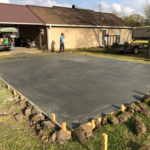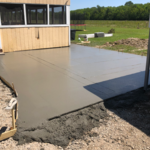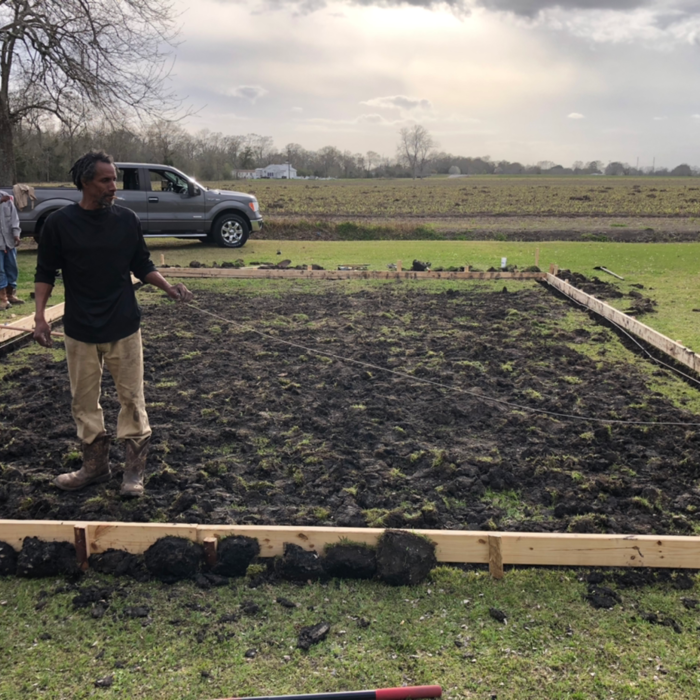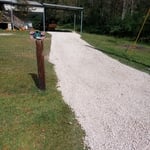




Top-rated concrete driveway pros.

Get matched with top concrete driveway pros in Pollock, LA

Enter your zip and get matched with up to 5 pros

Need a pro for your concrete driveway service project in Pollock, LA?

Select your specific project to find the pro for you.

Find Concrete driveway pros in Pollock

Avatar for Whispering Pines Earthworks, LLC
Whispering Pines Earthworks, LLC
5.0(
8
)
Concrete Patios, Walks & Steps- Install

Serving Pollock, LA and surrounding areas

In business since 2010

Free estimates

Small jobs welcome

"They reached out to work with my schedule. Arrived on time, outstanding customer service. Worked quickly and effectively and completed work on time as promised. Very happy with experience."
Response time10 hrs
Response rate91%
Recommended by100%of homeowners
Ryan's Concrete Service
5.0(
1
)
Concrete Driveways & Floors - InstallConcrete Driveways - InstallConcrete Floors - Install+1 more

Serving Pollock, LA and surrounding areas

In business since 2016

Free estimates

Emergency services offered

Here at Ryan's Concrete Service we have a main focus of quality over quantity! We guarantee our work on every single job and look forward to earning your life long business. We are driven by your wants and needs and always get the job done right the first time. Please call today for a free estimate!

Response time4 days
Recommended by100%of homeowners
Showing 1-10 of 43
Concrete Driveways questions, answered by experts

Whether you need to winterize your pressure washer depends on where you store it. If you can keep it in a relatively warm place with no risk of freezing, you won't need to add antifreeze. However, if the machine will be stored in freezing temperatures, any liquid left in the water pump can freeze, expand, and cause severe damage. To prevent this, add antifreeze to keep it in good condition. While some suggest emptying the machine with compressed air, this can be a tedious process that may not fully drain the liquid. Regardless of storage conditions, it is also good practice to empty the gas chamber and refresh the oil before winter storage.

You should avoid using a pressure washer on any surface or item that could be damaged by the high-pressure spray, as some materials are too delicate to withstand the force.

Key items and surfaces to avoid include:

  • Electrical Components: Never pressure wash electrical systems, as water can cause short-circuits and create a safety hazard. This includes utility meters, breaker boxes, electrical outlets, generators, and HVAC or air conditioner units.

  • Delicate and Fragile Materials: Fragile items can crack, shatter, or be stripped by the pressure. Avoid pressure washing windows, glass, light fixtures, shingled roofs (especially asphalt), and stucco.

  • Painted, Stained, or Sealed Surfaces: Unless your goal is to strip the finish, do not pressure wash painted surfaces, stained wood (like decks), or anything with a protective seal that could be stripped away. Be especially cautious with older surfaces that may contain lead paint.

  • Soft Woods and Certain Decking: Delicate surfaces like softwood, composite decking, and antique or wooden patio furniture can be etched or damaged. If you must wash wood, use a lower-powered pressure washer with a wide-angle nozzle to prevent damage.

  • Living Things: Never use a pressure washer on people, pets, or plants. The force can cause serious injury and will destroy landscaping.

You can clean light stains off of concrete using a pressure washer with 2,000 psi, or you can clean tougher stains if you use a smaller nozzle and point the wand closer to the stain. You may also need to go over the surface more than once for a deeper clean. If you want to clean concrete faster, consider using a pressure washer with a psi of 3,000 or higher.

Excavators work in tandem with dump trucks to haul away excess dirt and soil. The excavator will dig into the ground and move the excess dirt into a pile. Using a backhoe, the specialist can fill a truck with excavated soil from that pile. They will then drive the truck to a different location where they can dump the material.

When comparing installation costs, asphalt is often less expensive upfront than concrete. Asphalt prices typically range from $7 to $15 per square foot, while concrete can range from $3 to $18 per square foot. However, long-term costs should also be considered. Concrete driveways generally last longer (up to twice as long) and require less maintenance, which can make them more affordable over their lifespan. While asphalt has a lower installation cost and is easier to repair, it requires more frequent maintenance, such as sealing, which can add up over time. Therefore, while concrete is more expensive initially, its durability may offset the cost in the long run.

The Pollock, LA homeowners’ guide to concrete driveway services

From average costs to expert advice, get all the answers you need to get your job done.