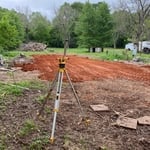
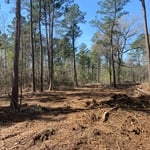
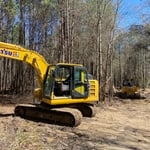
A leading construction company in (LOCATION) focuses on providing optimum quality in various construction services. We take great pride in our work as we have during our () years in business. Thus, you can rest assured, that no matter what construction project we handle, we will be giving nothing but highly professional and expert works. Our galleriescollections of photos from previous construction projectscan attest to the amount of time, thought, and effort that we put into the services we provide.\n\n\n \n\n\nOf course, while we strive to provide the most beautiful designs and outcomes, we understand that price is one of the most important deciding factors for clients. That is why we offer the fairest prices for our best quality works. Call today for your free estimate!
Thank you for considering hiring us for your project! At Mettech Excavating we pride ourselves on quality work, integrity and competitive pricing. We believe in giving our absolute best, no matter how big or small your project.\n\nWe are experts in our trade, and we will keep you educated and informed throughout the completion of your project. We treat your property like it's our own, with the utmost respect, just like we would our own family!\n\nAs the owner, my aim is to earn a 5-star review on the completion of your project. So, please let me know if at any time we are not living up to earning your perfect 5-star review.\n\nWe look forward to earning your business, so please ask us for references!
We take great pride in our experience, expertise, quality, and customer service that we provide to meet the consumer's needs. It is our mission to provide excellent workmanship and complete customer satisfaction from start to completion of a project. In order to understand the needs and expectations of our customers, we take great care to work and communicate with every customer in a professional manner. Our reputation is based on service, safety, and quality, regardless of how large or small the job. Call us today.
We take great pride in our experience, expertise, quality and customer service that we provide to meet your needs. It is our mission to provide excellent workmanship and complete customer satisfaction from start to completion of a project. In order to understand the needs and expectations of our customers, we take great care to work and communicate with every customer a professional manner. Our reputation is based on service, safety and quality, regardless of how large or small the job.
I’m a father and husband, I have done a lot of land clearing and lawn care in past jobs Im looking to start maintaing yards for others. I can trim limbs , mow , weedeat. I can do most things you may need on your property
We take great pride in our experience, expertise, quality, and customer service that we provide to meet the consumer's needs. It is our mission to provide excellent workmanship and complete customer satisfaction, from the start to the completion of a project. In order to understand the needs and expectations of our customers, we take great care to work and communicate with every customer in a professional manner. Our reputation is based on service, safety, and quality, regardless of how large or small the job.
T & J Farms and Demolition is a locally owned and operated company that values honesty and integrity in all aspects of our business. Our dedicated team of professionals have over 12 years of hands on experience, to provide innovative ideas and suggestions tailored to your projects. Our services are customized to your individual needs, paying close attention to the details of each project that we are involved with. Please feel free to contact us today!\n
We are a very hard working and dedicated company. Each job is treated with respect and is performed safely and efficiently. We have the equipment to tackle most any job.
At CenLa Roofing and Construction, we strive for only the best, we do work for our costumers as we’d expect people to do work for us, we specialize in roofing and construction, we also provide land clearing, demolition, and cleanup, we’re a 24/7 business operation, so never be afraid to call, no matter the time or day, emergency storm cleanup, and storm related services are provided, no job is too big or too small, we provide all types of home and land services, so give us a call, we’d love to take care of you!
Concrete blocks are the cheapest way to base a shed. However, the space in between allows critters to go under, burrow, and even damage your shed’s frame. For a more pest-proof option, consider building a shed base with gravel or paver stones. Both options are fairly affordable and easy enough for a DIY project. For gravel, you can build a wooden frame to contain the loose material.
A perc test can take anywhere from one to eight hours to complete. The total time depends on factors like the amount of excavation required, the depth and width of the holes, and whether multiple test holes are needed. For a single hole, the process of filling it with water and monitoring the drainage rate usually takes less than an hour. Professionals can often complete the entire test in a single day. While it's possible to get results the same day, some companies may take a few days to provide the official report.
You can bury underground electrical wire six inches deep—but only if you use a rigid metal electrical conduit. For rigid, non-metallic conduits, bury the wire at least 12 inches deep. If using an underground feeder cable rated for direct burial, you'll need to place it at least 18 inches deep, as it has no conduit for extra protection.
It’s possible to transplant trees as tall as 50 feet when an experienced tree planting service uses the right equipment. However, a tree with a trunk larger than two or three inches in diameter needs to be handled by a professional in order to yield successful transplanting results. Consulting a tree planting professional is the best way to tell if your large tree can be safely transplanted.
Most residential basements are 8 to 10 feet deep. You can dig deeper depending on building codes, but it does become more difficult. You’ll likely need to install stronger foundation walls and additional supports to handle the increased load. Depending on the water table, you may also need a water management system. Clay soil can support a deeper foundation than sandy soil. A structural engineer will be able to tell you the maximum, feasible depth.
The Cheneyville, LA homeowners’ guide to excavation services
From average costs to expert advice, get all the answers you need to get your job done.
Excavation costs $1,500 to $6,300 for most residential projects—but it depends on factors like the size of the area. This guide will help you plan a budget.
You can't have an in-ground pool without digging into the ground. How much does pool excavation cost, and can you take it on yourself? Our guide explains.
Picking the right pro can make or break your project. Learn how to hire an excavation pro with the qualifications and skillset to do the job efficiently.