

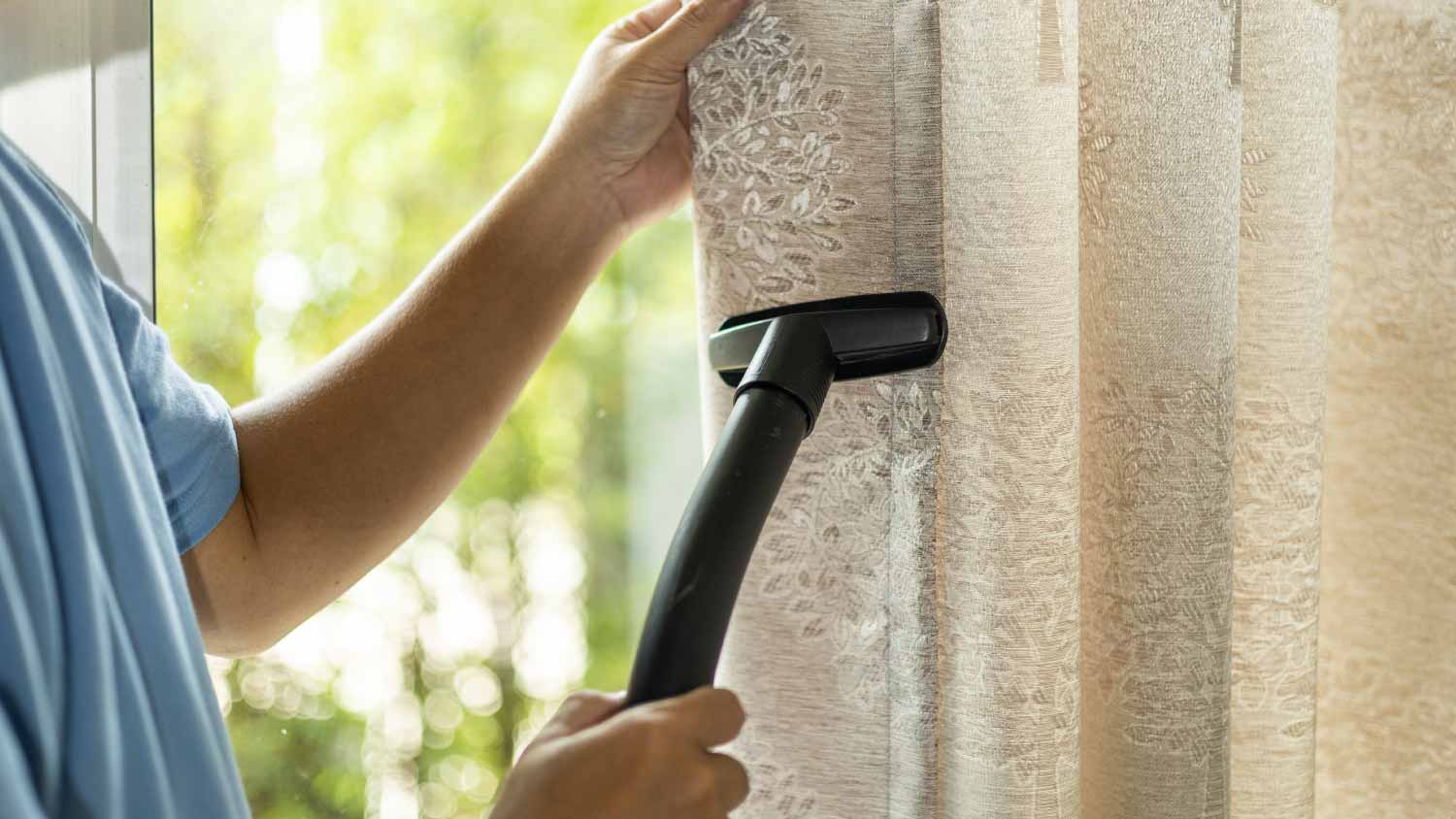
Top-rated drapery cleaners.

Best drapery cleaners near Clinton, IN

Enter your zip and get matched with up to 5 pros

Need a pro for your drapery cleaning project in Clinton, IN?

Select your specific project to find the pro for you.

Top-Rated Drapery cleaners in Clinton - Updated Nov 2026

No results for Drapery cleaner in

Try adjusting your search criteria.
Drapery Cleaning FAQs, answered by experts

Costs depend on fabric type, drape size, cleaning method, and whether additional services like pressing or deodorizing are included.

In general, shades and blinds are the most common window coverings used today because they create unobtrusive, sleek profiles that fit into any space. In addition, blinds and shades are extremely easy to use. Most operate using either a pull system or wand. While most blinds and shades sold by retailers are available in a wide range of sizes that are made to fit standard windows, customers can also order custom shades and blinds for windows that are hard to fit.

Yes, professional drape cleaning is often worth the investment. A professional cleaning service can remove accumulated allergens like dust, pollen, and pet dander, which is especially beneficial for households with allergy sufferers or individuals with respiratory issues like asthma. This process also effectively eliminates odors from cooking, pets, and daily life, helping your home look and smell fresh while improving indoor air quality. Furthermore, hiring a professional ensures that the correct cleaning methods are used, preventing damage to the fabric. It is generally recommended to have drapes professionally cleaned every four to five years, with regular light vacuuming in between.

You should avoid using a pressure washer on any surface or item that could be damaged by the high-pressure spray, as some materials are too delicate to withstand the force.

Key items and surfaces to avoid include:

  • Electrical Components: Never pressure wash electrical systems, as water can cause short-circuits and create a safety hazard. This includes utility meters, breaker boxes, electrical outlets, generators, and HVAC or air conditioner units.

  • Delicate and Fragile Materials: Fragile items can crack, shatter, or be stripped by the pressure. Avoid pressure washing windows, glass, light fixtures, shingled roofs (especially asphalt), and stucco.

  • Painted, Stained, or Sealed Surfaces: Unless your goal is to strip the finish, do not pressure wash painted surfaces, stained wood (like decks), or anything with a protective seal that could be stripped away. Be especially cautious with older surfaces that may contain lead paint.

  • Soft Woods and Certain Decking: Delicate surfaces like softwood, composite decking, and antique or wooden patio furniture can be etched or damaged. If you must wash wood, use a lower-powered pressure washer with a wide-angle nozzle to prevent damage.

  • Living Things: Never use a pressure washer on people, pets, or plants. The force can cause serious injury and will destroy landscaping.

The main categories of window coverings are shades, shutters, curtains, drapes, and blinds. However, consumers today have dozens of options within these categories when it comes to everything from materials to the technology behind how window coverings operate.

The Clinton, IN homeowners’ guide to drapery cleaning services

From average costs to expert advice, get all the answers you need to get your job done.