





Top-rated bird control service pros.

Get matched with top bird control service pros in Lincoln, IL

Enter your zip and get matched with up to 5 pros

Need a pro for your bird control service project in Lincoln, IL?

Select your specific project to find the pro for you.

Find Bird control service pros in Lincoln

Avatar for Terminix® Pest Control
Terminix® Pest Control
3.8(
4
)

Serving Lincoln, IL and surrounding areas

Approved

In business since 1927

Free estimates

Warranties offered

"Very knowledgeable guy who seem to know what he’s doing. Don’t know results of spraying. Have had much rain since. Will have to see if it worked. Terminex will spray again the beginning of next month."
My jobs
My jobs
My jobs
My jobs
My jobs

+2

55 neighbors recently requested a quote
Bird Control questions, answered by experts

No, mothballs do not keep bats away. Not only are mothballs completely ineffective when repelling or removing bats, but using them could be illegal, depending on where you live. Remember, bats are federally protected, and it's illegal to use chemicals during the removal process, and mothballs tend to fall into this category.

No single deterrent will work 100 percent of the time, so we suggest combining deterrents to ensure your seed has the best possible chance to grow. Using bird netting over your seed, with physical deterrents like mylar tape coupled with hanging bird feeders at the edges of your growing area—and removing any bird’s nests, if possible—will give your seeds the best possible chance for success.

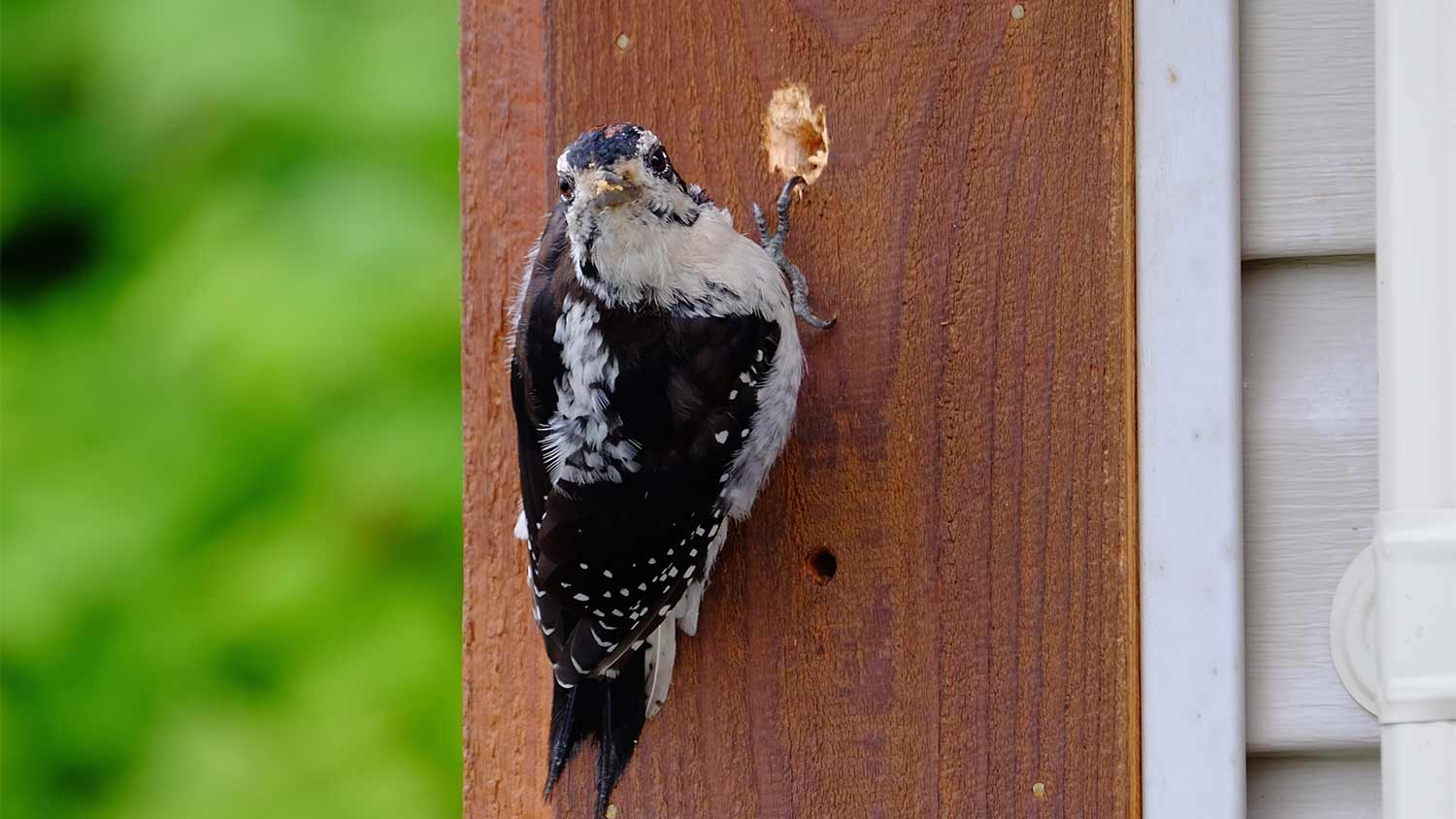
When woodpeckers start banging on your walls or roof, they are probably looking for insects to eat, storing nuts for winter, drilling a hole to make a nest, or communicating with other birds to establish territory or find a mate.

The size of the hole can help determine the reason for the pecking. Small irregular holes are a result of insect hunts. Acorn holes are more consistently sized and often fitted with a nut in the middle. Nest holes are large and have rounded edges. If the bird is pecking to mark its territory or attract a mate, it may leave dents rather than holes, and the noise will stop when the mating season starts in spring.

An owl's worst enemy in the wild is often other raptors and environmental factors. Among the avian threats, larger owls or other birds of prey can pose a danger, engaging in territorial disputes or competing for food resources. Terrestrial predators like foxes, raccoons, and larger mammals may target owl nests or young fledglings. Environmental factors like severe weather conditions, habitat loss, and food availability changes can also significantly impact owl populations.

Studies indicate that owls don't possess a conventional sense of fear. However, they find intense, sudden human noise unsettling, like clapping or shouting. Additionally, owls are likely spooked by sudden bursts of bright light. While they may not experience fear as humans do, these disturbances can disrupt their natural behaviors, making it essential to minimize such disruptions when sharing spaces with these remarkable creatures.

The Lincoln, IL homeowners’ guide to bird control services

From average costs to expert advice, get all the answers you need to get your job done.