




Top-rated deck staining pros.

Get matched with top deck staining pros in Georgetown, ID

Enter your zip and get matched with up to 5 pros

Need a pro for your deck staining project in Georgetown, ID?

Select your specific project to find the pro for you.

Find Deck staining pros in Georgetown

Deck Staining questions, answered by experts

Generally, these steps are included in exterior house painting:

  • Prepping and protecting the areas not being painted

  • Scraping away loose paint

  • Cleaning off dirt, grease, and debris

  • Caulking gaps and openings

  • Priming with a quality paint primer

  • Painting the prepared areas, including trim and accents with chosen paint finish

  • Adding a second coat

  • Cleaning up the site and disposing of tape, plastic, and drop cloths

When staining a deck, don’t skip surface prep, avoid staining damp or dirty boards, and don’t apply stain in extreme heat, cold, or wet conditions. Never overload the wood with a stain, as too much can cause tackiness or peeling. Also, don’t forget to test a small area first to ensure the color and finish look right.

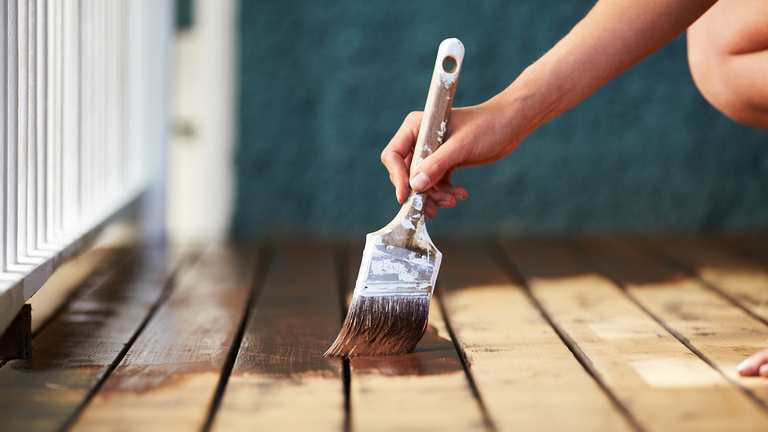
Whether to brush or roll stain on wood depends on the project and your preference. Brushing is ideal for smaller, intricate areas and offers more control over the application, ensuring thorough coverage and penetration into the wood's grain. 

Conversely, rolling is efficient for more extensive, flat surfaces and can save time. However, it is not always the best fit for textured or uneven wood. Some projects may benefit from combining both methods, using a brush for detail work and a roller for broader areas. Ultimately, the choice between brushing and rolling depends on the specific requirements of your staining project.

Wet-sanding and dry-sanding each have pros and cons. Dry-sanding is less messy, so it’s a good option if you’re trying to minimize dust (for example, if you’re sanding an occupied home or working with particularly dry or dusty drywall mud). However, dry-sanding is quicker because you don’t have to keep rinsing a sponge or wait for it to dry before painting.

Staining a deck with a rag is typically a better option than using a brush, as it helps the stain penetrate deeper into the wood. However, both brushes and rags are best reserved for detailed work because using these tools on an entire deck can require tediously crawling around on your hands and knees. A pad applicator, sprayer, or roller are preferred alternatives to applying stain over the majority of a deck. Use a rag for railings and other detailed work, and let the wood soak up as much of the stain as possible before wiping away drips or pools.

The Georgetown, ID homeowners’ guide to deck staining services

From average costs to expert advice, get all the answers you need to get your job done.