Need something fixed around the house? I’m your local handyman, ready to help with those projects you’ve been putting off. I show up on time, treat your home with respect, and stand behind my work.
I have been doing construction work since 1992 from plumbing to roofing. From 1994 till now I have been in the Commercial Millwork industry. Co owning a business for ten years. I did all the programming and when machine broke down I was the one troubleshooting and fixing them. I am a perfectionist and will not leave something half way.
Hi. My Name is William, but you can call me Bill. I’m a fair, honest, dependable guy that’s hard working and reliable. I won’t accept a job Im not confident in finishing, I won’t scam anyone. I just ask to be treated fairly and equitably.
At Accomplix Inc we specialize in transforming worn-out, outdated, or damaged furniture into beautiful, revitalized pieces that enhance your living or workspace. ** WE SPECIALIZE IN RECLINER REPAIRS** With years of expertise in furniture refinishing, our skilled craftsmen bring a deep understanding of traditional and modern techniques to every project.\n\nWe offer a wide range of services, including stripping, sanding, staining, painting, and custom finishing, tailored to meet your specific needs and style preferences. Whether it’s restoring a cherished antique, modernizing a family heirloom, or refreshing your home or office furniture, we are dedicated to delivering exceptional quality and craftsmanship.\n\nOur commitment to sustainability is evident in our use of eco-friendly materials and practices, ensuring that your refinished furniture not only looks stunning but also aligns with your values. At PFS, we take pride in our meticulous attention to detail, personalized service, and passion for breathing new life into your treasured pieces.\n\nTrust us to turn your furniture into a lasting work of art that you’ll enjoy for years to come.\n\nServices Offered:\n\nFurniture Refinishing & Restoration\nCustom Staining & Painting\nAntique Restoration\nFurniture Repair\nFurniture Assembly\n\nWhy Choose Us:\n\nExpert Craftsmanship\nPersonalized Service\nCall or Text Us Now!\n
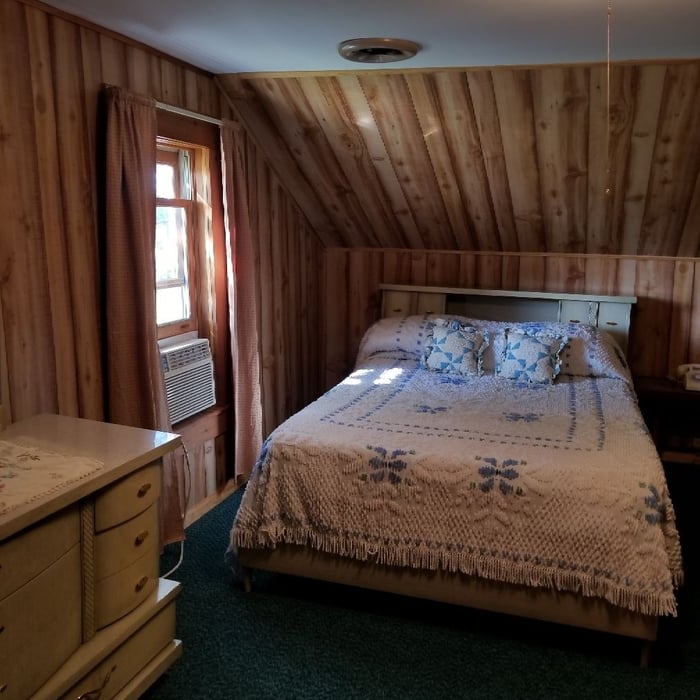
At Sparkle & Shine we pride our selves on 100% QUALITY WORK.....\nwe use only non toxic supplies safe for your children/pets...listening to the needs of our clients and what type of cleaning products you would liked used as well, we work with everyone..\nwe offer FREE ESTIMATES so we can meet new clients to discuss exactly what you would like cleaned..\nIf you would like to have your home Sparkle & Shine dont wait book an appointment..\nwe also offer emergency cleanings,\nif you have an event coming and need a cleaning done ASAP let us know...\nwe have years of experience in Move in/out cleanings to lesson the stress from your move or if you just want insure you get that deposit back...\nwe also provide WEEKLY, BIWEEKLY, ONCE A MONTH OR ONE TIME CLEANINGS..\nREAL ESTATE CLEANING.\nAIR B&B CLEANING.\nCAMP CLEANINGS..\nAND MORE..\nGive us a call you will be glad you did..\nreferences upon request....\nCHECK OUT OUR PHOTOS TO SEE WHAT WE DO AT SPARKLE & SHINE CLEANING!!!!\nwe also offer custom carpentry work.\nask for more details \n
"We're very happy with the results. The floor is much more level, and you can tell throughout the house--doors that used to swing shut on their own now stay in place. The floor also feels much more secure; things on the counters don't shake when you walk by anymore. The crew came on time each day and completed the work within the time frame they said they would, despite some bad weather."
Luke's Painting Company strives every day to be the best in this industry and our customers agree that we are! We do this by treating every customer as if they are our only customer. We treat every project like it is our own personal space, leaving no mess left behind and being certain that every inch and every corner of every job is finished with precision and perfection. We have an exceptional eye for detail which is what makes us the best painters around! On top of all this we only use high quality premium products for every project. The paint that we use offers great coverage, exceptionally stunning colors, high durability and excellent washability. Location of any project is never an issue, we love to travel so let us get you a free quote today!\n\nLuke can be reached directly by phone or text at - 334-922-9148\nBy email at - [email protected]
Jack Of All Trade Carpentry is committed to excellence in every aspect of our business. We uphold a standard of integrity bound by fairness, honesty, and personal responsibility. Our distinction is the quality of service we bring to our customers. Accurate knowledge of our trade combined with ability is what makes us true professionals. Above all, we are watchful of our customers' interests, and make their concerns the basis of our business.
"Hello, My name is Phil Carr-Jones, I am reviewing my experience of working with and building my own kitchen, using cabinets and doors from Arkansas Wood Door. While I am an Episcopal Priest, it turns out I get to do a lot of things they don't teach you in seminary. Over the years, I have had to get fairly skilled in all the trades, including, no surprise, carpentry. But I am by no means an expert. For instance, I employed a retired carpenter to help out with the crown molding and other trim. Apart from that though, this is all my and my wife's work. So let me state up front, Arkansas Wood Doors is the go to place for the DIY’er who is thinking of remodeling their own kitchen. Here's why: I searched the web for months, literally doing comparisons and research on flat pack rta cabinets. I went to the big box store for a design and pricing in their three lines of cabinets, and I went in for a consult with a small custom shop in my area. Here's what I found. 99 outof 100 rta cabinet companies have their product made in china which means the standards for formaldehyde are going to be as fishy as they smell, plus you can only get cabinets in fixed sizes so if you looking to eeck out every last inch of space you're going to lose a lot and you'll be using a lot of filler strips wasting what could have been useful storage. If you want to go custom, then you only have less than a handful of online options, companies that will make to order in any dimension. For instance, I only wanted an 8 inches deep spice cabinet to allow for greater working room over the counter. My wife and I are pretty serious about cooking from pastries to mains and sides. We want a very serious kitchen. Plus, I'll tall so I needed the room. In any case, if you want something custom your choices online are limited. The big box stores don't really do custom and are just as limited in their options as are the online rta places. Most online rtas offer far cheaply made boxes with construction methods less sturdy. I have found that if I buy cheap, I shouldnt expect my kitchen to hold up past a few years. The finish will fade. The drawers will warp. The joints will open up. The big box stores basically offer the same thing, too. When I go to a big box store to buy something, I do it knowing I probably willl get a year out of it, whether that’s a lawn chair of a power tool. I mean when was the last time you regretting spending too much money on a better grade of power tool? So if you want quality, a better and safer grade building material and much wider choices in sizing then your basically down to three or four options. I went with Arkansas Wood Door and am completely pleased and impressed by the experience. Now I could have spent twice what I did and gone to a small custom shop and gotten the same thing, but I am in to saving money and frankly I enjoy the challenge. AWD worked with me directly. Working up the order and getting the plan for each box just right. If you have never designed and built a kitchen before, there are plenty of tips and guidance on the web and I recommend you heartily research all of the aspects and complications involved. I hit a couple of unexpected bumps. But more about that below. So do your research. For instance you can save a lot of money by building the plinths yourself and only order squared off boxes without the toe kick. By making the platform on which you place the lower cabinets first, you can get that plumb and level, so throwing up the boxes is a breeze. And again, the cabinets are also less expense, a complete all around win. AWD uses an easy system for matching up box parts so assembly was easy. No special tools required. Given the many parts and I used a mix of frameless and face framed cabinets, there was a moment or two when in amongst all the materials I got nervous about having everything I needed, but low and behold, all was right there in the end. I also recommend the concept from French cooking "mis en place" that is have all your ingredients in place and all your tools where you need them before starting out. Also, it was a lot easier to work with my wife than doing it alone, but I did a few by myself and so if that is your only option than you should have no problem. I've assembled a lot of cheaper Swedish flat packed furniture in my day, and the quality and sturdiness of AWD leaves no doubt about how long these will last. Just rock solid. Great thing about AWD is the cost to quality ratio. Cant beat it. Which also means if you make a mistake the replacement is so reasonable it becomes not big deal. I mis-measured one box and so I needed to order the right size. Worked out fine, but that was because AWD had an incredibly fast turn around. The other few reliable companies are several weeks to months. And these other places are crazy expensive. And in truth, the other companies are a complete rip off on trim and accessories. AWD pricing was so amenable that my mistakes cost me so little in comparison with what I was saving. So there's a built in confidence for the first timer. Also AWD made one mistake on the placement of a hinge in two doors. They immediately and without question remade them and sent them out in under ten days. You just can't get that service anywhere in the custom cabinet world. It was so affordable I upgraded on one side to black walnut. Trying doing that at the other quality shops. The quality of the roll out drawers and top drawer boxes is superb and the hinges and under-mount sliders are top grade excellent. The hardware was the easiest part frankly. Their system, for lining up the hardware is just so easy. Drill driver is all you need as the placement is already leveled for you. SO: high end quality custom built cabinets, superior custom support, fastest turnaround in the marketplace, most affordable pricing out there, excellent hardware, and oh yeah, I almost forget, color choices. They offer complete line of lacquer - just pick a SW color and they'll match it. SO completely and truly custom for a fraction of cost without sacrificing any quality. The Rev. Philip Carr-Jones"
Homeowners can increase the usefulness of their garage space in other ways, and one option is to extend the length of the garage by making it deeper. The process is similar to traditional garage extensions, but the end product is a garage with a different layout rather than additional parking spaces.
Yes, you can hang picture frames, shelves, and other items on Trusscore panels. For lightweight items (less than 30 pounds), the company recommends using adhesive strips rather than nails or screws. However, you’ll need to secure heavier objects to a stud in the wall. In these situations, Trusscore recommends cutting away the panel material and fastening the object to the stud with metal hardware.
Your local building code will list all the framing requirements for whatever type of structure you're building. Most exterior walls require spacing of 16 inches on-center, while many non-load-bearing interior walls only require 24 inches of spacing. However, there are also varying requirements depending on your construction material, so checking your municipality's rules is essential.
Yes, most services include necessary frame modifications for proper door fitting. Confirm with your provider.
There are a few easy ways to locate a wall stud without a stud finder. First, try knocking on the wall with your knuckles. Most parts of the wall will sound hollow, but when you tap over a stud, it will sound more solid. Alternatively, since studs are spaced 16 or 24 inches apart, you can measure those distances from a corner of the room, which will always have a stud.
The Wrightsville, GA homeowners’ guide to carpentry services
From average costs to expert advice, get all the answers you need to get your job done.
Add a wow factor to your home with a chandelier. Chandelier installation costs depend on style, location, and labor, so learn what you can expect to budget.
When you’re tackling a project or hiring a contractor, it’s helpful to know key carpentry terms. From end grain to dovetail joints, here’s a complete list.