


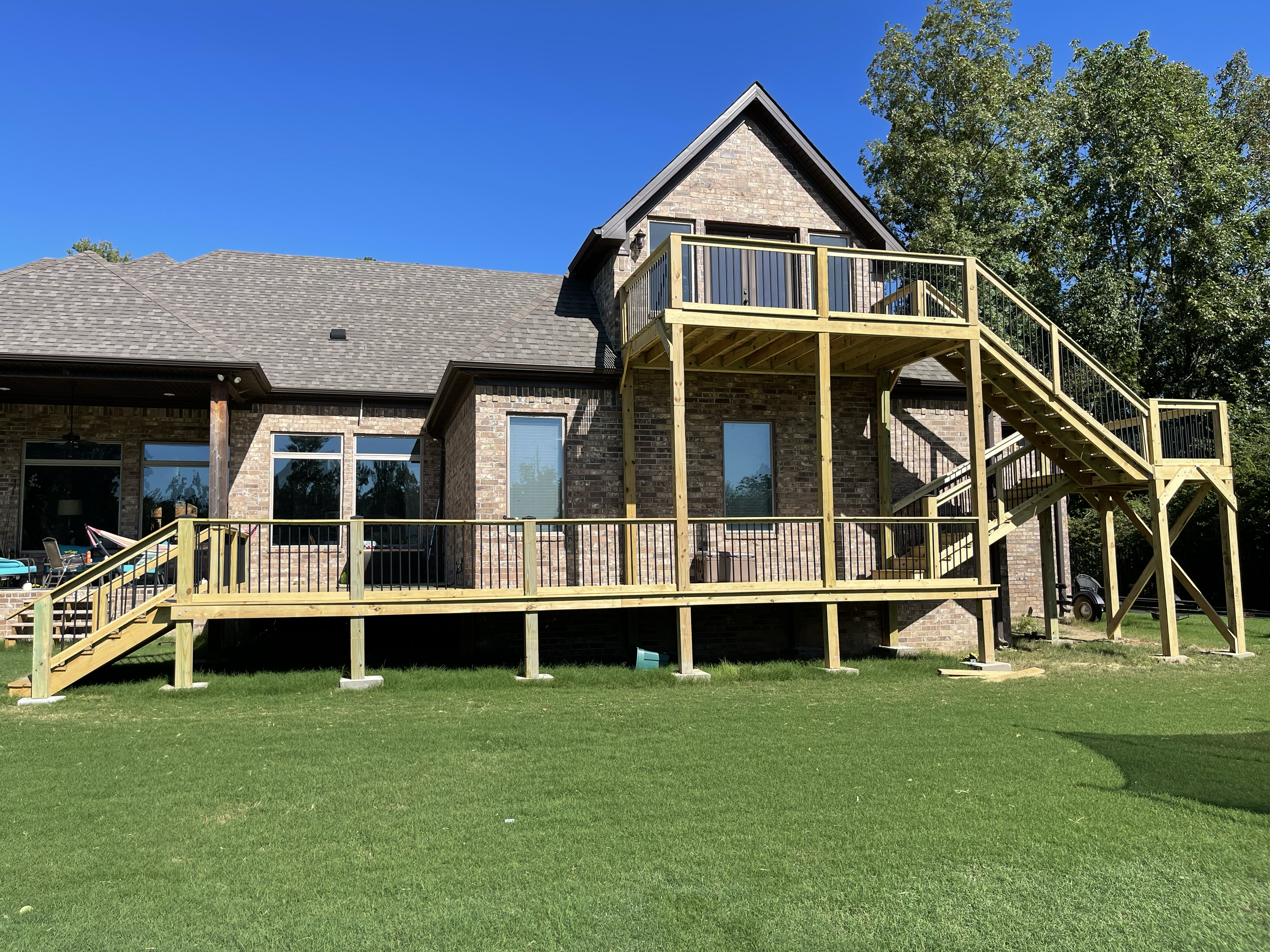

Top-rated deck staining pros.

Get matched with top deck staining pros in Traskwood, AR

Enter your zip and get matched with up to 5 pros

Need a pro for your deck staining project in Traskwood, AR?

Select your specific project to find the pro for you.

TRUSTED BY TRASKWOOD, AR HOMEOWNERS

  • Average homeowner rating star icon4.8
    Average homeowner rating
  • Verified reviews icon42
    Verified deck staining services reviews

Find Deck staining pros in Traskwood

...
Showing 1-10 of 57
Deck Staining questions, answered by experts

Wood stain does go bad, but it will last in the can for between three and six years, provided you use proper storage techniques. Storing wood stain in open containers or in extremely low or high temperatures will cause your wood stain to become unusable much more quickly. Water- and latex-based wood stains typically last for just two to four years, while oil-based wood stains can last for three to six years.

The need for a topcoat on a painted deck depends on various factors, primarily the type of paint used and your desired level of protection. Many premium deck paint formulations are self-sealing, eliminating the necessity for an additional topcoat. These paints often have built-in additives that substantially protect against moisture, UV rays, and everyday wear and tear.

Always wait until the morning dew has dried before you stain your deck. The stain needs a fully dry surface to sink into.

Yes, you can waterproof any wood that has not already been treated. A good way to test this is to splash some water on it. If the water starts to bead up, the wood is treated and most likely doesn’t need another coating.

Limewash and whitewash are two techniques used to give brick a light, matte finish, but they differ in composition, application, and permanence. The best choice depends on your aesthetic goals and the specific surface.
Composition

  • Limewash: A natural and environmentally friendly option made from limestone, water, and sometimes pigments. It is breathable and soaks into porous surfaces like brick.

  • Whitewash: Traditionally made from lime, water, chalk, and binders, but a similar look can be achieved with watered-down white paint. It is paint-based and sits on top of the surface.

Appearance and Finish

  • Limewash: Provides a natural, textured appearance that allows the brick's character to show through. It offers a more traditional finish.

  • Whitewash: Creates a softer, more opaque finish, often used for a rustic or shabby-chic style.

Application and Permanence

  • Limewash: Is semi-permanent and can be removed, making it a good choice if you might want to change the look in the future. It requires more skill to apply and cannot be used on previously painted brick.

  • Whitewash: Is a more permanent solution. It is more forgiving to apply and can be used on painted brick. However, because it sits on the surface, it can trap moisture.

Ultimately, if you want a breathable, natural, and reversible finish for unpainted brick, limewash is a great option. If you need a more permanent, opaque coating that can be applied over painted surfaces, whitewash is the better choice. Whitewashing may also be more economical, costing approximately $1.40 to $4.20 per square foot.

The Traskwood, AR homeowners’ guide to deck staining services

From average costs to expert advice, get all the answers you need to get your job done.