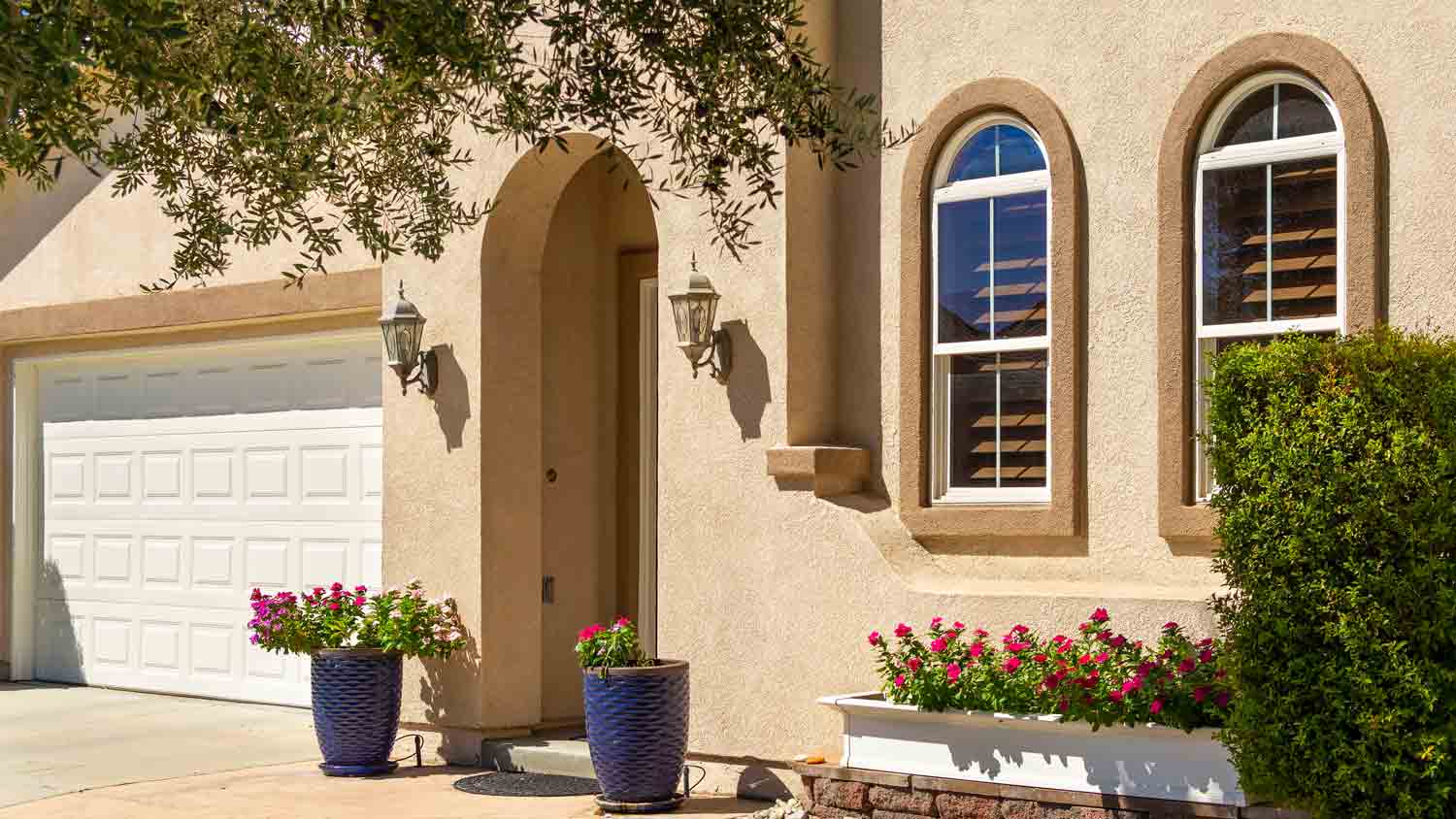








Top-rated stucco pros.

Get matched with top stucco pros in Conway, AR

Enter your zip and get matched with up to 5 pros

Find Stucco pros in Conway

Venable & Sons
4.7(
9
)
Synthetic Stucco - Repair or Partially Replace- For BusinessTraditional Stucco - Repair or Partially Replace- For Business

Serving Conway, AR and surrounding areas

In business since 2000

Free estimates

Emergency services offered

"Justin and his sons did a wonderful job in installation of two windows at the front of the house and removing sheet rock in 5 rooms. I am happy to see a dad instilling work ethic in his kids. They were very well mannered and stayed on task.The kids worked hard and I was happy to have them working in the house. Teens need to have responsibilities and looks like this dad has figured it out."
Response time2 days
Recommended by88%of homeowners
Showing 1-10 of 22
Stucco questions, answered by experts

Yes, you can screw directly into stucco. Only do so if the item you are installing is a permanent fixture. Drill a pilot hole into the stucco using a masonry or concrete bit, then drive in the screw with a power drill or screwdriver.

DIY is possible for small cracks or patches. Professional services ensure proper texture and color matching.

Masonry screws are the best option to be used on stucco. They’re thicker and made to penetrate harder surfaces like concrete and cinder blocks. Fluted masonry screws work the best because they create a stronger grasp thanks to the lines on their shafts. If you’re working on exterior stucco, use galvanized screws to prevent corrosion.

Several clues suggest that your stucco is damaged or has underlying issues. Visual clues include discoloration, cracks, indentations, broken caulking, or visible mold. If you touch your stucco and feel any soft spots, that could also indicate a problem. If you notice any of these concerns, call in an inspector who can confirm your suspicions and help provide solutions.

To repair damaged exterior stucco, you’ll first remove all loose and crumbling material from the damaged area. You then need to thoroughly clean the area and dampen it to ensure proper bonding. After that, you’ll apply a bonding agent to the repair area, then apply new stucco in layers, allowing for curing time between each layer. The final coat should be textured to match the surrounding stucco pattern as closely as possible. Once fully cured, the repaired area can be painted to match the rest of the wall if needed.

The Conway, AR homeowners’ guide to stucco services

From average costs to expert advice, get all the answers you need to get your job done.