
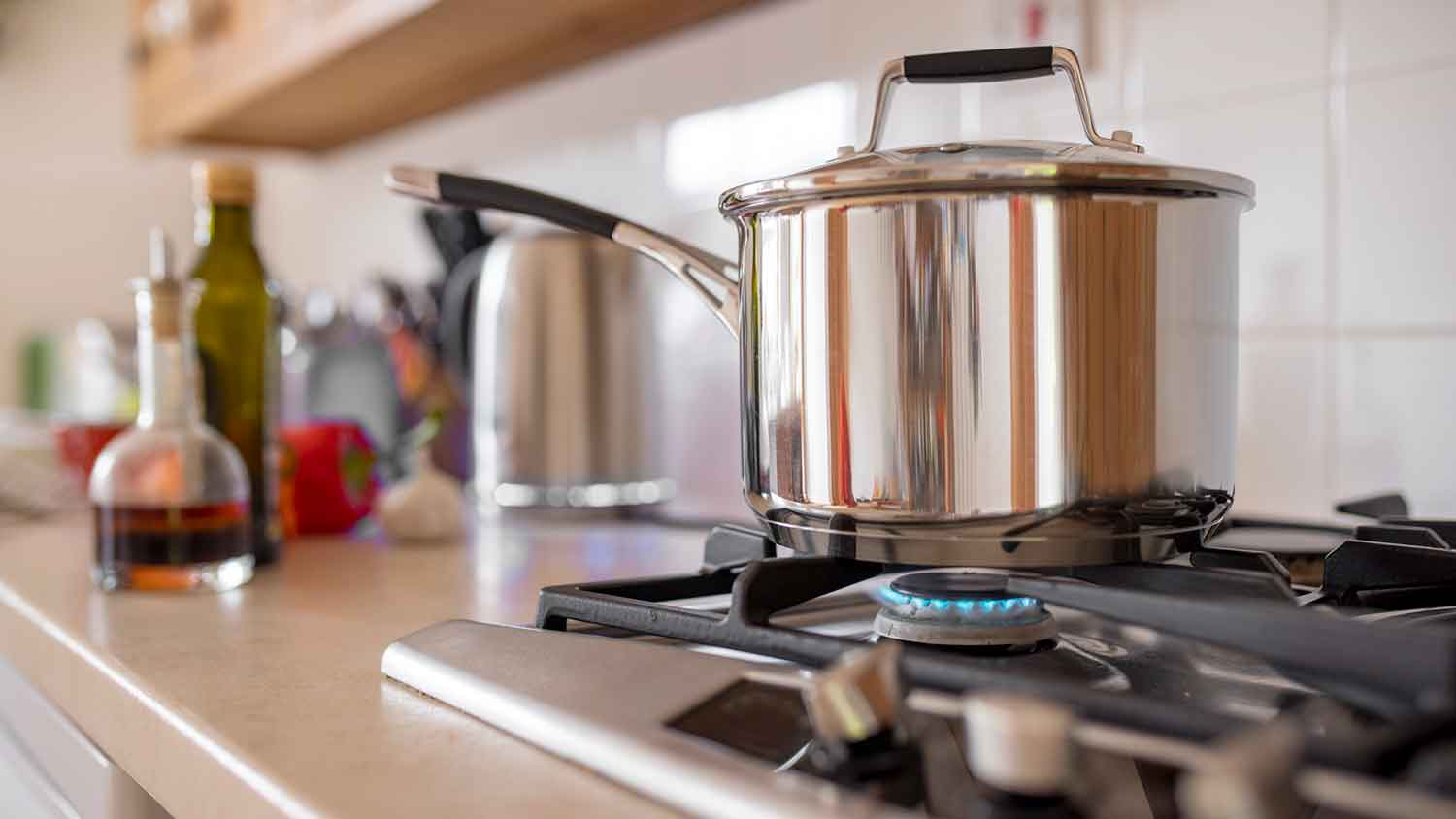
Find costs to repair a gas line and plan your budget based on the problem, from excavating for a new line to making a minor repair to an existing one.
Keep in mind durability, safety, and longevity

Black pipe for a gas line is the most common choice because it resists corrosion naturally and lasts 40 to 70 years in your home.
Polyethylene pipes cost $1 to $2 per linear foot and work best underground, where they resist moisture and weather for up to 100 years.
You should match your pipe type to your installation location, choosing flexible CSST for tight spaces and PE pipes for underground runs outside your home.
Hiring a local natural gas plumbing professional keeps your gas line installation safe and code-compliant, handling everything from pipe selection to proper sealing and testing.
Choosing the best pipes for home gas lines means enjoying toasty heat in the winter and cooking hearty meals on the stove without the worries of dangerous leaks and pipe failure. Six of the most common types of gas line pipes are black pipe, corrugated stainless steel tubing, copper, polyethylene, galvanized steel, and aluminum-plastic composite.
Whether you’re building a new home or looking to repipe your current residence, you’ll see that some pipe types will work better for you than others. Your gas installer can help you figure this out now so that you’re ready when construction begins.


Black pipe is commonly used for gas lines because it’s highly durable and reliable. It’s a steel pipe with a black exterior. The black color is from the natural oxidation of the steel when exposed to air. The layer of iron oxide and ferric oxide prevents rust and corrosion. However, the black layer can become damaged in humid weather or high-moisture conditions. It costs $4.90 per linear foot and has a lifespan of 40 to 70 years.
| Pros | Cons |
|---|---|
| Highly durable | Airtight seal can degrade over time |
| Straightforward installation | Susceptible to high-moisture conditions |
| Resistant to rust and corrosion | Requires regular maintenance |
Best for: Traditional homes

Corrugated stainless steel tubing (CSST) is a flexible pipe that makes installation a lot easier, especially when you want to run gas lines under floor joists, above ceiling joists, and inside walls. It doesn’t require soldering and there are few joints. Another advantage to these is that they’re less likely to be damaged by earthquakes. On the downside, CSST requires proper bonding and grounding to avoid problems from lightning strikes on the property or nearby, like electrical shocks, gas leaks, and fire. It costs $2 to $4 per linear foot and lasts 30 to 50 years.
| Pros | Cons |
|---|---|
| Easy to install in hard-to-reach areas | Underground installation can lead to pinhole leaks from corrosive soil |
| Durable and resistant to corrosion | Specialized training is required for installation |
| Less likely to be damaged by earthquakes | Impact or crushing can damage these pipes |
Best for: Homes with nontraditional layouts

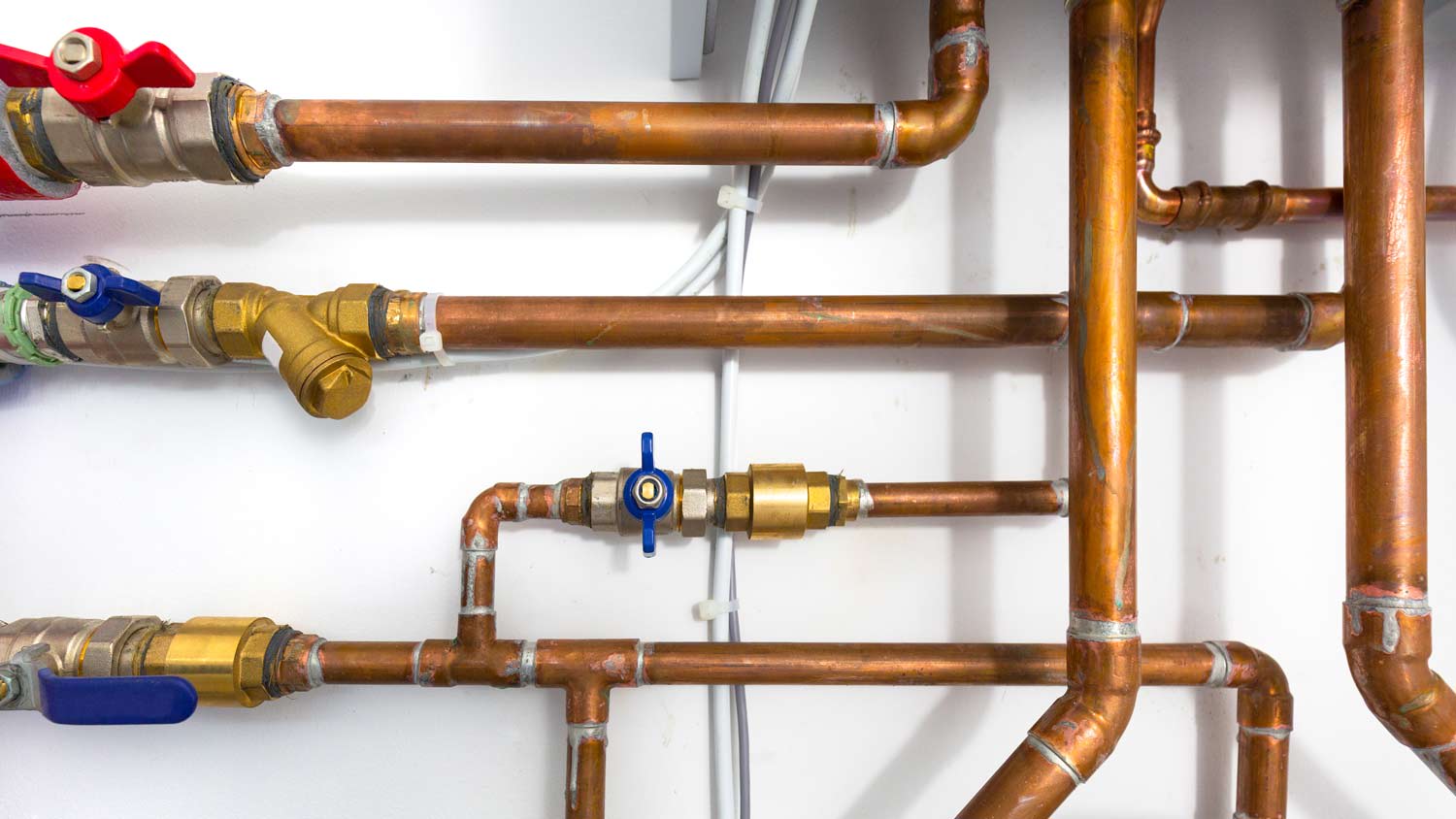
Copper pipes are on the lower end of the price range at $1 to $3 per linear foot and are the most cost-effective solution for gas with a lifespan of 50 years. You can opt for flexible copper tubing that’s easy to install in tight spaces and wherever you need it. It’s durable and has been used for gas lines for over 30 years.
The downside of copper is that it’s not allowed in all areas because the material can wear down over time and sustain damage through corrosion or pinhole leaks. If you’re not sure if it’s allowed in your home, you can call a natural gas plumber near you to find out.
| Pros | Cons |
|---|---|
| Durable | Not allowed by some building codes |
| Easy to install | Can corrode |
| Affordable | Can develop pinhole leaks |
Best for: Budget-conscious homeowners
A professional should always do gas hookups because of the serious dangers and risks involved. Signs you might need gas plumbing repairs are rust, damaged connections, or a gas smell. If you smell gas, turn off your appliance immediately and call a professional to inspect it.

Polyethylene pipes are durable and can withstand extreme weather and high levels of moisture without cracking, corrosion, or rust. You can also use high-density polyethylene (HDPE), which is a more durable version of PE pipes.
Installation is easier with PE pipes than with steel pipes because PE is lighter and more flexible. However, installers must watch out for sharp objects like nearby rocks that can cause damage. You can only use PE pipes underground, not in your home aboveground. These pipes can last 100 years and cost $1 to $2 per linear foot.
| Pros | Cons |
|---|---|
| Durable against moisture and weather | Only allowed for underground use |
| Long lifespan | Not as strong as steel |
| Doesn’t require constant maintenance | Rocks and sharp objects can puncture the pipe |
Best for: Underground installations

Galvanized steel pipes for gas have a zinc coating on the exterior and interior that protects them from corrosion and rust. While the zinc coating is intact, these pipes are extremely durable, corrosion-resistant, and energy-efficient.
One downside is that the zinc can wear down over time, leading to serious damage like leaks. For this reason, galvanized steel is not allowed by some building codes, and it’s only usable for aboveground installations. This option costs $2 to $9 per linear foot and lasts 20 to 50 years.
| Pros | Cons |
|---|---|
| Durable | More costly compared to other types |
| Energy-efficient | Not allowed by some building codes |
| Corrosion-resistant while the zinc coating is intact | Regular inspections are vital since the pipes can get damaged over time |
Best for: Aboveground installations

Aluminum-plastic composite pipes, also referred to as PEX-AL-PEX, have polyethylene on the interior and exterior with an aluminum tube in the middle. These pipes are durable, require limited joints like copper, and are energy-efficient compared to black pipes.
PEX-AL-PEX is susceptible to damage from UV rays, requires specialized knowledge to install, and isn’t allowed in all areas. Some people find them visually unappealing because they don’t install perfectly straight, and you’ll notice some curvature even when it’s vertical. The lifespan is 50 years, which is comparable to other pipe types.
| Pros | Cons |
|---|---|
| Durable and lightweight | Visually unappealing |
| Energy-efficient | Susceptible to UV damage |
| Doesn’t corrode | Regular inspections are required |
Best for: Alternative to common pipe types
Positive experience. As previously stated, the replacement/repair could not be completed (no fault of the plumbing tech) b/c misinformation was rec?d by property management maintenance. Thanks to the plumbing tech for your efforts. Appreciate you!
 The Waterworks
Carpet repair done well. Scheduling was easy. Showed up on time.
 BR Flooring Installation
As usual with ECO, tech Jordan was outstanding, very professional, very knowledgeable, and very thorough with repairs made to tankless water heaters. Very highly recommend ECO!!!
 Eco Plumbers, Electricians, and HVAC Technicians
I would recommend this company to anyone! He showed up on time, was friendly, completed a very difficult repair on our dryer vent cover, was responsive, and pricing was extremely fair and competitive. I would have him back to do any of our repairs or cleanings without hesitation!
 U.S.A. Dryer Vent, LLC
Everything from initial contact to completion was absolutely top notch. We contacted the business during off hours to leave a message, and the owner still reached out to feel out the issue within minutes. We were scheduled and repaired within 48 hours. I cannot say enough about the...
 Supreme brick & chimney
This place took $25,000 for a flat roof job with a five-year warranty and never returned to fix the leaks that were caused by their work. These people are not professionals and should not be doing this type of work. They incorrectly changed the pitch of the roof, and caused more damage than...
Ace Fireplace Services came to the rescue for my chimney repair. They were quick to pinpoint the issue and worked their magic to fix it. My chimney is now in excellent shape, and I'm a satisfied customer.
 Ace Fireplace Services
On Sunday 2/26 I requested quotes via Angi from 4 refrigerator repair businesses. Northwest Appliance responded to me Monday morning (2/27) and my refrigerator was repaired by noon the same day. Great communication, they did everything they said they would. The technician had the parts on...
When we had the winter freeze, I called Quantum Waterworks Waterline & Drain Cleaning Services and within 1 hour I received an e-mail and he sent someone out the next day and he was on time, he was nice and did the job quickly and cleaned up after himself. We had a leak in our kitchen from...
 Quantum Waterworks Waterline & Drain Cleaning Services, LLC
Great experience all together. Dog friendly, courteous, great results and honest with recommendations. Will certainly be using Cardinal in the future for any carpet repairs
 Cardinal Carpet Care & Repair
From average costs to expert advice, get all the answers you need to get your job done.
Find costs to repair a gas line and plan your budget based on the problem, from excavating for a new line to making a minor repair to an existing one.

Whether it's time for pipe replacement or to hook up the range of your dreams, gas line installation cost is an important line in your budget. Let's take a look.

Making updates to your home? You may need to move your gas line to fuel new appliances or meet code regulations. We’ll cover the cost of moving a gas line, plus project tips.
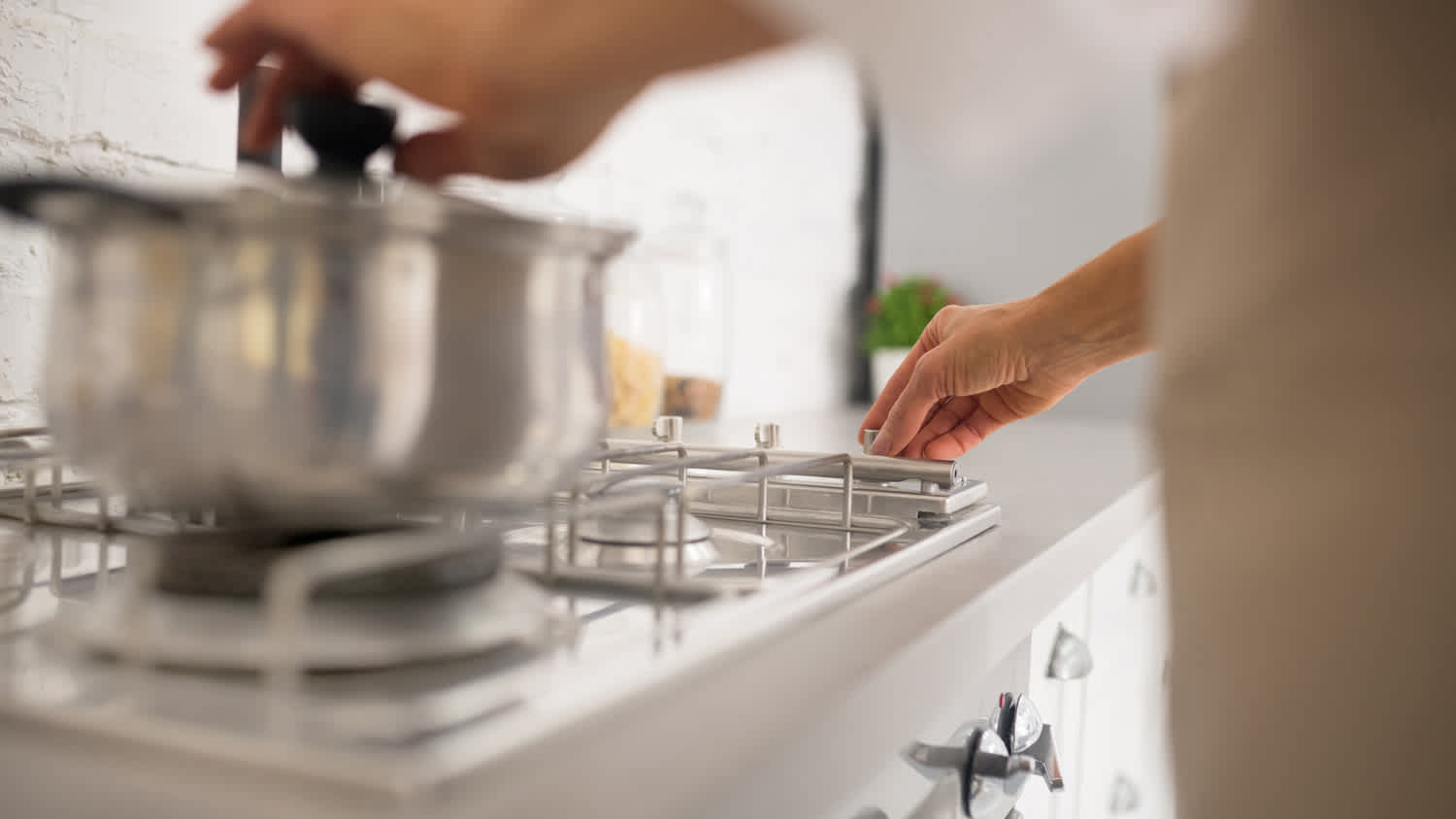
Learn how gas flows from the exterior line into your home, the different types of gas pipes, how to handle leaks, and what’s involved in installing a new gas line.
Trying to decide which home gas pipe size fits? We look into home gas pipes, standard sizes, how to measure, and factors that will influence your choice.
Smell rotten eggs or hear hissing near your meter? Learn about gas line installation costs, dangerous warning signs, and how to hire a local gas plumber.