

The cost of a radon mitigation system in Philadelphia, PA, depends mostly on the type of system being installed. Use this guide to learn about your options.
Biohazard remediation costs depend on your project and location. Check with a local pro for your specific job.

Professional radon testing in Philadelphia, PA, costs $311 on average, depending on the test type.
The size of your home and the specific testing method you choose determine your total price.
Upgrading to a reusable digital monitor costs between $105 and $260 for ongoing indoor air readings.
Hiring a local radon testing pro in Philadelphia, PA to do testing keeps you and your household safe from radon.
This article was created using automation technology and produced in accordance with our AI policy, which includes editorial quality standards.
Radon testing in Philadelphia, PA, costs $311 on average, and ranges from $142 to $607. Your total price depends on the square footage of your home, the specific testing method you choose, and current local labor rates. Before scheduling a radon test to check your indoor air quality, understanding the cost helps you plan a project that protects your household and fits your budget.
When hiring a radon testing professional in Philadelphia, PA, several variables determine your final bill. The specific testing method and the square footage of your property are the primary factors that dictate the total price you pay for this service.
The specific method you select to measure radon levels directly dictates your overall expenses. In Philadelphia, PA, the variable climate and humid conditions mean homeowners rely on highly accurate professional testing to ensure safe indoor air. A standard DIY short-term test is the least expensive option, ranging from $15 to $45 per kit. Conversely, hiring a certified expert to conduct a professional test costs between $155 and $720 per project. Homeowners find that the overall average for professional testing falls around $311 per project, with typical ranges spanning from $142 to $607 per project.
| Test Type | Description | Local Average Cost | National Average Cost |
|---|---|---|---|
| DIY short-term | Charcoal or liquid scintillation kits are used for 2–7 days | $15–$45 | $10–$40 |
| DIY long-term | Alpha track or electret kits used for 90+ days | $30–$65 | $25–$60 |
| DIY digital | Electronic monitors for ongoing readings | $105–$260 | $100–$250 |
| Professional | A certified pro uses an active or passive device | $155–$720 | $150–$700 |
The square footage and layout of your property determine how many testing devices are necessary to get an accurate reading. Homes in Philadelphia, PA, feature large basements or multiple levels that require comprehensive testing, particularly during winter Nor'easters when houses are sealed tight against the cold. Testing a small home of 1,200 square feet requires a single kit and costs $155 to $310 per project. For a large home over 4,000 square feet, multiple kits are necessary, pushing the price to $515 to $720 per project. Bundling this service with other assessments helps manage overall home inspection costs effectively.
| Home Size/Type | Description | Local Average Cost | National Average Cost |
|---|---|---|---|
| Small home (1,200 sq. ft.) | Single kit, single level | $155–$310 | $150–$300 |
| Medium home (2,500 sq. ft.) | Two kits or multi-level testing | $310–$515 | $300–$500 |
| Large home (4,000+ sq. ft.) | Multiple kits, multi-unit or multi-level | $515–$720 | $500–$700 |
The number of times you test your property over the years adds to your total maintenance expenses. Experts advise testing every two to five years, and residents in Philadelphia, PA, benefit from this schedule due to the region's fluctuating seasonal weather that impacts indoor air circulation. If previous tests indicated high levels, frequent retesting is essential to verify safety. Factoring in these recurring tests helps you budget accurately, especially if you are also planning for a future radon mitigation cost to address elevated gas levels.
The physical equipment used to capture radon gas samples plays a significant role in the price of the service. Homeowners in Philadelphia, PA, dealing with heavy summer humidity must select the appropriate materials to ensure precise readings. A basic disposable charcoal canister costs $15 to $35 per kit and provides a quick snapshot of current levels. For continuous tracking, a reusable digital monitor costs $105 to $260 per unit and requires periodic calibration. Selecting the right materials is a critical step in comprehensive indoor air quality testing for your household.
| Material/Kit Type | Description | Local Average Cost | National Average Cost |
|---|---|---|---|
| Charcoal canister | Disposable, short-term DIY kit | $15–$35 | $10–$30 |
| Alpha track detector | Long-term DIY kit, measures over months | $30–$65 | $25–$60 |
| Digital monitor | Electronic, reusable, needs calibration | $105–$260 | $100–$250 |
| Pro-grade equipment | Used by certified testers, higher accuracy | Included in service | Included in service |
Hiring a certified professional involves paying for their expertise, time, and specialized equipment. In Philadelphia, PA, technicians navigate local weather impacts, such as heavy rain or heat waves, which dictate the optimal conditions for setting up the equipment. Labor is billed as a flat fee that encompasses the initial setup, sample collection, laboratory analysis, and the final detailed report. Paying for this specialized labor guarantees accurate results and eliminates the risk of user error during the testing process.
Tipping your testing professional is not a standard industry practice and does not factor into your base budget. If a technician in Philadelphia, PA, provides exceptional service by braving a severe storm to complete your assessment, a small gratuity is a welcome gesture. However, leaving a positive review or referring the company to neighbors is the most effective way to show appreciation for their work.
Choosing between a DIY kit and a professional service dictates the final price and the reliability of your results. In Philadelphia, PA, homeowners must weigh the upfront savings of a DIY approach against the guaranteed accuracy of a certified expert. Purchasing a DIY kit costs $15 to $105 per project, making it an economical choice for a preliminary check. Hiring a professional costs $155 to $720 per project and includes comprehensive analysis and official documentation. Much like a professional mold inspection, investing in an expert radon test provides definitive answers and peace of mind regarding your home's safety.
| Method | Local Total Cost Range | National Total Cost Range |
|---|---|---|
| DIY | $15–$105 | $10–$100 |
| Professional | $155–$720 | $150–$700 |
Hiring a certified professional to test your indoor air quality in Philadelphia, PA, ensures accurate and reliable results. Most homeowners in Philadelphia, PA, pay a flat fee for this service, which typically ranges from $155 to $720 per project. This price usually covers the testing equipment setup, sample collection, laboratory analysis, and a detailed final report. While DIY kits are cheaper, investing in a local expert guarantees precise readings to keep your household safe from dangerous gas exposure.
Hiring a radon testing pro in Philadelphia, PA ensures your home is safe while saving you time and delivering long-term value.
Local experts understand the specific soil compositions in Philadelphia, PA that contribute to elevated radon levels.
They use highly calibrated, continuous monitors to provide exact readings far beyond basic hardware store kits.
An expert pinpoints the exact entry points of the gas, streamlining the mitigation process.
Using a certified inspector guarantees your results are valid for real estate transactions.
Home is the most important place on earth, which is why Angi has helped more than 150 million homeowners transform their houses into homes they adore. To help homeowners with their next project, Angi provides readers with the most accurate cost data and upholds strict editorial standards. We’ve surveyed thousands of real Angi customers about their project costs to develop the pricing data you see, so you can make the best decisions for you and your home. We pair this data with research from reputable sources, including the U.S. Bureau of Labor Statistics, academic journals, market studies, and interviews with industry experts—all to ensure our prices reflect real-world projects.
Want to help us improve our cost data? Send us a recent project quote to [email protected]. Quotes and personal information will not be shared publicly.
I brought a property that had Abestos as well as junk removal. J&J Abatement took on both projects. Respectful, courteous and very professional.
 J&J Abatement and Demolition LLC
got here a little later than expected but did great work. cleanup was great. I'd use them again
 The Ceiba Tree Service LLC
Knowledgeable and professional. Got the job done and felt confident about the repair.
 Aqua Plumbing & Heating
Sweepster Cleaners is very professional. The cleaner was extremely hard working and left the place in a very clean condition. Would use again.
 Sweepster Cleaners, LLC
We have used Aggy Cleaning Services for our residential property for over 15 years. The team works fast and are extremely efficient. Great customer service is displayed at every visit.
 Leonard
Great service! Response time, communication, and honesty of repair were all excellent. Will definitely be using them again!
 The Flying Locksmiths - Philadelphia North
I have been using Caprari Restoration for bath tub Reglazing numerous time for our rental properties. Great quality work and the glazing tubs really hold up for many years. Highly recommend the company.
I contacted Ron Own re service and made an appointment, but was able to fix my gas log fireplace myself. Ron was amazing to deal with. was gracious, personable and most professional. I've dealt with some surly customer service reps lately, so her excellence makes her an incredible...
 United Home Services 2
Green pest is a good company. I haven’t had any problems. But what keeps me with this company instead of shopping around for cheaper services is my tech MARLON BENJAMIN! He comes to my house every time so it’s been nice to have a relationship w the same person. Marlon is never, ever late....
 Green Pest Solutions
I was fostering some cats in my room and the cats made such a mess. They did a wonderful job with the carpet which had some horrible smelling cat feces in it - they were friendly and fast and did the full treatment even just for one room! The smell is all gone and the carpet looks like new....
 Almighty Cleaning System
From average costs to expert advice, get all the answers you need to get your job done.
The cost of a radon mitigation system in Philadelphia, PA, depends mostly on the type of system being installed. Use this guide to learn about your options.

Find out the average indoor air quality testing cost in Philadelphia, PA. Learn what you can expect to pay for local testing and keep your home safe.

Find out what impacts radon testing costs, including average prices for DIY kits and professional services, so you can protect your home and budget confidently.
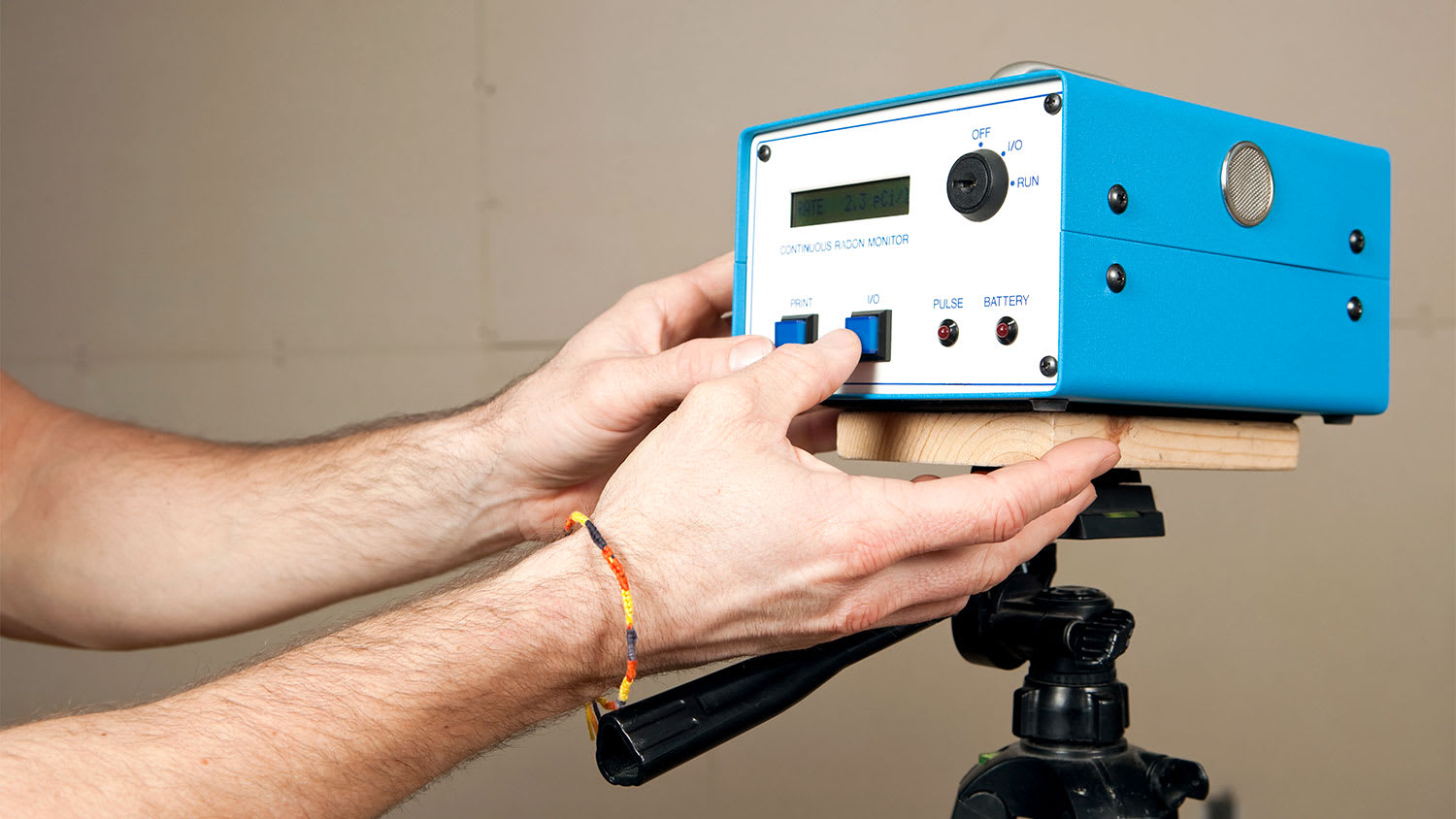
Learn how to hire a qualified radon testing pro for your home. Find certified professionals, understand costs, and get expert tips to protect your family.
Knowing how to test for radon will keep your home free and safe from this odorless gas—you just have to decide whether to do it yourself or hire a pro.

Radon is a gas that you can't see or smell and is harmful to your health. If your home has radon, you need to know who installs radon mitigation systems.