

The cost of a radon mitigation system in Raleigh, NC, depends mostly on the type of system being installed. Use this guide to learn about your options.
Biohazard remediation costs depend on your project and location. Check with a local pro for your specific job.

Homeowners in Raleigh, NC, can expect to spend an average of $169 on professional radon testing services.
The specific type of test you choose and the overall size of your home determine your total expenses.
Purchasing reusable digital monitors for ongoing readings adds between $100 and $250 to your final project bill.
Hiring a local radon testing pro in Raleigh, NC to do testing keeps you and your household safe from radon.
This article was created using automation technology and produced in accordance with our AI policy, which includes editorial quality standards.
Radon testing in Raleigh, NC, costs $169 on average, and ranges from $123 to $350. Your final price depends on the square footage of your home, the specific type of test you choose, and local labor rates. Before scheduling this essential health and safety check, understanding the cost helps you plan a project that protects your household and fits your budget.
When hiring a radon remediation professional in Raleigh, NC, several variables dictate your final bill. Understanding these specific elements helps you anticipate expenses and budget accurately for this essential safety service.
The specific testing method you select is one of the primary drivers of your total price, as different technologies offer varying levels of precision. In Raleigh, NC, the hot, muggy summers prompt homeowners to choose continuous digital monitors to track fluctuations in indoor air quality. A basic DIY short-term kit is the most budget-friendly option, running from $10 to $40 per kit. Conversely, hiring an expert for a professional test using active or passive devices costs between $150 and $690 per project. Factoring in air quality testing ensures a comprehensive understanding of your home's environment.
| Test Type | Description | Local Average Cost | National Average Cost |
|---|---|---|---|
| DIY short-term | Charcoal or liquid scintillation kits are used for 2–7 days | $10–$40 | $10–$40 |
| DIY long-term | Alpha track or electret kits used for 90+ days | $25–$60 | $25–$60 |
| DIY digital | Electronic monitors for ongoing readings | $100–$250 | $100–$250 |
| Professional | A certified pro uses an active or passive device | $150–$690 | $150–$700 |
The square footage and layout of your property dictate how many testing devices are necessary, directly impacting your overall expenses. Larger homes in Raleigh, NC, require multiple kits to ensure accurate readings across different zones, especially since heavy flooding risks demand testing both basements and upper levels. For a small home of about 1,200 square feet, expect to pay between $150 and $295 per test. Testing a large home over 4,000 square feet requires multiple kits and ranges from $495 to $690 per project. On average, homeowners spend $169 per project for this service, with most typical projects falling between $123 and $350 per project. Factoring in home inspection costs provides a clearer picture of your total property evaluation budget.
| Home Size/Type | Description | Local Average Cost | National Average Cost |
|---|---|---|---|
| Small home (1,200 sq. ft.) | Single kit, single level | $150–$295 | $150–$300 |
| Medium home (2,500 sq. ft.) | Two kits or multi-level testing | $295–$495 | $300–$500 |
| Large home (4,000+ sq. ft.) | Multiple kits, multi-unit or multi-level | $495–$690 | $500–$700 |
How often you conduct these evaluations plays a significant role in your long-term maintenance budget. Given the stormy and humid climate in Raleigh, NC, regular checks are necessary to ensure your indoor environment remains safe year-round. Professionals charge a flat one-time cost for testing every two to five years, and you must also test immediately after completing a radon mitigation system installation. Adding this to your routine upkeep, alongside your standard HVAC inspection, maintains a healthy home without unexpected financial surprises.
The quality and type of equipment used to measure gas levels heavily influence the price of your testing kit. In Raleigh, NC, where mild but humid weather affects disposable items, homeowners prefer investing in reusable electronic devices. A standard charcoal canister is a disposable, short-term option that costs $10 to $30 per kit. For ongoing readings, a reusable digital monitor requires a higher upfront investment of $100 to $250 per device, plus occasional calibration fees. Comparing this to your mold testing cost helps prioritize your environmental safety upgrades.
| Material/Kit Type | Description | Local Average Cost | National Average Cost |
|---|---|---|---|
| Charcoal canister | Disposable, short-term DIY kit | $10–$30 | $10–$30 |
| Alpha track detector | Long-term DIY kit, measures over months | $25–$60 | $25–$60 |
| Digital monitor | Electronic, reusable, needs calibration | $100–$250 | $100–$250 |
| Pro-grade equipment | Used by certified testers, higher accuracy | Included in service | Included in service |
The expertise and time required by a certified specialist make up a significant portion of your total bill. In Raleigh, NC, local demand for environmental specialists fluctuates, particularly after severe weather events like hurricanes or tornadoes that prompt widespread safety checks. Professionals charge a flat fee that covers the setup, sample collection, and a detailed final report. When bundling this service with a broader indoor air quality assessment, you secure a better overall rate for the combined labor.
Gratuity is not a standard expectation in the environmental testing industry, so it does not add to your final expenses. When a technician in Raleigh, NC, provides exceptional service by navigating a difficult crawl space after heavy flooding, a small tip is a nice gesture but entirely optional. Instead of a cash tip, leaving a positive review or referring the company to neighbors is a highly valued way to show your appreciation.
Choosing between a store-bought kit and a certified expert significantly impacts your final budget. In Raleigh, NC, where severe weather like ice storms keeps you indoors, having accurate, professionally verified results offers peace of mind. Taking the DIY route is highly economical, with total costs ranging from $10 to $100 per kit. However, hiring a professional guarantees proper placement and precise analysis, costing between $150 and $690 per project.
| Method | Local Total Cost Range | National Total Cost Range |
|---|---|---|
| DIY | $10–$100 | $10–$100 |
| Professional | $150–$690 | $150–$700 |
Hiring a certified specialist in Raleigh, NC, ensures accurate results. Most homeowners pay $150 to $690 per project for professional evaluations, depending on the home's size and equipment. While some experts charge a flat fee, others bill $30 to $75 per hour for setup and analysis. When budgeting for your safety inspection in Raleigh, NC, remember to account for the local 7.25% sales tax applied to materials like digital monitors or disposable test kits.
Hiring a radon testing professional in Raleigh, NC protects your health by ensuring accurate readings and saving you time over DIY kits. We recommend leaving this to the experts for the best value and peace of mind.
Experts use calibrated continuous monitors to provide precise, hour-by-hour data.
Specialists understand how regional soil compositions affect indoor air quality.
Pros deliver certified reports quickly to keep real estate transactions on schedule.
Inspectors offer actionable mitigation steps if they detect dangerous gas levels.
Home is the most important place on earth, which is why Angi has helped more than 150 million homeowners transform their houses into homes they adore. To help homeowners with their next project, Angi provides readers with the most accurate cost data and upholds strict editorial standards. We’ve surveyed thousands of real Angi customers about their project costs to develop the pricing data you see, so you can make the best decisions for you and your home. We pair this data with research from reputable sources, including the U.S. Bureau of Labor Statistics, academic journals, market studies, and interviews with industry experts—all to ensure our prices reflect real-world projects.
Want to help us improve our cost data? Send us a recent project quote to [email protected]. Quotes and personal information will not be shared publicly.
We thought that we were hiring this company to do mold remediation based on their name, but all that they did was empty our entire basement, including taking things that we had no intention EVER of losing--such as our bikes, one of which was new and expensive, as well as our entire wine...
 Black Water Mold
Whilst the team had the best of intentions, the repair work was subpar. Considering the work that was required, the fee charged was almost entirely labor costs and the repair work, notably the sheetrock work was poor. They came out a second time to fix what had been done but that again was...
 Certified Restoration Consultants
In May of 2025, I hired Michael and Son for crawlspace water damage mitigation. They didn?t complete the work but billed me over $15,000?charging for my entire house instead of the 540 sq. ft. affected area. Even after reducing the charge, it was still above standard mitigation and plumbing...
 Michael & Son
Speedy solid work that was very thorough. Would hire again for small animal removal.
 Hunter's Wildlife and Removal, LLC
Scott did an excellent job helping us remodel our kitchen floor/lighting, master bedroom floor, and removing popcorn ceiling. He is very professional, interactive and knowledgeable. We could not be happier with our renovations. I would highly recommend Scottâ s Home Remedies for any home...
 Scott's Home Remedies
I would highly recommend Greyson for any of your excavating needs. He was very easy to work with and got the job done in a timely manner.
 Grey Land Specialist
Honestly, I cannot praise Mike and COASTAL ENVIRONMENTA SOLUCTIONS loudly enough. They were kind enough to work me into their busy schedule right away. When Mike arrived he went directly to the first source of mold/toxins in my apt in about 1 minute. His explanation of how the air quality...
 Carolina Environmental Solutions, LLC
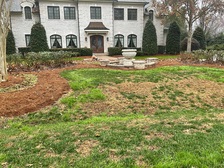
A very professional company. They were prepared to take care of removing all poison ivy from our yard. All debris was removed. Highly recommend!
 Huggins & Sons Yard Service
HHR was by far the most comprehensive mold remediation and sealed crawlspace service company I have ever used. Their incredible reviews here on Angie's List are the reason I contacted them initially. They just completed a difficult emergency water damage/mold remediation/sealed crawlspace job...
 Healthy Home Restoration
We have had continuous pest and termite control coverage with Terminix for more than 10 years. The pest control coverage is quarterly; the on-going termite inspection is annual. That would indicate that at least 5 times a year, someone from Terminix is on our property, viewing some structures...
 Terminix - Raleigh -Termite & Pest Control
From average costs to expert advice, get all the answers you need to get your job done.
The cost of a radon mitigation system in Raleigh, NC, depends mostly on the type of system being installed. Use this guide to learn about your options.

Find out the average indoor air quality testing cost in Raleigh, NC. Learn what you can expect to pay for local testing services and keep your home safe.

Find out what impacts radon testing costs, including average prices for DIY kits and professional services, so you can protect your home and budget confidently.
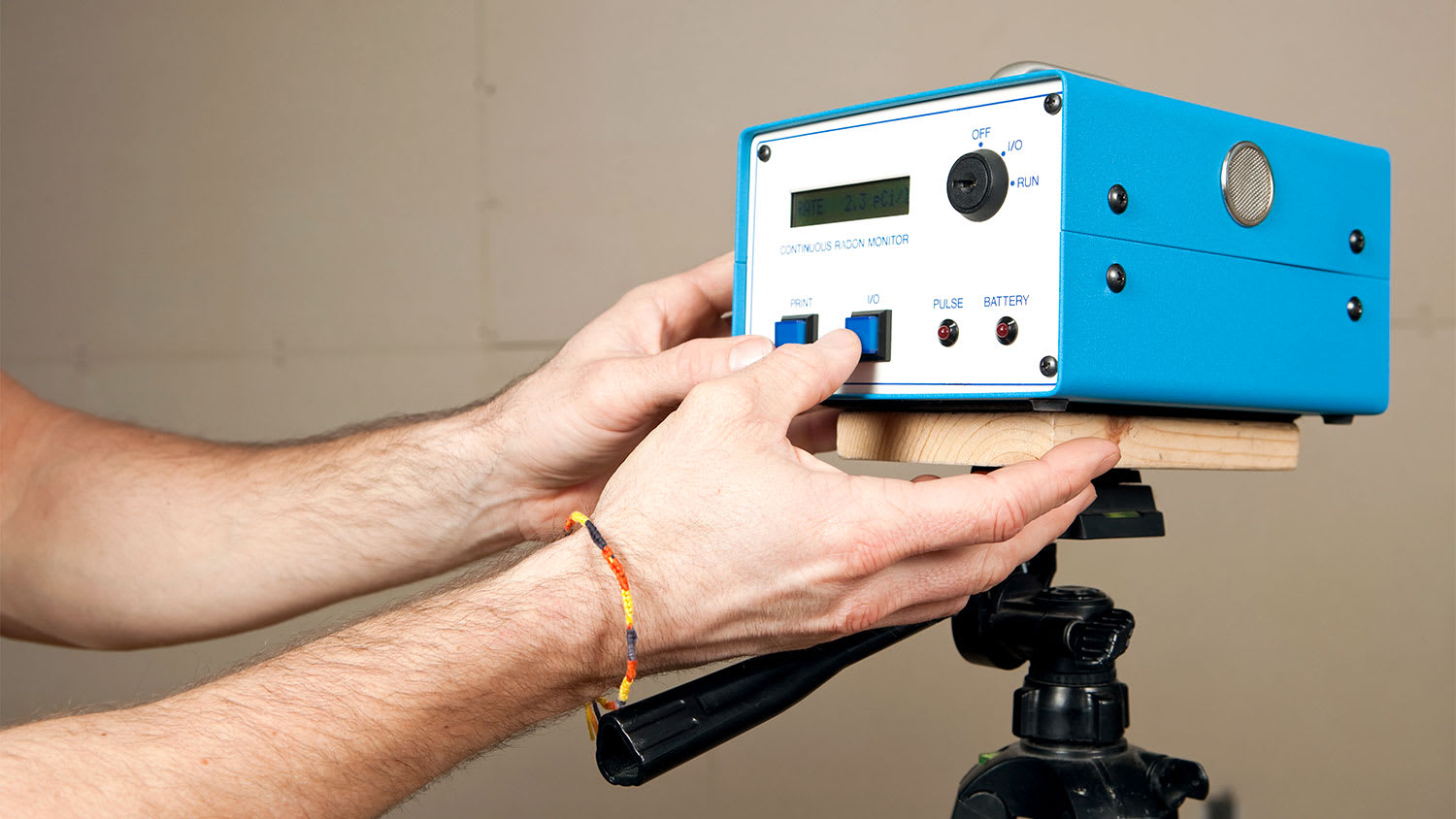
Learn how to hire a qualified radon testing pro for your home. Find certified professionals, understand costs, and get expert tips to protect your family.
Knowing how to test for radon will keep your home free and safe from this odorless gas—you just have to decide whether to do it yourself or hire a pro.

Radon is a gas that you can't see or smell and is harmful to your health. If your home has radon, you need to know who installs radon mitigation systems.