

The cost of a radon mitigation system in Kansas City, MO, depends mostly on the type of system being installed. Use this guide to learn about your options.
Biohazard remediation costs depend on your project and location. Check with a local pro for your specific job.

Professional radon testing in Kansas City, MO, costs $472 on average for most local residential homeowners.
The specific type of test you choose and the total square footage of your home determine final prices.
Opting for a reusable DIY digital monitor adds an upfront equipment expense of $95 to $235.
Hiring a local Kansas City, MO radon testing pro to do testing keeps you and your household safe from radon.
This article was created using automation technology and produced in accordance with our AI policy, which includes editorial quality standards.
Radon testing in Kansas City, MO, costs $472 on average and ranges from $178 to $765. Your final price depends on your home's total square footage, the complexity of your foundation type, and the specific short-term or long-term testing method you choose. Before scheduling a professional radon inspection, understanding these cost factors helps you budget effectively and ensures your home remains a safe, healthy environment.
In Kansas City, MO, hiring a certified radon remediation professional to evaluate your indoor air quality involves several pricing variables. The total expense for this service depends on the testing method, the square footage of the property, and the specific equipment required to complete the assessment.
The specific method chosen to measure radon levels dictates the base price of the service. Active digital monitors provide continuous tracking, while passive charcoal kits offer a snapshot of gas concentrations. In Kansas City, MO, homeowners pay between $95 and $235 per test for a DIY digital monitor to capture ongoing readings. Professional testing utilizes an active continuous monitor and costs between $140 and $650 per project. The overall project total for a professional assessment averages $472, with most homeowners spending between $178 and $765. Scheduling an indoor air quality testing service alongside your radon test provides a comprehensive view of your home's safety.
| Test Type | Description | Local Average Cost | National Average Cost |
|---|---|---|---|
| DIY short-term | Charcoal or liquid scintillation kits are used for 2–7 days | $10–$40 | $10–$40 |
| DIY long-term | Alpha track or electret kits used for 90+ days | $25–$60 | $25–$60 |
| DIY digital | Electronic monitors for ongoing readings | $95–$235 | $100–$250 |
| Professional | A certified pro uses an active or passive device | $140–$650 | $150–$700 |
The square footage and layout of a home directly determine the number of testing devices needed. Multi-level properties require separate detectors for basements, crawl spaces, and upper floors to ensure accurate readings. Testing a small, single-level home of 1,200 square feet costs $140 to $280 per project. For a large home exceeding 4,000 square feet with multiple levels, the price increases to $465 to $650 per project. Kansas City, MO, experiences extreme weather, including severe thunderstorms and flooding, which forces residents to keep windows tightly sealed during storms, making accurate multi-level testing critical. If a home inspector finds elevated levels across multiple floors, homeowners must factor in radon mitigation system installation costs to address the issue.
| Home Size/Type | Description | Local Average Cost | National Average Cost |
|---|---|---|---|
| Small home (1,200 sq. ft.) | Single kit, single level | $140–$280 | $150–$300 |
| Medium home (2,500 sq. ft.) | Two kits or multi-level testing | $280–$465 | $300–$500 |
| Large home (4,000+ sq. ft.) | Multiple kits, multi-unit or multi-level | $465–$650 | $500–$700 |
The interval at which a property is tested impacts the long-term financial investment in air quality monitoring. Regular assessments ensure that mitigation systems function correctly over time. Homeowners test their properties every two to five years, or immediately following major renovations. Frequent testing adds to the lifetime expense but prevents prolonged exposure to dangerous gas. Following a severe ice storm or tornado in Kansas City, MO, structural shifts occur, necessitating a new test to confirm the foundation remains sealed. Combining this routine check with an annual HVAC inspection ensures the home's ventilation system does not inadvertently circulate radon gas.
The physical components and technology used to capture radon gas influence the upfront price of the test. Advanced electronic sensors cost more than disposable charcoal or alpha track materials. A basic charcoal canister costs $10 to $30 per kit, providing a budget-friendly option for a quick reading. Investing in a reusable digital monitor costs $95 to $235 per device, though these devices require periodic calibration to maintain accuracy. Certified testers use pro-grade equipment, and the cost of these materials is included in the flat service fee. When evaluating home inspection costs, the inclusion of professional-grade radon testing materials guarantees compliance with local real estate transaction requirements in Kansas City, MO.
| Material/Kit Type | Description | Local Average Cost | National Average Cost |
|---|---|---|---|
| Charcoal canister | Disposable, short-term DIY kit | $10–$30 | $10–$30 |
| Alpha track detector | Long-term DIY kit, measures over months | $25–$60 | $25–$60 |
| Digital monitor | Electronic, reusable, needs calibration | $95–$235 | $100–$250 |
| Pro-grade equipment | Used by certified testers, higher accuracy | Included in service | Included in service |
The expertise required to properly place detectors, analyze data, and generate official reports dictates the labor portion of the bill. Certified professionals charge for their time, travel, and specialized knowledge. Most radon testers charge a flat fee that covers setup, retrieval, and lab analysis. Some environmental specialists charge hourly rates between $30 and $75 per hour for their services. In Kansas City, MO, labor rates fluctuate based on demand, especially during the stormy and windy seasons when homeowners spend more time indoors and prioritize air quality. Expedited lab results or travel to properties on the outskirts of the metro area incur additional fees.
Gratuity is not a standard expectation for environmental testing services. Professionals price their work to cover all necessary labor and overhead. Homeowners do not need to tip their radon tester. Leaving a positive review or referring the company to neighbors serves as the best way to support a local business in Kansas City, MO.
Choosing between a store-bought kit and a certified professional changes the total financial investment and the reliability of the results. A DIY approach in Kansas City, MO, costs between $10 and $95 per test, making it a low-cost starting point for concerned homeowners. Hiring a professional costs between $140 and $650 per project, which includes the setup, lab analysis, and a certified report. While DIY kits require strict adherence to instructions, a local radon remediation professional guarantees accurate placement and interpretation.
| Method | Local Total Cost Range | National Total Cost Range |
|---|---|---|
| DIY | $10–$95 | $10–$100 |
| Professional | $140–$650 | $150–$700 |
Hiring an expert in Kansas City, MO, ensures accurate indoor air quality readings. Most environmental specialists charge a flat fee covering setup and lab analysis, which typically ranges from $140 to $650 per project. Alternatively, some professionals bill between $30 and $75 per hour for their specialized labor. When budgeting for your assessment in Kansas City, MO, remember to account for an 8.98% local rate applied to testing equipment and materials used during the service.
Hiring a radon testing professional in Kansas City, MO protects your indoor air quality while saving you the time of navigating complex testing procedures. A local expert provides excellent value by ensuring accurate results.
Contractors use calibrated, commercial-grade continuous radon monitors to detect exact gas levels.
These inspectors understand regional soil compositions and basement structures to place detectors in optimal locations.
A licensed expert delivers a certified report detailing the precise steps to mitigate elevated radon concentrations.
Home is the most important place on earth, which is why Angi has helped more than 150 million homeowners transform their houses into homes they adore. To help homeowners with their next project, Angi provides readers with the most accurate cost data and upholds strict editorial standards. We’ve surveyed thousands of real Angi customers about their project costs to develop the pricing data you see, so you can make the best decisions for you and your home. We pair this data with research from reputable sources, including the U.S. Bureau of Labor Statistics, academic journals, market studies, and interviews with industry experts—all to ensure our prices reflect real-world projects.
Want to help us improve our cost data? Send us a recent project quote to [email protected]. Quotes and personal information will not be shared publicly.
Erick and his crew took out our garbage disposal, dishwasher, and replaced the oven hood in the kitchen. They replaced the old wooden baseboards (which had mold) and toilets in the bathroom. They also installed a water softener and replaced our water heater. Erick and his workmen were...
 Arcadia Heating and Cooling
David Possin from PROven came to discuss my options on repairing or rebuilding my detached garage. First off, he was right on time for the appointment. It was a very thorough inspection and discussion of all the different options and how much each portion of the job would cost. He even gave...
 PROven Building Solutions
Mark was really great to work with. Very knowledgeable and helpful in assuring us about how our situation could be remedied. He was very responsive throughout the entire process. I highly recommend him and his team!
 DemoPro Surface Systems, LLC
Smart Environmental has excellent customer service and incredibly honest people. They saved us thousands of dollars by stressing the importance of testing our old vermiculite insulation rather than assuming it had asbestos. While another company took a look at our attic and gave us a quote...
 Smart Environmental Services LLC
Great work that was done on time. Would highly recommend using these guys for any junk removal for a good price!
 816 Removal
Same as foundation repair. The same project.
 DiCarlo Masonary
Bryan and his crew did a great job on our bathroom remodel. They did what they said they would do when they said they would do it. I would definitely use them again for other projects!
Jim and his team came out to take care of a growing crack and small footing/structural issue on our entryway. Though it was generally tough to get anyone to show up, they came out, bid and began work within 2 weeks of first contact which was appreciated. While working on our house they also...
 Absolute Masonry & Foundation
I used this company to do my front yard landscaping in 2019. They were a bit pricey ($8000 - I already had the design and there was no hardscaping). Unfortunately, 2019 had a very wet spring so my project kept getting pushed back. Although, it was supposed to be completed in May it ended up...
 Divine Services
I have dealt with Anthony technicians for installation of water heater, plumbing issues, and routine maintenance. All very efficient and knowledgeable. My only problem arose with installation of my new AC/heater. The system was not cooling. Instead of sending out someone familiar with...
 Anthony Plumbing, Heating & Cooling
From average costs to expert advice, get all the answers you need to get your job done.
The cost of a radon mitigation system in Kansas City, MO, depends mostly on the type of system being installed. Use this guide to learn about your options.

Find out the average indoor air quality testing cost in Kansas City, MO. Learn what you can expect to pay for local testing services to keep your home safe.

Find out what impacts radon testing costs, including average prices for DIY kits and professional services, so you can protect your home and budget confidently.
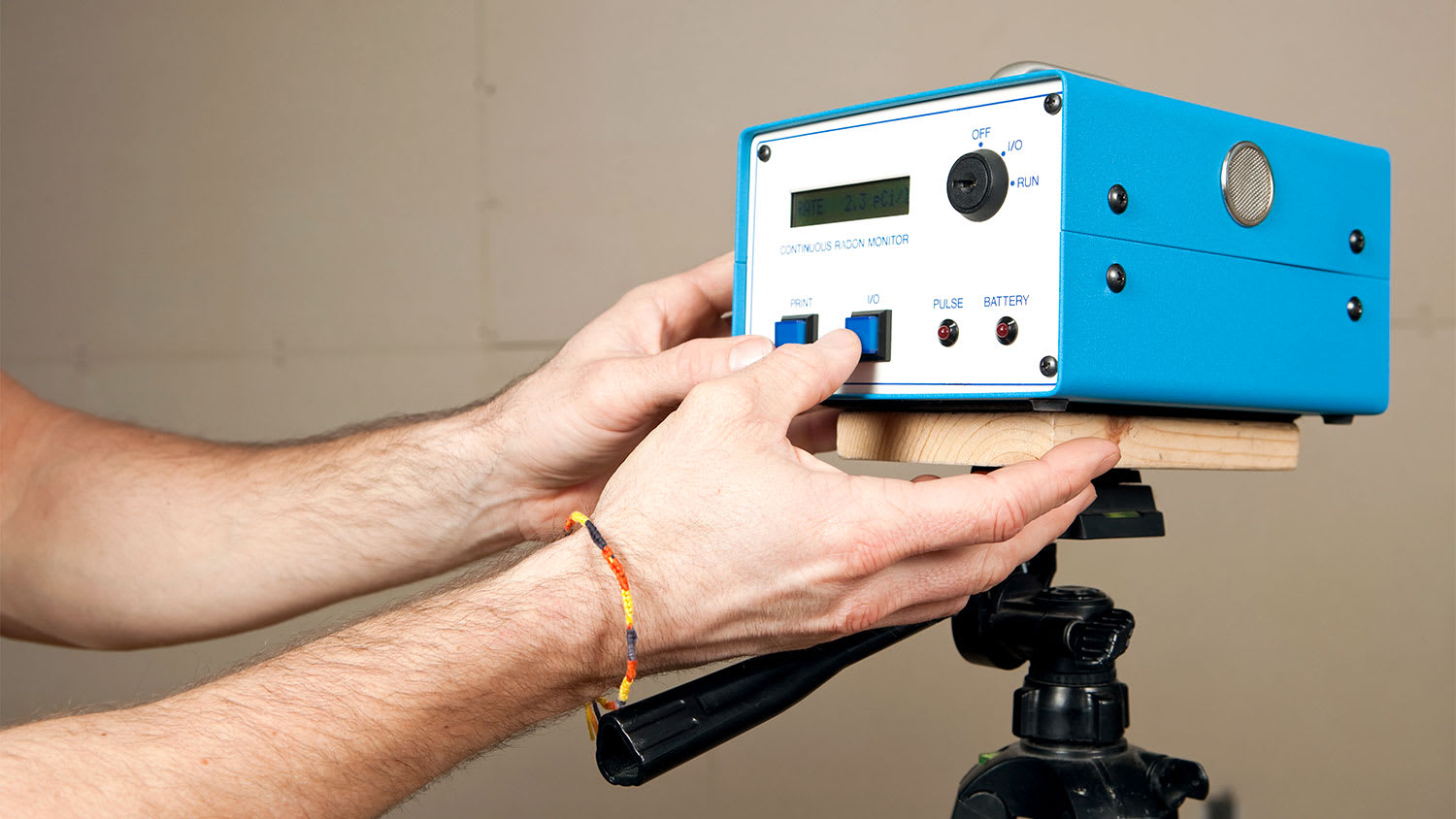
Learn how to hire a qualified radon testing pro for your home. Find certified professionals, understand costs, and get expert tips to protect your family.

Knowing how to test for radon will keep your home free and safe from this odorless gas—you just have to decide whether to do it yourself or hire a pro.

Radon is a gas that you can't see or smell and is harmful to your health. If your home has radon, you need to know who installs radon mitigation systems.