

Sunken concrete slabs can quickly get expensive to raise back up. Learn about polyurethane concrete lifting costs to see how you should budget.
Stop tripping over uneven concrete with these repair methods

Both mudjacking and polyjacking lift sunken concrete slabs by injecting material underneath, but polyjacking uses lightweight polyurethane foam while mudjacking uses a heavier slurry mixture.
Mudjacking costs $3 to $6 per square foot while polyjacking costs $5 to $25 per square foot, so your budget plays a key role in choosing between them.
Your decision depends on the project size, how quickly you need to use the concrete, and whether longevity or upfront cost matters more to you.
Hiring a local concrete mudjacking professional provides expert guidance on which method suits your situation best, helping you level driveways and walkways with confidence.
Over time, the concrete slabs that make up your driveway, walkway, patio, or other home features may become uneven due to settling, shifting, and cracking. When you’re tired of tripping every time you walk up to your home, it’s time to fix the concrete. You have two repair methods to choose from: polyjacking and mudjacking. Learn the difference between the two and which one is right for your uneven concrete.
Both mudjacking and polyjacking are types of concrete leveling. They both involve injecting material under the concrete to lift and re-level it, making it a more cost-effective and less time-consuming fix than replacing the concrete slab entirely. Mudjacking is the older method and, as the name suggests, uses a mud-based slurry to raise concrete from underneath. Polyjacking is a newer method that injects polyurethane foam under the slab.
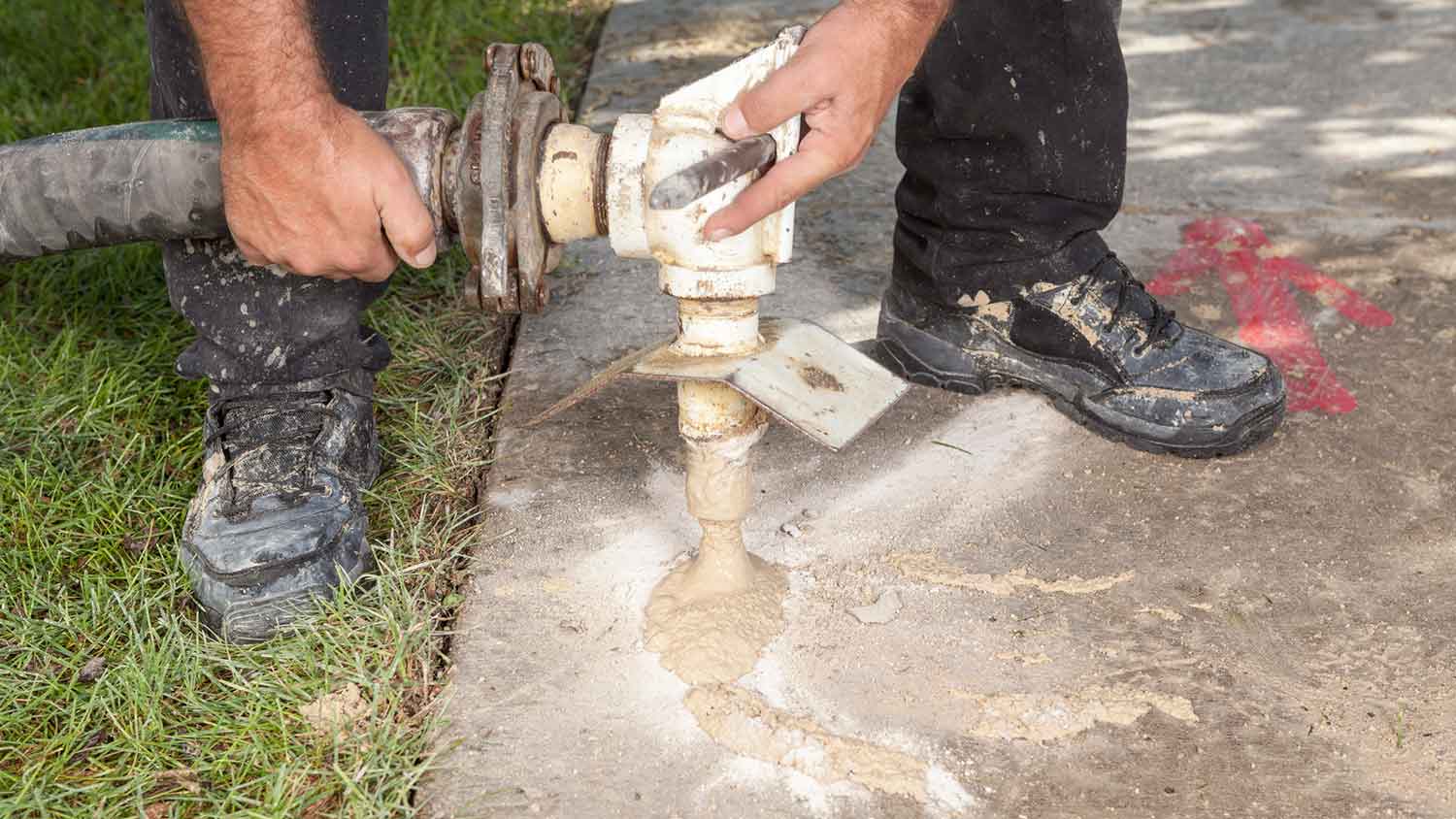
Mudjacking uses a slurry made of soil, clay, sand, limestone, and cement. The slurry may depend on the local climate, the use of the concrete slab, and other factors. The mudjacking process starts by drilling 2-inch holes at strategic intervals, then injecting the slurry until the slab is level. Once the slab is level, the holes are filled in and smoothed out.
| Pros | Cons |
|---|---|
| More cost-effective | Requires larger drill holes |
| Good for larger jobs | Takes longer to cure |
| Can withstand heavy weight | Can shift with erosion |
Best for:
Bigger jobs with more square footage
Driveways or other areas that will hold a lot of weight
Areas less prone to water intrusion
If you’re facing a big leveling project, mudjacking is a more cost-effective option, with its lower cost per square foot. It’s also great for areas like driveways that will hold a lot of weight.
The large holes that mudjacking requires can not only be unsightly but can cause smaller slabs to crack. In addition, a mudjacked slab takes 24 to 48 hours to fully cure before it can be used again, so any repaired areas will need to be avoided until the material has fully cured and can take weight again.
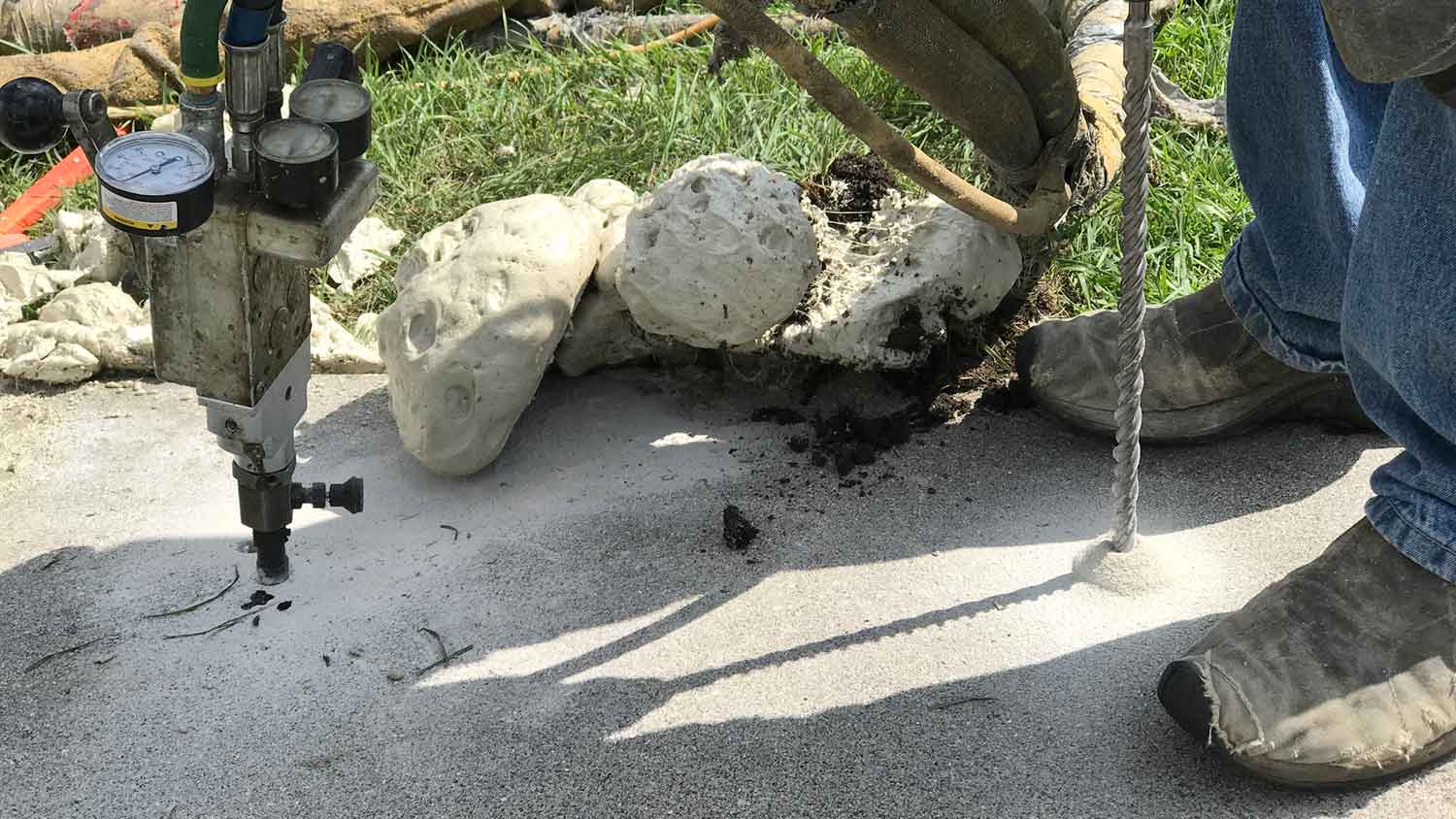
Polyjacking is similar to mudjacking but with a few key differences. Polyjacking injects high-density polyurethane foam under a concrete slab through drilled holes about the size of a dime. As the foam expands, it lifts the concrete slab until it is level, and then the injection holes are filled.
| Pros | Cons |
|---|---|
| Requires smaller injection holes | Less cost-effective |
| Little to no curing time | Foam may cure before filling all voids |
| Lightweight and strong | May overlift slab while expanding |
Best for:
Smaller slabs
Highly visible areas
Areas needing more precise repairs
Areas that need to be used immediately after repair
The advantages of polyjacking include much smaller injection holes than mudjacking, which makes polyjacking great for smaller slabs or areas that are more visible. Polyjacking also requires next to no curing time—once the foam has been injected, it only needs to cure for about 15 minutes, and then the concrete is ready to be used as usual.
The quick curing time and smaller injection holes do come at a price—polyjacking is significantly more expensive than other concrete leveling methods. Polyjacking also requires a fair amount of precision. The foam expands to fill in voids, so it’s possible to overlift a slab if too much material is injected before expansion. The fast setting time also requires quick work so that the foam doesn’t begin to cure before the job is done.
When it comes to pricing, the cost of mudjacking is usually much lower than polyjacking, mostly due to the cost of the injection materials. Mudjacking averages about $3 to $6 per square foot, while polyjacking costs between $5 and $25 per square foot.
After polyjacking, you can return to normal use of the concrete slab immediately, while mudjacking needs a day or two before it’s fully cured.
The foam used in polyjacking chemically reacts with the soil to stabilize the soil and concrete, and the material doesn’t degrade or erode. Mudjacking is more susceptible to settling, water erosion, and frost heaving.
Because polyjacking requires much smaller drill holes than mudjacking, there’s less chance of cracking the slab and requiring a full replacement.
If you’re looking to DIY your mudjacking or polyjacking, you’ll need specialized equipment like a hydraulic injection pump, so unless you already have the equipment on hand, it’s probably more cost-effective to hire a local concrete leveler to do the job.
Both types of concrete leveling are made to be long-lasting and will likely keep your concrete level without any need for regular maintenance. In some cases, however, mudjacking may need to be repeated in the future if erosion or settling occurs in the leveling material.
The right concrete repair method depends on your situation. To decide whether you’d be better off with mudjacking or polyjacking, consider the following:
Cost: For the most cost-effective option, mudjacking is the way to go, as its materials are easy to find and more affordable. Note that while polyjacking may be a bit more expensive than polyjacking, the higher price point may be worth it as it offers longer-lasting results.
Longevity: Mudjacking has the ability to lift and level concrete. However, it doesn’t deliver as long-term results as polyjacking. If you opt for mudjacking, you can expect the mixture to break down over time. Polyjacking, on the other hand, involves durable, moisture-resistant foam that ensures the concrete will remain lifted for a long period of time.
Aesthetics: Since the mudjacking process is messier and contains patched areas that might not match the original concrete perfectly, it’s not as attractive as polyjacking. Polyjacking is the way to go if you’re looking for a cleaner, more aesthetically pleasing look.
Soil Stability: While mudjacking can raise the surface of the concrete, it won’t compact or stabilize the surrounding soil. With its lightweight foam, polyjacking lifts the concrete and protects the surrounding soil without putting pressure on it.
Rachel Hoffman contributed to this piece.
I highly recommend KTM construction! I will look no where else for anything that needs to be done, in or out side of our property. The level of craftsmanship is 5 star service across the board! The level of detail, knowledge and professionalism is 5 star service across the board! Ken is a...
 KTM Construction, LLC
We recently had our office sidewalk repaired and CT Concrete did an "Outstanding" job. They were quick, friendly and the job is "flawless". I would highly recommend CT Concrete for any of your concrete/sidewalk needs.
My painting job was a tricky one, with 18' walls and large ducts to work around near the top, in a downtown condo with its associated parking and unloading challenges. Brad and his crew did a great job in a short amount of time. My walls look great, with even paint and clean lines,...
Very pleased with the service and level of professionalism. Courteous and very unobtrusive in performing service. Unlike several other companies, Bradford Xteriors was willing to perform work on a three story home with a clay tile roof. <br />
 Bradford Xteriors
A team of 3 technicians arrived on time, on the day of installation. They took the time to cover all the flooring from the bottom level to the 3rd floor, where the new install was. The team worked all day and completed the job by 5:00. They had all the necessary paperwork, including...
 CARE Heating & Cooling Inc
Mark did an excellent job. He was professional, hard working and detail oriented. The work required a lot of expertise as it is an old building with uneven floors and odd shapes. He removed all the old floor trim, leveled the floor and installed new trim. I felt very confident in his...
Americoat did an amazing job with the tear out of the sidewalk and kept the area very clean. The concrete team showed up right on time and pour the sidewalk. The drive was sealed a few days later and looks great. <br />
 AmeriCoat Asphalt & Concrete
All around they have done a really great job. <br /> I have used JL Landscapes for the past 8 years. I own and operate my own commercial/residential real estate company where we own, operate, and maintain our own properties. JL Landscapes has been our exclusive landscaper for both our...
 J.L. Landscapes
We had a great experience with Mark Rodgers Construction. We were in the process of seeking out estimates for possible foundation work for our front porch. Mark came out himself to provide the estimate. Turned out that the company deals mainly with concrete, so we wouldn't be getting an...
 Mark Rodgers Construction
We first had Mark fix the back patio and liked his work so much we had him make a brick patio on the side of the house. When we decided to change our concrete walkway to brick, we wanted Mark to do the job because his prices were fair and he did such good work on t he other two projects.
 Mark Monnette Masonry
From average costs to expert advice, get all the answers you need to get your job done.
Sunken concrete slabs can quickly get expensive to raise back up. Learn about polyurethane concrete lifting costs to see how you should budget.
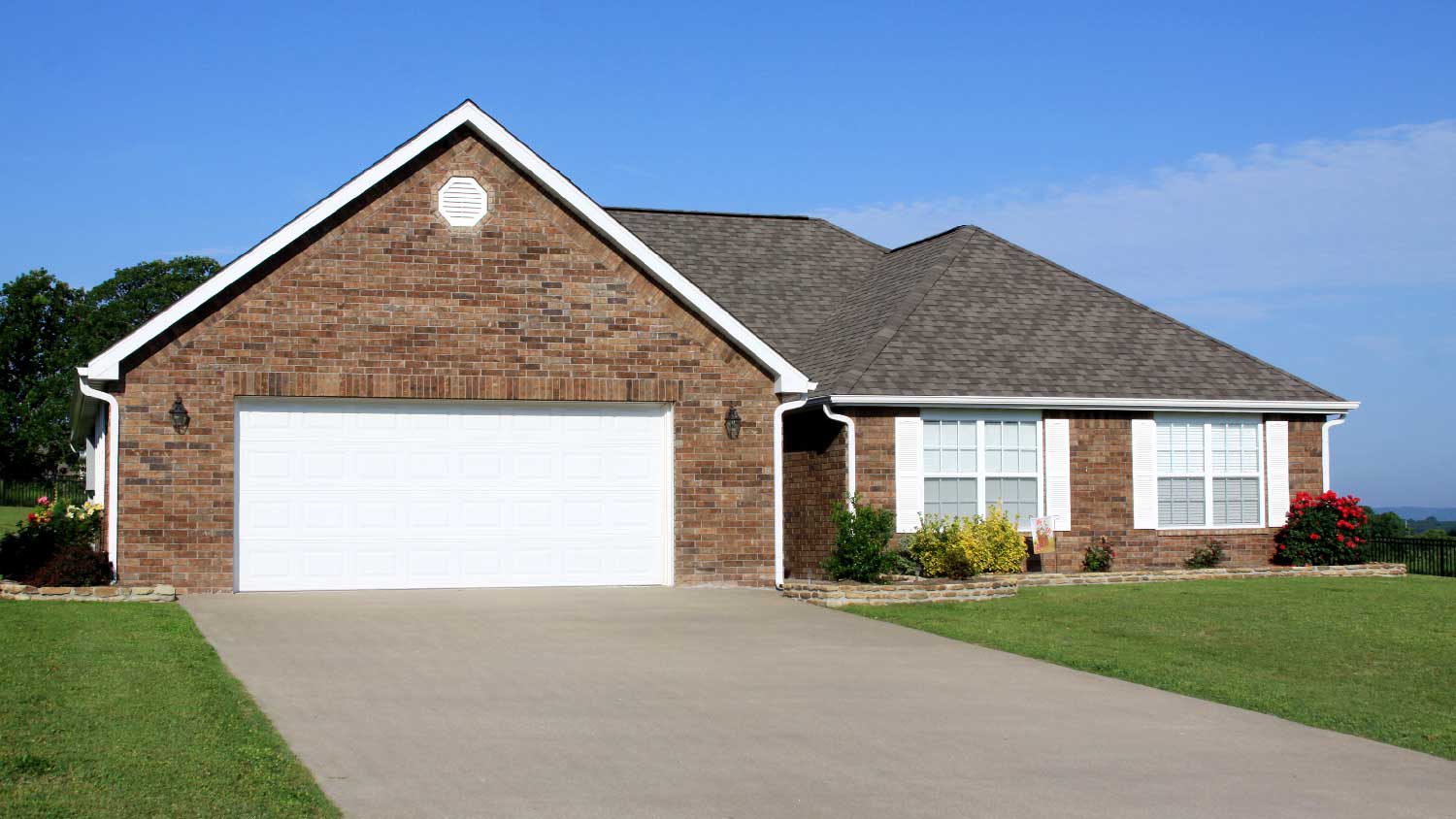
Don’t let sinking concrete capsize your budget. Learn about concrete leveling costs and the available methods to plan ahead for your project.
Crawl space repair costs can seem intimidating, but putting them off can lead to bigger issues. Learn about repair costs in this guide to set your budget.
Mudjacking is an affordable fix for sunken or uneven concrete. Learn what mudjacking is and if it’s worth it for your driveway, sidewalk, or patio.
While both grass types grow fast, crabgrass and Bermuda grass couldn’t be more different. Learn how to tell the difference between crabgrass vs. Bermuda grass.
Learn about concrete leveling and how it can fix uneven surfaces, from sunken sidewalks to uneven driveways, and boost your home’s safety and curb appeal.