
Considering replacing your home’s knob and tube wiring with a contemporary electrical system? Find out what costs and considerations may be involved.
Learn about the risks of this outdated wiring type


Knob-and-tube wiring safety depends on your system's condition, as unmodified circuits work fine but improper repairs, missing ground wires, and contact with insulation create serious risks.
Expect to pay $12,000 to $36,600 to replace knob-and-tube wiring in your home, with costs around $10 to $20 per square foot depending on accessibility and circuit count.
Your knob-and-tube electrical system needs a professional inspection if you find white porcelain knobs or tubes in your attic, basement, or under floorboards to confirm code compliance.
Hiring a local electrical professional provides reliable inspections and safe rewiring when your knob-and-tube system shows damage, improper modifications, or insulation contact that increases fire risk.
If you own a classic home built between the late 1800s and mid-1900s, you may have a form of electrical wiring in your home called knob and tube or K&T wiring. While the nature of the system itself is safe, it's essential to have your electrical system professionally inspected to ensure it's still in working order and meets local safety codes. The simple wear and tear of time, decades of repairs, and our ever-growing need for more electricity may put too much pressure on these antique systems.
To ensure your K&T wiring is safe, be sure you understand knob and tube wiring dangers and how to keep your electrical system in working order. And before you continue on, never attempt to alter any knob or tube wiring you find in your home, as doing so without professional expertise can lead to injury or damage from electric shock or fire.

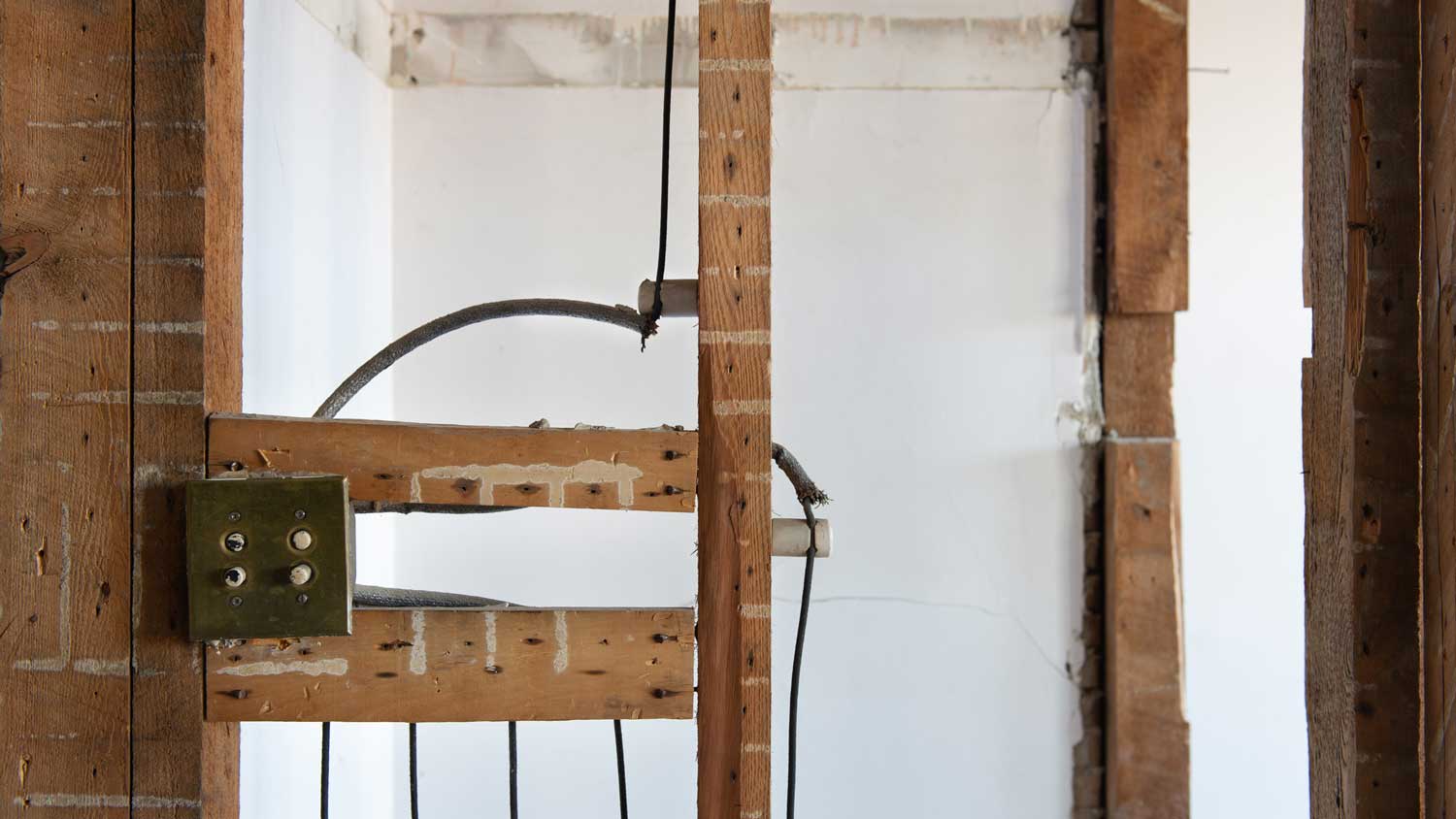
Knob and tube (K&T) wiring was commonly used from 1880 to the 1970s, featuring porcelain knobs to reduce fire risk and linked to 60-amp service boxes. With increasing electrical demands from new appliances, K&T wiring became obsolete, as modern homes now use 100-amp breaker boxes that K&T systems can't support. The knobs keep the wiring parallel to the wooden framing, and the tubes run the wires through the frame, keeping them from fraying or coming in contact with the wood. Take a peek around your attic, basement, or under your floorboards, and you may spot the signs of an original knob and tube wiring system.
Knob and tube wiring has a bad reputation for safety due to improper repairs and modifications made to the system. This wiring often has old hardware, and when you combine that with inadequate insulation that doesn’t meet modern safety standards, knob and tube wiring has an above-average risk of causing permanent damage in the home.
Here are some of the most common knob and tube wiring problems that could put your home in danger.
Knob and tube wiring systems don't have a ground wire. But what is a ground wire? A ground wire is an electrical wire that literally extends into the ground underneath your home. This way, if the normal wiring can’t conduct the electricity for any reason or there’s more electricity than the wiring can handle, the extra electricity will have a safe place to go: into the ground. When you see an outlet in your home with three holes instead of two, that outlet has a ground wire.
Most modern outlets have three holes, but knob and tube wiring systems only have two prongs that conduct electricity. You can use prong adapters, but this won’t solve the problem entirely because it still leaves your appliances or devices ungrounded, increasing the risk of shock. Plus, two-pronged outlets often do not meet local electrical codes and will eventually need to be replaced to reduce the risk of an electrical fire.
Ten, 20, or even 30 years ago, a local handyperson may have spliced your K&T system to work with modern wiring, a higher-capacity service box, or a powerful appliance. Without a thorough home inspection, no one would ever know about the dangerous setup, which could eventually cause your circuit breaker box to overload. Overloading can damage your appliances and even lead to an electrical fire.
Older homes are the most common victims of quick and fast electrical work from an unlicensed electrician, a practice that became more common as regulations changed and safety standards got more and more rigid. It's important to have your knob and tube system inspected for these modifications.
Insulation around wiring keeps the electrical current concealed and protects against overheating. Electricians often used rubber-insulated cloth wiring to cover knob and tube wiring, but experts now know that cloth insulation is too thin and delicate to protect your home properly. Additionally, pests like rats and mice often nibbled through the insulation.
One of the biggest issues with knob and tube wiring is its proximity to your home’s insulation. The design of K&T wiring required ample space between your walls and the wire to leave room for heat to release from the wires when conducting electricity. When you add a layer of foam insulation inside your walls, the heat becomes trapped, creating a fire hazard.
For this reason, many states require a home inspection before installing or replacing insulation. The 2008 National Electrical Code specifies that professionals cannot install wires in the "hollow spaces of walls, ceilings, and attics where such spaces are insulated by loose, rolled, or foamed-in-place insulating material that envelops the conductors."
You may also encounter issues insuring a home with a knob and tube wiring system. Due to their risks and expensive upkeep over time, companies may charge higher premiums or refuse to insure your home unless you have everything rewired.

Knob and tube wiring is easy to identify if you have access to the exposed wires in your basement or attic. Knob and tube wiring will consist of insulated copper wires supported by bright white porcelain or ceramic knobs.
If you have wires that run through wood framing, look for porcelain or ceramic tubes nailed to exposed joints. If you find evidence of K&T wiring, get a professional inspection to ensure it is safe.
The very existence of a knob and tube system in your home doesn't mean that you need to have it removed and replaced. However, it's very smart (and often required) that you call a pro to inspect your knob and tube system to look for any hazards.
If the time has come to replace the older system, you must invest in rewiring your home. Always take your home’s electrical wiring safety seriously, and don’t attempt to rewire your home on your own.
Contact an electrician near you if you want to have your knob and tube wiring system inspected or replaced. They’ll check for damaged or incorrectly-modified circuits and recommend added protection to reduce shock and fire risk.
In most cases, unmodified and unextended knob and tube wiring circuits are safe if you follow a few safety tips.
Although you likely had your home inspected when you purchased it, it's unlikely that the inspector could see all of the wiring in the house. For that reason, when you remodel your home or open the walls for any reason and reveal K&T wiring, it's an excellent idea to hire an inspector to examine the circuit. This is especially true if you discover splices (places where two or more wires were joined together) or wiring alterations inside the wall.
Even if you’re not sure if what you’re seeing is a splice or a wiring alteration, it’s better to be safe than sorry where your home is concerned. When in doubt, call a pro.
Maintaining knob and tube wiring is mostly about leaving it alone, especially if you’re not a certified electrician. K&T wire casings are typically brittle after this long, and moving them can cause breaks in the protective covering. Making any alterations whatsoever to this outdated system can be risky, so leave it to the pros.
In some cases, a qualified electrician can extend a K&T circuit at a junction box with a RomexⓇ cable and an inspector's approval. However, strict restrictions apply, and only a professional electrician is qualified to handle the task. Splicing K&T wiring with RomexⓇ outside an electrical junction box is never allowed.
If you find K&T wiring in your attic or basement that comes into contact with insulation, turn off your power at the breaker box. Then, carefully pull the insulation away from the wiring while wearing protective equipment (rubber gloves, long sleeves, eye protection, and a mask) to allow heat to dissipate from the wires. Be careful not to touch the wires, tubes, or knobs directly, and don’t make any alterations to the wiring system after removing the insulation.
When you expose knob and tube wiring during a remodeling project, you should probably include its replacement in the cost of the job. In many cases, replacing K&T systems is required during a remodel. However, even if keeping the older system is allowable, removing and replacing it is the best (and safest) method for dealing with outdated circuits.
Updating your home's knob and tube wiring to a new system compatible with today's electrical needs costs between $12,000 and $36,600, with an average cost of $10 to $20 per square foot. The total expense can vary based on several factors, including the size of your home, the number of circuits that need updating, your location, and how accessible the existing wiring is.
Complex electrical work is not a DIY project. Only a licensed electrician with expert knowledge of local building codes should rewire your home. This will ensure that the work is code-compliant and that the project is done safely without risk of fire or electrocution.
I recently had Mosby Electric perform an electrical installation on 8-14-2026, and I couldn’t be more satisfied with the service. From the moment I called, their team demonstrated fast arrival and professionalism. The electricians were highly knowledgeable, completing the installation...
 Mosby Electric
Great company! Price was competitive, technician showed up on time and completed the job (exterior electric Radon fan replacement) quickly. Would hire them again.
 MaGen Property Inspections and Radon Mitigation
I conferred with 2 other contractors before Armstrong Electric. Nick and his crew showed me that the project was not as convoluted as the other contractors made it appear to be. They completed the entire project on time. They were professional, friendly and cleaned up after at completion. I...
 ARMSTRONG ELECTRIC, LLC
The techs on my project, Shawn and Cliff, were great. They were prompt, courteous, and efficient. I am very happy with the results and would definitely contact Mr. Electric for any future electrical projects.
 Mr. Electric of Columbus
Victor was wonderful. He was on time, professional, and explained everything he was doing. He was thorough and figured out that the problem was electrical instead of with my HVAC system. Very knowledgeable. I will be using this company in the future for any HVAC needs. Thanks!
 Hubbs Heating & Air LLC
They were excellent. They did a great job. I was totally satisfied. They put tremendous effort in making sure the work was completed. They were great. They provided immediate response to any inquires I made. I would hire them again. I would recommend them to anyone who needs electrical work....
 JCB & Associates, LLC DBA Property-Tech Industries
Initially, the repairman could not find the problem. Apparently, there was some electrical shortage, but he could not find the definite problem. He left, but called back later to say he had a new idea. He returned and replaced the light switches on the doors. The refrigerator seemed to return...
 Appliance Pro LLC
The initial quoted price from a walk-through seemed high, but we discussed that the quote represented worst case scenario (re-wiring to two floors) and we were excited about the opportunity to have the work done in a timely manner with closing for fire safety reasons, etc. When the job was...
I have to tell you I am all about customer service - I will go out of my way and even pay more for it if you give me great customer service. <br> <br>In a world where this is hard to find, these guys were awesome! I can not sing their praises enough. They were prompt, personable, funny, got...
 Waibel Electric
When I challenged the markup on the generator, Bruder Electric withdrew its bid. They only want naïve customers.
From average costs to expert advice, get all the answers you need to get your job done.
Considering replacing your home’s knob and tube wiring with a contemporary electrical system? Find out what costs and considerations may be involved.

Rewiring a house can be a complex project but don’t let it catch you off guard. Read this to plan ahead and discover the cost to rewire a house.
What can you do if you have knob-and-tube wiring in your home? Here are some steps you can take to address your K&T electrical system.

Are your lights flickering or breakers tripping? Learn about electrical wiring and panel service costs, warning signs, and how to hire the right local pro.

Electrical wiring repair and installation projects can be expensive. Here’s how to know if your home insurance will cover them.

Faulty wiring can be a serious fire hazard, and it’s especially common in older houses. Here are the warning signs to look for with old house wiring and safety upgrades you can make.