
Not only are carpet tiles easier to install than carpet, but they’re often more affordable. So, how much does carpet tile installation cost? Let’s take a look.
Don’t let this easy DIY project floor you

There’s nothing quite like a freshly carpeted room. But traditional carpets can be tricky to install—not to mention expensive. Carpet tiles are a DIY-friendly option ideal for homeowners who want to replace their flooring on a budget. This guide will teach you how to install carpet tiles so you can say goodbye to your old dingy flooring without breaking the bank.
Before starting the project, remove any furniture from the room so you have a blank canvas. Then, remove the old flooring if necessary. Carpet tiles can be installed over certain types of flooring, including ceramic tile, vinyl, and hardwood. However, installing carpet tiles directly on the subfloor ensures the adhesive will bond and the tiles won’t slip or come loose once installed. Installing carpet tiles on the existing floor also means you might be able to see or feel the grout lines of the underlying floor after the tiles are installed.
If you have carpet (or decide to remove the vinyl or hardwood before installing carpet tiles), you may need to use a pry bar and floor scraper. If the floor has been installed using adhesive, it can be particularly difficult to remove—in this case, it might be best to leave removal to a pro. Carpet removal costs between $120 and $720.
Installing carpet tiles is a DIY-friendly project. Follow these seven steps to refresh your room from the floor up.

A smooth, even subfloor ensures your carpet tile will lay flat once installed. Before laying the carpet tiles, check the subfloor for cracks, dips, or dents and fill them in with putty (or add floor leveler using a trowel). Sand the floor lightly if you notice any splinters or rough spots. If the subfloor has extensive damage, you might need to replace it first. Replacing subflooring costs between $900 and $3,000, or an average of $1,560.
Once the subfloor is smooth, clean it thoroughly using a vacuum cleaner or broom and dispose of any debris. Mop the floor using warm water to ensure it’s clean, then allow the floor to dry thoroughly. Failure to clean the floor could result in the tile adhesive not sticking properly.
Finally, seal the subfloor to prevent damage from any spills. Use the proper sealant for the subfloor material, and apply it using a paint roller and metal tray, wearing a respirator to protect your lungs from the chemicals. You may need to add a couple of coats to ensure the floor is sealed correctly. Let the sealant dry thoroughly, which takes about an hour.
Measure the room and find the center, then divide the room into four quadrants. Mark the center and each quadrant with chalk so the lines intersect in the room’s center. Use a T-square tool to check that the center lines intersect at a 90-degree angle. Doing this lets you start the installation from the center of the room for an even finish.

Once you’ve divided the room into quadrants, start laying the carpet tile from the center, moving out toward the wall along the quadrant lines. If your tiles are patterned, check that the layout looks good before installing them permanently. Adjust the center point as needed until you’re happy with how the design looks in the room.
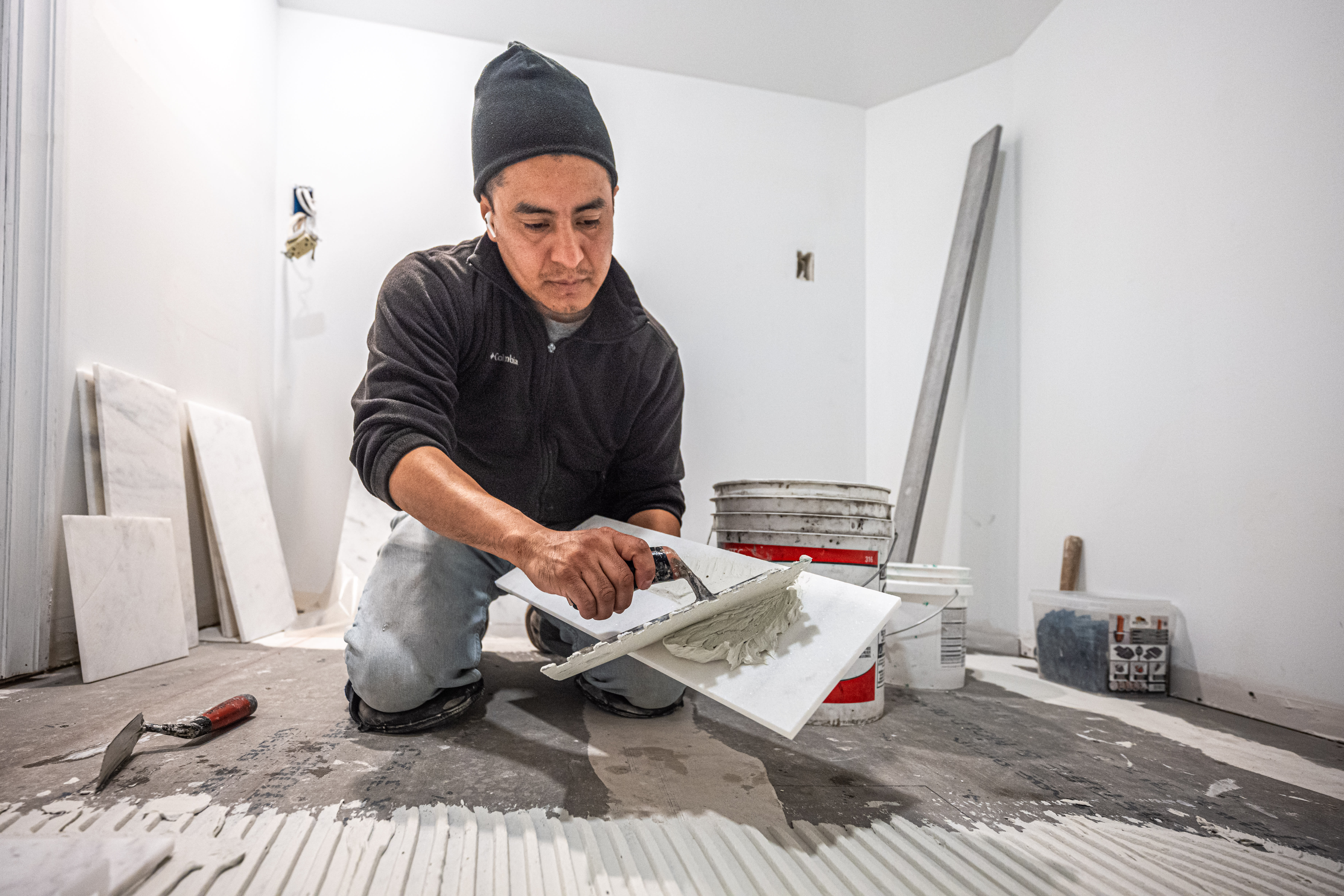
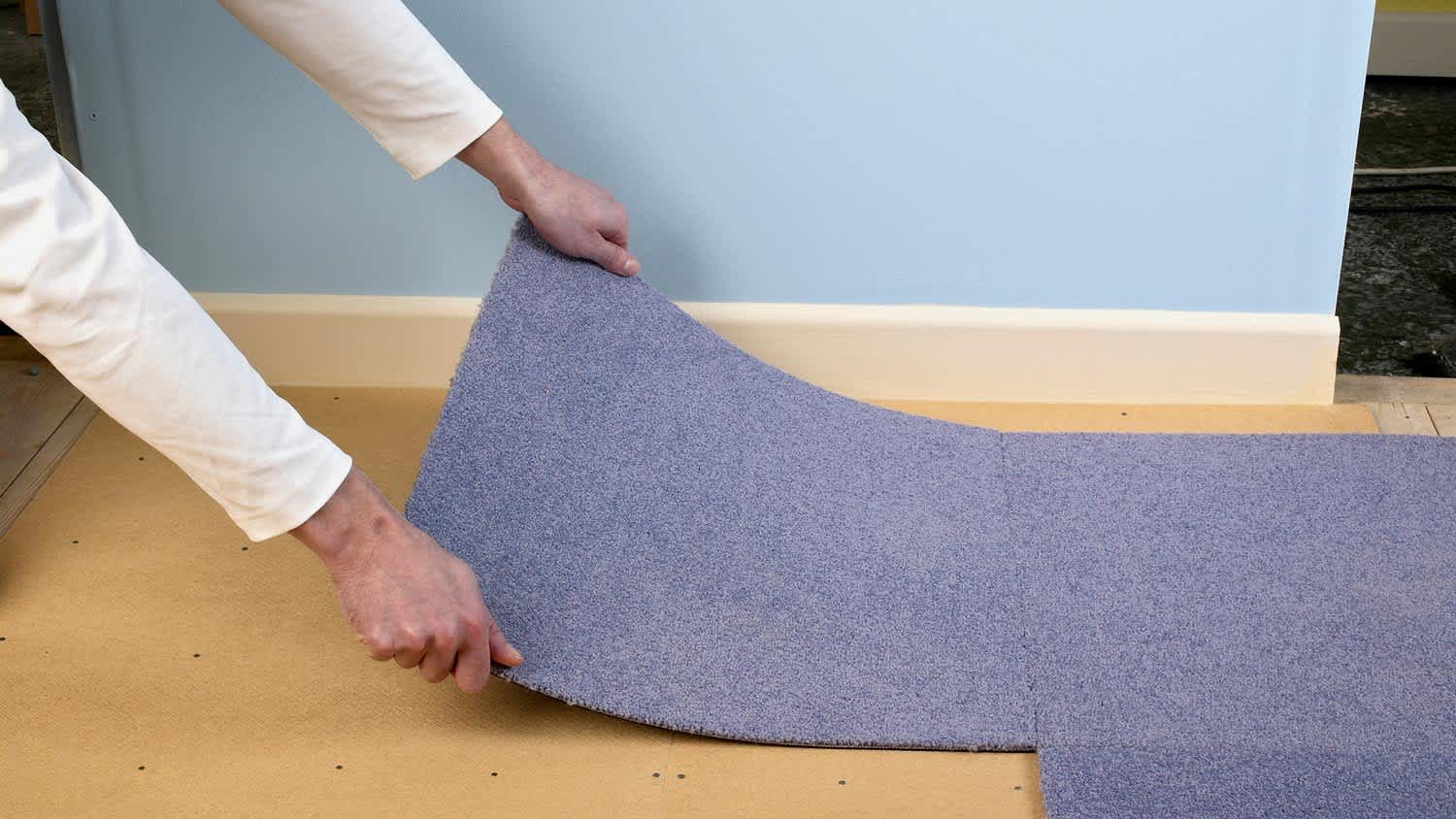
The next step is to install the tiles using adhesive. Just like when you dry-fit the tiles, start in the center of the room and install the tiles outward toward the walls. Apply adhesive to one quadrant of the subfloor, or remove the backing sheets if using peel-and-stick carpet tiles. Press the tile onto the subfloor firmly, then repeat the process with the next tile along the quadrant line.
Once the first row of tiles is installed, start the second row, butting each tile against the first row to prevent gaps. Continue installing until the first quadrant is complete, then install the tiles in the three remaining quadrants.
When you reach the room's edges, you may need to trim the carpet tiles to ensure a snug fit. Mark the backside of the tile with chalk to show where the tile starts to overlap with the one it’ll butt up against. Cut the tile using a carpet knife or utility knife against a straight edge to ensure a clean cut. Install the tile with the factory edge against its neighbor, slotting the cut edge against the wall to hide imperfections.
If you have any cabinets, pipes, or notches in the room, use your knife to cut the carpet to fit around these obstacles before installing.
Once all the tiles are installed, grab your carpet roller and roll it across the surface, starting at the center of the room and working outwards toward the walls. Roll the carpet in overlapping lines until you’ve rolled the entire room. This ensures the tiles are firmly stuck to the subfloor and can push out any pockets of trapped air underneath them.
The last step is to reinstall any baseboards you removed before installation and vacuum the carpet to remove any remaining dust or debris. Once you’re confident with the installation, move the furniture back into the room and enjoy your brand-new carpet!
Carpet tile installation is a doable project for most DIYers, even those without experience. Tackling this project yourself saves you around $0.50 to $1 per square foot on labor. However, some aspects of the project are best left to a local carpet installer near you.
For example, subfloor repair or replacement isn’t as DIY-friendly as carpet tile installation. An improperly prepped subfloor can cause issues down the road. Some homeowners may prefer to leave the entire project to a pro—carpet tile installation costs between $540 and $2,380, with an average cost of $920.
Showed up on time and cleaned carpets well, but didn?t move furniture.
 Voda Cleaning & Restoration of Columbus
Carpet repair done well. Scheduling was easy. Showed up on time.
 BR Flooring Installation
Joseph did a great job with the staircase and trim. Timely and efficient, clear communication about the work, very fair pricing. For the stairs in particular, done very skillfully in an old house (1893) in a tight spiral, and very creative with how to do the handrail. Did a nice job with...
 Vouis Trim Carpentry L.L.C.
This company does it right. Firstly, I want to say that Landan was a joy to work with. He was so kind, transparent, and had everything under control. His entire team showed up ready to work and they were all very respectful of the fact that we were in an office space. A little backstory – we...
 Krumlauf Floors
Very professional, knowledgeable and helpful! Completed the install on time and as expected.
 Ward's Services
Excellent, Prompt, Courteous Service!!! They were super friendly and quite personable. I felt very comfortable with the gentlemen that did the installation. They installed it exactly where I asked them to and they did an excellent job!! I loved their service so much.
 Tether House
I hired windows depot USA of central to install new windows in house in Oshawa. Ilya was very professional from the start, not only did he offered a great price, he also made sure the installation was on time. I am very satisfied with final outcome. The windows look great and the overall...
 Window Depot USA of Central Ohio
AFS was excellent from start to finish. Jess, the sales associate, was fantastic...very knowledgeable and very professional. The installation crew was excellent. I couldn't be more pleased with the process. Best of all, my new floor looks fantastic!
 America's Floor Source
We were having 2”x 2” tile installed . There was a small installation error and the new additional replacement tile was from a different lot and the colors didn’t match. Joe assured us that he would rectify everything , which he did without hesitation. We decided to go with the 18” x 36” tile...
 CarifaTile
Great experience all together. Dog friendly, courteous, great results and honest with recommendations. Will certainly be using Cardinal in the future for any carpet repairs
 Cardinal Carpet Care & Repair
From average costs to expert advice, get all the answers you need to get your job done.
Not only are carpet tiles easier to install than carpet, but they’re often more affordable. So, how much does carpet tile installation cost? Let’s take a look.
Find out how much you can expect your tile floor installation to cost depending on a range of factors, including tile type.
Discover how much carpet replacement costs based on factors like the project size, the carpet material, and the labor required.

Want fluffy floors but not those large and slippery area rugs or custom cuts from expensive rolls of carpet? Learn all about types of carpet tiles.
Affordable and durable, carpet tile offers more design flexibility than either carpet or tile. Learn what carpet tile is and whether it’s right for your home.
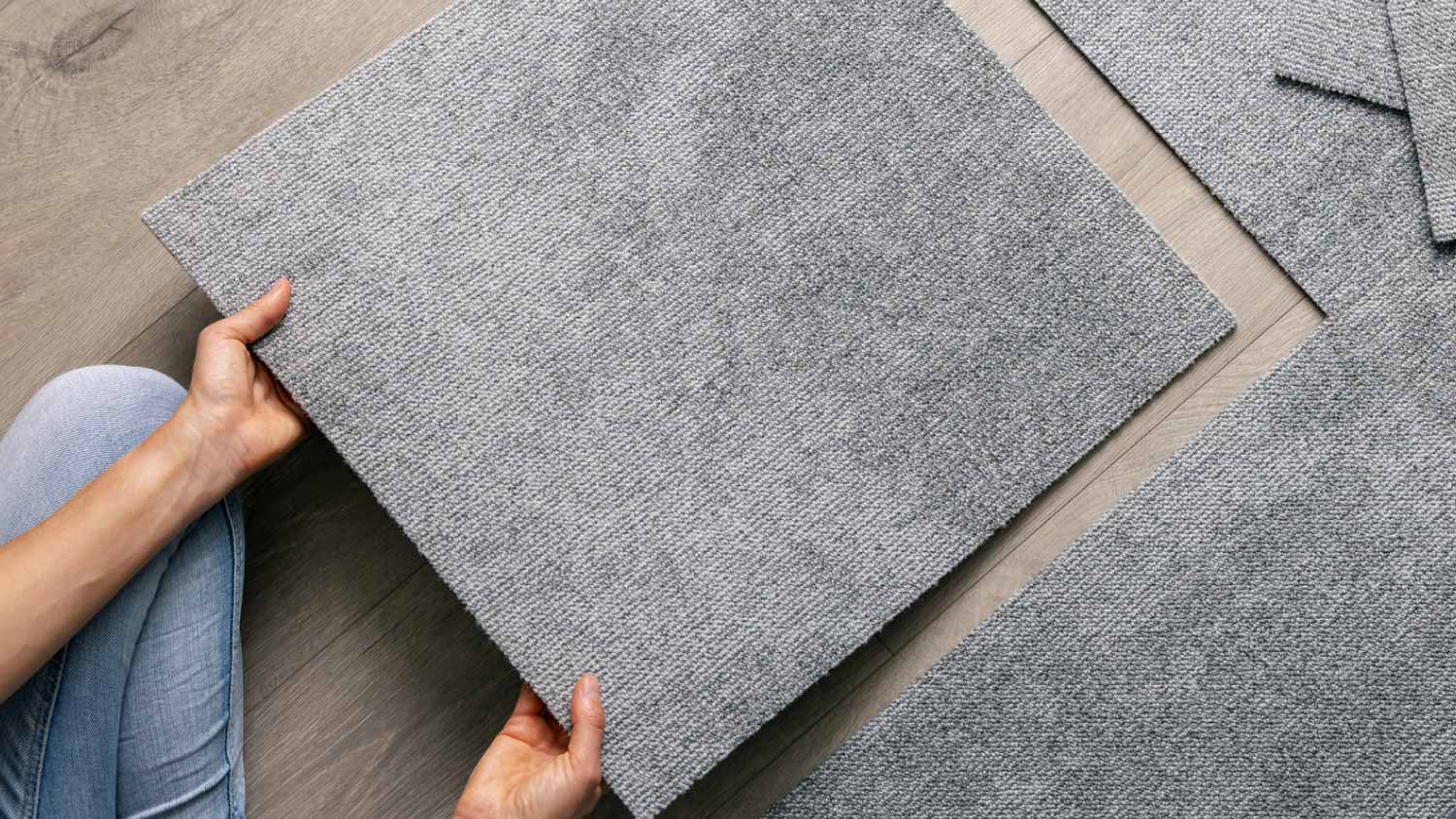
Curious about the differences between carpet tiles versus carpet? We’ve gathered everything you need to know about these flooring options.