
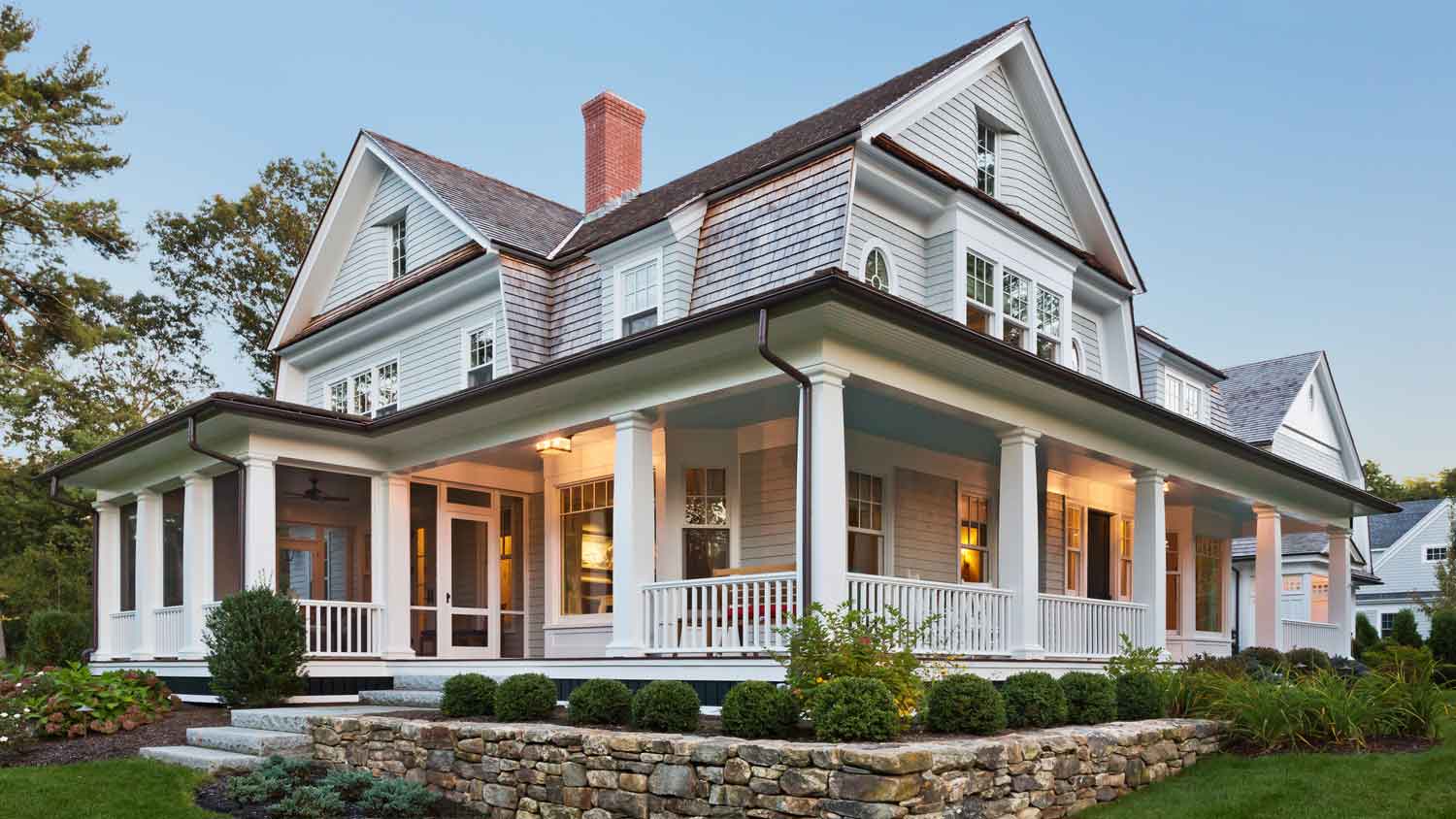
If you’re planning to hire an electrician to install outdoor lights, consider cost factors like light type, bulb type, quantity, and more.
Home security system service costs depend on your project and location. Check with a local pro for your specific job.

Motion sensor light installation costs between $350 and $500 for your project, with most homeowners spending around $425 for first-time installation.
The type of light fixture you choose and the power source it requires will determine your final installation total.
You should also account for the cost of special features like pet sensitivity adjustments and custom lighting controls when creating your budget.
Hiring a local electrical professional ensures your motion sensor lights are wired correctly and keeps the household safe from electrical hazards.
In 2026, the national average cost to install a motion sensor light is $425 for first-time installation. Most homeowners pay between $350 and $500, with the spread driven by the type of fixture, ease of access, and the power source required. Installing motion sensor lights is also a practical way to increase home security and visibility at night without leaving lights on around the clock.
Motion-sensor lights range from simple spotlights to smart camera-integrated fixtures, and the type you choose is the primary driver of your total installation cost.
Motion-sensor spotlights direct light in a single, spread-out beam and typically cost around $40 for the fixture alone, coming out to roughly $200 after installation. Depending on the size and brightness of the fixture, you can expect to pay $15 to $65 for the light itself and $50 to $250 for labor. These lights work especially well in low-visibility areas like the side of the house near a garage or trash cans.
Motion-sensor floodlights are the most traditional outdoor security light, combining multiple smaller bulbs aimed in different directions to illuminate a much wider area than a spotlight can cover, with fixture costs ranging from $30 to $400 and total installed costs from $250 to $600.
Decorative motion-sensor lights blend with your existing outdoor fixtures while still providing security, with fixture costs averaging $40 to $110 and total installed costs running $250 to $350. Keep in mind that decorative models tend to produce less light output than standard floodlights.
Smart motion-sensor lights combine outdoor lighting and a built-in security camera into a single fixture, costing $100 to $300 per light before installation and $200 to $500 once labor is factored in. These fixtures also send customizable alerts to your phone, from every activation to only when the camera detects on-screen movement.

You can customize your motion-sensor lights by choosing the type of bulb you want and even how the motion sensor activates. You'll also need to consider how these lights receive power.
Depending on the type of light bulb you choose, your motion-sensor light cost will vary accordingly, with prices ranging from $2 to $15 for standard fluorescent bulbs up to $5 to $50 for energy-efficient LEDs. Common light bulbs for motion-sensor lights and their costs by bulb type are shown below:
| Light Bulb Type | Cost per Light Bulb in 2026 |
|---|---|
| Fluorescent | $2–$15 |
| Halogen | $3–$12 |
| Compact fluorescent lights (CFL) | $3–$15 |
| LED | $5–$50 |
| High-intensity discharge (HID) | $10–$30 |
Any motion-sensor light installation involving electrical wiring should be handled by a local licensed electrician or outdoor light fixture installer, and the cost of hiring an electrician for this job ranges from $50 to $150 per hour.
Like lightbulbs, there are a plethora of sensors on the market that you can choose from for your motion-sensor lights. These will range from simple microwave or vibration sensors ($30 to $50) to fancy remote sensors ($50 to $500) or tomographic sensors. The cost of different types of sensors and light fixtures by sensor type is broken down below:
| Sensor Type | Cost Range in 2026 |
|---|---|
| Microwave | $30–$50 |
| Vibration | $30–$50 |
| Passive infrared | $30–$100 |
| Automatic | $30–$100 |
| Ultrasonic | $40–$100 |
| Area reflective | $40–$100 |
| Duel sensors | $50–$300 |
| Remote sensors | $50–$500 |
| Tomographic | $300–$1,000 |

Motion-sensor lights are available in three power configurations: hardwired ($15 to $200), battery-powered, and solar-powered. The right choice depends on your preferred maintenance level and where you plan to mount the fixture. Motion sensor light costs vary meaningfully by power source, as the breakdown below shows:
| Power Source | Cost per Light in 2026 |
|---|---|
| Hardwired | $15–$200 |
| Battery-powered | $20–$100 |
| Solar-powered | $25–$300 |
Special features like pet sensitivity adjustments, floodlight arc controls, and custom settings add convenience but also increase your total cost, with upgrade prices varying by feature type.
Pet sensitivity: $15 to $40 extra
Floodlight arcs: $50 to $100 extra
Custom settings: $50 to $200 extra
DIY installation is a realistic option for battery-powered or solar-powered motion-sensor lights, bringing your total cost to around $150 to $300 and saving roughly $50 to $150 in labor compared to hiring a pro. Hardwired installations should always be left to a licensed electrician due to the risk of electrical shock. The tools you will likely need for a self-install are listed below.
Drill: $80 to $200
Proper drill bit: $5 to $15
8-foot ladder: $100 to $200
Hammer: $5 to $20
Screw anchors: $1 to $5 for a pack
A good friend to help you out: Priceless
DIY installation averages around $225 when you already own the necessary tools, compared to roughly $425 when hiring a qualified outdoor lighting company, making the potential savings about $200.
Battery-powered or solar-powered lights in accessible locations like a porch or deck are reasonable candidates for a self-install, but hardwired fixtures or lights mounted on a two-story home or garage are best handled by a professional to avoid improper installation and potential home damage.
While motion sensor lights are a great start to bolstering your home's defenses, other security systems can be installed as well. Consider adding these options to better protect your property and give you peace of mind.
Security Cameras: Enhance surveillance with strategically placed cameras around your property to monitor activity 24/7.
Alarm Systems: Install systems that alert you and authorities in case of unauthorized entry.
Smart Locks: Upgrade to keyless entry with smart locks that can be controlled remotely and provide access logs.
Video Doorbells: See and communicate with visitors at your door, even when you're not home, via your smartphone.
Window Sensors: Detect if a window is opened or broken, triggering an alert if tampered with.
Glass Break Sensors: Specifically designed to recognize the sound of breaking glass for added security.
Panic Buttons: Easy access to alert authorities quickly in case of emergency.
Home is the most important place on earth, which is why Angi has helped more than 150 million homeowners transform their houses into homes they adore. To help homeowners with their next project, Angi provides readers with the most accurate cost data and upholds strict editorial standards. We extensively research project costs to develop the pricing data you see, so you can make the best decisions for you and your home. We rely on reputable sources, including the U.S. Bureau of Labor Statistics, academic journals, market studies, and interviews with industry experts—all to ensure our prices reflect real-world projects.
Want to help us improve our cost data? Send us a recent project quote to [email protected]. Quotes and personal information will not be shared publicly.
If you’re good people wanting to do business with good people, hire Matt. He is a consummate professional and utterly competent. He installed a water heater in my home at a price that beat competitors by hundreds of dollars with a promise to support the unit for its life (even after its 6 yr...
 Greene's Plumbing Services
I recently moved to another state and chose United Trust Van Lines after comparing several companies. Their team was punctual, professional, and extremely careful with my belongings. I was especially impressed with how they handled my home office setup and fragile items. Everything arrived on...
 United Trust Van Lines, LLC
1st Choice Renew is simply the best! We hired them for a complete home renovation, and they transformed our space into something truly amazing. The team attention to detail and commitment to quality were evident throughout the project. They were easy to work with, very responsive, and always...
 Save A Dime
I had Ace Fireplace Services install custom chimney caps for my home, and the results are stunning. They fit like a glove and have added a touch of sophistication to my chimney. I can't recommend their services enough.
 Ace Fireplace Services
Exquisite workmanship from Custom Paint Jobs LLC. My home has never looked better.
 Custom Paint Jobs, LLC
I was concerned about my possessions safety throughout the move but Bridge View Van Lines took all necessary security measures to make sure everything arrived in mint shape I am really appreciative of their effort and commitment They made my long distance move seem simple
 Bridgeview Van Lines
We needed windows in our home, and we couldnt believe we got our entire home done for under $14,000. We have a lot of windows, and not only was it affordable, but it got done in a timely manner! Thanks guys, I truly appreciate you all!
 Window Depot USA of Central Ohio
Working with Mike on our first home purchase was an absolute pleasure. Mike put us at ease and made the process of buying a home fun. Mike is knowledgeable, honest, professional, and punctual. He worked with our busy schedule and always made time for us. When a home came on the market that...
 Michael Marshall - Buyer's Resource Realty Svcs.
Before choosing a real estate agent, we conducted a lot of research to see who would be the best choice. Homes that Click stood out as the best Columbus has to offer: their rankings are excellent, their social media presence was strong, and I could tell they put a lot of work into their...
 Homes That Click Realtors
Fantastic! Top Line was early for the appointment and very knowledgeable and took time to explain everything they had found during the home inspection. The report included clearly defined issues and what they recommended to remedy the same. The report also included many pictures to help...
 Top Line Home Inspections, LLC
From average costs to expert advice, get all the answers you need to get your job done.
If you’re planning to hire an electrician to install outdoor lights, consider cost factors like light type, bulb type, quantity, and more.
Light fixtures are important elements in any home. Find out how much it costs to install a light fixture based on factors like type, location, and labor.
Discover the average cost of lighting design, including price ranges, key cost factors, and tips to help homeowners budget for their lighting project.

Installing a motion sensor light involves delicate, dangerous electrical work. Here are the steps a qualified pro takes to assemble a motion light successfully.

Installing a motion sensor light switch lets you control your lights hands-free. Find out the benefits and uses of a motion sensor light.

Ensure your home is safe and well-lit for guests. Learn about the different types of security lights and choose what’s best for your home.