
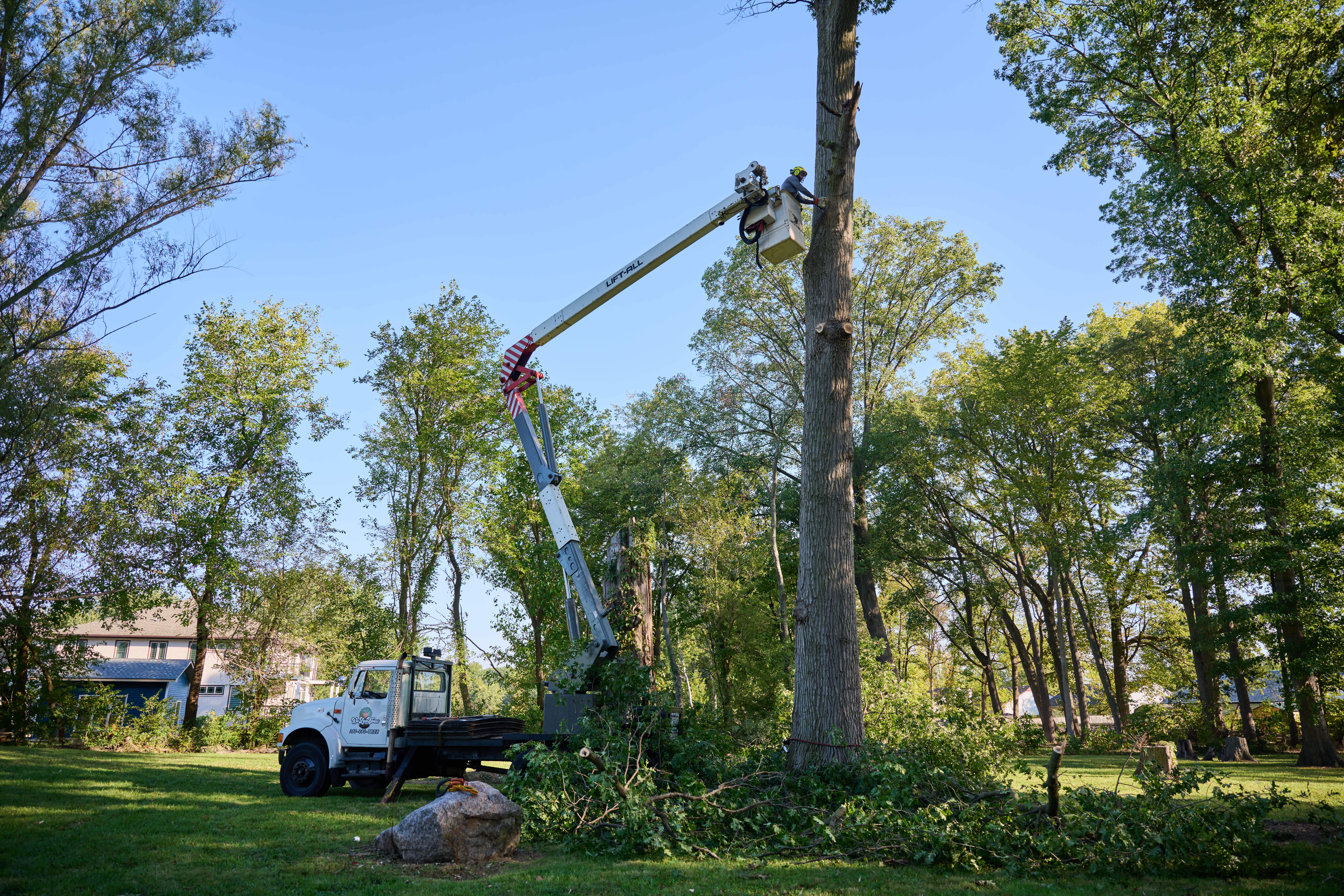
The most significant factor in tree removal costs is the amount of debris. Read on to learn more about the average tree debris removal costs in Kansas City, MO.
Tree service costs depend on your project and location. Check with a local pro for your specific job.

Your pro needs to possess adequate insurance across the board. If they don’t, they aren’t the pro for you.
Size is the defining cost factor, but the type of tree and how hard it is to access also influence the total cost.
Wood in good condition can be split for firewood. Offering half to your pro may help lower costs. Alternatively, sell it in bundles.
Gather a number of quotes before deciding on hiring.
Tree removal in Kansas City, MO, will cost $694 on average, with most homeowners spending between $185 and $1,850. Shorter trees will cost closer to $139, while taller or hard-to-access trees are more difficult to remove and can cost up to $9,250. You may not have the option to delay removal, so talk to a pro as soon as possible after reading this, so the cost information is fresh on your mind.
Tree removal in Kansas City, MO costs what it does because the job requires trained professionals and specialized equipment. Crews must also follow strict safety procedures to prevent damage or injury. Any complication with access increases cost. Expect extra costs for stump grinding and debris removal, which increase the total cost.
A tree's size affects several main tree removal cost factors—how long it takes to cut down, the accessibility to higher branches, and possible interference from other trees, power lines, or structures. For example, take a look at the primary tree removal price ranges by size:
| Tree Size | Average Cost |
|---|---|
| Up to 30 feet | $150–$350 |
| 30–60 feet | $350–$1,000 |
| 60–80 feet | $650–$1,250 |
| Over 80 feet | $800–$1,650 |
The price tends to increase once the tree grows over 80 feet high. At this stage, your team will need to bring in a crane to access its branches, which will cost about $600, including the truck rental and additional staff.
Also, keep in mind that trees get wider with age, making the diameter of their trunk more difficult and take longer to cut. In many species, branches and root systems also expand quite far in either direction, adding up to a possible multi-day project to safely remove the tree from the area without affecting other utilities.

Some trees can grow to a very stately 100 feet tall or more. American ash, bur oak, and maple are considered to be more difficult to remove than others, and therefore, removing them costs more. Here are the costs for various types of tree removal:
| Type of Tree | Average Removal Cost | Important Details |
|---|---|---|
| Oak | $150–$1,650 | Some states forbid the removal of these heritage trees |
| Japanese Knotweed | $1,650–$8,200 | Highly invasive shrub, some states prohibit their possession |
| Aspen | $800–$1,500 | Enormous poplar tree, have complex root systems |
| Pine | $200–$1,250 | Older pine trees may have a tap root buried in the soil, requiring specialist removal |
| Palm | $550–$1,250 | Extremely heavy, expensive to remove |
| Maple | $200–$1,650 | Can grow 100 feet high and have large branches |
| Ash | $200–$1,500 | Striking leaf colors in Autumn, can reach 80 feet in height |
| Cedar | $200–$1,250 | False cedars are common in North America while “true” cedars are native to places with high altitudes |
Most of the time, you aren’t going to want to keep the tree stump after the tree is removed. Removing a tree can also leave behind a trail of branches, bark, leaves, and the tree itself. The company might haul away your tree for about $70, put it through a chipper for an average cost of $95, or split it into firewood for your home at about $50.
In Kansas City, difficult access is one of the biggest factors driving up tree removal costs. Working around tight backyard spaces, neighboring fences, or overhead utility lines demands skill and the right equipment, which is often expensive. Sloped terrain or densely packed properties add another layer of complexity, requiring additional planning. And when a tree hangs over a roof, roadway, or power infrastructure, the job becomes significantly more involved, and your quote will reflect that.
The cost of hiring a tree removal pro in Kansas City, MO, costs $30 to $90 per hour in labor costs. While there may be some wiggle room, don’t expect a big labor discount. Tree removal pros have to carry expensive insurance and often lease pricey machinery, making their margins tighter than those of other pros. They might not even have any negotiation room with tree removal to even offer you.
When hiring a pro, remember to vet them by checking their reviews and photos of past work. Double and triple check their insurance is current and adequate. The stakes are simply too high to cut corners—a single mistake can mean serious injury or major property damage.
When considering if the process of tree removal will result in a home value increase, homeowners shouldn’t count on it. In fact, tree removal usually lowers a home’s value, especially if the tree provided meaningful shade, privacy, was old and in good condition, or encouraged wildlife on the property.
Homeowners in the area should think of tree removal as a home value preservation measure and less of an investment. If a tree is leaning over a roof, close to power lines, is rotting, or has any other defects, removing it will help prevent a drop in home value. Over time, trees that used to be beneficial can overgrow and drag down a home’s value, such as when the roots interfere with underground utilities or choke out other plant life.
To help homeowners plan their next project, Angi provides readers with carefully researched cost data and upholds strict editorial standards. We start with national average project costs, which we collect by analyzing competitor information, retailer material costs, and input from professional contractors. We then apply local price index data to calculate location-specific estimates that reflect what homeowners typically pay in their local area. To do that, we use data from the U.S. Bureau of Economic Analysis (BEA), including its Regional Price Parities (RPPs), which measure price differences across cities. This helps us account for differences in labor, materials, and overall cost of living, so estimates in higher- or lower-cost areas better reflect real-world local pricing.
Every estimate undergoes a thorough editorial review to verify accuracy, consistency, and alignment with observed market conditions.
Want to help us improve our cost data? Send us a recent project quote to [email protected]. Quotes and personal information will not be shared publicly.
Zach and his crew did a fantastic job. They arrived on time and finished in less time than projected. And best of all, they left no evidence that they had been on my property…..plus that problematic tree was gone forever. Thanks guys. We’ll hire you again.
 Hills Tree Care
Very good service now problems
 Urban Turf Lawncare & Landscaping
Two Friend's tree service it’s true to their word! They do an excellent job at a fair price which these days is something that’s hard to find. I’ve used them for all of my rental properties and my personal home. I would highly recommend them.
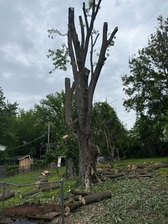 Two Friends Tree Service
I definitely recommend using Urban Forestry LLC Tree Experts, a company that is fully licensed and insured, for tree removal. From start to finish their professionalism was amazing. They gave me a very reasonable estimate and provided information for a flexible payment plan. Scheduling the...
 Urban Tree Specialists LLC
The service was fantastic and completed with great customer service.
 Hot Water Biz
KC Tree service was promp, punctual, efficient, safe, well equipped, well manned and very reasonable. I would highly recommend!
 KC Tree Service
It was a great service.
 N L Electric & Appliance Services
Excellent! Prompt, efficient, and an excellent job removing a large pile of tree limbs and debris!
 Gonzalez Tree and Lawn Service LLC
They came out and gave an estimate the same they were contacted. The price was very reasonable and they were able to do the work the next say.. Showes up on time worked quickly, did an excellent job and left the area clean. I recommend Arbor Kingdom Tree Service.
 Arbor Kingdom Tree Service
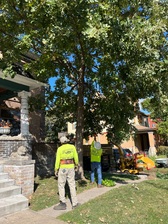
I had this company remove several trees (I think 5?) from a house I just bought with heavily overgrown backyard. They also cleaned up the overgrown shrubbery. I canâ t say enough about how pleasant they were to work with and the excellent quality of work they do. I have used them several...
 Pro Stump Grinder
From average costs to expert advice, get all the answers you need to get your job done.
The most significant factor in tree removal costs is the amount of debris. Read on to learn more about the average tree debris removal costs in Kansas City, MO.
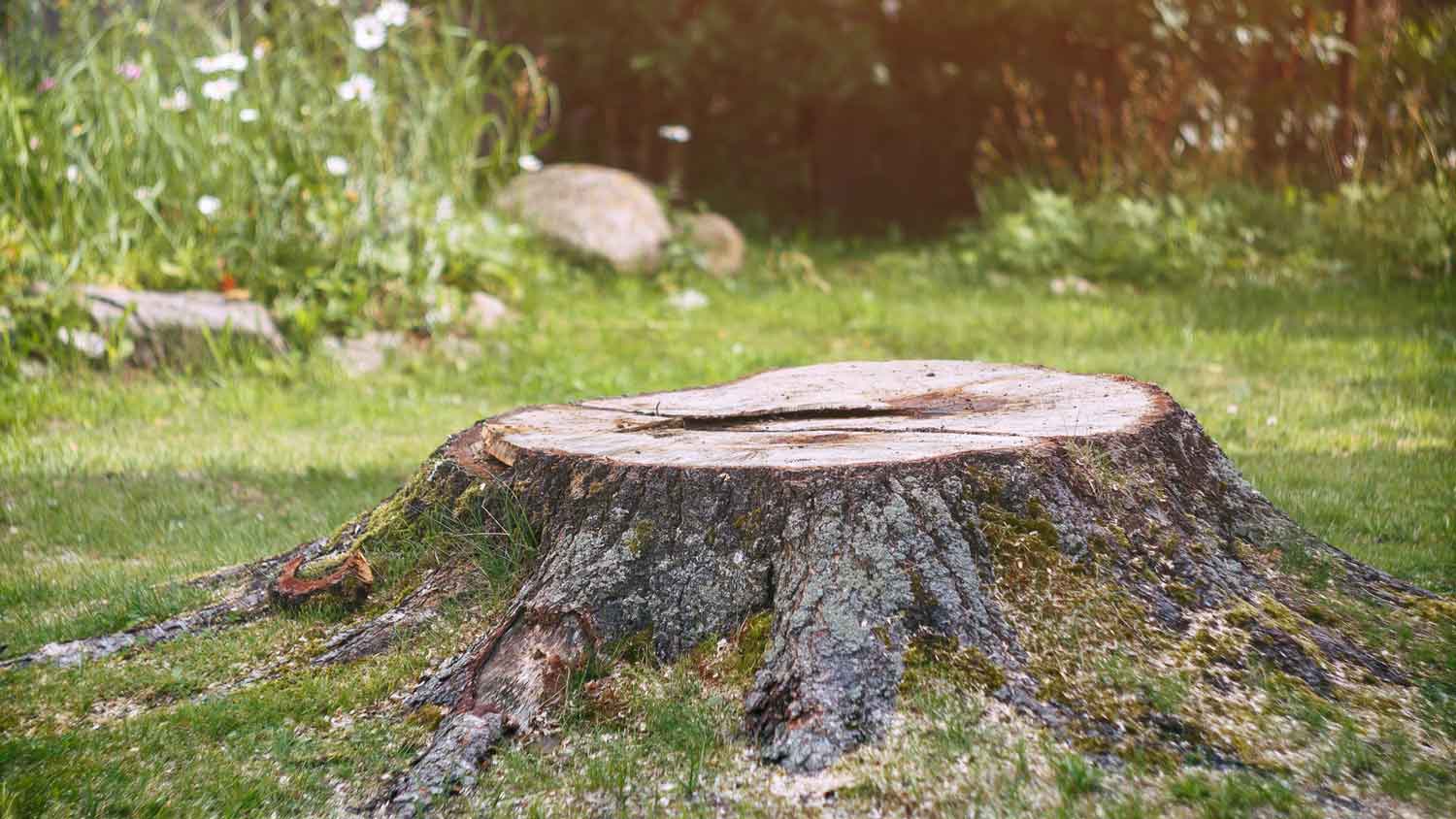
Find out the average tree stump removal cost in Kansas City, MO. Learn what you can expect to pay for local stump grinding and clear your yard today.
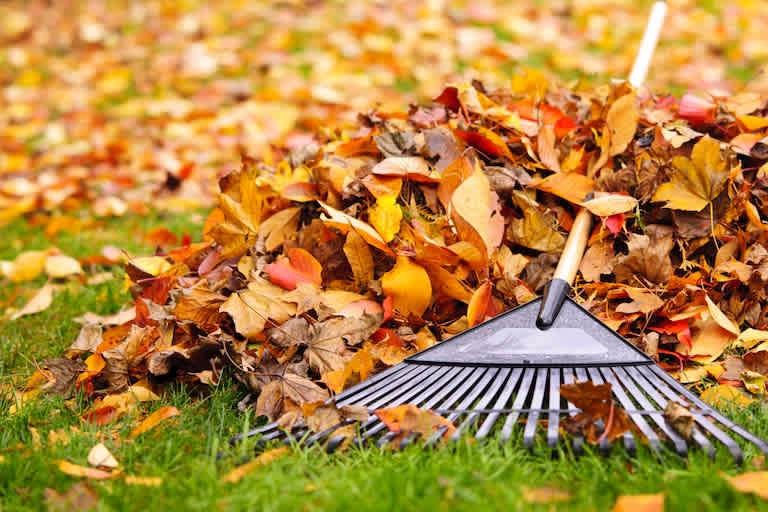
Find out the average leaf removal cost in Kansas City, MO. Learn what you can expect to pay for local yard clean-up services and get your lawn ready today.
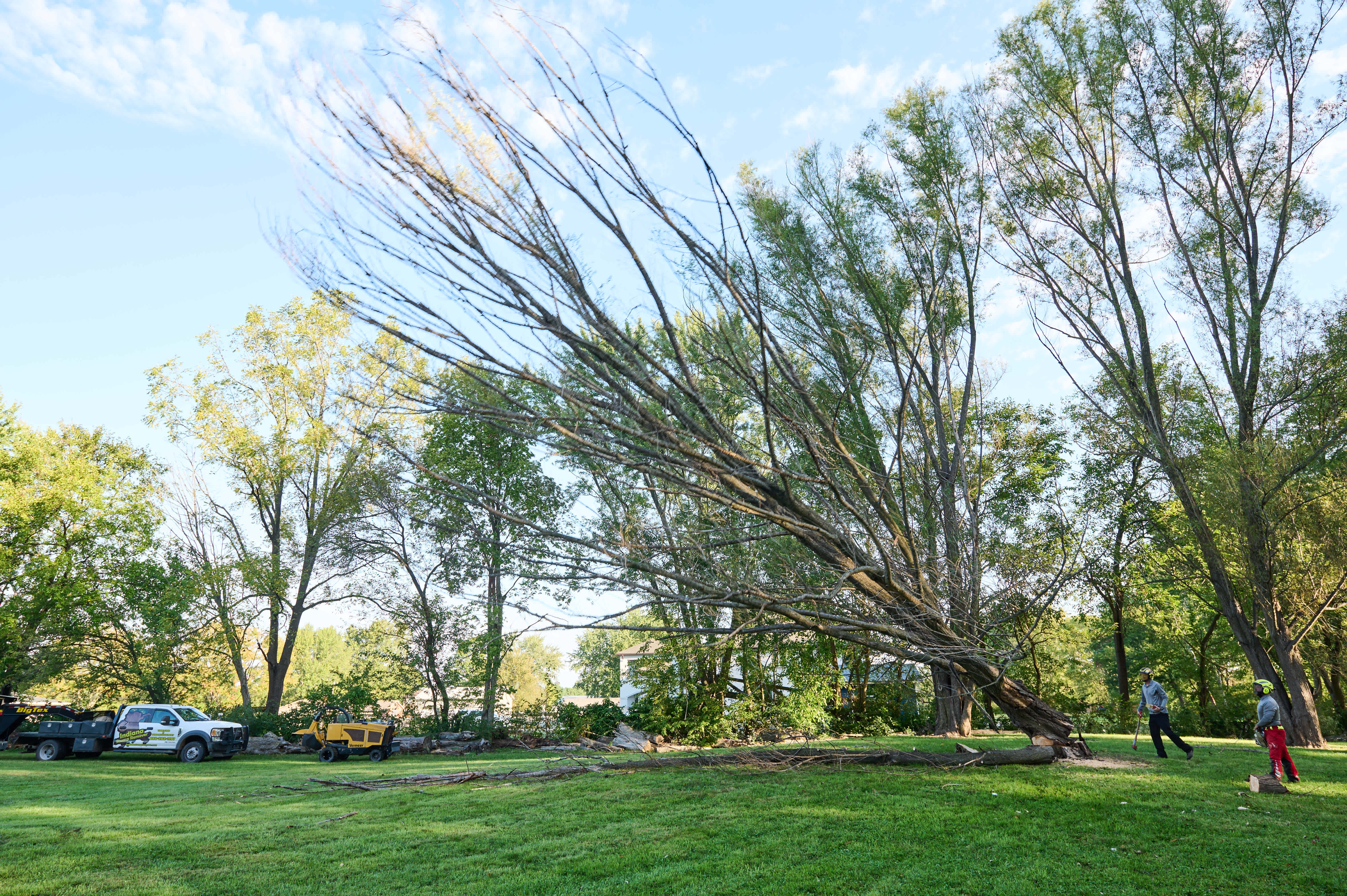
Need a tree removed from your yard? Learn how to negotiate tree removal to get the best rates on having dangerous trees removed from your property.

Weather getting colder? The cheapest time of year for tree removal is right on the horizon. This guide will show you how to plan your project and save.

Discover the average tree trimming cost in Kansas City, MO, key price factors, and tips to save. Get expert insights to plan your budget with confidence.