
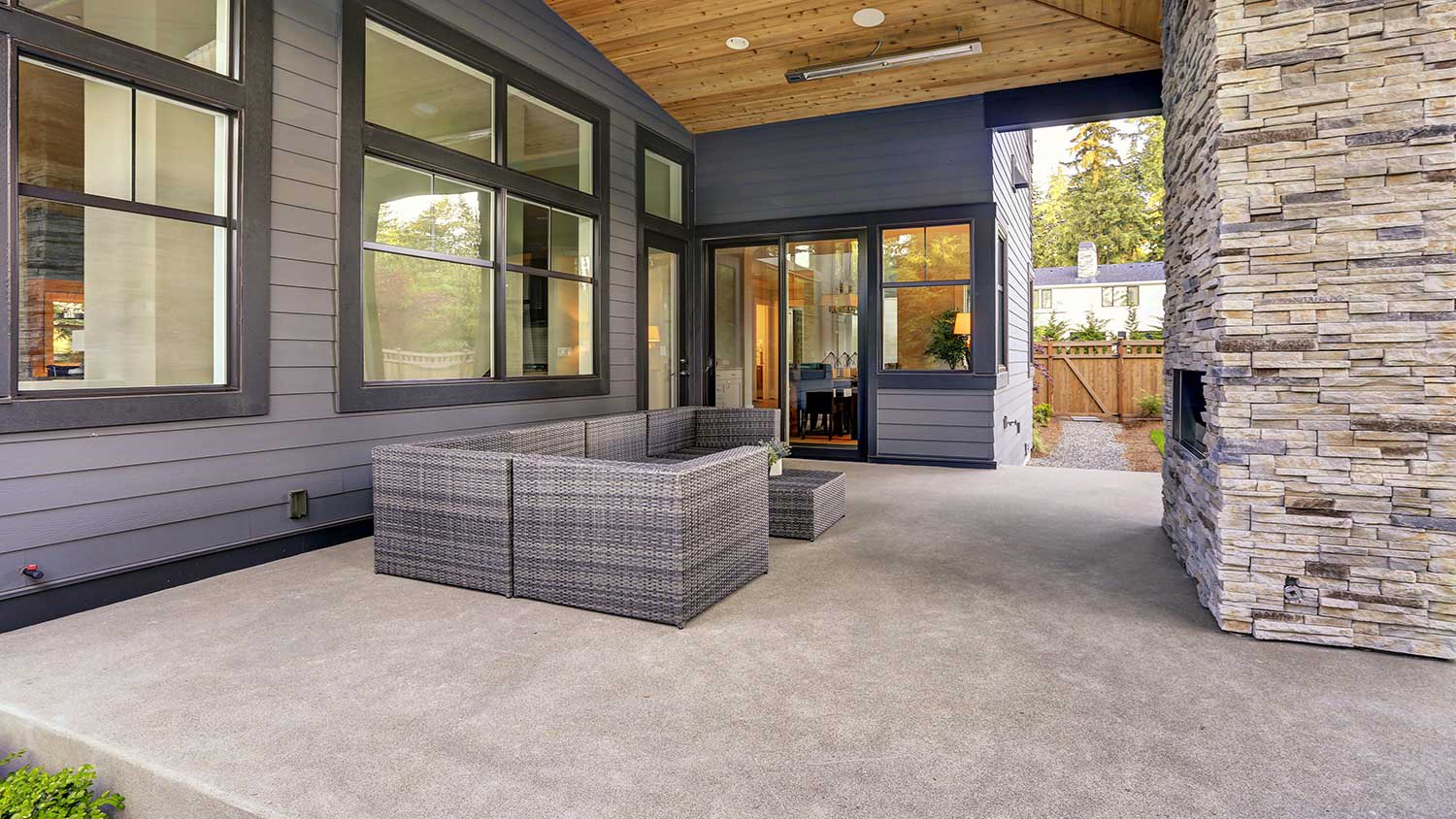
A concrete patio adds outdoor living space to your home. Learn how much a concrete patio costs in Austin, TX, and the factors affecting the project price.
Patio service costs depend on your project and location. Check with a local pro for your specific job.

Installing a basic concrete slab patio in Austin costs $6 to $12 per square foot.
Premium travertine pavers run $20 to $30 per square foot, installed.
Excavation, base prep, and drainage work can add $1,000 to $4,000.
Patio installation labor costs $50 to $120 per hour.
Austin homeowners may recover 65% to 85% of patio project costs at resale.
Austin, Texas’s warm climate and thriving outdoor food culture have made patios one of the most in-demand home upgrades in the region. Installing a new patio in Austin costs an average of $3,205, with most homeowners paying between $1,873 and $4,633, depending on materials, size, and project scope. Whether you're in a new build in Pflugerville or a mid-century home in Allandale, a well-built patio extends your living space and directly appeals to buyers in one of the country's most active real estate markets.
Multiple variables determine the cost of a patio project in Austin, Texas. The city's expansive clay soils, intense summer heat, and impervious cover regulations all shape how projects are designed, priced, and built here.
Patio installation in Austin costs an average of $5 per square foot for basic concrete patios and up to $50 per square foot for a high-end model with premium materials and custom finishes. Patio size options vary based on intended use, from bistro seating to full outdoor dining. Naturally, the bigger the patio, the more it will cost.
A small 7-foot-by-7-foot bistro patio will almost always cost significantly less than a large dining patio made from the same material. Thinking carefully about how you plan to use the space will help you right-size the project.
Here’s how patio size influences the average installation cost:
| Patio Size | Square Footage | Average Cost |
|---|---|---|
| Small | 49 | $250–$2,500 |
| Medium | 144 | $750–$7,200 |
| Large | 400+ | $2,000–$20,000 |
Material choice has a major impact on upfront costs and long-term performance when you build a patio in Austin's climate. Concrete is the most widely installed patio surface in the city at $6 to $12 per square foot. Decorative concrete finishes for patios are worthwhile if you want the durability of concrete with a more polished aesthetic, running $9 to $18 per square foot.
Travertine pavers are a standout local favorite at $20 to $30 per square foot. Their natural limestone composition stays cooler underfoot in the Texas sun than many alternatives. Keep in mind that patio materials are heavy and costly to move, making locally-sourced materials more affordable than their counterparts.
Take a look at how patio material affects the installation cost:
| Material | Average Lifespan (Years) | Average Cost per Sq. Ft. |
|---|---|---|
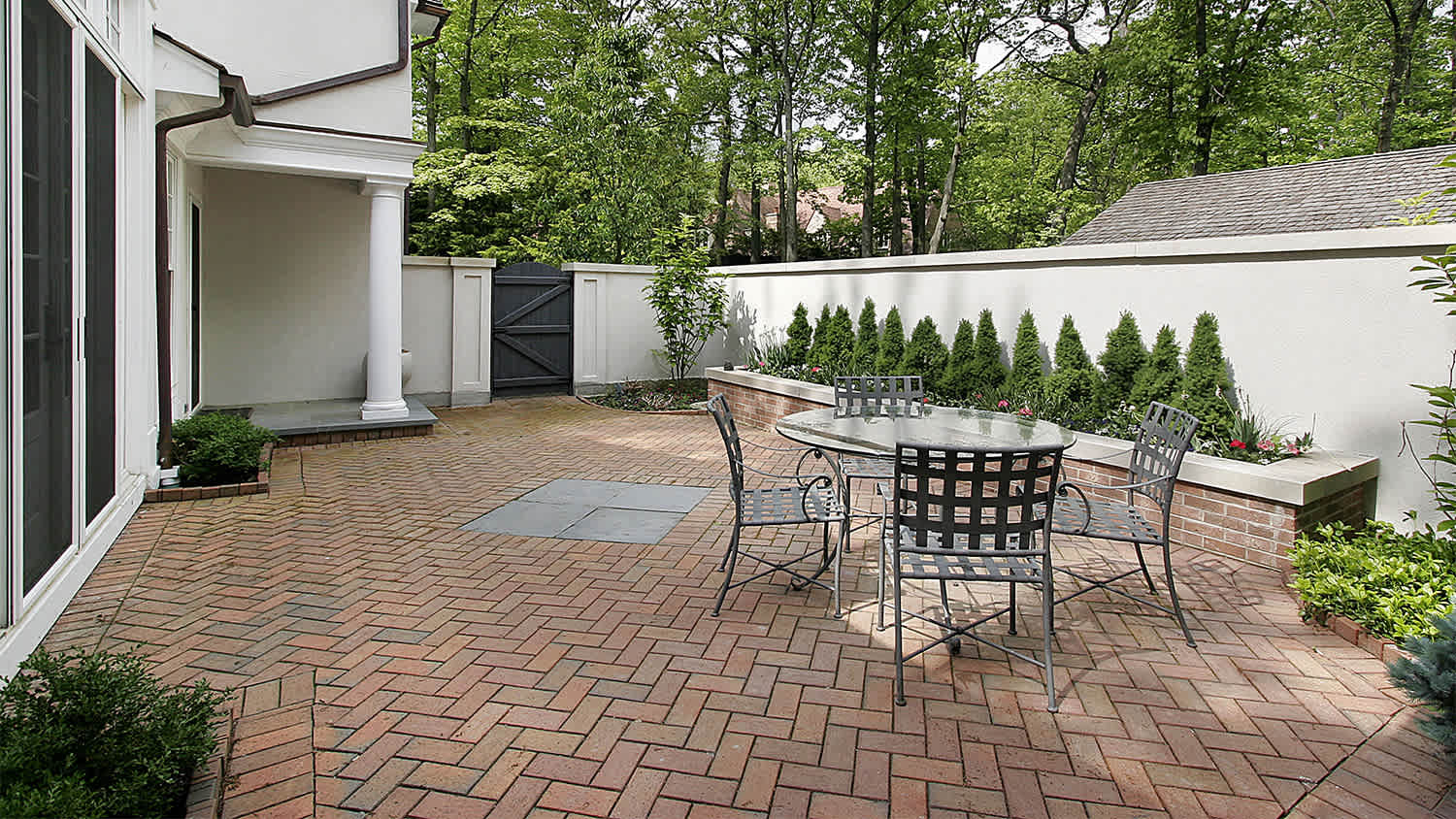
| Brick pavers | 25–35 | $8–$25 |
| Concrete | 30–50 | $6–$12 |
| Decorative concrete | 30–50 | $9–$18 |
| Gravel | 50+ | $1–$4 |
| Permeable pavers | 25–35 | $10–$30 |
| Stone/flagstone | 40–50 | $18–$35 |
| Travertine pavers | 25–35 | $20–$30 |
If your yard has an existing concrete slab or old paving that needs to come out first, budget between $2 and $6 per square foot for demolition and disposal. Before committing to a full tear-out, ask your contractor to evaluate whether to repair or replace a concrete patio if the structure beneath is still sound. You’ll likely save money by asking your contractor to bundle demolition with your new installation.
Removing an old patio yourself is worth considering if you’re on a tight budget. It isn’t a DIY task that requires complex technical know-how, but it’s still labor-intensive.
Site preparation is frequently the most underestimated cost in Austin patio projects. East Austin's clay soil expands dramatically when wet and contracts when dry, which exerts enormous pressure on improperly prepared patio bases. West Austin's caliche and limestone can require specialized excavation equipment to cut through, adding to both time and cost.
Regardless of which side of the city you're on, knowing how thick a concrete patio should be and what base depth your soil requires is essential before any pour begins. Proper site prep adds $1,000 to $4,000 on average, though severely sloped or drainage-compromised lots can run higher.
We strongly recommend that you hire a professional to properly grade the land, make any necessary drainage modifications, and prepare the substrate.
Any shape deviation from a standard square or rectangular patio will increase your project costs. Custom curves, angles, or freeform designs require additional forming, cutting, and labor, all of which add to the total. Pavers are a great option for curved or circular patios because you can arrange them without much customization.
If you're designing around mature trees, account for root zones and potential future root movement when planning the patio's shape and perimeter.
Patio installation costs are significantly higher for elevated patios because they’re more complex to build. Given the additional work that’s required, you’ll likely pay $5 to $30 per square foot more than a ground-level patio of the same material. For a 10-foot-by-10-foot patio, you could end up paying $3,000 more for an elevated surface.
Though ground patios are the most popular option, a raised patio is a great solution if you want your patio to be level with your door or if your house is built on a slope.
Summers in Austin are intensely hot, with average highs in the upper 80s to low 90s from June through September, and direct sun exposure can make some patio surfaces uncomfortably hot underfoot. Dark-colored concrete and standard brick absorb heat readily, while lighter-toned materials like travertine, limestone, and light-colored concrete pavers reflect more sunlight and stay cooler.
A patio without a pergola, covered roof, or shade sail can be unusable during peak afternoon hours. Budgeting for shade as part of your project planning, whether that's a pergola for $3,000 to $8,000 or an insulated aluminum patio cover for $30 to $55 per square foot, will dramatically increase how much you actually use the space.
The City of Austin limits total paved surface, including patios and driveways, to up to 45% of your total lot size in many standard zoning districts, though limits vary by zoning classification and watershed restrictions.
If your existing driveway, sidewalks, and home footprint already cover a significant portion of your lot, your patio may be constrained in size. Alternatively, you could go with permeable pavers, which are not counted against your impervious cover total in certain configurations.
Austin's booming construction market has kept demand for skilled outdoor living contractors consistently high. Reaching out to Austin patio pros in fall or winter for faster scheduling and occasionally better pricing.
Labor costs rise for projects involving difficult site access, sloped terrain, significant demo work, or intricate stamped or custom designs.
Labor costs around $4 to $12 per square foot for standard concrete installations in Austin, and it often accounts for 40% to 60% of your patio project cost. Your total bill can increase for many reasons, including a sloped yard, the removal of an existing patio, or an area that needs extra prep work.
If your contractor charges on a time basis, expect to pay $50 to $100 per hour for an experienced concrete pro, with paver and masonry specialists running $70 to $120 per hour. Get to know the right questions to ask a patio contractor to vet their experience with Austin-specific challenges before committing.
Depending on the scope of your outdoor project, several additional tradespeople may need to be involved beyond your primary patio contractor. Budget $300 to $1,400 for lighting work from an electrician, depending on the extent of wiring. A licensed plumber or gas fitter will charge $500 to $2,000 to run a gas line to your patio for a grill or fire pit connection.
For projects on significantly sloped lots, a grading contractor or civil engineer may also be needed to assess drainage before installation begins, particularly if the project site is near a creek, drainage easement, or within a watershed protection zone.
Ground-level patios that are not attached to the home and do not involve roofing, electrical, or plumbing typically do not require a building permit in Austin. However, some flatwork may still trigger review depending on drainage impacts or zoning requirements, and any project that includes a patio cover or roof, involves electrical wiring, connects to a gas line, or affects grading will require a permit through Austin Development Services.
Permit fees start around $100 for basic projects and increase with the scope and assessed valuation of the work.
If you’re installing a concrete patio or using another material that your municipality deems a “permanent foundation,” consider the impact it will have on your property taxes. The total increase in taxes isn’t going to be enormous, but plan on spending a bit more over time on any patio that bumps up your taxes. Gravel, crushed decomposed granite, and other non-permanent materials are less likely to affect your assessment.
Few cities in America reward outdoor-living investments more consistently than Austin. A well-built patio in Austin can yield a 65% to 85% return on investment (ROI), reflecting the premium buyers place on functional outdoor spaces and the city's strong real estate fundamentals.
Covered patios and pergolas tend to reach the higher end of that range because shade structures transform what would otherwise be an unusable summer slab into a genuinely functional outdoor room that can be enjoyed even during peak heat.
Avoid overcovering the backyard. Cover limits aside, buyers in Austin still value open green space. A patio that consumes the entire yard can sometimes be a turnoff rather than a selling point.
Home is the most important place on earth, which is why Angi has helped more than 150 million homeowners transform their houses into homes they adore. To help homeowners with their next project, Angi provides readers with the most accurate cost data and upholds strict editorial standards. We survey real Angi customers about their project costs to develop the pricing data you see, so you can make the best decisions for you and your home. We pair this data with research from reputable sources, including the U.S. Bureau of Labor Statistics, academic journals, market studies, and interviews with industry experts—all to ensure our prices reflect real-world projects.
Want to help us improve our cost data? Send us a recent project quote to [email protected]. Quotes and personal information will not be shared publicly.
I hired Stability foundation repair to re-level my home. I had several bids and the gentleman that came out with Stability was very knowledgeable. My new paved patio and fire pit looks wonderful and I?m very pleased.
 Texas Stability General Contractors
Excellent! Jesus quickly grasped the concept I had in my mind and helped me size it up and pick the materials. He and crew showed up when they said they would and when finished I had something I was very pleased with and proud to show my family and friends. I definitely recommend J&Y...
 J&Y Remodeling
John and Mike were great to work with. We hired JFB to do an 8x12 concrete patio extension for our home. Pros: Mike who came to quote the project was very knowledgeable and took the time to explain the options, the process, and answer my detailed questions. He was very responsive as well on...
 JFB Concrete LLC
Concrete patio with piers and beams. Very impressive work done by Robert Campbell.
 RC Tex Construction
We had our front yard planters border redone because the original one was not done correctly and was cracking and uneven and a large pavers patio area in our backyard done and DeLuna did an amazing job. Their attention to detail was great. They listened to everything we wanted, was always...
 Deluna Construction & Excavation
I had a large back patio enclosure completely redone, as well as new roofing. All the different teams (electrical, framing, roofers, drywall/painters) did great work. Whenever anything unexpected came up, or I had questions Roland was quick to respond and on top of things. Would definitely...
 Castillo Construction Services
Super responsive and was able to fit us in between jobs the next day. Also took the extra time to ensure a stone repair matched up perfectly with our existing patio. Will definitely use again for future projects!
 Carrate Landscaping, LLC
Jerry and team did an amazing job. We are really pleased with how our paver patio came out. Really transformed our yard into a usable space. Highly recommend Signature Paving!!
 Signature Paving
Mr Ledezma and his team did a great job installing a patio extension! They were courteous, and cleaned up. Highly recommend
 Ledezma's Landscaping
I hired this company for landscape work - a flagstone patio and limestone pavers surrounding by crushed gravel on the side yard. Josue was so responsive and had great ideas for us! His crew was very hardworking and respectful. They even worked on Saturday. Great value for the money. Love...
From average costs to expert advice, get all the answers you need to get your job done.
A concrete patio adds outdoor living space to your home. Learn how much a concrete patio costs in Austin, TX, and the factors affecting the project price.
Find out the average patio repair cost in Austin, TX. Learn what you can expect to pay local concrete patio companies to fix your outdoor living space.
Looking to elevate your backyard aesthetic with a patio in Austin, TX? Use this paver patio cost guide to help you estimate your total project cost before you get started.

Find out the average sunroom and patio enclosure repair cost in Austin, TX. Learn what you can expect to pay for local repairs and get your project started.
Determine the true cost of installing garage door openers in Austin, TX. You’ll need to consider type, horsepower, and other factors.
Looking to spruce up your outdoor area? Learn how much paver cleaning and sealing costs in Austin, TX, and what factors to consider when estimating your total.