

Dallas, Texas, is known for its heat, so working AC is essential for homeowners here. Here’s what you’ll spend on AC replacement costs in Dallas, Texas.
Heating and air conditioning service costs depend on your project and location. Check with a local pro for your specific job.

Dallas, TX, homeowners can expect to pay between $650 and $5,600 for a single-zone mini-split installation.
Larger properties may require additional mini-split zones, which have the greatest impact on installation costs.
Don’t forget to budget for local permits and required inspections, which range between $300 and $900.
Hiring an HVAC specialist in Dallas, TX, ensures a code-compliant installation and offers a 50% to 70% return on investment (ROI).
In Dallas, TX, the cost of installing a mini-split system can vary depending on local labor rates and the strong need for reliable cooling during long, hot summers. Homeowners in the area can expect mini-split installation prices between $2,062 and $5,155, with an average cost of $3,093.
Your total investment will depend on several key factors, such as the size and layout of your home, the number of indoor units you require, and the complexity of the installation. Choosing upgrades like higher-efficiency equipment or enhanced zoning features can increase the cost, but deliver better comfort and improved energy efficiency throughout the year.
In Dallas, TX, the final cost of your mini-split installation depends on several factors, including the number of zones, the unit size, and the unit’s efficiency. Here’s a closer look at how these affect your budget.
You and your HVAC team will likely start by examining the correct mini-split configuration for your home. Tiny homes or those with an open floor plan may only require a single-zone system, while homes that need multiple thermostats will require more. The mini-split’s location will also determine the product's cost. Keep in mind that these prices do not include installation costs.
| Type | Average Cost |
|---|---|
| Single-zone | $650–$5,600 |
| Multi-zone | $1,700–$13,000 |
| Wall-mounted | $650–$9,500 |
| Ceiling-mounted | $1,400–$13,000 |
| Floor-mounted | $1,400–$4,300 |
| Ceiling cassette | $1,500–$9,800 |
Ductless mini-split installation is determined mainly by the system’s size.
| Unit Size (BTUs) | Average Cost |
|---|---|
| 6,000 | $500–$1,800 |
| 9,000 | $700–$2,600 |
| 12,000 | $800–$3,600 |
| 18,000 | $1,200–$4,700 |
| 24,000 | $1,300–$5,800 |
| 30,000 | $1,800–$6,300 |
| 36,000 | $2,000–$6,800 |
| 42,000 | $3,300–$8,800 |
The average 12,000 BTU unit will cost $2,200. Ductless cooling systems cost 30% more than new ductless systems and nearly twice as much as standalone window ACs, so consider your energy bill when budgeting for the long term.
The advantage of a multi-split or multi-zone system is that it allows you to have different cooling areas in your home. Up to five indoor units can be attached to each outdoor unit; most systems have at least one indoor unit. Additional units can cost between $450 and $2,000. More powerful condensers are needed to run more than five units at a time, which can increase costs.
When deciding how many rooms you need cooled in your home, you can choose between a single-zone and a multi-zone mini-split system. An HVAC professional can assess each room's square footage to ensure the right fit. More zones lead to higher costs, with single-zone units ranging from $650 to $5,600 and five-zone units from $4,800 to $13,200.
| Number of Zones | Average Cost |
|---|---|
| 1 | $650–$5,600 |
| 2 | $1,700–$8,400 |
| 3 | $2,100–$10,000 |
| 4 | $2,900–$11,800 |
| 5 | $4,800–$13,200 |
The efficiency of a mini-split unit significantly impacts its cost. A higher Seasonal Energy Efficiency Ratio (SEER) rating means lower monthly energy costs due to increased efficiency. You should factor this in when choosing a unit, especially in a region with extreme temperatures, where a higher SEER-rated system may be cost-effective.
Energy-efficient units save money in the long run and often even qualify for utility rebates and government tax credits. However, they may come with a higher upfront cost. Be sure to balance your budget with long-term savings when making a decision.
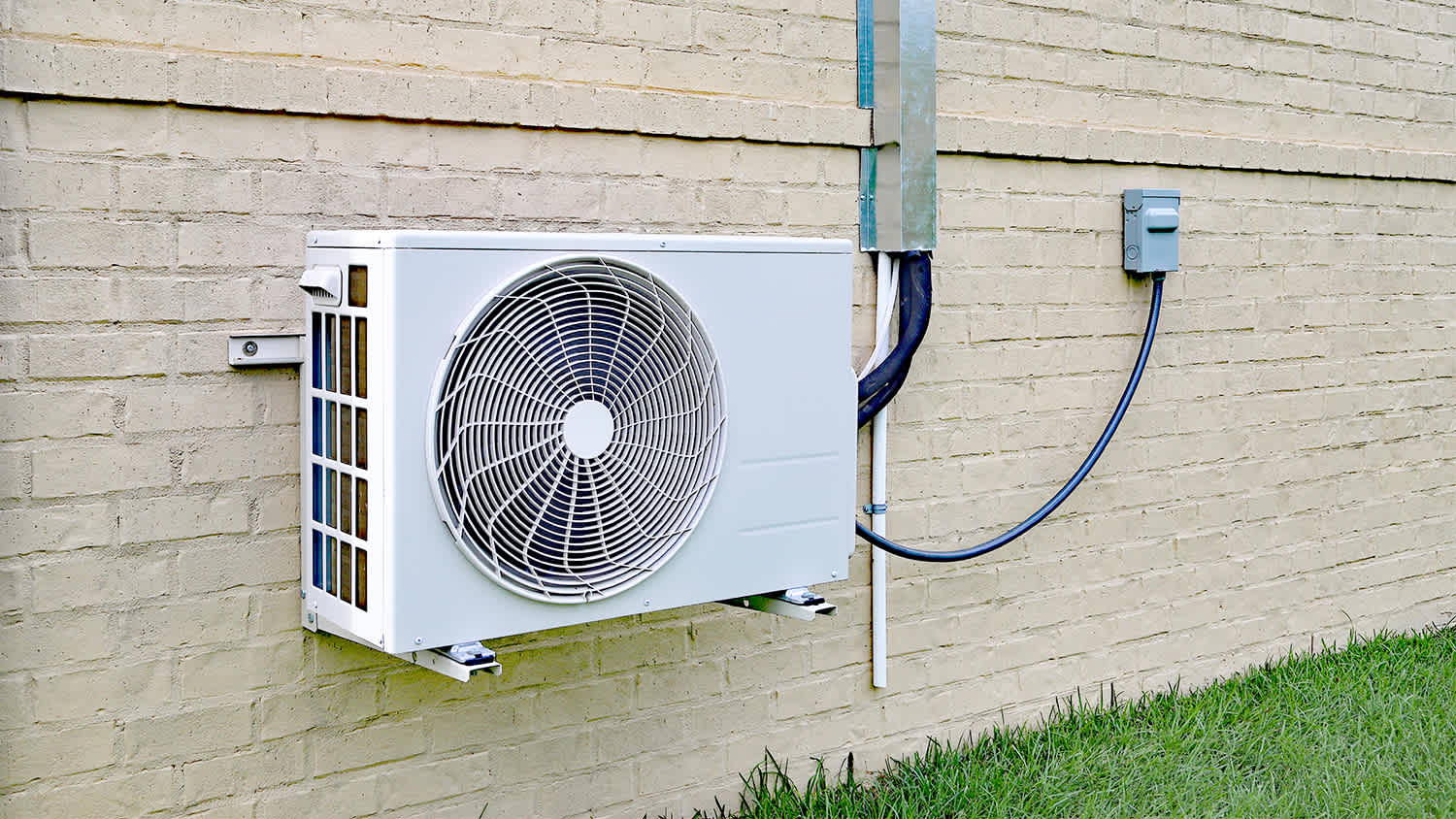
A ductless mini-split AC system comprises three main parts: an outdoor condensing unit, inside air units, and refrigerant coolant lines to connect everything. They can be bought as a kit, or each part can be purchased individually as needed.
The average prices below are for parts only and don’t include labor for professional HVAC installation, which can cost between $1,000 and $3,800.
| Part | Average Cost |
|---|---|
| Outdoor unit | $1,100–$6,000 |
| Indoor unit(s) | $450–$2,000 |
| Refrigerant lines | $6–$7 per foot |
| Installation kit | $350–$600 |
Homeowners in Dallas, TX, should also account for local labor pricing, permitting, electrical requirements, and other project-specific expenses when budgeting for a mini-split installation. Below is a breakdown of typical costs when hiring HVAC specialists in Dallas, TX.
In Dallas, TX, labor accounts for 35% to 60% of the cost of a mini-split installation. HVAC technicians in the region charge between $120 and $240 per hour, or approximately $4,500 to $13,000 or more per installation, depending on system size, home layout, accessibility, and complexity.
Licensed HVAC professionals in Dallas, TX, can answer all your mini-split questions and are experienced with high-efficiency cooling setups, which are widely used across North Texas due to long, hot summers. A qualified local HVAC pro can help size the system correctly, recommend energy-efficient models suited for extreme heat, and manage installation challenges such as multi-zone configurations or retrofits in older homes.
Depending on the scope of your project, you may also need additional licensed pros to ensure safe installation and code compliance:
General contractors may be needed if structural changes are required, such as modifying walls, creating new mounting locations, or coordinating multiple trades. In Dallas, TX, general contractors charge between $120 and $230 per hour.
Electricians are required for panel upgrades, dedicated circuit installation, or wiring adjustments needed to support the outdoor condenser unit. Local electricians in Dallas, TX, charge an average of $140 to $260 per hour.
In Dallas, TX, permits are required for mini-split installations to comply with local mechanical and electrical codes. Permit costs range from $300 to $900, depending on system size, zoning requirements, and whether electrical upgrades are involved. Most homeowners in Dallas, TX, rely on their HVAC contractor to handle the permitting process, since local professionals are familiar with city inspection procedures, documentation requirements, and energy compliance standards.
In Dallas, TX, installing a mini-split system can be a strong upgrade for both comfort and property value, especially in older homes, room additions, or properties without existing central air conditioning. The estimated return on investment (ROI) ranges from 50% to 70%, depending on installation quality and the home's condition.
With Dallas, TX, experiencing long, hot summers and occasional temperature swings, efficient cooling is a major priority for buyers. Ductless mini-splits are often viewed as a practical improvement because they offer zoned comfort, better energy control, and flexible installation options compared to traditional systems. As buyers continue to favor updated HVAC systems, installing a mini-split can improve a home’s appeal and competitiveness on the market.
To help homeowners plan their next project, Angi provides readers with carefully researched cost data and upholds strict editorial standards. We start with national average project costs, which we collect by analyzing competitor information, retailer material costs, and input from professional contractors. We then apply local price index data to calculate location-specific estimates that reflect what homeowners typically pay in their local area. To do that, we use data from the U.S. Bureau of Economic Analysis (BEA), including its Regional Price Parities (RPPs), which measure price differences across cities. This helps us account for differences in labor, materials, and overall cost of living, so estimates in higher- or lower-cost areas better reflect real-world local pricing.
Every estimate undergoes a thorough editorial review to verify accuracy, consistency, and alignment with observed market conditions.
Want to help us improve our cost data? Send us a recent project quote to [email protected]. Quotes and personal information will not be shared publicly.
This Guy is a real pro at what he does! I don't have enough words to express my appreciation with the Job he did in my attic with the air conditioning ducts. Besides being an excellent air conditioning pro he is pleasant and honest. I had interviewed 3 other companies for the Job and I...
 Manny and Son Air Conditioning & Heating
I recently hired AirFlux Pro to clean my air ducts, and I couldn't be more impressed! From the moment they arrived, the team was professional, courteous, and incredibly thorough. They took the time to explain the entire process, and even showed me the before-and-after results. The...
 AirFlux Solutions
Great service from havenhub! By far the easiest HVAC company I’ve ever worked with, they are very professional and answered all my questions. I’d highly recommend them for any heating and cooling work
 HavenHub Home Services
Highly recommend Green City Pros for duct cleaning! Leroy did a thorough job, And the difference in air quality was noticeable immediately. I'd gladly recommend this company to anyone looking for quality air duct work.
 Green City Pros
We hired Attic Air to re insulate our attic, they were on time, super king, super professional and thorough. They came on time , cleaned everything in a timely professional fashion, cleaned up behind themselves, and showed me everything every step of the way. Thank you
 Attic Air
This was our first time using Fresh Air Home Services to clean our ducts and vents, and we were extremely satisfied with their work. The employees were punctual, knowledgeable, and professional. Our air ducts and vents were thoroughly cleaned. We intend to use the company again when we...
 Fresh Air Duct Cleaning
Cory and Josh both went out of their way to help me during the summer heat. Great guys and better customer service. Highly recommend.
 AR Air Conditioning & Heating LLC
Our furnace stopped heating and Yamil stopped by the next day, diagnosed the problem and fixed it right away. Highly recommend him and plan to use him for future.
 4 Seasons AC and Heating Group, LLC
Responsive on-demand same day service. Customer Service efficiently scheduled appointment, followed by text message with photo of Service technician Roman. He arrived as scheduled, was knowledgeable and professional. Resolved issue and A/C cooling again all in a few hours. For excellent HVAC...
 Rescue Air, LLC
Call Tres for an estimate before buying from someone else!!! The owner (Tres) came out for the estimate and was here the entire day with his crew to install two new heat pump systems. They were professional, courteous, tidy (covered carpets, wore shoe coverings, etc) and trustworthy to do...
 Limitless Premier Services LLC
From average costs to expert advice, get all the answers you need to get your job done.
Dallas, Texas, is known for its heat, so working AC is essential for homeowners here. Here’s what you’ll spend on AC replacement costs in Dallas, Texas.

If your air conditioning unit isn’t functioning properly, you might need an AC recharge. Our guide will detail what a typical AC recharge cost in Dallas, TX looks like.

Getting AC and furnace replacement done at the same time can lead to huge benefits for your wallet and your home in Dallas, TX. Here’s everything you need to know.

Review the disadvantages of mini-split systems as well as the benefits before buying. Review our breakdown of the mini-split pros and cons.

Thinking about a ductless mini-split heating installation? Learn about zoning options, costs to expect, and how to hire the right local HVAC pro.
Adding a ductless mini split can be the right choice for a home addition or small space. Review these ductless mini split questions to prep for talking with a pro.