
•
Discover the cost to stucco a house in 2026, including average prices, key factors, and tips to help you budget and plan your stucco project with confidence.
Don’t get stuck on stucco

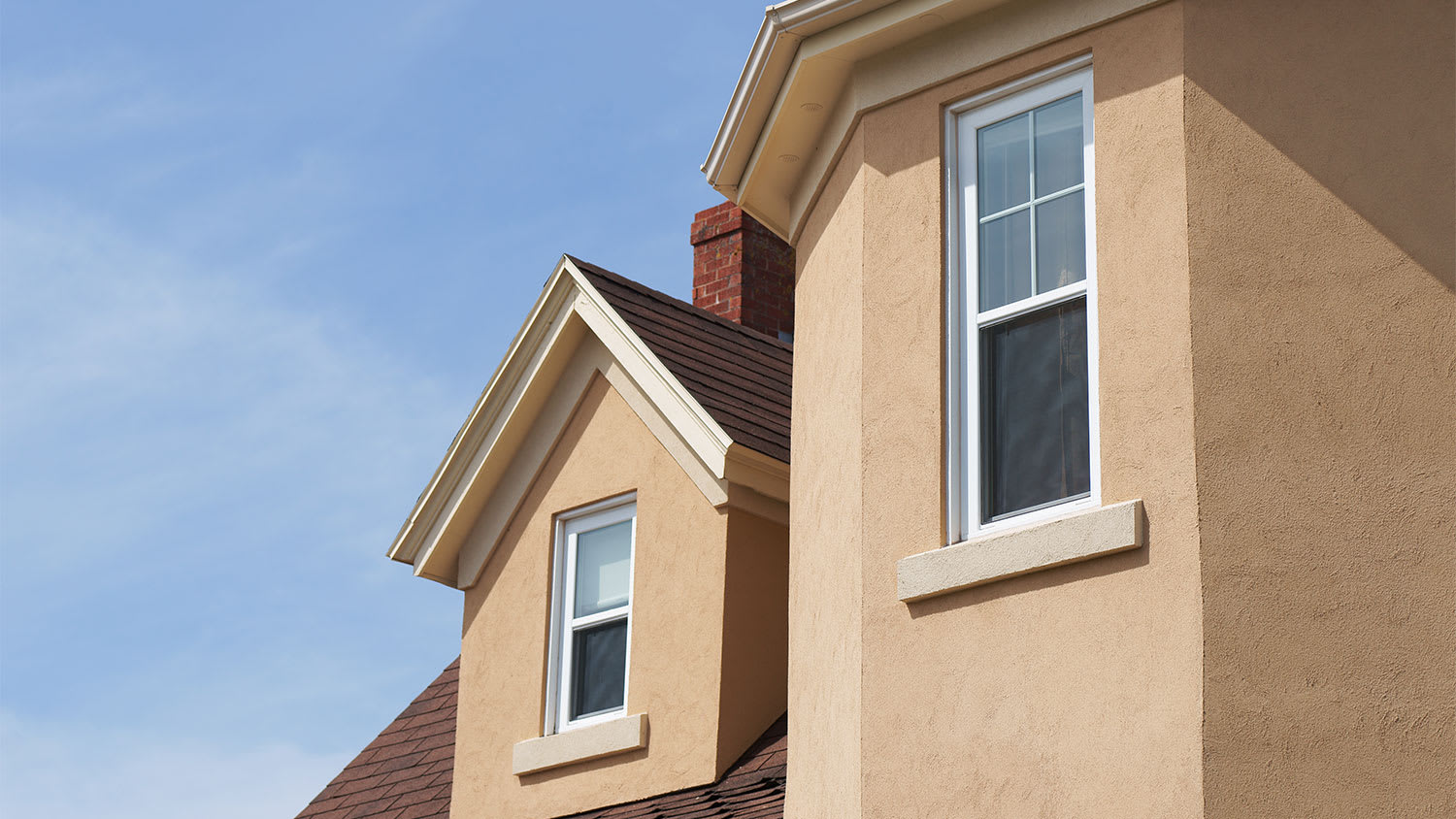
Replacing windows in stucco on a frame wall requires specialized tools like diamond blades and concrete saws to cut through the hardened cement mixture.
Window replacement costs range from $180 to $410 per window, though stucco homes often require more time and specialized equipment for proper installation.
Your window replacement method depends on your goals: insert replacement keeps costs lower, while architectural replacement maintains original window size and creates a seamless finish.
Hiring a local window and door professional keeps your project on track with proper stucco cutting, frame installation, and waterproofing for lasting protection.
Stucco is one of those materials that has stood the test of time, as the mixture is affordable, aesthetically pleasing, and durable. Removing doors and replacing windows on a stucco home, however, requires a bit of masonry expertise and specialized tools. If you’re looking to make exterior improvements to your home, keep in mind these tips when you’re replacing windows in stucco.
To replace windows on a stucco home, you will need specific tools to minimize damage and ensure a tight fit. Wall removal is inevitable in this process unless your window is specifically designed for retrofitting. The following tips will help you understand the proper way of replacing windows in stucco homes, the necessary tools, different replacement options, and how to properly finish the new windows.
Stucco is the result of mixing Portland cement with lime, water, and a bit of sand, essentially making it solid rock layered on top of the wood framing of your house. Stucco siding is popular in warmer climates, in particular, because it insulates both hot and cold air.
While the vertical nature of the cladding limits the thickness to about an inch, stucco is still a very hard material to cut without diamond blades, so you’ll want to hire a local window contractor to do this work. Most contractors will use a gas-powered concrete saw to etch around the windows, but if you’re doing a smaller DIY window replacement job, you can get by using a hand grinder with a concrete blade.
This work is messy and requires a fair bit of muscle, as do all concrete jobs, so bring your elbow grease, an N95 mask, and leather gloves to the work site or hire a concrete repair contractor.
On a house with wood siding, the framing of the windows is usually thick header boards made of wood. But on a stucco-sheathed home, the additional weight of the walls requires a sturdier support mechanism.
If you’re replacing the windows on your stucco home as a DIY project, the additional width that you’ll need to cut out of the stucco to access the main steel beam across the top of the window makes this process quite a bit more effort than an insert. These pieces of steel are often rusted out and will need to be removed first.

When it comes to replacing windows in stucco, there are two tried-and-true techniques to consider: insert replacement and architectural window replacement.
The insert method is not only the most affordable option for replacing stucco home windows, but it also requires the least amount of exterior changes.
First, the window installer or contractor will measure for replacement windows and order a window that's slightly smaller than the original. During replacement, your pro will cut out the existing window and insert the new one without changing the stucco, framing, or seal. The benefit is a straightforward method, but it can potentially make the window look a bit smaller or less seamless than a more custom approach.
This method is best when you want it to match the house's original architectural intent and construction. Architectural windows require a more labor-intensive replacement process, beginning with stripping the stucco from the wood studs and removing the old frame. Next, the new window will be nailed directly to the studs. A few layers of stucco will cover the flange, ensuring a watertight seal.
Matching the new stucco to the original requires a bit of extra care. Therefore, you may want to leave this part to a contractor who can handle a more time-consuming expert install and finish the project with the right tools and know-how. The result is worth the additional considerations as it keeps the original window size intact and creates a more finished look.
To access the original framing and remove the window entirely, you’ll need to use masonry tools to cut out and remove about five inches of old stucco wall all the way around the window. The stucco will be mixed with a wire lathe base and the nails used to hold it up, so you’ll encounter additional hazards during this partial wall removal and need to proceed carefully.
Retrofitting an existing window in a stucco house can result in requiring the removal of rock or brick that surrounds the opening. Depending on how your house was designed and built, brick or rock may frame the window and, thus, need to be removed. A window retrofit is hard labor and often out of reach for the average DIYer, so you’ll want to hire a window installer for the gig.
Due to the use of lead paint, stucco removal can be dangerous on homes built before 1978. Don’t attempt to remove any stucco unless you’re familiar with lead paint safety, such as wearing proper PPE and washing all clothes immediately after the work is done.
Even without lead paint concerns, stucco dust is still highly harmful to the human body, posing significant lung and body damage threats. Therefore, it is best to leave the job to a pro.
Stucco flange and nail flange are two common types of installation methods, and the right process for your home may come down to what shape the existing window frame is in and if you need additional waterproofing done.
Stucco flanges—also known as a flush-fin—are commonly used when a window frame needs a flush installation on a flat exterior surface. A pocket installation fits the new window into the existing frame, saving time since the stucco siding and old frame will remain intact throughout the process. Before installing, remove old sealant and debris from the wood frame. This type of installation is also ideal for windows with no structural deterioration or water damage and will be properly sealed and maintained to be extra waterproof and weather-resistant.
Nail flange or nail-fin window frames add an extra weather barrier to your window with a seamless outer perimeter around the window. The nail flange provides additional window support and helps prevent warping, as well. It attaches via pre-drilled fastener holes into your home's framing during installation. Because a nail flange is placed about 1/2- to 3/4-inch under the siding, the surrounding stucco material must be replaced and matched to the existing siding after the new window installation.
If you’ve replaced old windows with architecturally accurate replacements, the stucco contractors will have created a fresh bed of raw cement around every window. To match the existing texture and properly seal your home against the elements, you’ll need to prime and paint the stucco siding around the window.
When you’re done, you’ll also need to touch up the walls on the inside of your home, so brush up on your home painting tips before you start or hire an interior painter. If you’ve opted for the insert method of replacing your old windows, you’ll still have damage to your exterior and interior trim that, while minimally invasive in comparison, will require a layer of primer and paint to finish the job on both sides.
We have used Window Warriors many times with no issues. They arrived on time and were very professional . We have pets and Window Warrior team treated them very well, well trusted team.
 Window Warrior of Columbus, Inc.
I am highly satisfied with the window replacement service I received; the professionals from Savvy Exteriors were punctual and did an amazing job that exceeded my expectations.
 Savvy Exteriors
I hired windows depot USA of central to install new windows in house in Oshawa. Ilya was very professional from the start, not only did he offered a great price, he also made sure the installation was on time. I am very satisfied with final outcome. The windows look great and the overall...
 Window Depot USA of Central Ohio
The team is awesome!! I can generally pick up and clean throughout the week, but they CLEAN! Windows, stair rails, microwave. All the things I can’t ever seem to get to regularly. The house looks and smells great after they leave.
Description says they handle window repair including rotten hardwood - they called me back right away but didnâ t leave a voicemail. I followed up 3 days later and they said they donâ t do that kind of work.
 Window-Gurus
We had a gutter blockage that was causing water to sheet down the side of the house and ultimately it started to come in at a window (need mortar people next). Called around 7:30am, and he responded by 8am. He was able to come out the same morning and do a look over and clean out. He also...
From average costs to expert advice, get all the answers you need to get your job done.
Discover the cost to stucco a house in 2026, including average prices, key factors, and tips to help you budget and plan your stucco project with confidence.

The cost to paint a stucco house depends on its size, the type of paint used, and any required repairs. This guide will help you budget for the painting project.
Find out how much it costs to add a window to your home, including the cost to cut and frame the opening, as well as installing the window itself.

Choose the right pro for stucco installation to get the best professional-quality results. Learn who does stucco installation and the benefits of hiring a pro.

Learn how to hire a qualified stucco installation pro for your home. Get tips on finding reputable contractors, questions to ask, and what to expect.

Stucco is a type of cement-based siding that’s durable, inexpensive, and designed to withstand the elements. Find out what makes it special, how much it will cost to install, and if it’s an addition that will be right for your home.