
Wondering how much gutter installation costs? We’ll break down prices by material, gutter type, and other factors impacting overall gutter costs.
Whether you opt for thick or thin gutter gauges, don't neglect this essential part of your home drainage system

Gutter thickness in standard installations varies by material, with aluminum measured in thousandths of an inch and steel or copper measured in whole-number gauges.
Aluminum gutters cost $2 to $3 per linear foot, while steel costs $4 to $6, copper $15 to $25, and zinc $15 to $30 per linear foot.
Your home needs thicker gauge gutters to handle heavy snow loads, steep roofs, or extreme weather conditions that can warp or collapse thinner materials over time.
Hiring a local gutter installation professional provides reliable help selecting the right gauge for your roof and ensures proper installation that protects your home from water damage.
When managing drainage and protecting your home from water damage, your gutters are usually out of sight and out of mind. Your home’s gutters and downspouts make up the drainage system responsible for channeling rainwater and melted snow away from your roof and toward parts of your yard with good drainage.
If your home doesn’t have gutters, or if your gutters haven’t been cleaned out and maintained properly, the roof can accumulate leaves and debris. Without clear gutters, one major storm can damage your home, including water infiltration, rusting, and a weakened foundation. Over time, the cost and extent of the necessary repairs can increase dramatically, or you’ll have to replace the gutters altogether. To keep your drainage system in fighting condition, let’s take a look at how to choose the best gutter gauges for your home.

The thickness of gutter material is measured by its gauge metal. Gauge is measured in thousandths of an inch for aluminum gutters and whole numbers for steel and copper. With whole-number gauges, the higher the number, the thinner the piece of metal.
| Gutter Material Type | Typical Gauge Range |
|---|---|
| Steel | 24–30 |
| Copper | 16–24 |
| Aluminum | 0.019–0.025 |
For steel gutters, which typically come in gauges from 24- to 30-gauge thicknesses, the most commonly installed gauge is a 26-gauge. A 24-gauge will be sturdier and prove more resistant to heavy loads. Downspouts are more commonly available in 26- or 28-gauge. Even with thicker steel gauges, the gutters may rust through within 10 to 15 years unless they’re well-protected with the appropriate rust-proofing paint.
Copper gutter fittings are known for their rich color and long-lasting abilities. Copper gauges range from 16 to 24, with 20-gauge thicknesses being the most common. However, 16-gauge copper is often used in homes that have steep roofs or are located in areas that experience heavy snow and ice.
On the downside, that lovely bright color will evolve over time to the familiar green patina of aged copper. Over time, that discoloration can become uneven unless it’s treated ahead of time with chemical pre-weathering agents.
For aluminum gutters, thickness or gauge is measured in thousandths of an inch. Aluminum gutter fittings that are available in most home improvement stores tend to be quite thin. In many cases, the available stock ranges from a lightweight 0.019-gauge, which is susceptible to warping or even collapsing under accumulated snow, to a slightly thicker 0.025-gauge, which can also buckle under heavy rainfall. Thinner gauge gutters also tend to need to be replaced more quickly than thicker ones, which usually last longer.
In contrast, contractors use an industry standard of either 0.027- or 0.032-gauge aluminum when installing gutter systems. Both of these thicknesses will hold up longer and better than thinner gauges under the stresses of extreme weather and time.

When considering gutter gauges, it helps to understand how gutters and downspouts work. Gutters run horizontally around your home’s roof, while downspouts run vertically and send the water runoff to the ground for drainage.
Gutters and downspouts are typically made of one of five commonly used materials, each with different pricing (usually compared on a linear foot basis). It’s important to use the correct size gutters and downspouts for your roofing system to keep them working effectively.
Vinyl is easy to cut to fit, and it will not corrode or rust. However, it can become brittle in very cold temperatures. Vinyl gutters and downspouts cost about $1 to $2 per linear foot.
One of the top materials for residential gutters, aluminum gutters generally cost around $2 to $3 per linear foot and $4 to $6 per linear foot to install.
Galvanized steel is one of the sturdiest materials for gutters and downspouts. However, it is subject to rust. Additionally, with prices averaging $4 to $6 per linear foot, it can increase your overall project costs.
Many homeowners find copper gutters and downspouts to be an attractive option, especially for older homes. They are rust-proof and don’t need painting, but they tend to cost substantially more at around $15 to $25 per linear foot. Copper is also less common than the other materials, at least in most single-family homes, due to the average cost.
Stainless steel gutters and downspouts will maintain their sheen for many years, but they are more expensive than other options, up to $20 per linear foot.
The price per linear foot for gutter installation cost using zinc gutters is between $15 and $30. While pricier than aluminum, zinc can double the life span of aluminum to last 50 years. Zinc can also be a better high-end option than copper for homeowners looking for gutters that are available in multiple colors.
Corey Carr was great. I had damage from a recent storm and needed to have my mast and other components replaced. The project entailed coordinating with AEP, and Corey helped make a stressful situation a lot less stressful. I really appreciated his dedication to service and the job very well done.
 Mr. Electric of Columbus
Positive experience. As previously stated, the replacement/repair could not be completed (no fault of the plumbing tech) b/c misinformation was rec?d by property management maintenance. Thanks to the plumbing tech for your efforts. Appreciate you!
 The Waterworks
Carpet repair done well. Scheduling was easy. Showed up on time.
 BR Flooring Installation
Cole has been handling plumbing and general contracting for our four properties over the past three years, and he’s always done a great job. Most recently, he installed a sink and countertop in our retail store where none existed before, and it turned out exactly how we needed. He’s...
 ANB Renovations LLC
I am highly satisfied with the window replacement service I received; the professionals from Savvy Exteriors were punctual and did an amazing job that exceeded my expectations.
 Savvy Exteriors
I would recommend this company to anyone! He showed up on time, was friendly, completed a very difficult repair on our dryer vent cover, was responsive, and pricing was extremely fair and competitive. I would have him back to do any of our repairs or cleanings without hesitation!
 U.S.A. Dryer Vent, LLC
Everything from initial contact to completion was absolutely top notch. We contacted the business during off hours to leave a message, and the owner still reached out to feel out the issue within minutes. We were scheduled and repaired within 48 hours. I cannot say enough about the...
 Supreme brick & chimney
Ace Fireplace Services came to the rescue for my chimney repair. They were quick to pinpoint the issue and worked their magic to fix it. My chimney is now in excellent shape, and I'm a satisfied customer.
 Ace Fireplace Services
On Sunday 2/26 I requested quotes via Angi from 4 refrigerator repair businesses. Northwest Appliance responded to me Monday morning (2/27) and my refrigerator was repaired by noon the same day. Great communication, they did everything they said they would. The technician had the parts on...
When we had the winter freeze, I called Quantum Waterworks Waterline & Drain Cleaning Services and within 1 hour I received an e-mail and he sent someone out the next day and he was on time, he was nice and did the job quickly and cleaned up after himself. We had a leak in our kitchen from...
 Quantum Waterworks Waterline & Drain Cleaning Services, LLC
From average costs to expert advice, get all the answers you need to get your job done.
Wondering how much gutter installation costs? We’ll break down prices by material, gutter type, and other factors impacting overall gutter costs.
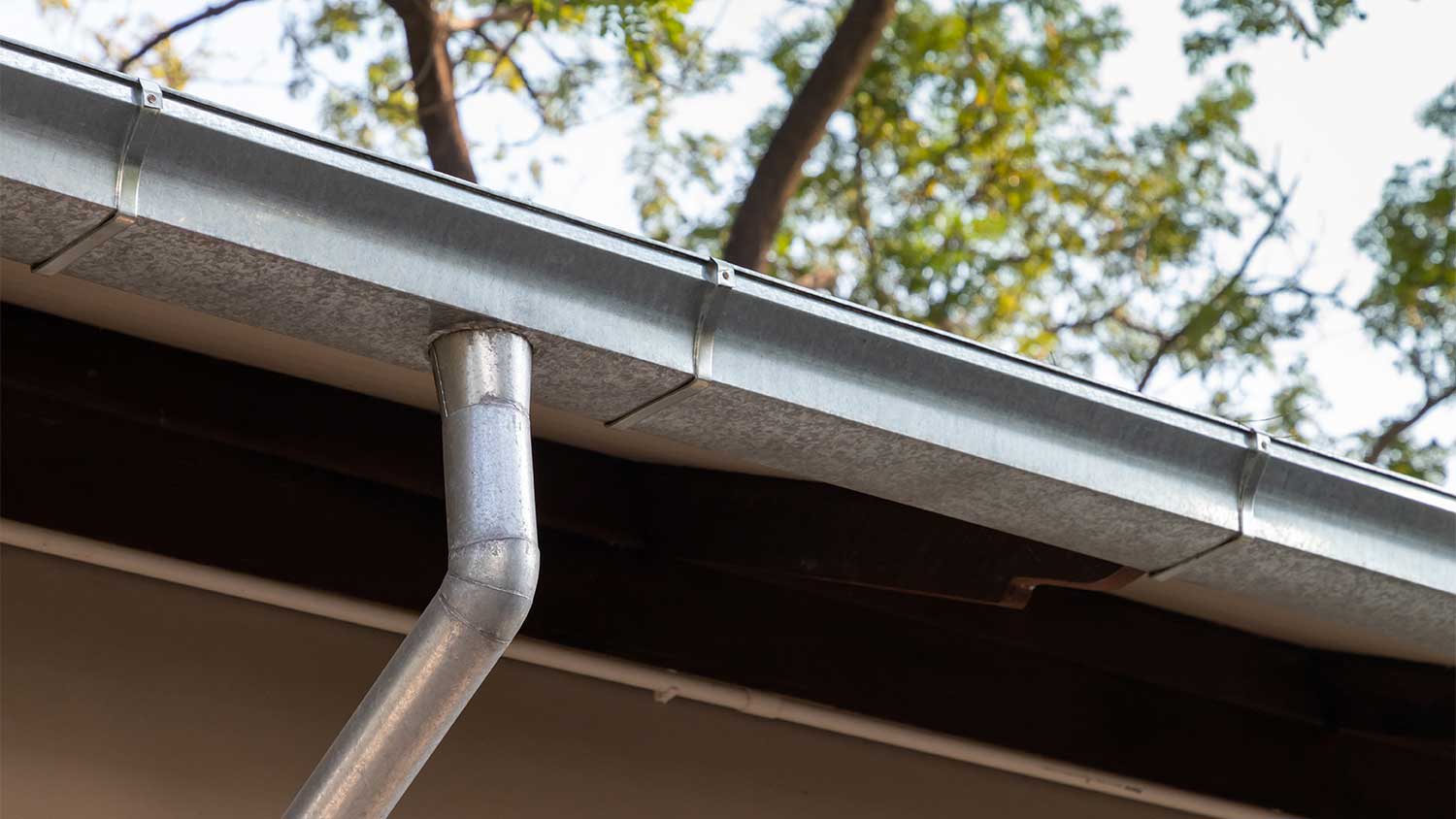
Galvanized gutters are expensive but require minimal maintenance and never rust. Use this galvanized gutter cost guide to see what they’ll cost for your home.
This guide will give you an idea of how much you can expect to pay when getting new seamless gutters installed when accounting for removal, labor, and different gutter materials.
Learn to choose the proper size gutters and downspouts to install, plus some gutter sizing tips, maintenance routines, and gutter alternatives.
How thick a foundation should be depends on a few factors. Learn about minimum thicknesses for different foundation types and soils in this guide.

Learn about the different types of gutters that can be installed at different price ranges to stop water damage to your home's foundation.