
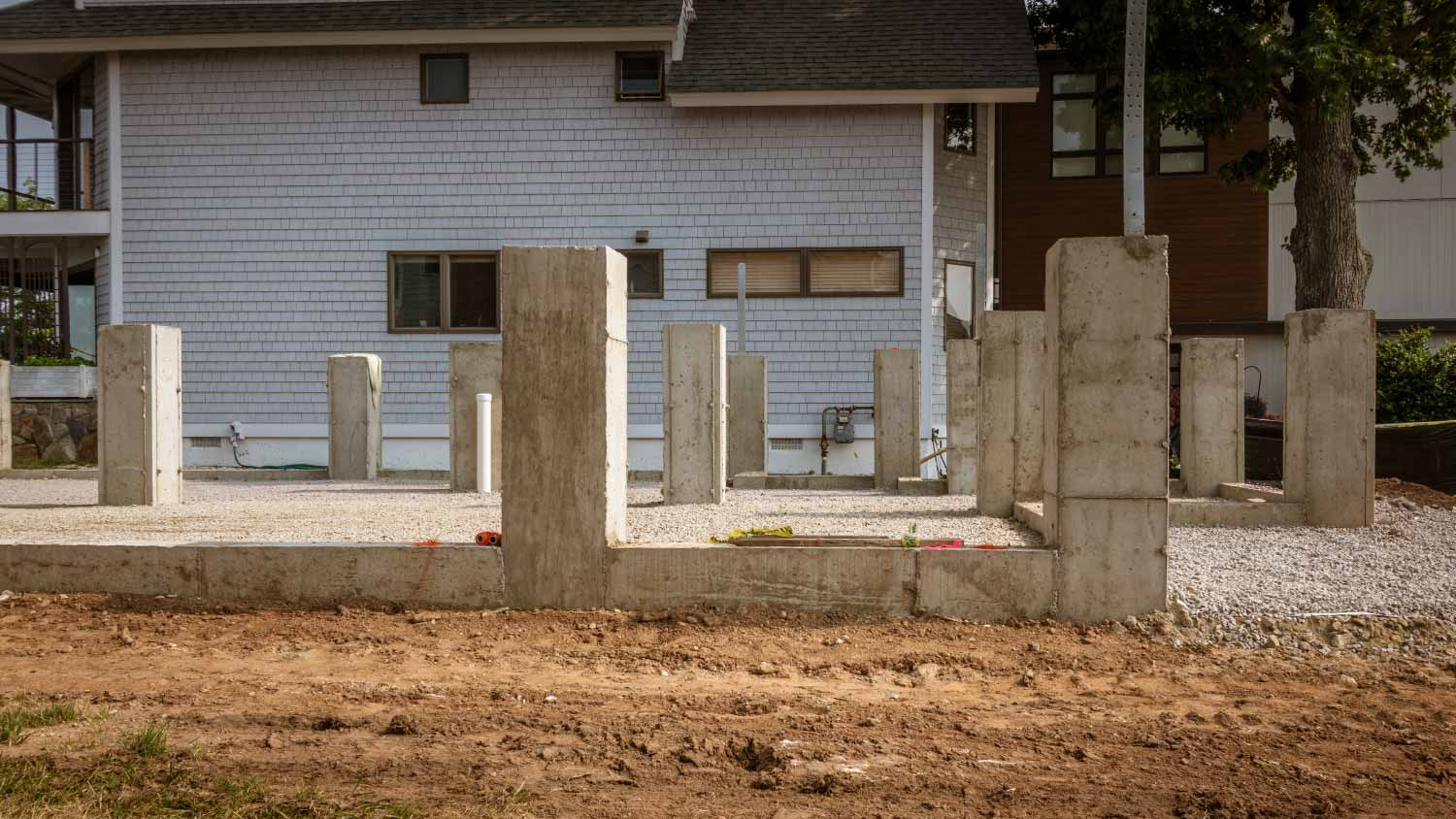
Worried about pier and beam foundation repair costs? Get a better understanding of how to budget by learning about the repair methods available to you.
Settling is perfectly normal but is often confused with more serious structural issues

Foundation settlement happens when your home's weight naturally compacts the soil below, creating minor hairline cracks less than one-eighth inch wide.
Foundation problems include wide horizontal or diagonal cracks, stair-step patterns, and visible water intrusion that signal structural damage rather than normal settling in your home.
Your choice between monitoring and repair depends on crack width, crack growth over time, water intrusion, and whether you notice interior signs like sticking doors.
Hiring a local foundation repair professional provides clear answers through inspections and identifies whether your cracks need sealing or structural stabilization.
Your home’s foundation is under immense stress, so it’s important to identify issues and get professional solutions immediately. While foundations crack and shift due to normal settlement, it’s very easy for untrained homeowners to confuse settlement with serious issues. In this guide, we’ll discuss the differences between foundation problems versus settling so that you can identify both and get the appropriate repair underway.
Foundation settling refers to minor movements of your home’s foundation, usually downward into the soil within the first few years of construction. Settling puts some added stress on the concrete, but not enough where it compromises the structure's integrity.
Foundation problems, on the other hand, can be much more severe, leading to foundation instability, larger cracks in the foundation, and related issues, like water intrusion, pest infestation, foundation sinking, and more.
| Foundation Settling | Foundation Problems |
|---|---|
| No loss of structural integrity | Structural damage is possible |
| Normal and expected | Arises because of an unexpected issue |
| Occurs within first few years of construction | Can happen at any time |
| Repairs often not required | Stabilization or other repairs necessary |
| Symptoms include hairline cracks in foundation | Symptoms include wide cracks, sinking, water intrusion, and more |

One of the most important differences between normal foundation settlement and more severe foundation problems is in the symptoms.
All foundations settle and crack, but the soil movement that causes the foundation cracks to form is minor, leading to hairline cracks forming on the slab or the foundation walls if you have a crawl space or basement. The cracks typically develop within a few years of construction and then stop growing and widening.
Hairline cracks are less than ⅛-inch wide. Neither side of the crack rises above the other, and the crack doesn’t usually span from slab to wall or between walls. Sometimes, you might see a thin hairline crack on your concrete block wall in the shape of a stair step. This symptom could be from normal settlement if the crack is thin and doesn’t continue to grow over time, but it could also be a sign of structural damage.
Hairline cracks from foundation settlement rarely let visible water into your under-home area. If you see moisture along the crack, it’s best to seal it with a foundation crack sealant or epoxy.
Foundation problems often come with wider foundation cracks, usually more than ⅛ inch. If your foundation cracks continue to grow for years or develop long after construction, they’re more likely indicative of foundation damage rather than settlement.
There are a few types of foundation cracks that are a cause for concern and are rarely indicative of settlement:
Horizontal cracks on the foundation walls
Diagonal cracks on the foundation walls
Stair step cracks on the walls that round the corner
Any cracks that spread across room corners or from the slab to the concrete wall
You’re also more likely to see visible water coming through structural cracks. Since moisture intrusion is more of an issue, some other signs of foundation issues related to moisture accumulation include pest infestation, heavy or moist air in your under home area, and increased energy bills due to interior moisture.

The symptoms of foundation problems and settlement vary because the underlying causes differ.
Foundation settlement occurs because the weight of your foundation and the structure above continue to pressure the soil underneath and eventually compact it, causing the foundation to shift downward. The downward movement is minimal and usually happens uniformly under the home, so the foundation maintains even support.
There are many more underlying causes of foundation problems.
Uneven settlement: If what would otherwise be normal settlement occurs unevenly under your home due to differences in soil moisture content, it could result in structural damage.
Hydrostatic pressure: This puts intense pressure on your foundation walls and can bow them inward. It results from the soil around your foundation swelling in the presence of moisture.
Frost heave: Frost heave is when the water in the soil under your foundation freezes, putting damaging, upward pressure on the slab.
Sinkholes: Sinkholes can lead to unsupported sections of your foundation and rapid foundation sinking.
Moisture issues: Water intrusion can be an issue if your property has poor drainage. Moisture causes many problems for your foundation, including leaking and weakening of the concrete.
Poor construction: Home builders need to compact soil before pouring the foundation. If they don’t, the ground can settle unevenly, causing a loss of structural integrity.
Tree roots: Tree roots growing near your foundation can push the concrete inward to the point of cracking and structural damage.
Earthquakes: Earthquakes can cause sudden shifting of soil that damages your foundation, necessitating immediate structural repair.

Preventing foundation settlement is usually not possible, although compacting the soil under where the foundation will sit is a good way to minimize soil movement after construction and avoid damage.
Preventing foundation problems can take many forms, depending on the kind of damage you’re looking to avoid:
| Foundation Problem | Prevention Method |
|---|---|
| Frost Heave | Drainage system or foundation insulation |
| Hydrostatic Pressure | Drainage system or soil gradation |
| Sinkholes | Drainage system |
| Tree Roots | Planting trees 10+ feet away from home |
| Uneven Settlement | Proper construction or drainage system |
| Water Intrusion | Drainage system |
Foundation problems and settlement differ in how you should respond to and fix them as well.
In many cases, fixing foundation cracks from normal settlement isn’t necessary unless moisture or radon are issues on your property. You can seal them or have a foundation repair contractor fill them for you. Aside from sealant, settling cracks don’t need attention unless they grow or widen.
Foundation repair for more severe issues depends on the underlying cause and the extent of the damage. An expert might use a few different foundation repair methods to stabilize your foundation and prevent further movement.
Underpinning. Foundation underpinning is the placement of supportive piers beneath the foundation. The piers sink to stable soil for support to prevent the foundation from sinking.
Foundation wall support. Horizontal wall cracks from hydrostatic pressure might require bracing using carbon fiber strips to prevent additional bowing.
Drainage system. A drainage system, like a French drain, can move excess runoff away from your foundation to prevent moisture and water intrusion issues. This can also solve problems with expansive soil.
Mudjacking. Mudjacking, slab jacking, and poly jacking refer to when a contractor pumps a supportive, semi-fluid material under a slab to lift it back into place. When it dries, it provides even support for the foundation.
Crack sealant. Contractors sometimes use special epoxy to seal structural cracks and stabilize the damaged area to prevent further damage.

The easiest way to tell the difference between foundation settlement and foundation problems is to look at what’s occurring and where. If you notice thin cracks on your foundation that don’t span between walls or between the concrete floor and the walls, especially if they aren’t growing or widening with time, then they’re likely from regular settlement.
If foundation cracks widen to ⅛-inch or more, appear horizontally or diagonally on the foundation wall, appear in a stair-step formation on your concrete block wall, or stretch around corners or from the slab to a wall, you more likely have a serious foundation issue. Additionally, if you notice irregularities on your main floor, you probably have a foundation issue rather than settlement. Some common indications of an issue—and signs that you might want to walk away from the foundation problems if you’re buying a home—include the following:
Doors and windows that stick
Uneven, sloping, or bouncy floors
Cabinets and counters pulling away from the walls
Wavy or uneven roof
Cracks in drywall around wall openings
Nails pushing out of your drywall
If you have any doubt about whether symptoms in your home are from normal settling or a foundation issue, call a foundation repair company near you right away to get the problem addressed.
Positive experience. As previously stated, the replacement/repair could not be completed (no fault of the plumbing tech) b/c misinformation was rec?d by property management maintenance. Thanks to the plumbing tech for your efforts. Appreciate you!
 The Waterworks
Carpet repair done well. Scheduling was easy. Showed up on time.
 BR Flooring Installation
I would recommend this company to anyone! He showed up on time, was friendly, completed a very difficult repair on our dryer vent cover, was responsive, and pricing was extremely fair and competitive. I would have him back to do any of our repairs or cleanings without hesitation!
 U.S.A. Dryer Vent, LLC
Everything from initial contact to completion was absolutely top notch. We contacted the business during off hours to leave a message, and the owner still reached out to feel out the issue within minutes. We were scheduled and repaired within 48 hours. I cannot say enough about the...
 Supreme brick & chimney
Ace Fireplace Services came to the rescue for my chimney repair. They were quick to pinpoint the issue and worked their magic to fix it. My chimney is now in excellent shape, and I'm a satisfied customer.
 Ace Fireplace Services
On Sunday 2/26 I requested quotes via Angi from 4 refrigerator repair businesses. Northwest Appliance responded to me Monday morning (2/27) and my refrigerator was repaired by noon the same day. Great communication, they did everything they said they would. The technician had the parts on...
Great experience all together. Dog friendly, courteous, great results and honest with recommendations. Will certainly be using Cardinal in the future for any carpet repairs
 Cardinal Carpet Care & Repair
Description says they handle window repair including rotten hardwood - they called me back right away but didnâ t leave a voicemail. I followed up 3 days later and they said they donâ t do that kind of work.
 Window-Gurus
Chaz, the owner, was very responsive and he communicated with us throughout the entire process. The overall cost was in the middle compared to the three estimates we received. The installation crew was very professional. Chaz was considerate enough to send a crew back to our home to repair...
 Unique Hardwood Floor LLC
Great guys. Spend a lot of time repairing and prepping our walls before doing the new paint. Home looks great now.
From average costs to expert advice, get all the answers you need to get your job done.
Worried about pier and beam foundation repair costs? Get a better understanding of how to budget by learning about the repair methods available to you.

Staying ahead of foundation problems can save you time and effort. Learn how much foundation inspections cost and what affects how much you’ll pay.

All foundations settle, but some can develop related structural issues. Use this guide to identify foundation settlement and determine when to take action.
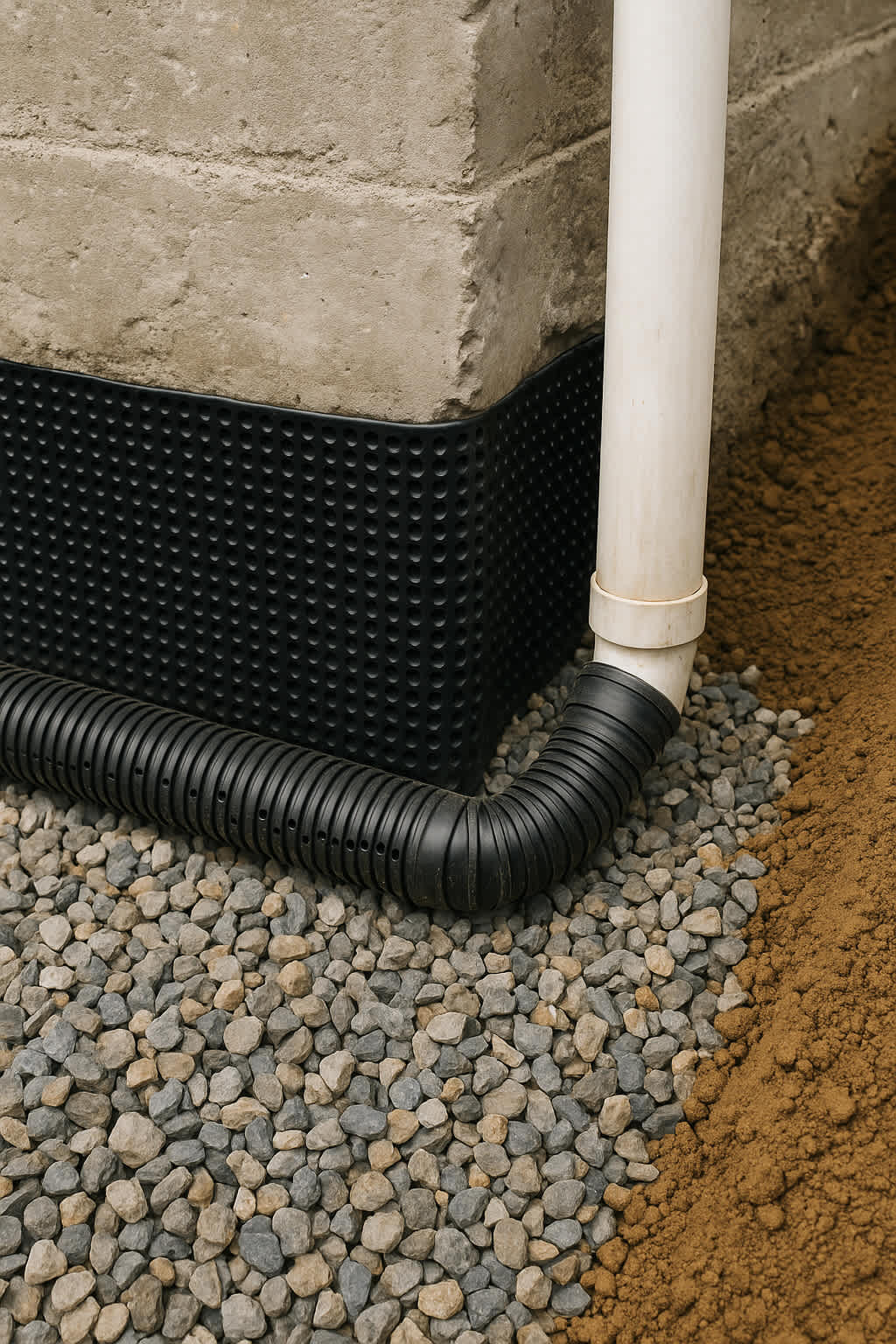
Foundation draining issues can cause a lot of problems for your house Learn how to spot these drainage problems so you can figure out how best to repair them.

Need help identifying foundation damage? Learn about the signs of foundation issues, the underlying causes, and what to do if you find them in your home.

All foundations crack, but not all cracks indicate structural issues. Learn about when to worry about foundation cracks and call in a professional.