
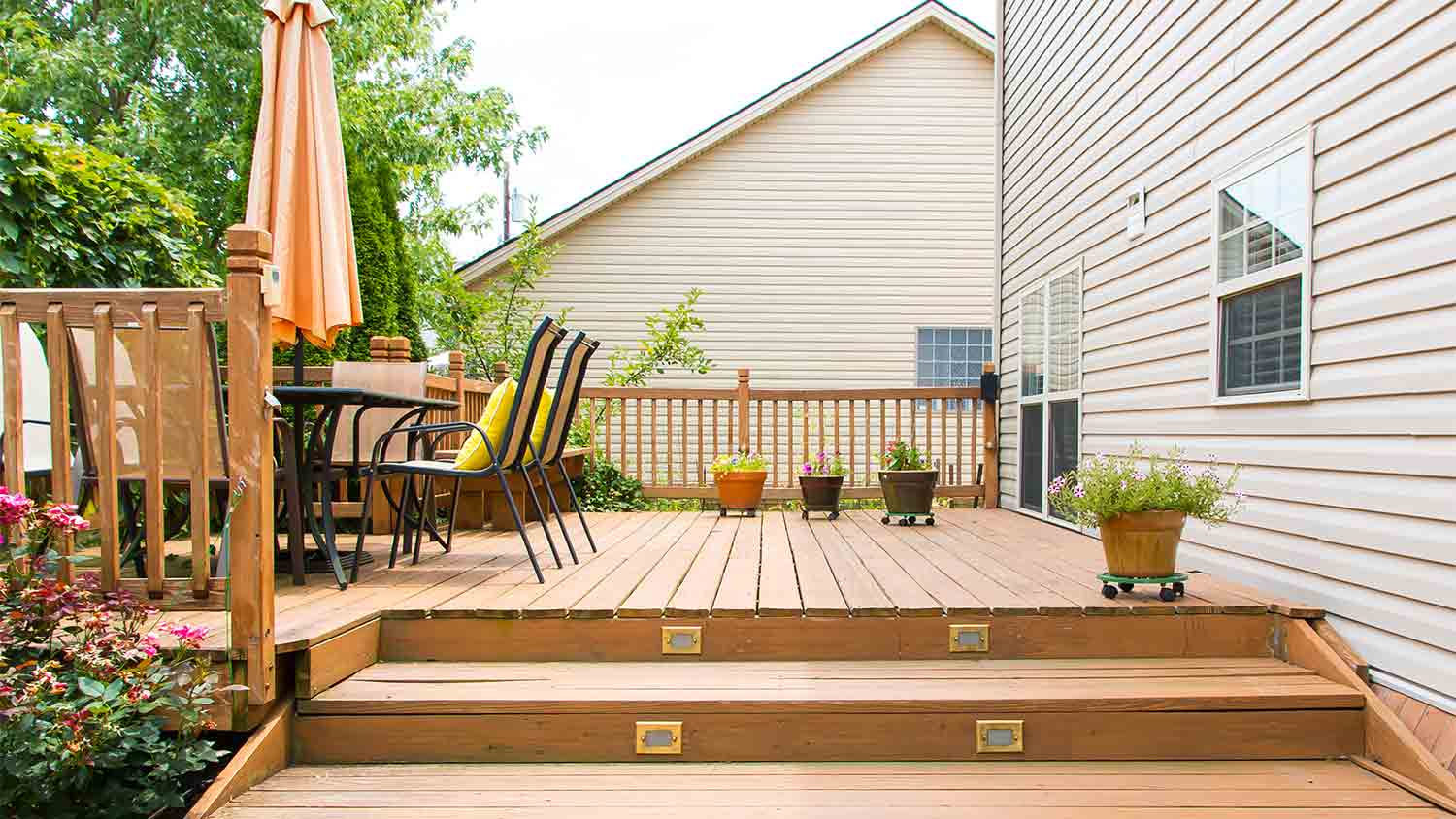
Looking to update your yard with a new outdoor entertaining area? Learn how much a pressure-treated wood deck costs and how to estimate your total.
Deck and porch service costs depend on your project and location. Check with a local pro for your specific job.


Floating deck installation runs $2,500 to $14,750 nationwide, with costs landing between $20 and $60 per square foot for your project.
Your deck size and style set your total, and multi-level or custom designs need more materials and labor.
Your permits cost $150 to $500 by city, and your budget should include railings, stairs, and site prep.
Hiring a local deck building professional ensures your outdoor space is built safely and boosts your home value with professional craftsmanship.
A floating deck costs an average of $4,500 nationwide, with most homeowners paying between $2,500 and $14,750 for installation on average. The cost per square foot ranges from $20 to $60, depending on deck size, material, and labor. Understanding these factors helps you plan your floating deck project and budget effectively.
A floating deck adds accessible outdoor living space without the complexity of traditional deck foundations. Let’s walk through what impacts floating deck costs, so you can make smart decisions for your home.
Several factors influence your final floating deck cost, beyond just size and style. Let’s break down the main considerations:
The size of your floating deck is one of the most significant factors affecting your cost. Larger decks require more materials and labor, which increases the total price. Standard sizes, such as 10 feet by 10 feet, 12 feet by 16 feet, or 20 feet by 20 feet, each have different cost implications. Most floating deck installations are priced by the square foot, with rates landing between $20 and $60 per square foot.
While larger decks may benefit from economies of scale—reducing the per-square-foot price—they still come with higher total costs. Multi-level or unusually shaped decks also increase expenses, as they require more planning, materials, and skilled labor.
| Deck Size (Sq. Ft.) | Dimensions (Ft.) | Average Cost | Average Cost Range |
|---|---|---|---|
| 100 | 10x10 | $4,000 | $2,000–$6,000 |
| 192 | 12x16 | $7,700 | $3,800–$11,500 |
| 400 | 20x20 | $16,000 | $8,000–$24,000 |
Floating deck style also plays a key role in floating deck costs. Common styles include ground-level, multi-tiered, platform, and freestanding decks. Simpler, ground-level decks are the most affordable, while multi-tiered or custom-designed decks with curves, built-in seating, or planters increase costs due to greater complexity and labor.
Basic floating decks are easier to maintain and install but may offer fewer features. Custom or multi-level decks can create a unique outdoor space but require more investment.
| Deck Style | Description | Pros | Cons |
|---|---|---|---|
| Ground-level | Sits close to the ground, simple design | Easy access, affordable | Limited elevation |
| Multi-tiered | Multiple levels, stairs connecting sections | Visual interest, versatile | Higher cost, more complex |
| Platform | Single, elevated surface | Clean look, flexible | Needs more support |
| Freestanding | Not attached to house, can be moved or adjusted | Flexible placement | May need extra bracing |
Where you live has a significant influence on your floating deck costs. Labor rates, material prices, and climate all vary across regions. Urban areas often see higher labor costs, while rural locations may face increased delivery fees or limited contractor options. Local building codes and climate factors, such as hurricane zones or frost lines, can require additional supports or materials, raising costs.
Floating deck installation involves skilled professionals such as general contractors, carpenters, or deck specialists. Labor rates range from $15 to $35 per square foot, depending on location and expertise. Minimum service fees can make small projects more expensive per square foot. More complex designs, difficult site conditions, or tight schedules can increase labor costs further.
Permits are often required for floating deck installation, especially if the deck exceeds a certain height or is located in a regulated area. Deck permit costs range from $50 to $500, depending on your city or county. Obtaining permits may require submitting plans and passing inspections, which can add to your timeline and budget.
Adding features such as deck railings ($20 to $60 per linear foot), stairs ($25 to $50 per step), built-in benches, planters, or lighting will increase your floating deck cost.
Customizations like unique shapes or accessibility features (such as ramps) can require extra materials and labor. Upgrades such as composite decking or integrated lighting also add to the total project price.
Consider the impact of these other costs on your floating deck budget:
Project complexity, such as multi-levels or curves, increases design and labor needs.
Accessibility issues, such as small yards or tight spaces, can raise delivery and labor costs.
Site preparation, including grading or debris removal, adds to your total.
Delivery fees for heavy materials and post-construction cleanup may apply.
Design or architectural fees are common for custom plans.
Some areas require inspections, which can add to your costs.
Floating deck costs go beyond installation. Here are a few other expenses to keep in mind:
Many contractors and manufacturers offer warranties on materials or workmanship. These can be included or come at an additional cost. Warranties provide peace of mind and may save you money on repairs, but longer or more comprehensive coverage increases upfront cost.
Ongoing costs for floating decks include cleaning supplies, sealants, and seasonal care. If you add electrical features, such as lighting, you’ll see a small increase in your utility bills.
Maintenance requirements depend on your deck material. Wood decks require annual cleaning and sealing, which costs $150 to $400 per year. Composite decking is lower maintenance, needing only periodic washing. Regular care extends the life of your deck and can prevent expensive repairs later.
Installing a floating deck could increase your property taxes, depending on local assessments. Some municipalities assess home improvements annually, which could slightly raise your tax bill.
A new floating deck may impact your homeowners' insurance premiums. Some insurers require notification and may charge a small premium increase to cover additional liability. Contractors should carry their own insurance during installation, and you’ll want to confirm coverage for accidents or damage related to your deck.
Homeowners would save $15 to $35 per square foot in labor costs, but for a project like this, those savings are not worth it. Talking to a local deck builder should open your eyes to the sheer amount of work—and specialty equipment—required to do the job correctly. While you can save some money, we strongly recommend leaving this to the pros.
DIY projects are inherently more risky, expensive, and take longer than pro work. Some other reasons to hire the right team are:
They understand building codes and permit requirements for your zip code.
Most homeowners lack the necessary tools for the job.
Having a pro scope the rest of your yard can be considered a casual, but free inspection.
A pro will understand how any trees, their roots, or utilities impact the project.
It’s obvious but often overlooked—hiring a pro will save you dozens of hours.
Prevents injury by ensuring the project is completed to safety standards.
A pro’s work is covered by a warranty that can save homeowners thousands if required.
We don’t recommend a DIY here. However, there are some steps you can take to make the pro's job a bit easier. Sometimes, this can save you a bit of cash. Consider the following:
Clear the deck of any furniture, branches, leaves, barbecues, etc.
Have any utilities marked beforehand by calling 811.
If you have one, make sure your HOA approves the deck.
Make sure the path from your driveway to the deck area is clear.
Check your insurance policies. If your deck was damaged, it may be covered.
Also, check warranties. Finding you’re covered can be a welcome surprise.
Deciding between repairing or replacing a floating deck depends on the extent of the damage and the deck’s age. Minor issues, such as loose boards or surface stains, are good candidates for repair, costing $250 to $2,500. If your deck has widespread rot, structural issues, or is nearing the end of its lifespan, replacement is safer and more cost-effective. If repair costs exceed 50% of replacement, replacement is recommended.
Older decks may lack safety features or be out of warranty, making replacement a better investment in the long run. Always consider longevity and safety when deciding.
A floating deck can add value by improving your home’s outdoor living space and boosting curb appeal. The average return on investment (ROI) for floating deck projects is 40% to 55%, which is competitive with other outdoor improvements. High-quality materials, professional installation, and a design that fits local trends all help maximize ROI.
Beyond resale value, floating decks create appealing spaces for entertaining, relaxing, and enjoying your yard. Prioritizing safety, efficiency, and universal design can further increase your home’s appeal to buyers.
Consider these cost-saving strategies to make your floating deck project more budget-friendly:
Choose economical materials that offer durability and low maintenance.
Opt for a simple, standard deck design to minimize labor and material costs.
Get multiple quotes from local deck builders to compare floating deck costs.
Schedule installation during the off-season for potential discounts.
DIY certain tasks, such as site prep or finishing, if you have the skills.
Maintain your floating deck regularly to avoid costly repairs.
Check licenses and insurance coverage for your pro.
Ensure you obtain an accurate timeline for the work.
Have your pro double-check your permit status.
Make sure your quote is itemized. If it’s just a single price with no breakdown, have them explain what that price is based on (e.g., hours, materials, etc.).
Home is the most important place on earth, which is why Angi has helped more than 150 million homeowners transform their houses into homes they adore. To help homeowners with their next project, Angi provides readers with the most accurate cost data and upholds strict editorial standards. We extensively research project costs to develop the pricing data you see, so you can make the best decisions for you and your home. We rely on reputable sources, including the U.S. Bureau of Labor Statistics, academic journals, market studies, and interviews with industry experts—all to ensure our prices reflect real-world projects.
Want to help us improve our cost data? Send us a recent project quote to [email protected]. Quotes and personal information will not be shared publicly.
One of my old tall evergreen trees was suddenly leaning toward the busy street in front of my house. I submitted a request for an emergency tree inspection, and Alejandro, owner of Cajete Tree Service, contacted me immediately and arrived to look at it just 20 minutes later. We agreed the...
 Cajete Tree Service LLC
1 tree was cut down and 5 others including a large willow tree were trimmed. The Grant Tree Service men were professional and cleaned up afterwards. The cost of the 6 trees were affordable. I am very happy with the results. I would hire them again.
 Grants Tree Service
Archie did a good job cleaning up the driveway before he laid down the sealer. It looks good. He was gracious and even helped me bring up my groceries. His rate was comparable to another company who came out to give me a quote and he talked to me personally rather than just text me a quote...
 Pro Seal Roofing & Paving
We have bought and sold numerous times over the past 50 years. Sherman Hall and Top Line are top notch. Thorough and detailed, he explains every possibility, probability, and eventuality. High class and pleasant. The best.
 Top Line Home Inspections, LLC
D1 Roofing delivers outstanding service from beginning to end, backed by a strong warranty and expert teams. I highly recommend them for their excellence in meeting and surpassing expectations with unmatched communication. Choosing D1 Roofing was flawless decision
 Division 1 Roofing LLC
Couldn't ask for a better company. Josh and Dee were Very professional, efficient, courteous and takes major pride in their work. They will travel to come to your home and will still give you a fair price. They are honest and trust worthy. Their focus is on their work and their work is...
 Supreme brick & chimney
Window Depot did an amazing job on my deck. I wasnt sure what I wanted to do, but their composite decking was affordable and will last a long time. I am excited to have family over, and I am no longer embarrassed by my backyard. Jeff and the ground crew were polite, respectful, and caring for...
 Window Depot USA of Central Ohio
Wonderful. I am going to have them remove and replace my driveway in the spring.
 All Star Paving and Sealing
We were having 2”x 2” tile installed . There was a small installation error and the new additional replacement tile was from a different lot and the colors didn’t match. Joe assured us that he would rectify everything , which he did without hesitation. We decided to go with the 18” x 36” tile...
 CarifaTile
Maple Tree Service should serve as a mentor for other business! Customer service was superior and beyond expectation. Response to request was prompt. The representative was very courteous and proud of the company. Quote was given during initial visit and work date established. A follow up...
 Maplewood Tree Service
From average costs to expert advice, get all the answers you need to get your job done.
Looking to update your yard with a new outdoor entertaining area? Learn how much a pressure-treated wood deck costs and how to estimate your total.
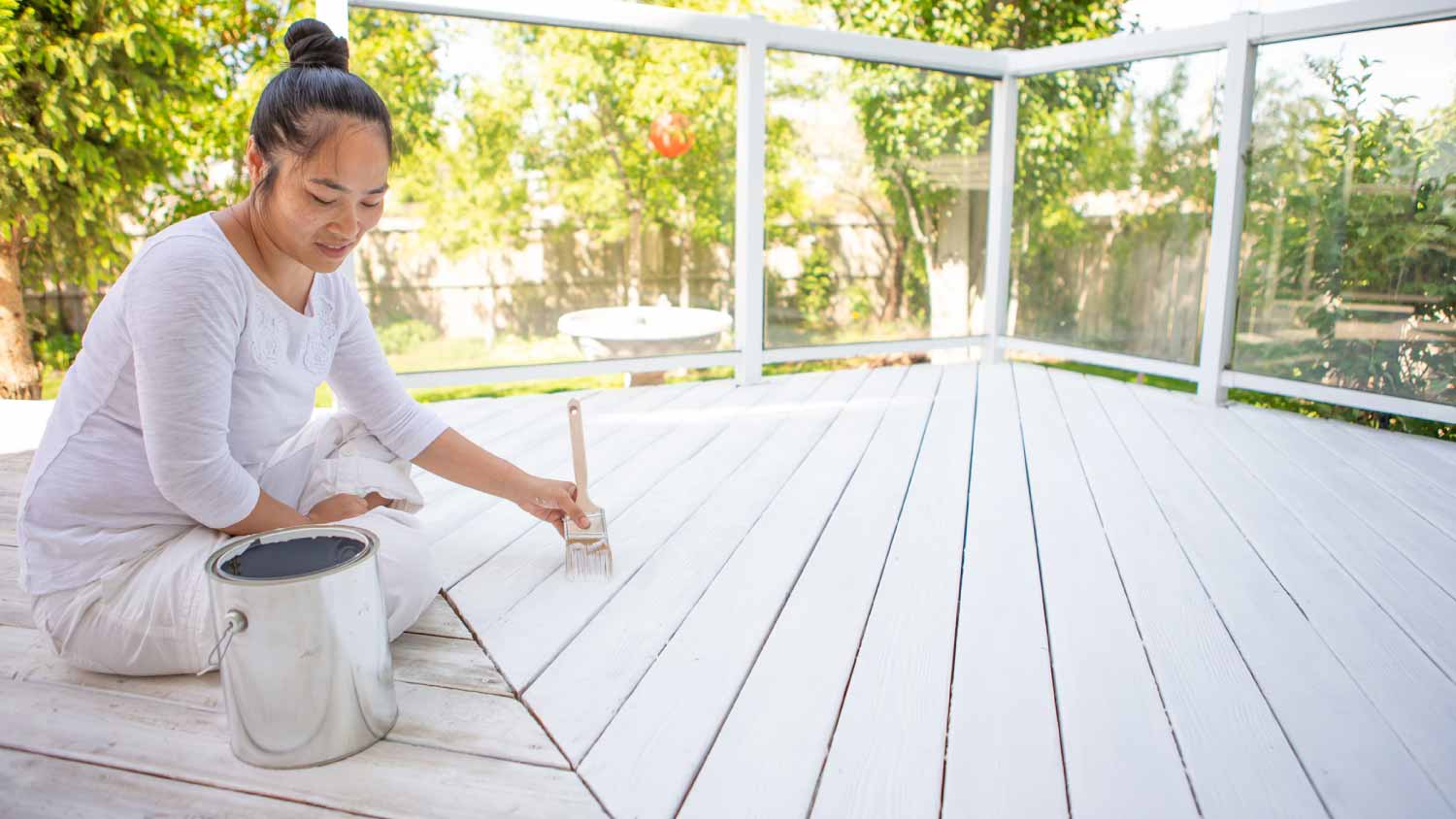
The cost to paint a deck depends on its size, design, and whether you DIY. Read this guide to help set the budget for your deck painting project.
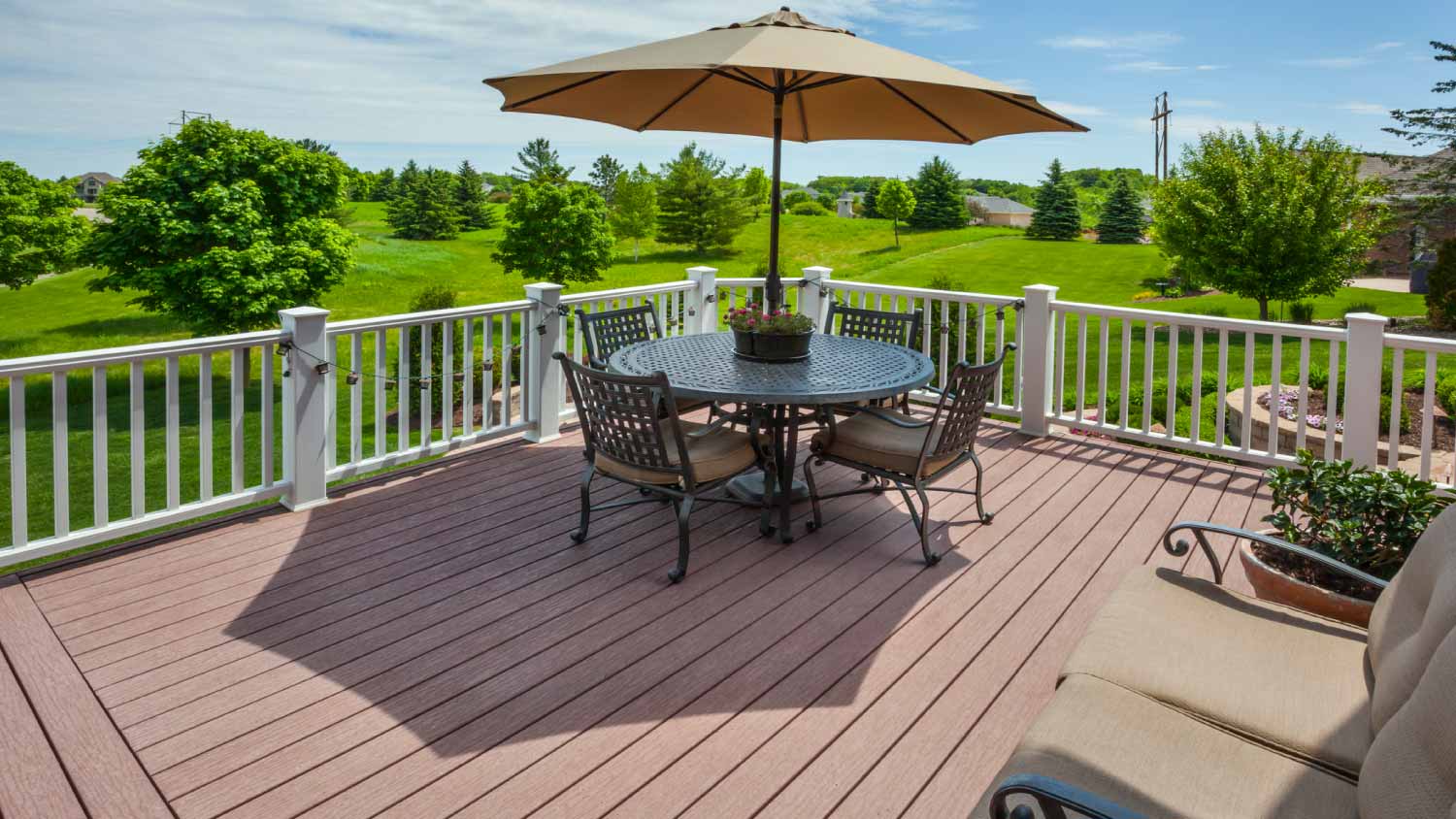
The cost of expanding your outdoor space with an elevated deck depends on the project size and the materials used. Plan your project budget with this guide.
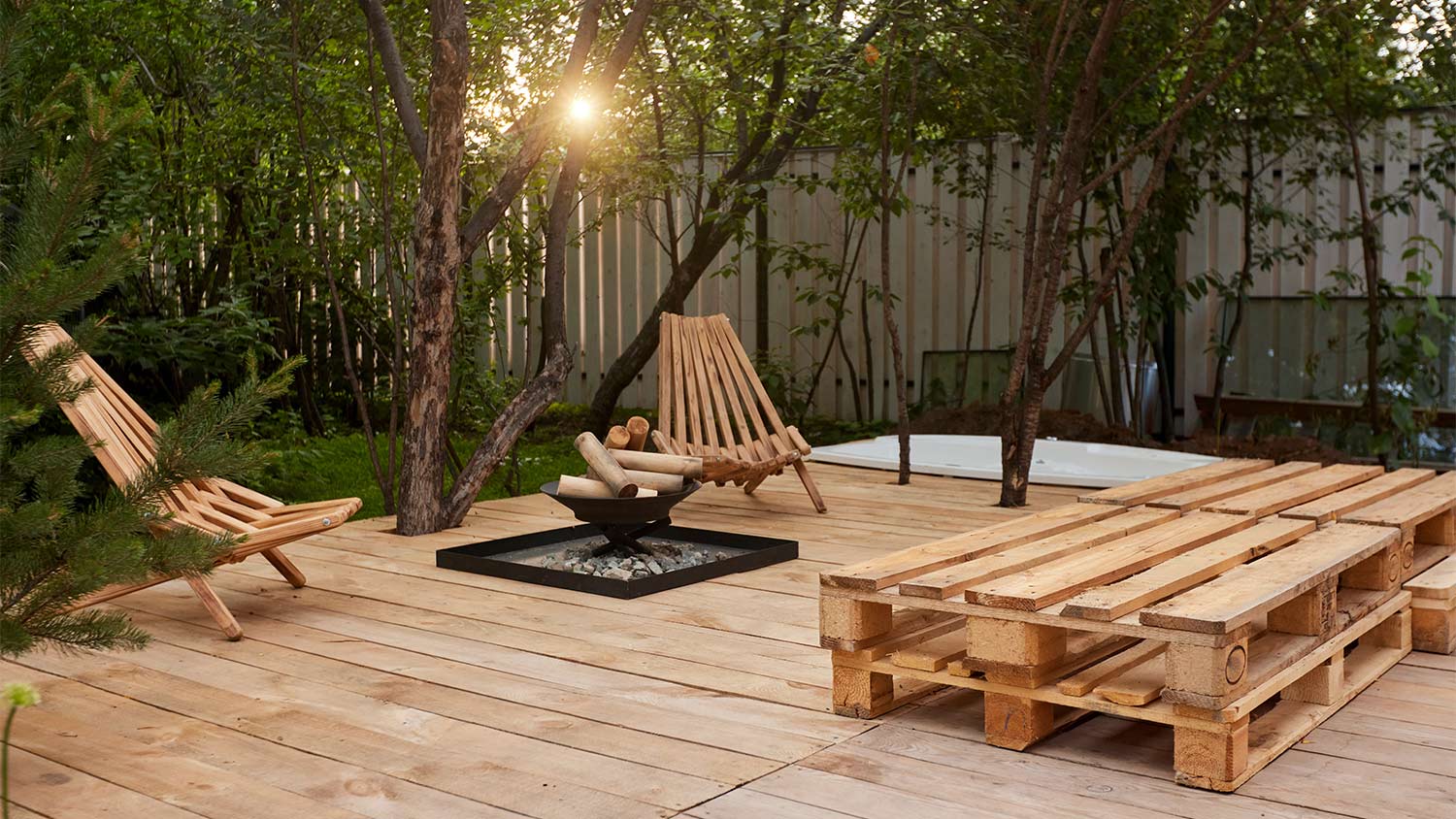
You can DIY a floating deck with the right layout, materials, and installation method. Here’s everything you need to know about how to build a floating deck.

Decks provide usable outdoor space for relaxing and entertaining. But do decks add value to a home? Find out the answer in this informative guide.
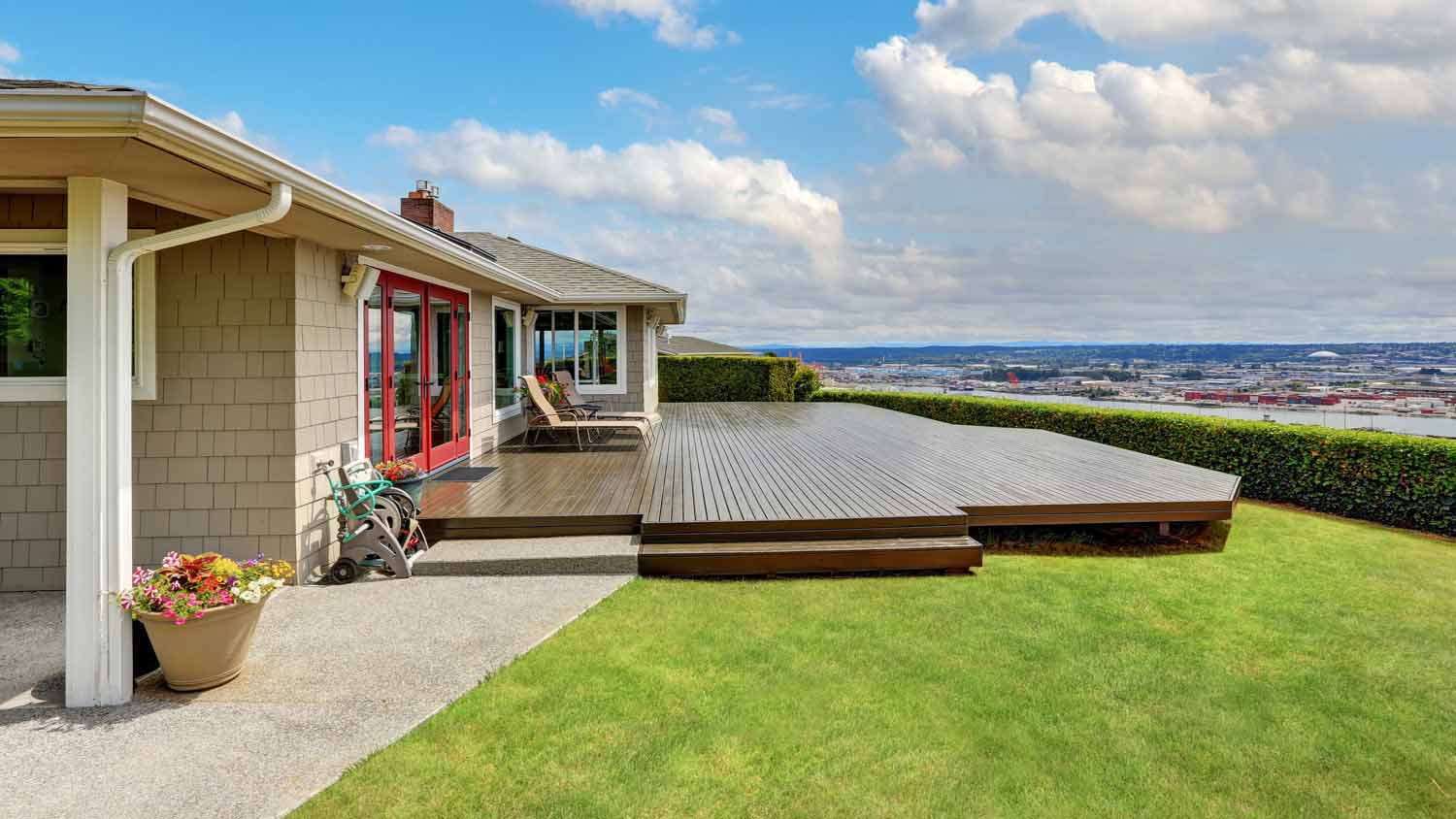
When planning an outdoor oasis, there are many types of decks to consider. This guide explores popular materials and styles to help you pick the best one.