

Sunken concrete slabs can quickly get expensive to raise back up. Learn about polyurethane concrete lifting costs to see how you should budget.
For those concrete patios, walkways, and slabs that need to be a few inches higher

DIY mudjacking lifts sunken concrete by injecting a slurry mixture below the slab, helping you avoid the cost of removing and replacing your concrete.
Professional mudjacking costs $1,200 on average or $3 to $6 per square foot, while DIY costs $1 to $5 per square foot plus tool expenses.
Your mudjacking project requires drilling injection holes through the slab, pumping slurry beneath it, and monitoring the concrete as it rises to the proper level.
Hiring a local concrete mudjacking professional keeps your slab level and crack-free while handling heavy equipment, slurry mixing, and precise lifting adjustments throughout the process.
Over time, concrete used for patios, walkways, stairs, and even foundations can sink into the ground. This happens for a number of reasons, including ground pressure, movement and settling, and poor drainage. If you have noticed your concrete steps are no longer level with a door or your concrete patio slab is a few inches lower than it used to be, you can raise the concrete with DIY mudjacking.
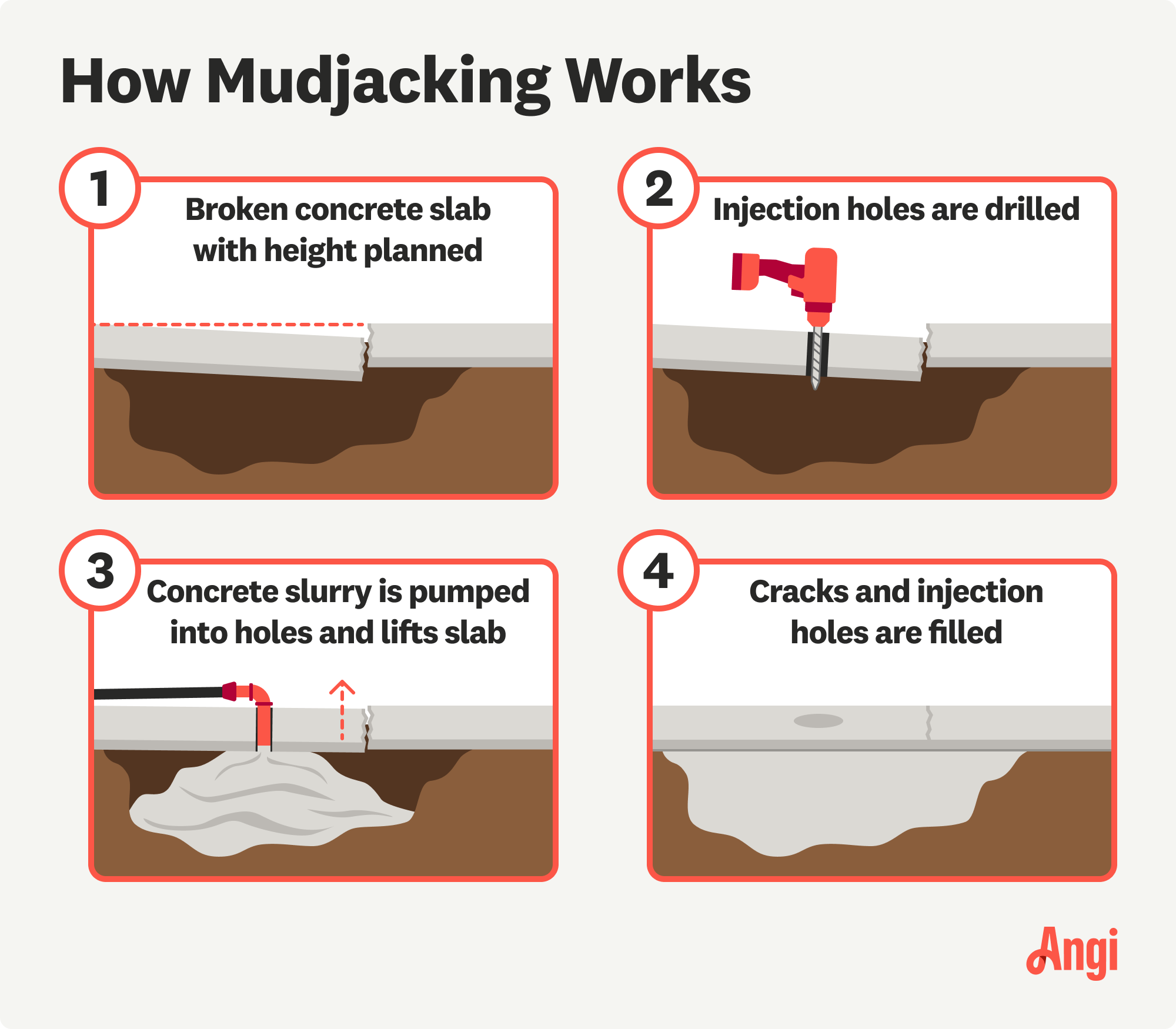
Also known as concrete lifting or slabjacking, mudjacking is a DIY-friendly technique to fix sinking concrete slabs. The process injects a slurry of concrete below the slab to provide support and lift it to its proper level. Not only does this help you save on the cost of concrete removal, but you also don't waste the cost of the concrete slab you invested in the first place.
This guide will walk you through step-by-step DIY mudjacking or the concrete lifting process so your concrete sidewalk, patio, driveway, or deck can get back to the right level. And if you’re looking to mudjack a foundation or other structural concrete, leave this task to a professional mudjacking contractor so they can preserve the structural stability of your home.
Mudjacking requires the use of heavy-duty power tools, including:
Hammer drill with diamond drill bit
Hydraulic slurry pump
Circular saw with diamond blade (optional)
In terms of supplies, you’ll also need:
Gloves
Safety glasses
Face mask
Marking tape
Level
Slurry mix (optional)
Concrete patching compound
Concrete repair caulk
It’s important to work in a well-ventilated area so concrete dust and fumes don’t build up. If you’re indoors or in an enclosed space, crack a window or use a fan to keep the air flowing.
Finally, because the process involves building up pressure beneath a concrete slab, always stay alert and be aware of your surroundings while mudjacking the slab to avoid injuries from the rising concrete.
When using power tools, always wear gloves for hand protection and safety glasses for eye protection. Wearing a face mask while cutting or drilling into concrete is crucial to avoid breathing in concrete dust.
With your safety gear in place and area prepped, you’re ready to begin the mudjacking process. Follow these steps to lift your sunken concrete slab.
Before getting started with mudjacking, be sure you know the desired height for your concrete slab. If you’re raising a section of sidewalk or driveway, you will, of course, want the sunken concrete to be level with the other sections.
If you are raising an entire concrete patio slab or a set of stairs, however, it is a good idea to mark the desired height of the concrete on your home’s foundation with marking tape. This way, you won’t raise the concrete too high or not enough.

If you only need to raise a section of a concrete sidewalk or driveway, you will need to separate it from any nearby sections. Use a circular saw with a diamond blade to cut the concrete at an existing joint. Fully cut through the concrete so the slab you will be raising is separated.

You need to drill holes into the concrete slab for injecting the slurry mixture. Using a hammer drill and a diamond drill bit, drill several 1- to 2-inch-diameter holes across the surface and all the way through the concrete slab.
If you just need to raise the corner of a slab, drill one or two holes in that particular corner. If you need to raise an entire slab, drill a hole in each corner and a few others across the slab so the slurry mixture can fill in everywhere beneath the concrete, usually every 3 feet or so. Be sure your drilled holes go all the way through the slab and into the dirt or stone below.
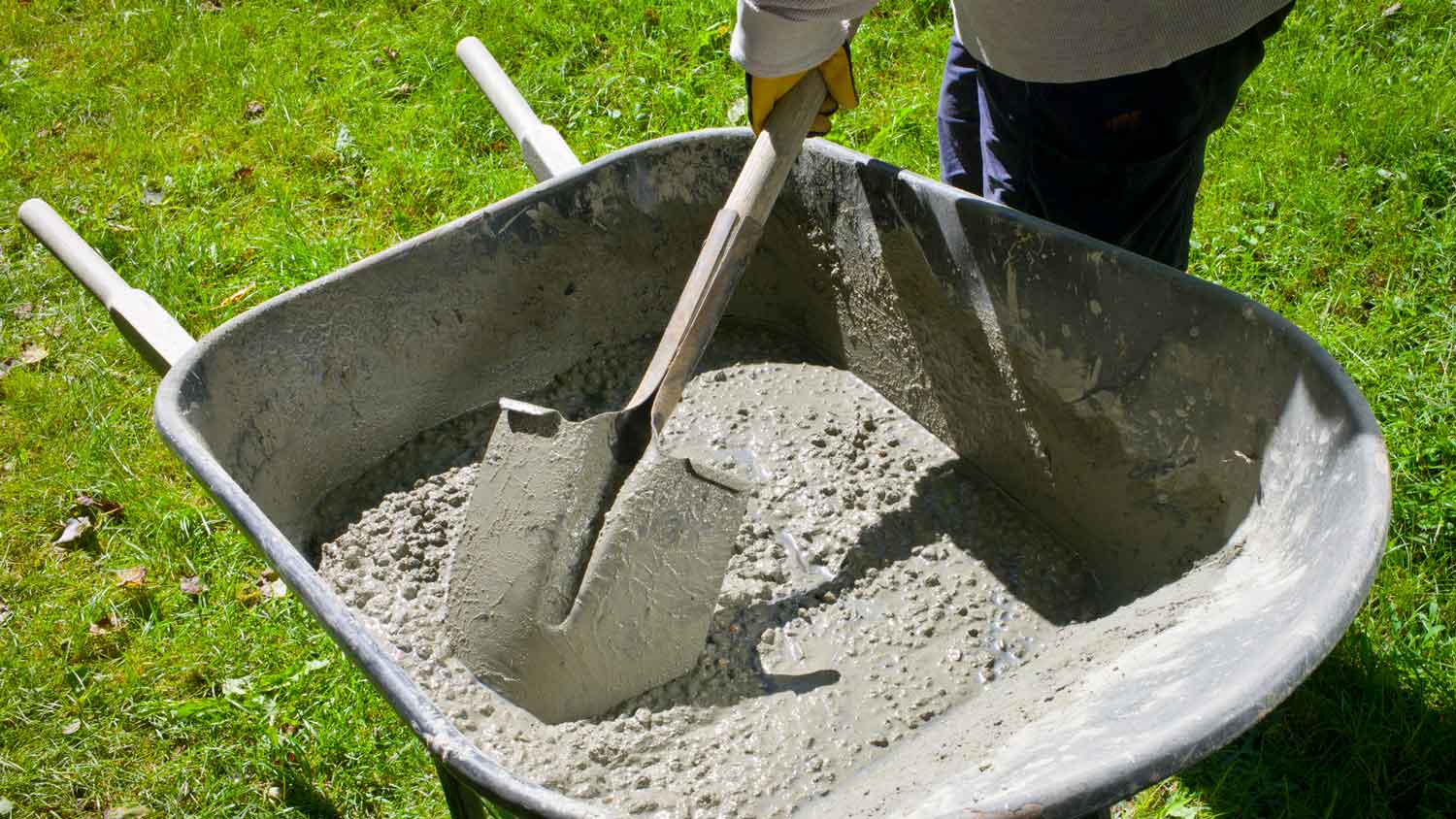
Next, you will need to mix or order a mudjacking cement slurry. The slurry is typically made with a combination of water and sand, clay or topsoil, and limestone dust, or Portland cement. This mixture can be ordered from a concrete supplier or mixed at your property if you have the correct materials available.
If you mix it yourself, make sure the consistency of the slurry is thick, like pancake batter, but still pourable. It should be thick enough to provide support but not so thick that it clogs the pump.
Once you have the cement slurry, it should be transferred to a hydraulic slurry pump (this can often be rented) that will inject the slurry into the concrete.
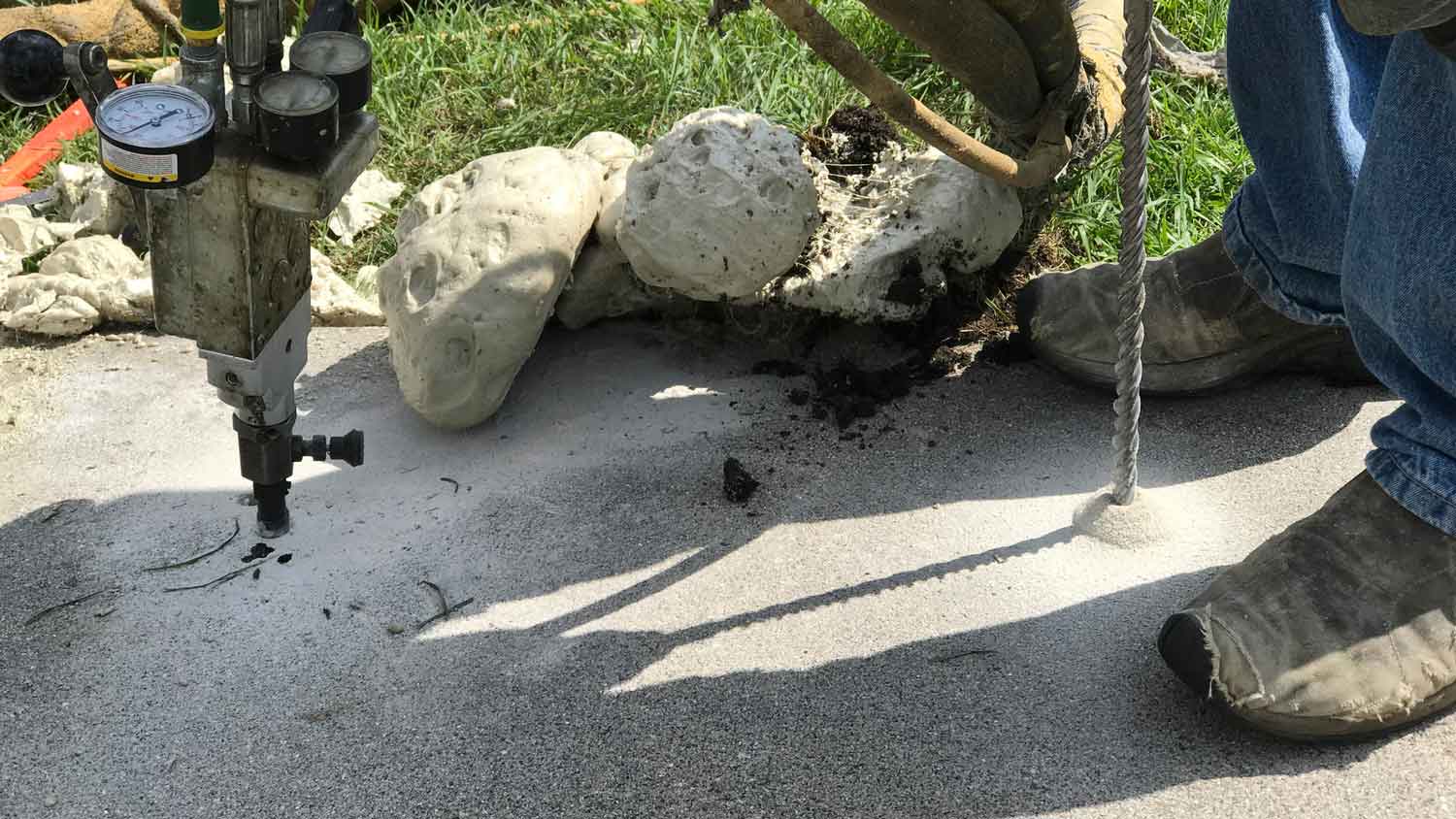
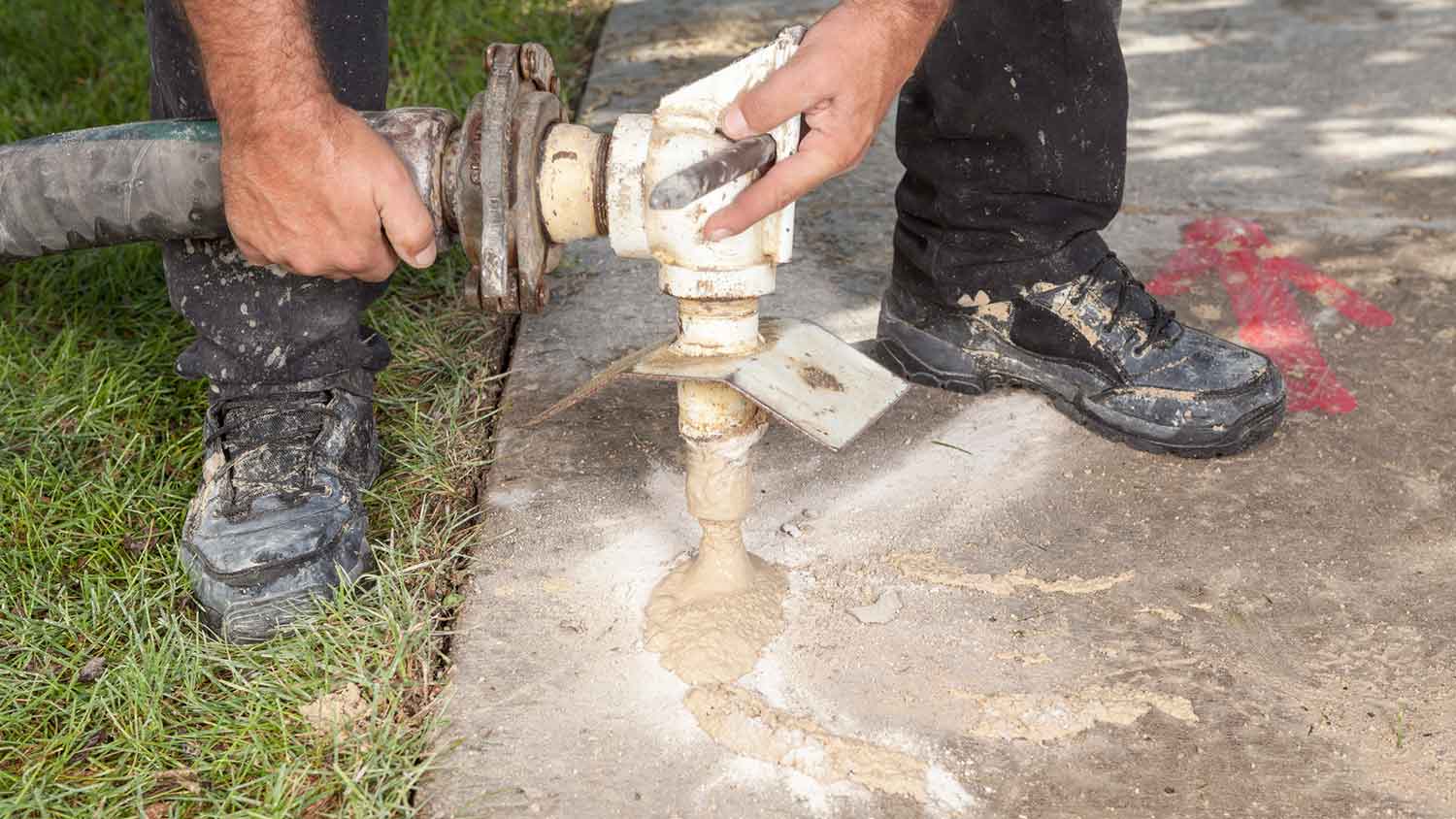
Using the hydraulic slurry pump and the attached nozzle, pump the slurry mixture into each one of the injection holes. Start injecting the mixture at one side of the concrete slab and slowly move to the other side. Fill each hole until the concrete slab begins to lift to the height you determined. Some holes may require more slurry mixture than others to fill the voids beneath.
Be sure not to overfill any of the voids, causing the concrete to lift past the desired height. As you pump, check the level of the slab frequently to ensure it’s rising evenly across the entire surface. Significantly uneven elevation can cause the concrete to crack.
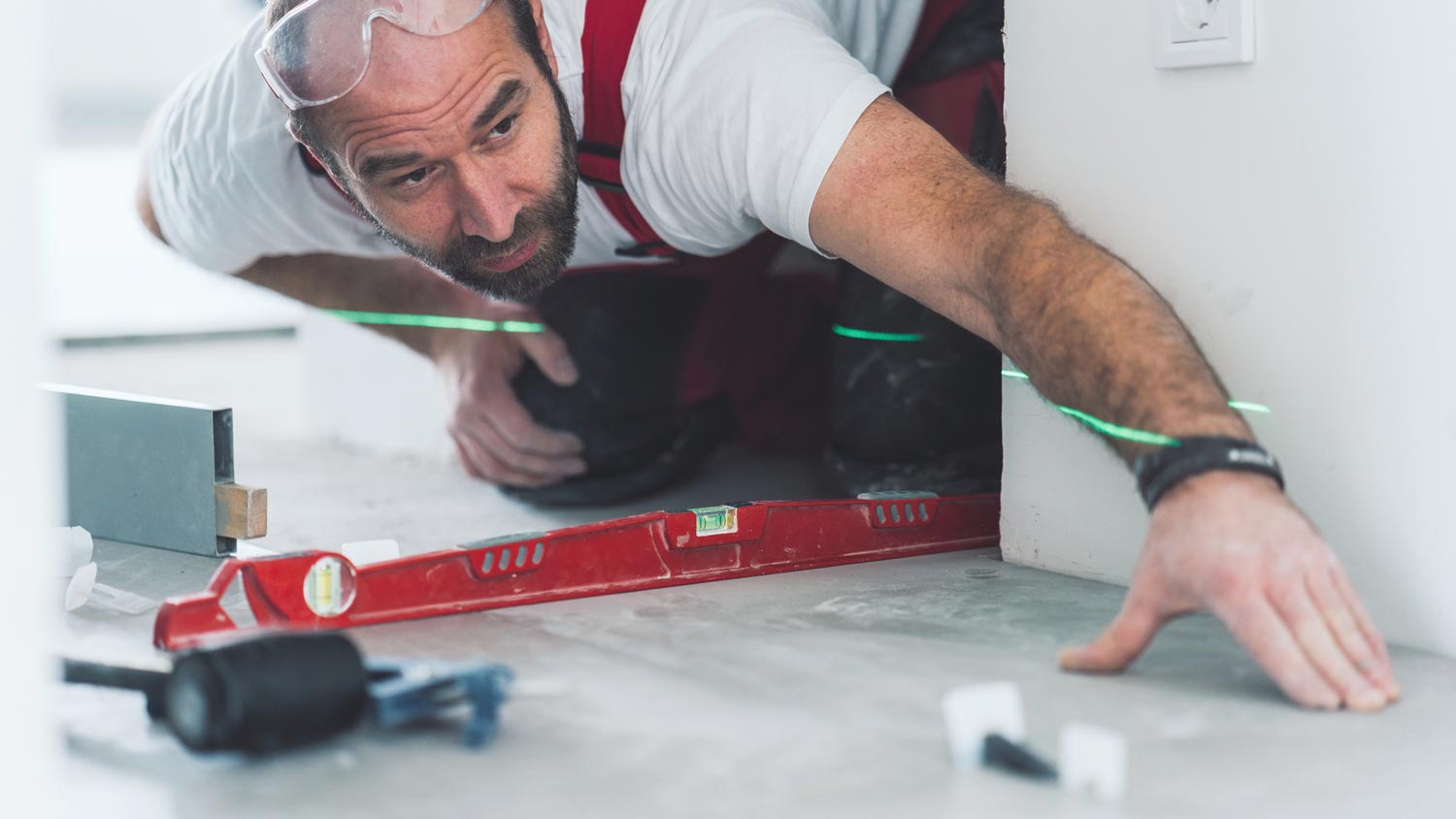
Once every injection hole has been filled with the slurry mixture, take a step back and evaluate the slab. It’s a good idea to have a level on hand during this step to make sure the slab is even.
If the slab is still too low or if certain areas need to be raised further, continue pumping the mixture into those specific injection holes.It’s best to fill slowly and come back to an injection hole later if it needs more slurry.
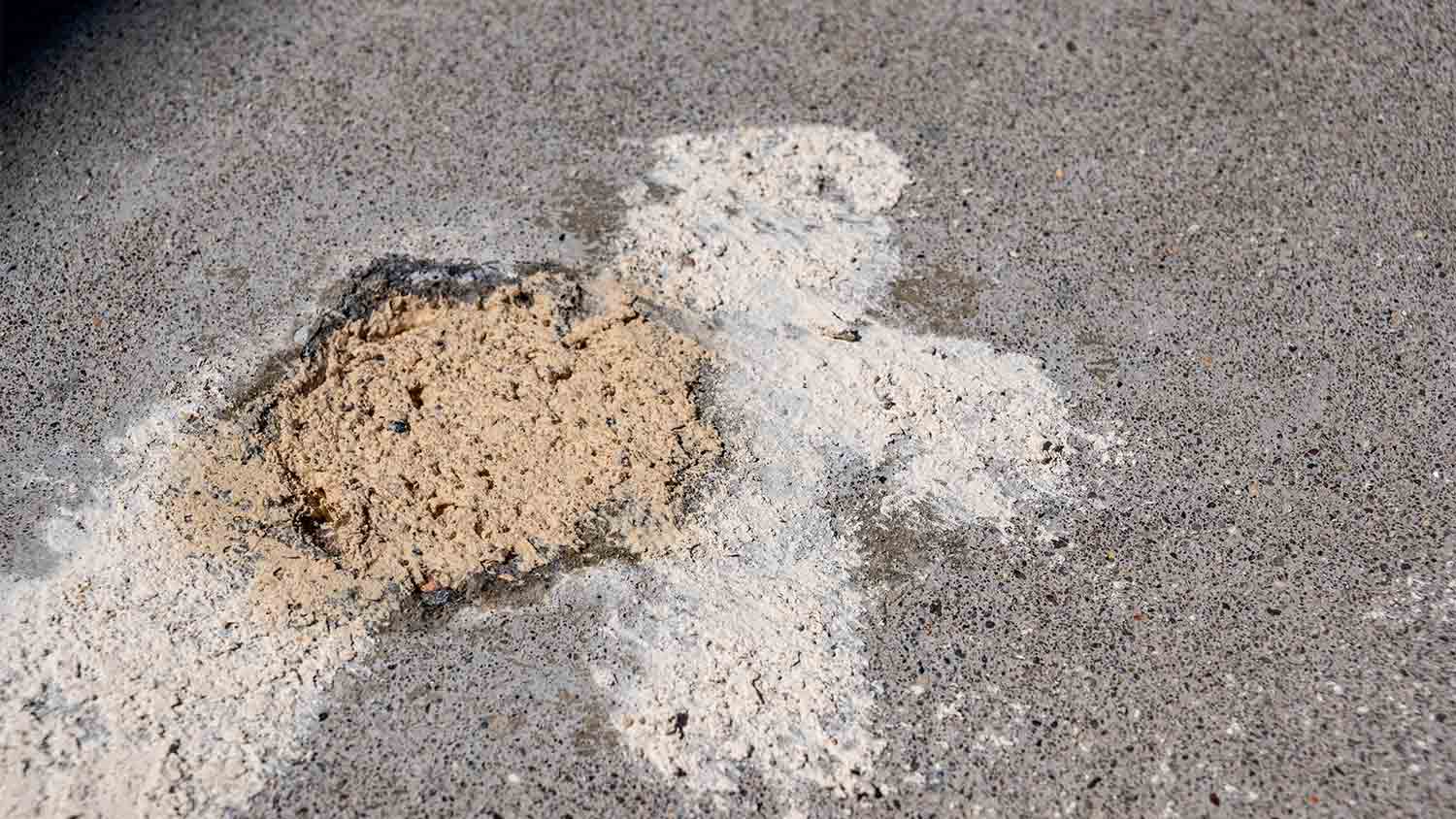
Once your concrete slab reaches the desired height, you can stop pumping in the slurry and rinse down the entire surface gently with a hose. Patch the injection holes and any concrete cracks with a concrete patching compound or repair caulk.
After filling the holes, you may want to use a trowel to smooth the surface for a seamless finish.

After the mudjacking process, the material beneath the slab must dry. Walking on the slab right after the material has been installed is okay, but avoid placing heavy loads (like vehicles) on the slab for 24 to 72 hours.
Mudjacking a concrete slab is a highly complex DIY project that requires special tools and skills. It costs between $1 and $5 per square foot to DIY. That being said, this price does not account for all the related tools and the possibility you'll need to pay for repairs should something go wrong. Take a look at the table below for some standard mudjacking tool costs.
| Tool | Cost |
|---|---|
| Concrete circular saw | $150–$5,000 |
| Hammer drill | $10–$2,000 |
| Hydraulic slurry pump | $100–$100,000 |
| Screed | $17–$900 |
| Concrete mixer | $10–$700 |
| Wheelbarrow | $50–$300 |
| Shovel | $15–$100 |
| Float | $9–$160 |
| Edger | $6–$106 |
| Rake | $17–$41 |
If you don’t already have the required tools for this project or you’ve never worked with a concrete mixture, leave this task to the professionals. The cost of mudjacking while hiring a professional is anywhere from $3 to $6 per square foot. While the project may end up costing a bit more, a local concrete mudjacking contractor will make sure your concrete slab is raised to your desired height, completely level, and does not crack during the process.
It's important to have the right tools when working with concrete. You'll need a screed, mixer, wheelbarrow, shovel, float, edger, and rake, depending on the type of job you're doing. It's often easier to hire a pro for concrete work, as they'll already have all the necessary tools.

Lastly, it's crucial to check with local building codes before attempting mudjacking on your own. If the area falls into a right-of-walk sidewalk or your state has strict DIY construction laws, you may be required to call a pro for such a large project.
Depending on your needs, budget, and the condition of the concrete, you may want to explore alternatives.
Polyurethane foam provides concrete leveling with a process called polyjacking. While the process is similar to mudjacking, polyjacking may be easier than mudjacking because other materials may be easier to inject below the concrete slab, requiring less disruption to the area. However, it tends to be more expensive.
Grout jacking involves injecting a grout mixture under the slab. The grout is denser and stronger than the slurry used in mudjacking, making it better for heavier structures or slabs with significant load-bearing needs. It’s more expensive than mudjacking and, since it usually involves working with larger structures, is best handled by pros.
| Mudjacking | Polyjacking | Grout jacking |
|---|---|---|
| Uses slurry mixture of water, soil, and cement | Uses expanding polyurethane foam | Uses dense grout mixture |
| $500–$1,000 | $900–$2,000 | $1,000–$3,000 |
| Best for sinking slabs with minimal cracks | Best for quick fixes with less disruption | Best for heavier slabs or load-bearing areas |
In cases where the concrete is severely damaged or cracked, replacing the concrete slab entirely may be the best option. While slab replacement is more labor-intensive and costly, it provides a long-term solution when damage is beyond what mudjacking or other injections can repair.
There are several factors that can send your concrete sinking into the ground. Poor installation, drainage issues, tree roots, or ignored decay can all lead to losing structure support. Here are seven tips for keeping the slab above ground:
Ensure proper concrete mixing when installing the slab. The wrong concentration of water or an incorrect curing time can lead to structural issues. And remember, cement versus concrete is easy to confuse for one another.
Install a proper subbase of sand or aggregate below your concrete slab for support. The subgrade (the compacted soil below your subbase) should also be level and strong.
Test your soil composition before installing a concrete slab.
Address potential drainage issues, particularly when water pools on or around the slab.
Fortify large cracks or the space between slabs with backer rods and polymeric sand.
Repair concrete cracks as soon as they appear to keep the slab from sinking on one side.
Address impeding tree roots that could shift the slab over time.
Call in a foundation or concrete repair contractor in your area to assess the underlying issues and help stabilize your slab.
I highly recommend KTM construction! I will look no where else for anything that needs to be done, in or out side of our property. The level of craftsmanship is 5 star service across the board! The level of detail, knowledge and professionalism is 5 star service across the board! Ken is a...
 KTM Construction, LLC
We recently had our office sidewalk repaired and CT Concrete did an "Outstanding" job. They were quick, friendly and the job is "flawless". I would highly recommend CT Concrete for any of your concrete/sidewalk needs.
My painting job was a tricky one, with 18' walls and large ducts to work around near the top, in a downtown condo with its associated parking and unloading challenges. Brad and his crew did a great job in a short amount of time. My walls look great, with even paint and clean lines,...
Very pleased with the service and level of professionalism. Courteous and very unobtrusive in performing service. Unlike several other companies, Bradford Xteriors was willing to perform work on a three story home with a clay tile roof. <br />
 Bradford Xteriors
A team of 3 technicians arrived on time, on the day of installation. They took the time to cover all the flooring from the bottom level to the 3rd floor, where the new install was. The team worked all day and completed the job by 5:00. They had all the necessary paperwork, including...
 CARE Heating & Cooling Inc
Mark did an excellent job. He was professional, hard working and detail oriented. The work required a lot of expertise as it is an old building with uneven floors and odd shapes. He removed all the old floor trim, leveled the floor and installed new trim. I felt very confident in his...
Americoat did an amazing job with the tear out of the sidewalk and kept the area very clean. The concrete team showed up right on time and pour the sidewalk. The drive was sealed a few days later and looks great. <br />
 AmeriCoat Asphalt & Concrete
All around they have done a really great job. <br /> I have used JL Landscapes for the past 8 years. I own and operate my own commercial/residential real estate company where we own, operate, and maintain our own properties. JL Landscapes has been our exclusive landscaper for both our...
 J.L. Landscapes
We had a great experience with Mark Rodgers Construction. We were in the process of seeking out estimates for possible foundation work for our front porch. Mark came out himself to provide the estimate. Turned out that the company deals mainly with concrete, so we wouldn't be getting an...
 Mark Rodgers Construction
We first had Mark fix the back patio and liked his work so much we had him make a brick patio on the side of the house. When we decided to change our concrete walkway to brick, we wanted Mark to do the job because his prices were fair and he did such good work on t he other two projects.
 Mark Monnette Masonry
From average costs to expert advice, get all the answers you need to get your job done.
Sunken concrete slabs can quickly get expensive to raise back up. Learn about polyurethane concrete lifting costs to see how you should budget.
Don’t let sinking concrete capsize your budget. Learn about concrete leveling costs and the available methods to plan ahead for your project.
Wondering about mudjacking costs? Discover prices, key cost factors, and tips to save on your concrete leveling project.
What is underpinning? Learn all about this foundation repair process, including when it’s useful and how much it usually costs.

Uneven concrete can be a safety hazard or cause structural damage. Learn the difference between mudjacking vs. polyjacking for concrete repair.
Should you tip junk haulers when they lug away your old stuff? While it's not expected, tipping great service is always a solid move.