
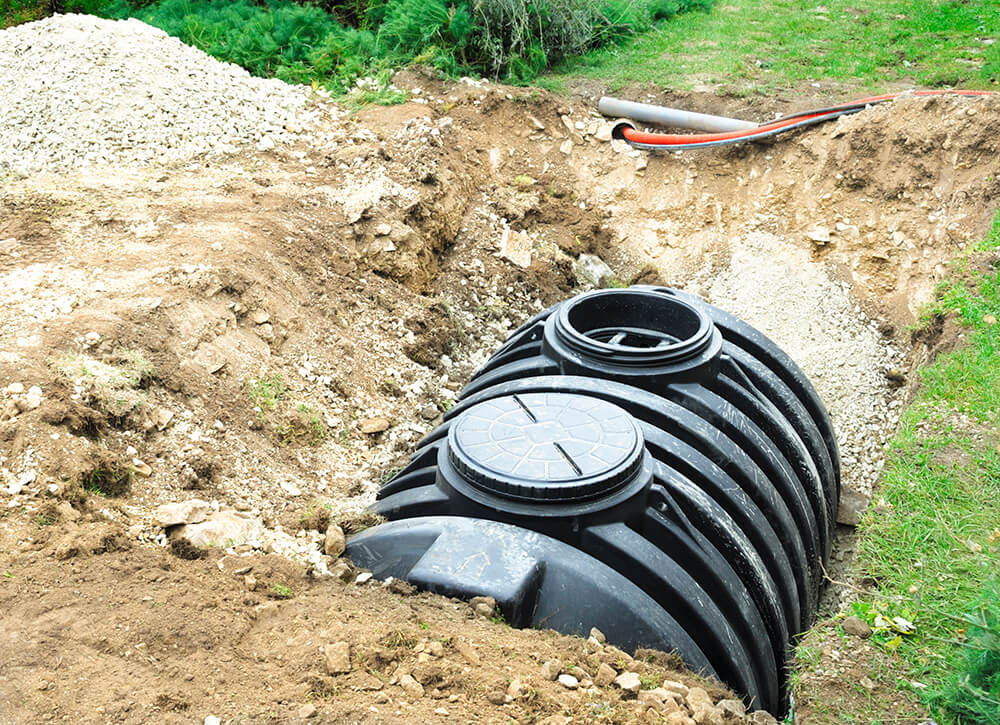
How much does a septic system cost? Explore impacting factors, important add-ons, and how you can save money on septic system installation right here.
Could this be the right type of septic system for your home?

A septic chamber system uses open-bottomed chambers instead of gravel in your leach field, making it easier to install in remote or mountainous areas.
Expect to pay $5,000 to $12,000 for chamber system installation and $175 to $600 for routine septic tank pumping every three to five years.
You need to avoid driving over your leach field to prevent chamber collapse and direct downspouts away from the system to protect drainage capacity.
Hiring a local septic tank company provides reliable support with routine pumping and leach field maintenance, keeping your system running smoothly for years.
You may not spend a lot of time thinking about where your wastewater goes once it swirls down the drain. But if you live on a property that isn’t connected to your local wastewater treatment center, you’ll need to spend a lot more time choosing the right septic system—and caring for it. If you’re considering a chamber septic system, here’s everything you need to know, from how it works to what it costs for installation and maintenance.

The chamber system is one of many types of septic systems that work best for homes with high water tables. This septic system uses a series of chambers, which are like pipes that are open at the bottom and have slits in the side, to release partially treated wastewater (called effluent) into the soil for further treatment. This is a gravelless septic system option, so it may be beneficial for properties where it can be hard to source or deliver gravel.
If you have a septic system, your wastewater is stored, filtered, and treated right on your property, rather than flowing through a main sewer line and directed to a municipal wastewater treatment center.
After you wash your hands, flush a toilet, or take a shower, the water goes down the drain and into your home’s plumbing pipes. From there, the wastewater is carried into a septic tank, where solid waste is separated from the liquid wastewater. Solid waste settles to the bottom and needs pumped out occasionally, usually every three to five years.
Then, the wastewater flows to what is called the leach field or drain field. In a conventional septic system, the leach field has gravel-filled trenches for the wastewater to drain into, and bacteria helps further treat the wastewater before it is released into the soil for final treatment and disposal.
In a chamber septic system, there is a series of chambers instead of gravel trenches. Wastewater flows into the chambers, which are open at the bottom to release the water into the soil for further treatment.

A chamber septic system is common for properties where accessing gravel and/or having gravel delivered is too difficult or expensive. For instance, if you live in a mountainous area or remote area that is hard to access with heavy machinery, switching to the chamber system may be easier.
A chamber septic system may be useful for areas with less space, because some states allow the leach field for a chamber system to be up to 50% smaller than a conventional leach field.
Chamber septic systems are common for areas with high water tables, and they can also be useful for homes with varying water usage, like vacation homes. That’s because the chambers are larger, making more storage for wastewater and stormwater alike and giving the effluent more time to disperse into the ground and be treated by bacteria in the soil.
A chamber septic system can work well for certain properties, but it’s not always the best septic system option for every home. There are some benefits and challenges to installing and maintaining a chamber septic system.
Easy to install
Low upfront cost
Good for small lots
A chamber septic system is easier to install than other types of septic systems, including conventional systems. This makes them a less expensive alternative to some septic systems, such as drip distribution systems (which cost $8,000 to $18,000), evapotranspiration systems ($10,000 to $15,000), or mound systems ($10,000 to $20,000).
Because of the design of the chambers, which increase storage space, chamber septic systems work well for smaller lots or properties with a high groundwater table.
Another unique benefit to a chamber septic system is that the chambers can often be made from recycled materials, making the system more eco-friendly.
Location affects cost
Not cost-effective if gravel is readily available
Not ideal for sandy soil
While chamber septic systems cost less than several other alternative septic system options, they aren’t always the best for your budget, particularly if you live somewhere with easy access to gravel. While chamber system installation starts at around $5,000, a conventional system starts around $3,460 to install.
The effectiveness of a chamber septic system can also depend on the soil type. Although a conventional septic system works best with loamy soils, chamber septic systems are often ideal for clay soils that can be broken up by the chambers, and they may not be ideal for sandy soils.

Like with any septic system, there are a few best practices to prevent flooding, foul odors, groundwater contamination, or sewage backing up into your home’s plumbing.
First, it’s important to hire a local septic tank company to pump the septic tank at least every three to five years. This process involves using specialized equipment to remove the sludge, or solid waste, from the septic tank that builds up over time. This prevents sewage and wastewater from backing up into your home’s drains.
You may be tempted to flush cleaning wipes down the toilet or throw the spent cooking grease from last night’s dinner down the drain, but these types of waste can lead to clogs in your pipes or further down the septic system. And flushing or pouring chemical cleaners down the drains could harm the helpful bacteria in your septic system. Only flush human waste and toilet paper, and take care not to pour grease, oils, cleaners, or coffee grounds down your drains. Instead, absorb them with paper towels and toss it in the trash.
Be sure that you aren’t driving or parking vehicles over the leach field. The chambers can be vulnerable to the added weight of a vehicle, and they could collapse from the pressure. This puts the driver at risk if the ground caves in, and this will lead to costly damage for the septic system and the vehicle.
While a chamber septic system can effectively handle rain or stormwater, it’s best not to allow a lot of water around your property to drain into the leach field. Otherwise, the system can’t effectively treat and disperse the wastewater. Make sure downspouts are pointed away from the leach field, and if you live in a wet climate, you may want to consider digging trenches that direct rain away from the leach field.
Installing a chamber septic system costs about $5,000 to $12,000, compared to the cost to install a conventional septic system, which can range from around $3,460 to $22,500. About every three to five years, you’ll also need to pay for the cost to pump a septic tank, which is about $175 to $600.
Finally, you may consider septic tank landscaping ideas to disguise or mark the ground above the septic tank, and this will cost about $5 to $25 per square foot. When landscaping around a septic system, it’s important to position plants far enough away to prevent their roots from growing into the pipes.
I recently moved to another state and chose United Trust Van Lines after comparing several companies. Their team was punctual, professional, and extremely careful with my belongings. I was especially impressed with how they handled my home office setup and fragile items. Everything arrived on...
 United Trust Van Lines, LLC
Positive experience. As previously stated, the replacement/repair could not be completed (no fault of the plumbing tech) b/c misinformation was rec?d by property management maintenance. Thanks to the plumbing tech for your efforts. Appreciate you!
 The Waterworks
As usual with ECO, tech Jordan was outstanding, very professional, very knowledgeable, and very thorough with repairs made to tankless water heaters. Very highly recommend ECO!!!
 Eco Plumbers, Electricians, and HVAC Technicians
I would recommend this company to anyone! He showed up on time, was friendly, completed a very difficult repair on our dryer vent cover, was responsive, and pricing was extremely fair and competitive. I would have him back to do any of our repairs or cleanings without hesitation!
 U.S.A. Dryer Vent, LLC
Best cleaning I've had at my property
I'm a repeat customer of All Star Paving & Sealing and I appreciate the service that all start paving has done for me in the past. I just recently had them out for an estimate and things couldn't have gone better. The staff that they send out to do the estimates are very knowledgeable. The...
 All Star Paving and Sealing
Supreme Brick & Chimney is one of the best service providers I’ve interacted with. Extremely efficient, knowledgeable, and thorough. They took the time to walk me through their detailed full-service inspection and were extremely professional. Not to mention their turnaround time was...
 Supreme brick & chimney
They were great! They were thorough and efficient and paid attention to the details. Definitely recommend. I'm definitely going back!
 FIFI'S EARTH FRIENDLY CLEANING
Storms Mobile Welding was great to work with. They were prompt, professional and did an overall excellent job on the project. I highly recommend.
Great experience all together. Dog friendly, courteous, great results and honest with recommendations. Will certainly be using Cardinal in the future for any carpet repairs
 Cardinal Carpet Care & Repair
From average costs to expert advice, get all the answers you need to get your job done.
How much does a septic system cost? Explore impacting factors, important add-ons, and how you can save money on septic system installation right here.

There are different types of septic systems. The right one for you depends on its size and construction as well as your household waste needs.

Your lot might require an alternative septic system based on location and soil conditions. Learn all about alternative septic systems and their costs.

Septic systems are an essential waste management feature of many homes. Find out how a septic system works to turn wastewater into treated groundwater.

Your septic drain field design makes a huge difference in the efficiency of your septic system. Learn how to choose the design best suited for your property.

What is a septic tank distribution box, and how important is it? Learn about this critical component, its purpose, and how it functions in this guide.