
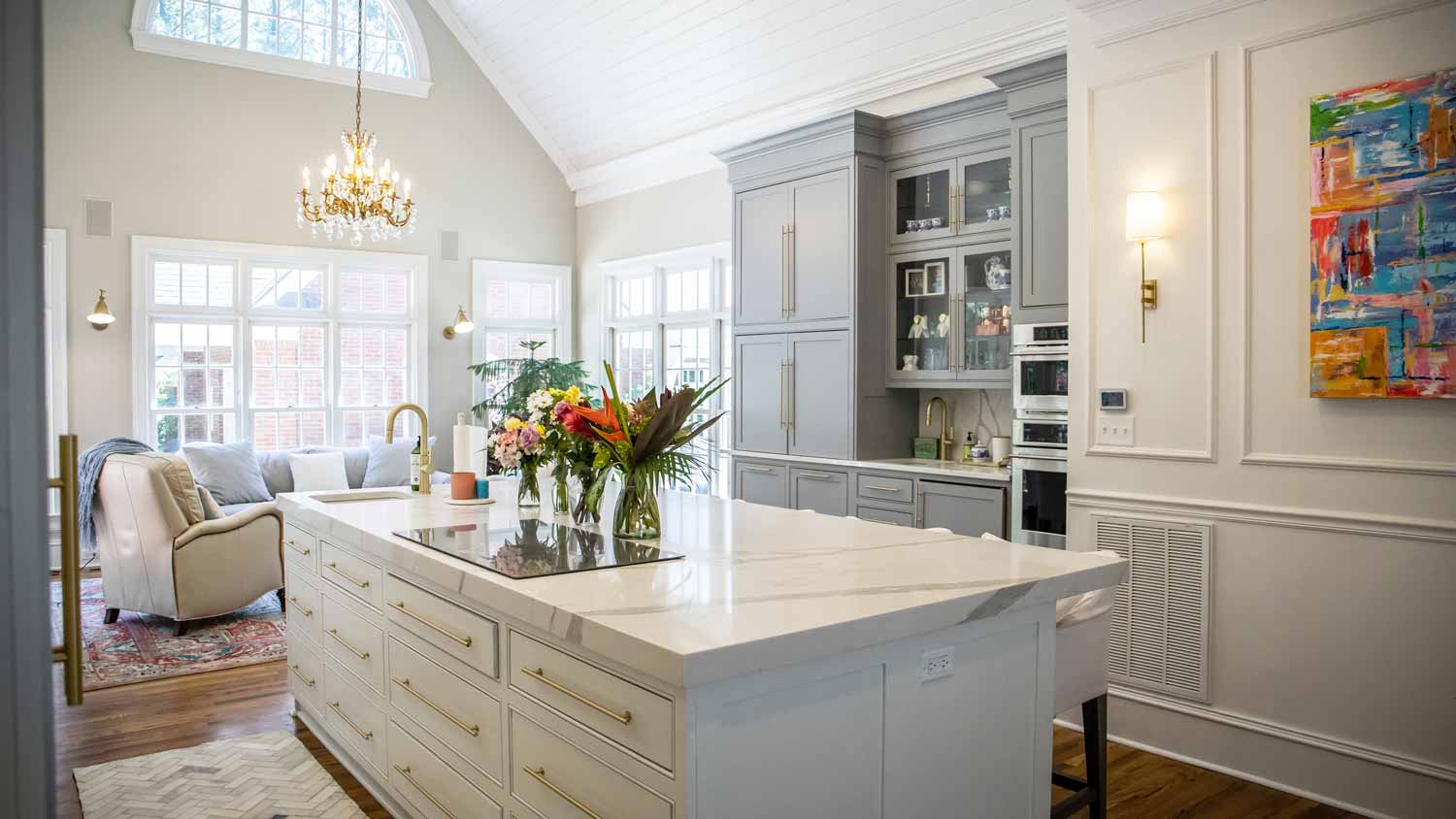
Looking to expand your ceiling and send claustrophobia running for the hills? This guide covers the cost to vault a ceiling and factors that impact estimates.
Take a peek into the vault(ed) ceiling

A vaulted ceiling sits below your roofline and can be curved or asymmetrical, while a cathedral ceiling follows your roof's pitch with symmetrical slopes.
Cathedral ceilings are more budget-friendly to install because they attach directly to roof trusses, while vaulted ceilings require custom construction below the roofline.
The better choice between cathedral and vaulted ceilings depends on your design goals: cathedral ceilings suit symmetrical spaces, while vaulted ceilings offer more customization options.
Hiring a local ceiling company provides expert guidance on installation complexity and structural requirements, helping you choose the right raised ceiling for your home.
Whether you’re building a new home or just want to redesign your existing home, a raised ceiling—like a cathedral or vaulted ceiling—can make a room appear larger and create space for windows and skylights. However, they differ in key ways when it comes to their construction and the aesthetic they offer. This guide breaks down the differences between cathedral and vaulted ceilings to see which would work best in your home.

It’s easy to get a cathedral ceiling and a vaulted ceiling confused. After all, they’re both types of raised ceilings that add height and a look of grandeur to a room, but they’re constructed differently. A cathedral ceiling follows the roofline and is installed on the roof trusses, while a vaulted ceiling sits below the roof trusses and is self-supporting. A vaulted ceiling can also be curved, whereas cathedral ceilings are sloped.
Installing a vaulted ceiling can cost more than a cathedral ceiling, but the final cost depends on the size of the space, the existing structure, and the type of vaulted ceiling you choose. If you know a raised ceiling is a must-have for you, speak with a ceiling pro who can discuss your options.

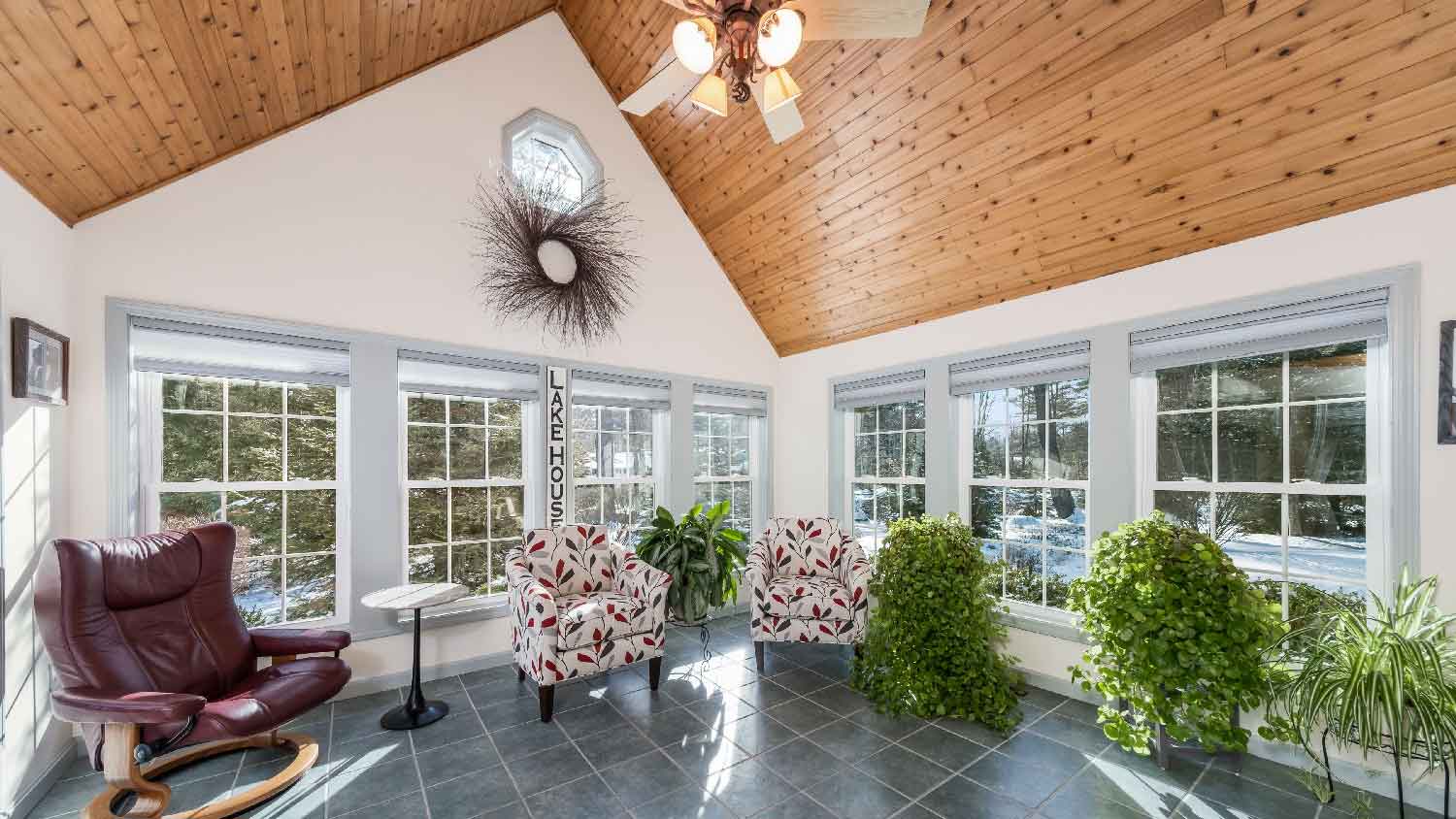
Cathedral ceilings have two symmetrical sides that slope upward, following the pitch of the roof and meeting in a ridge below the peak. They’re named for the place where they originated—cathedrals. Historic and even modern cathedrals are known for their soaring ceilings and high walls. A cathedral ceiling brings a similar grandeur into your home and creates a more open space.
| Pros | Cons |
|---|---|
| Creates a larger look and feel | More expensive than a standard ceiling |
| Cathedral roof trusses make it easier to install than in the past | Difficult to clean and change lightbulbs |
| Allows for large windows and skylights for more natural light | May increase utility bills if there isn’t proper air circulation |
Best for:
Homes that would benefit from a symmetrical look
Households with a tighter building or remodeling budget
Homeowners who want more natural light in their space
A cathedral ceiling creates beautiful symmetry in a space and makes a room feel bigger than it is. Because roof trusses can be manufactured to support a cathedral ceiling, installation isn’t as difficult as it was in the past when it had to be custom-built. Cathedral ceilings also provide the opportunity to add large windows to a room and let in more natural light.
Cathedral ceilings, while easier to install than in the past, still add costs to your ceiling project because they require more labor and trusses that are built specifically for cathedral ceilings rather than standard ceilings. Additionally, cathedral ceilings aren’t the most energy-efficient option because heat rises, and the room will need proper air circulation or additional heating to keep the living area comfortable.

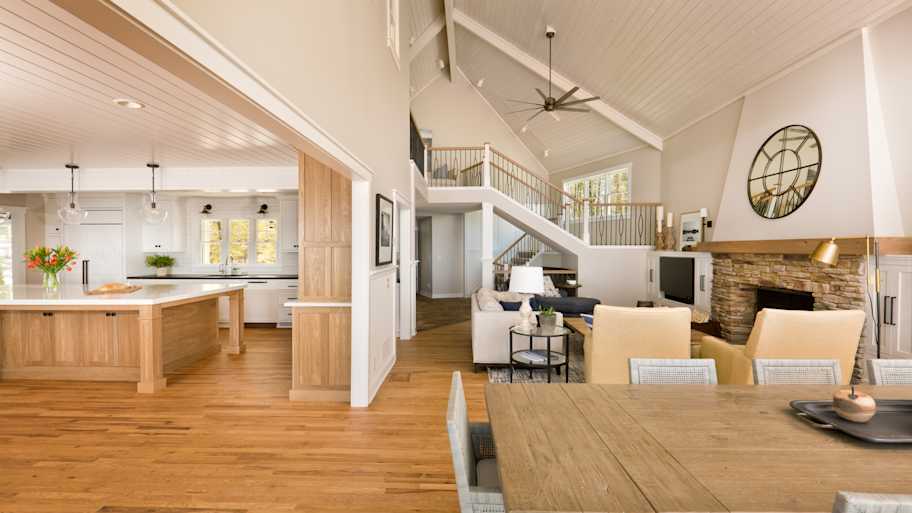
A vaulted ceiling is similar to a cathedral ceiling in that it dramatically raises the ceiling, but it’s self-supporting rather than being installed on the roof trusses. For instance, a vaulted ceiling sits below the roofline and doesn’t have to follow it. It doesn’t have to be symmetrical and can be curved (instead of sloped). This allows for several different ceiling vault types that can complement the overall design of a space.
| Pros | Cons |
|---|---|
| Offers a lavish look and feel | Not the most energy-efficient option |
| More customizable than cathedral ceilings | Difficult to clean or change lightbulbs |
| Can include skylights | Installation is more complicated because it’s constructed below the roof |
Best for:
Homes that would benefit from an asymmetrical look or curved ceiling
Homeowners who want a custom look and design
Households with a larger building or remodeling budget
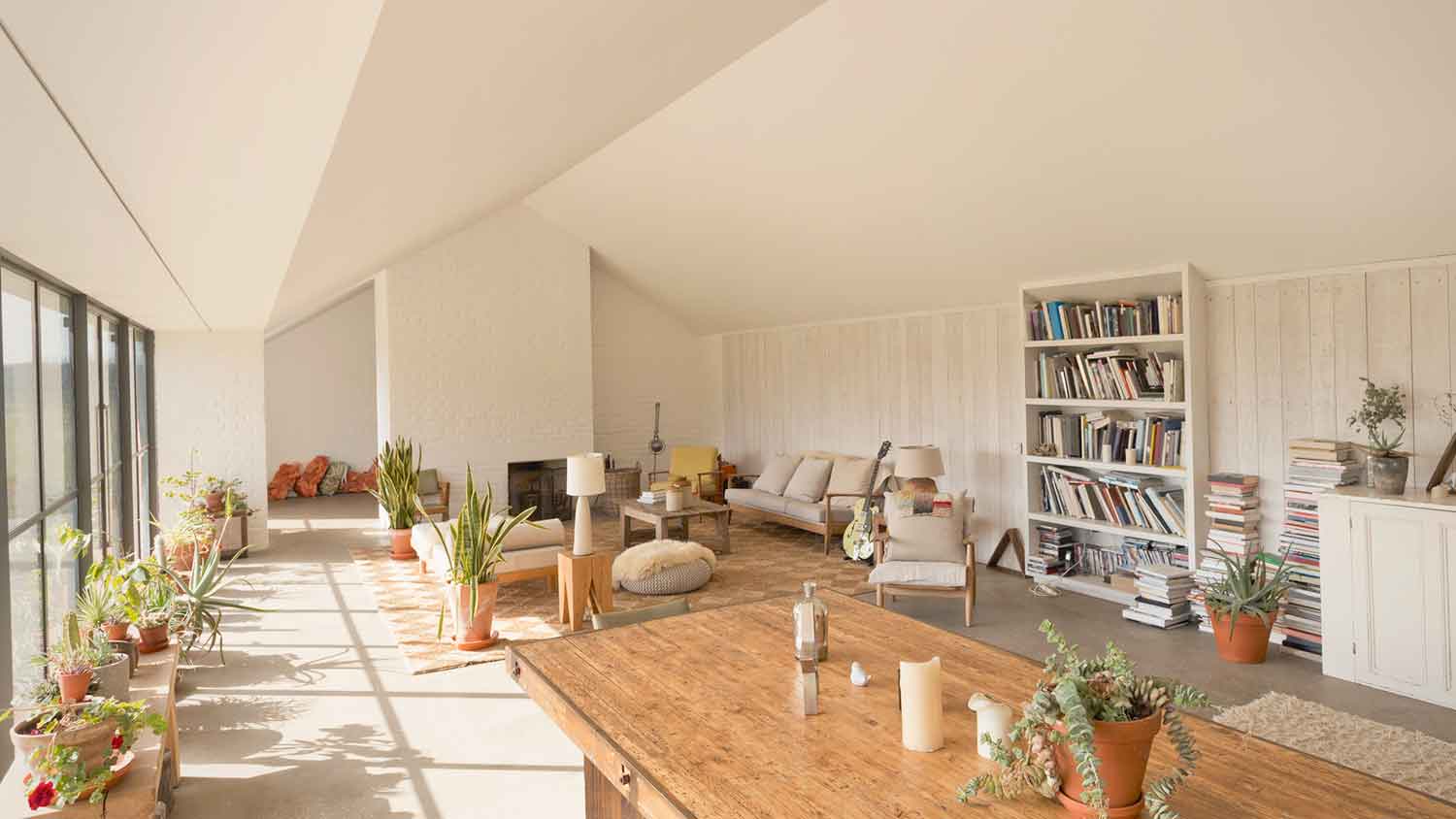
A vaulted ceiling offers more than a cathedral ceiling in terms of customization. The curve of a vaulted ceiling can reach between the sidewalls or form a dome in the center of the room. Vaulted ceilings can also be sloped and feature asymmetrical designs that work well in modern and contemporary homes.
Vaulted ceilings come with the same energy efficiency challenges as cathedral ceilings. Because the ceiling is higher, heat will rise and keeping the living area comfortable requires adequate air circulation or more heat, which can increase utility bills. A vaulted ceiling is also more expensive to install than a standard or cathedral ceiling because it must be custom-built to fit the space.
Making the decision between a cathedral ceiling and a vaulted ceiling means taking a few factors into consideration. Here’s how the two ceiling types stack up in terms of appearance, customizations, installation, and price.
The winner of the appearance category comes down to the actual design and how it fits into the space. Both types of ceilings can be customized with beams, skylights, or other accents, though as far as the design itself, vaulted ceilings offer more customization options.
While cathedral ceilings follow the roofline by definition, vaulted ceilings offer many opportunities for customization. They can be curved, domed, or have asymmetrical slopes and angles. You can add one-of-a-kind molding and detailing to enhance the space's unique look.
Cathedral ceilings follow the roofline, so while the trusses cost extra, installing a cathedral ceiling is a more straightforward process. Installing a vaulted ceiling requires more care to build the support structure and curve the drywall sheets to fit.
The cost to install a raised ceiling falls between $20,000 and $50,000, but the price varies with the type of raised ceiling you choose and whether you install it during the initial construction phase or find ways to raise an existing ceiling.
Installing a cathedral ceiling during the initial construction costs less than installing a vaulted ceiling. However, the costs differ if you want to install either in an existing home. It’s best to get a consultation and quote from a local ceiling contractor who can help you transform your space.
Exquisite workmanship from Custom Paint Jobs LLC. My home has never looked better.
 Custom Paint Jobs, LLC
Visited my home for estimate same day that I called. Painted on Saturday. Great job. Good price!
Window Depot did an amazing job on my deck. I wasnt sure what I wanted to do, but their composite decking was affordable and will last a long time. I am excited to have family over, and I am no longer embarrassed by my backyard. Jeff and the ground crew were polite, respectful, and caring for...
 Window Depot USA of Central Ohio
The guys did an outstanding job and we had a great experience with CarifaTile. I appreciated that Joe reviewed the quotes with me and set expectations prior to the install. The crews showed up as scheduled and always left the areas clean upon leaving the house. We will definitely use...
 CarifaTile
Beginning with the estimate, Larry and Peyton were super helpful in getting my new condo's interior re-painted. Not only was the job well done, but also done in a super timely manner as promised.
 Five Star Painting of Plain City and Powell
BJ Trim Carpentry rescued me in the middle of a do-it-yourself project. I found I needed more expertise than I had...and more TOOLS! BJ Trim Carpentry responded quickly and completed what I needed expertly, politely and with a little humor!
This brownstone is historical and the carpentry work is very detailed. I was very happy to secure a company in NY and living in OH to complete the request. Wood work on this brownstone has been existing since approximately 1888 and West side did a GREAT JOB. I will not be able to...
 Westside Home Improvement
We had a great experience with Mark Rodgers Construction. We were in the process of seeking out estimates for possible foundation work for our front porch. Mark came out himself to provide the estimate. Turned out that the company deals mainly with concrete, so we wouldn't be getting an...
 Mark Rodgers Construction
Overall this experience was incredible! I looked on Angies List for a cleaning service because I was planning a holiday party and wanted to make sure we found a reliable, thorough and efficient cleaning service to make sure everything was perfect for the party since we had co-workers and...
From beginning to end our experience with Joe was very good. He was professional and prompt in his estimate for the job and worked hard to meet our schedule so that he could remove our old backsplash the day before our new countertops were removed and return shortly after they were removed to...
From average costs to expert advice, get all the answers you need to get your job done.
Looking to expand your ceiling and send claustrophobia running for the hills? This guide covers the cost to vault a ceiling and factors that impact estimates.
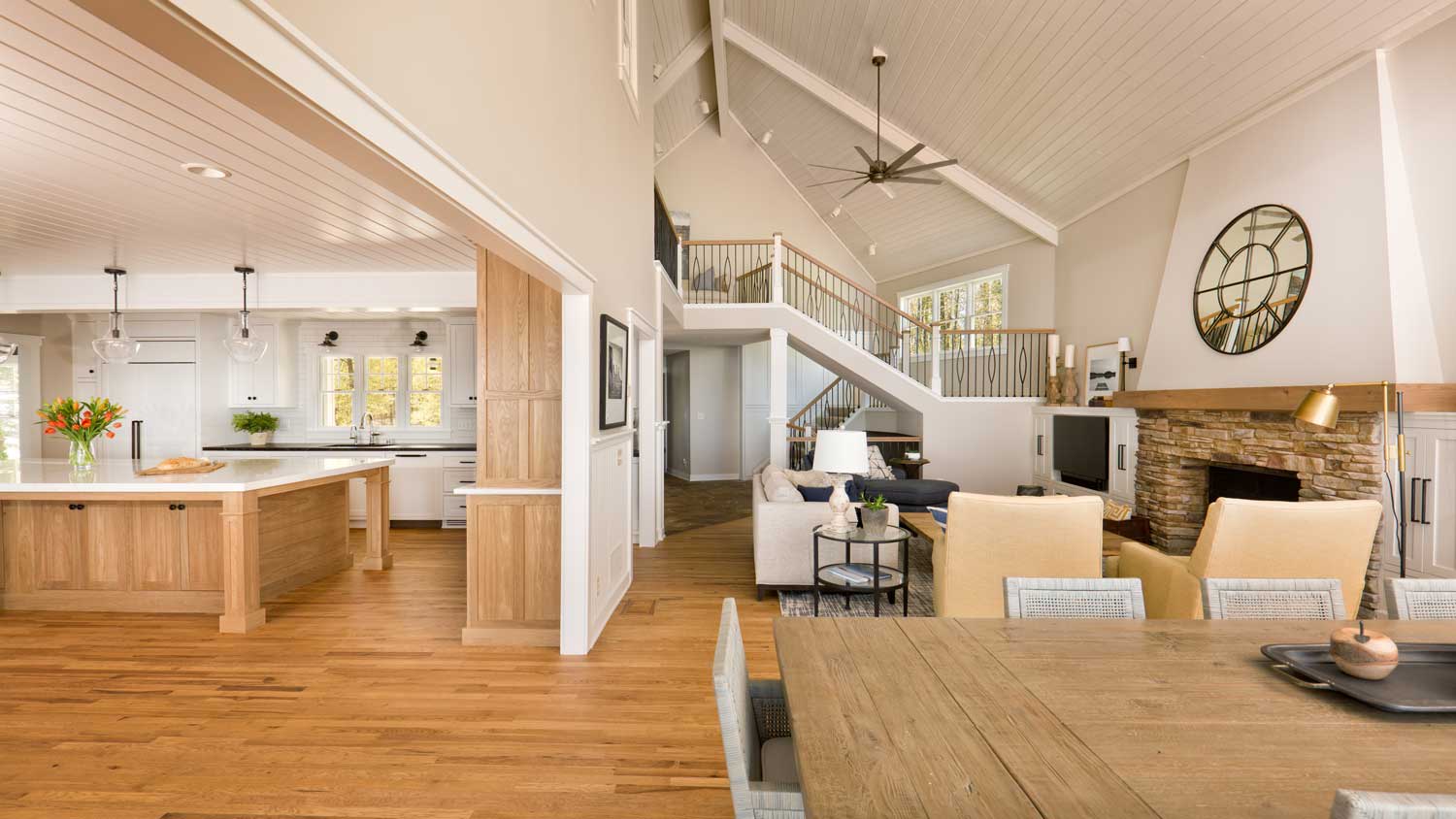
The cost to convert a vaulted ceiling to a second floor depends on factors such as its size, intended function, materials, and the project's complexity.
Looking to breathe new life into your space with a ceiling refresh? Learn about the cost to paint a ceiling and what factors can affect your total.
Cathedral ceilings add height to a room, and these vaulted ceilings can give your interior an opulent look. But is it worth it? This guide dives into the details.
While beautiful, cathedral ceilings are prone to ventilation problems. Here are four major warning signs that your ceiling has venting problems and who to call for help.
A vaulted ceiling incorporates sweeping archways for a dramatic effect. Learn more about what a vaulted ceiling is, your options, and where to use them.