
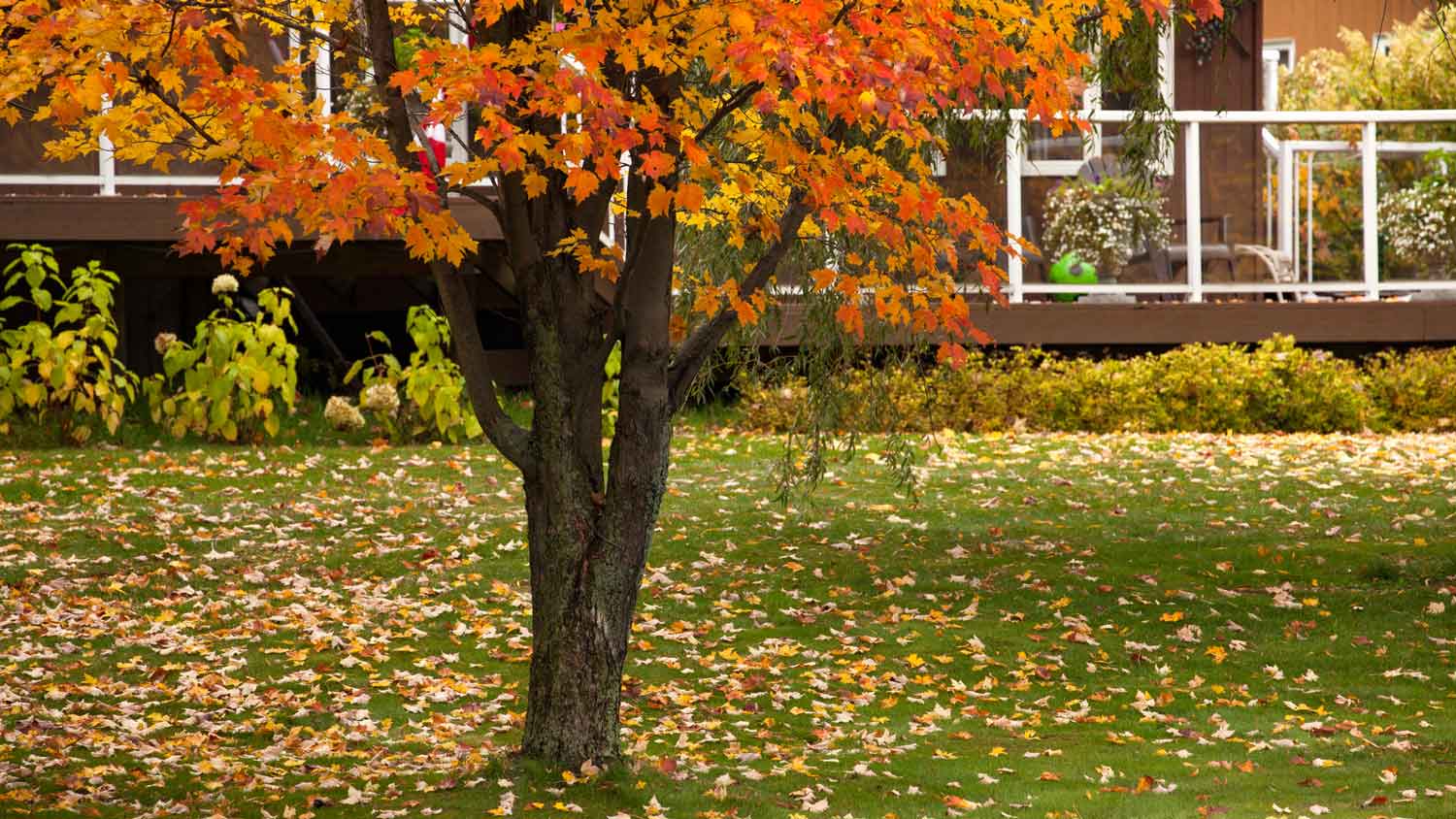
Allowing leaves to decompose naturally can add vital nutrients back into your soil. Learn whether you should rake leaves and why.
Autumn leaves have met their match

Bagging leaves on a dry, windless day saves you from dealing with wet, heavy leaves that tear paper bags and scatter your hard work.
Expect to pay $190 to $550 for professional leaf removal, which can save you hours of raking and bagging throughout the fall season.
Paper lawn bags stand upright on their own and are biodegradable, making your cleanup easier and more environmentally friendly than plastic bags.
Hiring a local leaf removal professional handles the entire job for you, from raking and bagging to hauling away leaves and yard debris.
Ready to bag those autumn leaves? The right techniques and supplies can save you a lot of time and effort. Learn the best way to bag leaves by following these 10 practical tips.
If you already know you’ll be bagging and removing the leaves on your lawn, save yourself the hassle of doing the job multiple times by waiting until most of the leaves are off your trees and on the ground. Trees of similar species tend to shed their leaves around the same time based on temperatures, which makes timing your cleanup project easier.
But if you have a wide variety of deciduous trees on your property, they’ll drop their leaves at different rates—in which case you’ll have no choice but to gather leaves more than once. Ash trees tend to shed their leaves early and quickly, for example, while hickory and oak trees are often among the last trees to change color and drop their leaves.
You don’t need special clothing for a typical leaf cleanup project, but a few key pieces of safety gear will make the job much more comfortable. Be sure you have:
Heavy-duty padded gloves. Leaves can have lots of needles, twigs, and even thorns in the mix. A good pair of gloves will also keep your hands dry if the leaves are a little damp.
Knee pads or a kneeling mat. After you’ve kneeled a few times to gather the last bits of a leaf pile, you’ll start to appreciate the importance of knee protection.
Face mask. Leaves can be dusty, and they often carry mold spores. A face mask will shield you from breathing in these potential irritants.
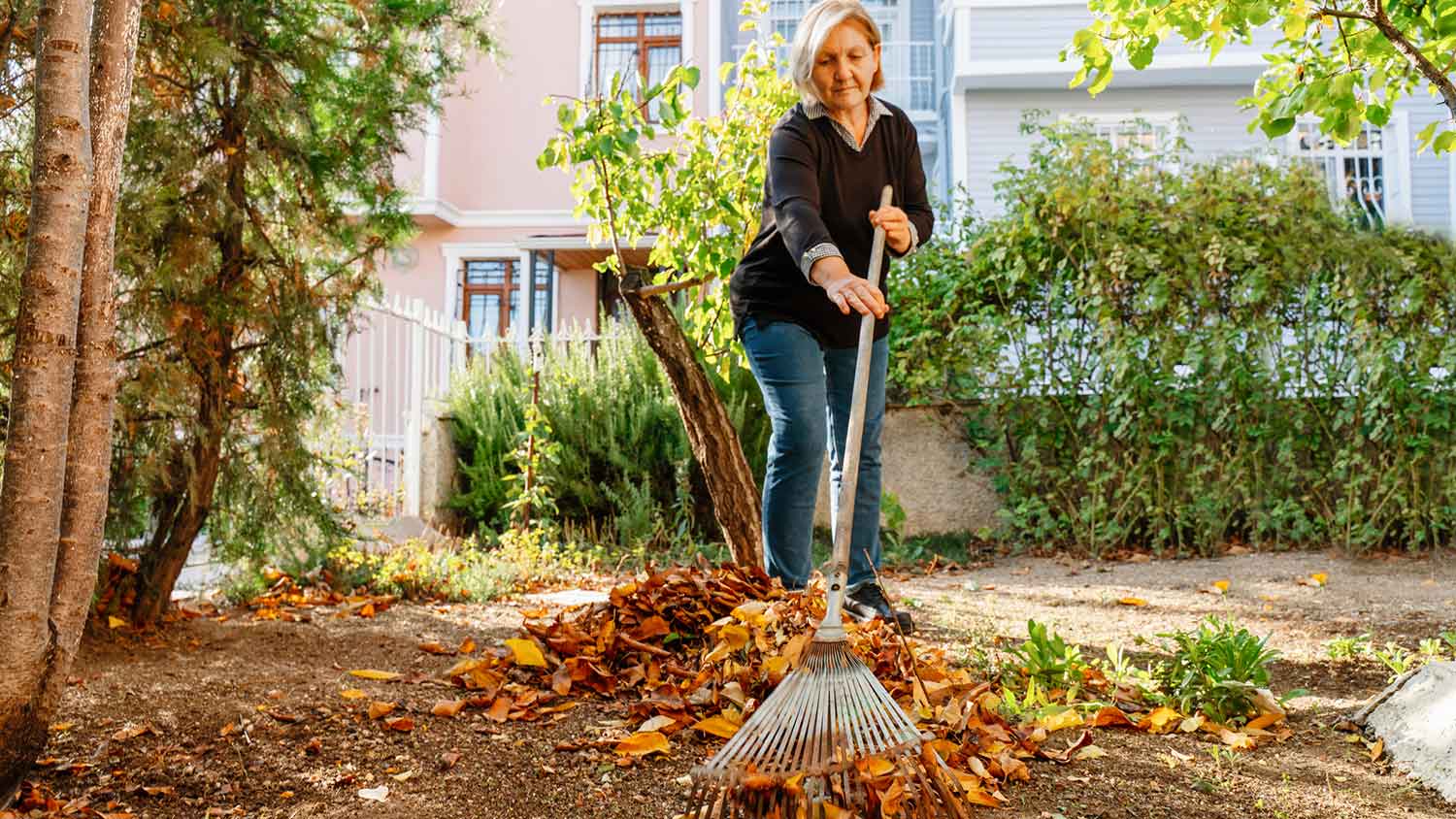
If you’ve ever raked leaves before, you know that not all rakes are created equal. Many rakes struggle with leaves, which can easily get trapped in the tines. To upgrade your rake for a leaf-ridden backyard, you have a couple of options.
One choice is a “clog-free” rake. These rakes have uniquely-designed heads that keep leaves from building up in the tines. Another option is a pair of handheld mini-rakes that you can use to both gather leaves together and pick them up to bag.

Paper lawn bags are readily available at home improvement stores. They can be made from recycled materials or are at least completely biodegradable, which makes them more environmentally-friendly than plastic yard waste bags. Plus, they’re designed with a flat bottom so that they stand up easily on their own and are less likely to roll over or collapse at the worst times. Best of all, they tend to be significantly less expensive than plastic trash bags.
The only concern with paper bags is that they can start disintegrating in the rain or when filled with particularly wet leaves, so they work best in dry conditions. Otherwise, they’re the go-to choice for bagging your leaves.
Wet leaves are harder to rake and pick up, and they can make your paper lawn bags disintegrate. Even if the forecast calls for sun, it’s best to wait until any morning dew has evaporated. And of course, there’s nothing more frustrating than watching a gust of wind scatter your perfect leaf piles and undo hours of work, so make sure there’s no wind in the forecast.
If you’re short on time, you can skip this step. But if you have a way to mulch leaves—like a dedicated mulcher, or a kit that lets you mulch leaves with a lawn mower—you may want to start by shredding leaves before bagging. Leaf bits are easier to rake and handle than full leaves, and you can fit them in bags more easily, too. Plus, you can save some of the mulched leaves for your compost or similar purposes.

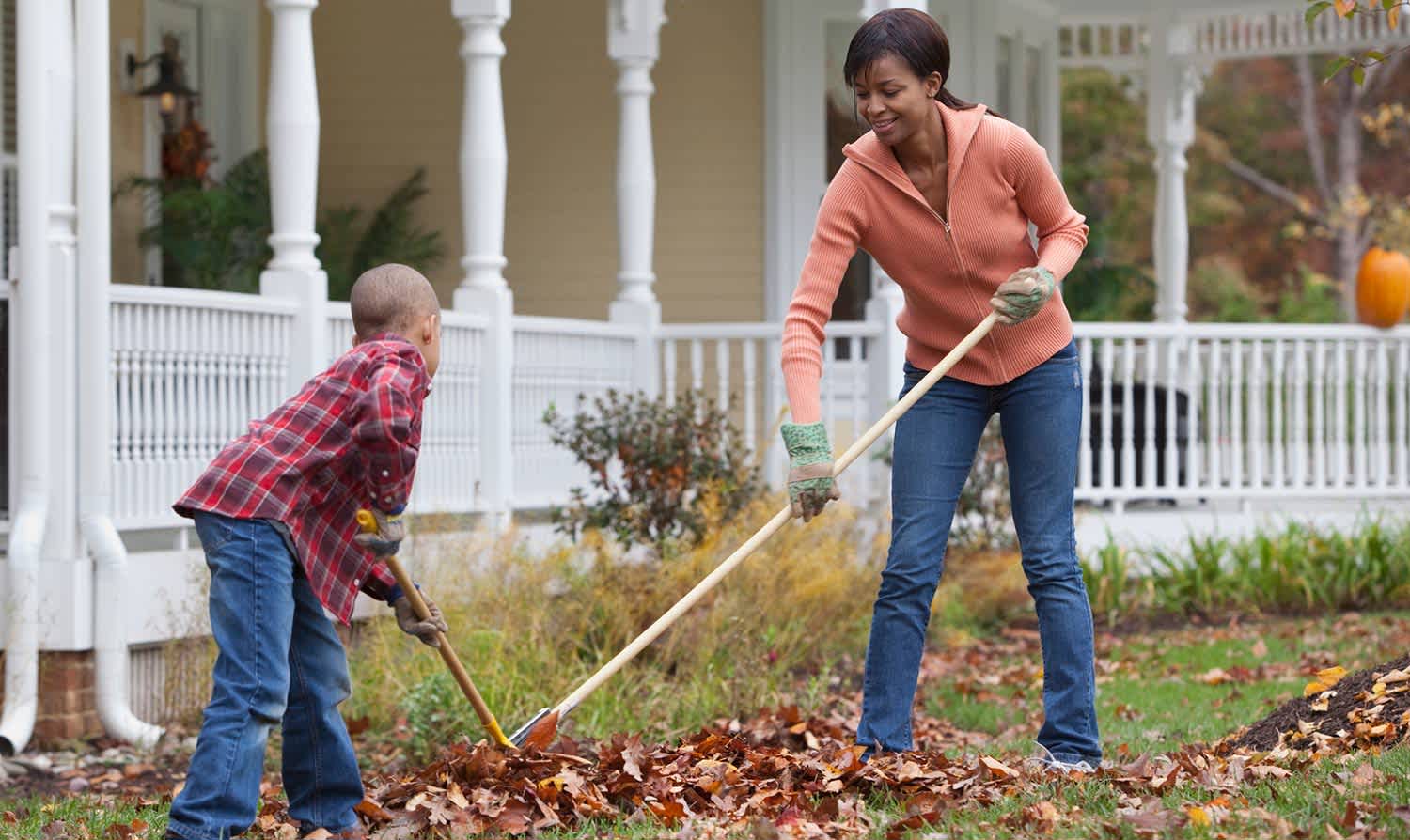
As you rake, divide leaves into manageable piles. Each leaf pile should be no more than a few feet across—small enough to easily pick up or push into bags when you’re finished raking. This approach also works well if you’re working in tandem with someone else who can follow behind and start bagging.
Bagging leaves isn’t rocket science—for the most part, you’ll be lifting piles of leaves with your rake or other tools and dumping them inside yard waste bags—but several tips will help you get the task done in short order. Be sure to practice good posture: Avoid hunching over for long periods of time, and focus on lifting with your legs. You’ll also save yourself a lot of time if you walk around the yard and pick up any fallen branches or other large pieces of debris before starting your cleanup project; these items can get tangled in paper lawn bags and can rip them.
For particularly big leaf cleanup jobs, it’s often easier to get a large tarp and pile leaves on it rather than trying to bag everything up. Using a tarp has several advantages. You can easily drag very large leaf piles wherever you want them. You can move the tarp to a truck or trailer if you want to avoid bagging altogether. And if you or your family loves playing in the leaves, a tarp pile makes for lots of fun with easy cleanup afterward.
With leaves bagged and ready, you need to choose a method of disposal, which is trickier than you may think. Household trash bins are rarely large enough to hold all the leaves that you’ve collected. Taking them to a dump or landfill will cost money, and many landfills will outright reject yard materials like leaves. So what do you do with your bags? The best solutions we’ve found include:
Check your local government website to see if they have any leaf removal days. Many municipalities schedule special days where they will pick up leaves at no extra expense. Occasionally, you’re even discouraged from bagging leaves and can just pile them in the street instead.
Look up community trash collection and see if there is a local dump site that doesn’t have the same restrictions as landfills.
Post on Facebook Marketplace, Craigslist, or a similar site to see if anyone’s interested in taking them. Sometimes local gardening groups or community gardens will take bags of leaves to use for mulch.
Now you’re ready to bag and remove leaves like a pro! Of course, you can always hire a leaf removal company near you to do the job instead. Professional leaf removal costs between $190 and $550.
One of my old tall evergreen trees was suddenly leaning toward the busy street in front of my house. I submitted a request for an emergency tree inspection, and Alejandro, owner of Cajete Tree Service, contacted me immediately and arrived to look at it just 20 minutes later. We agreed the...
 Cajete Tree Service LLC
Terrible experience. Walls/trim/floors/cabinets/doors all have drip marks, overspray, etc. Tiling at the fireplace had to be redone by another vendor due to incorrect and shoddy install by Profect. Contractor had his children in our house while he was on site without prior authorization or...
 Profect painting & exteriors
Wonderful. I am going to have them remove and replace my driveway in the spring.
 All Star Paving and Sealing
Lyle did a great job removing asbestos shingles from our front porch roof. They worked together with our roofer to make sure that the new roof was able to be installed on the same day that Lyle removed the asbestos shingles.
 Lyle Environmental
Involved an extensive bathroom remodel, including removing tub & installing walk in shower, new drywall, custome tile work to ceiling, plumbing, etc. Overall, job was done on time and on budget. Nick & his team were very professional and had high attention to detail. Quality was great. Highly...
 Stamos Flooring and Remodeling LLC
Extremely well. Ohio Tree Care is my go to company for all tree care and snow removal services. they are professional, knowledgeable and affordable. I manage five camps in 33 counties and Ohio Tree Care has serviced every one of our properties. Highly recommend.
 Ohio Tree Care Inc
A team of 2 spent 5 hours, cleaning top to bottom (removed all light fixture and cleaned.... impressive!!!)
 Luzia's Cleaning
Great Job!!! Martin called me after I requested a estimate on Home Advisor. He was very professional and actually went the same day and looked at the tree I needed removed gave us a estimate and I felt it was very aggressive so I did not even call for any other bids. I asked him how soon he...
 Reyes Tree Service LLC - Home Facebook
Removed various items (furniture, lamps, other junk) from my home. They were on time, personable, professional, etc. I can't say enough positive things about this company. <br />
The task proved more difficult than anticipated. When they arrived the first day, they had no tools with them at all, and had to make a run to purchase appropriate tools. It was quickly determined that the paper had to be steamed off, and neither the workers, nor the company itself, had...
 ABS Interiors of Mid-Ohio LLC
From average costs to expert advice, get all the answers you need to get your job done.
Allowing leaves to decompose naturally can add vital nutrients back into your soil. Learn whether you should rake leaves and why.
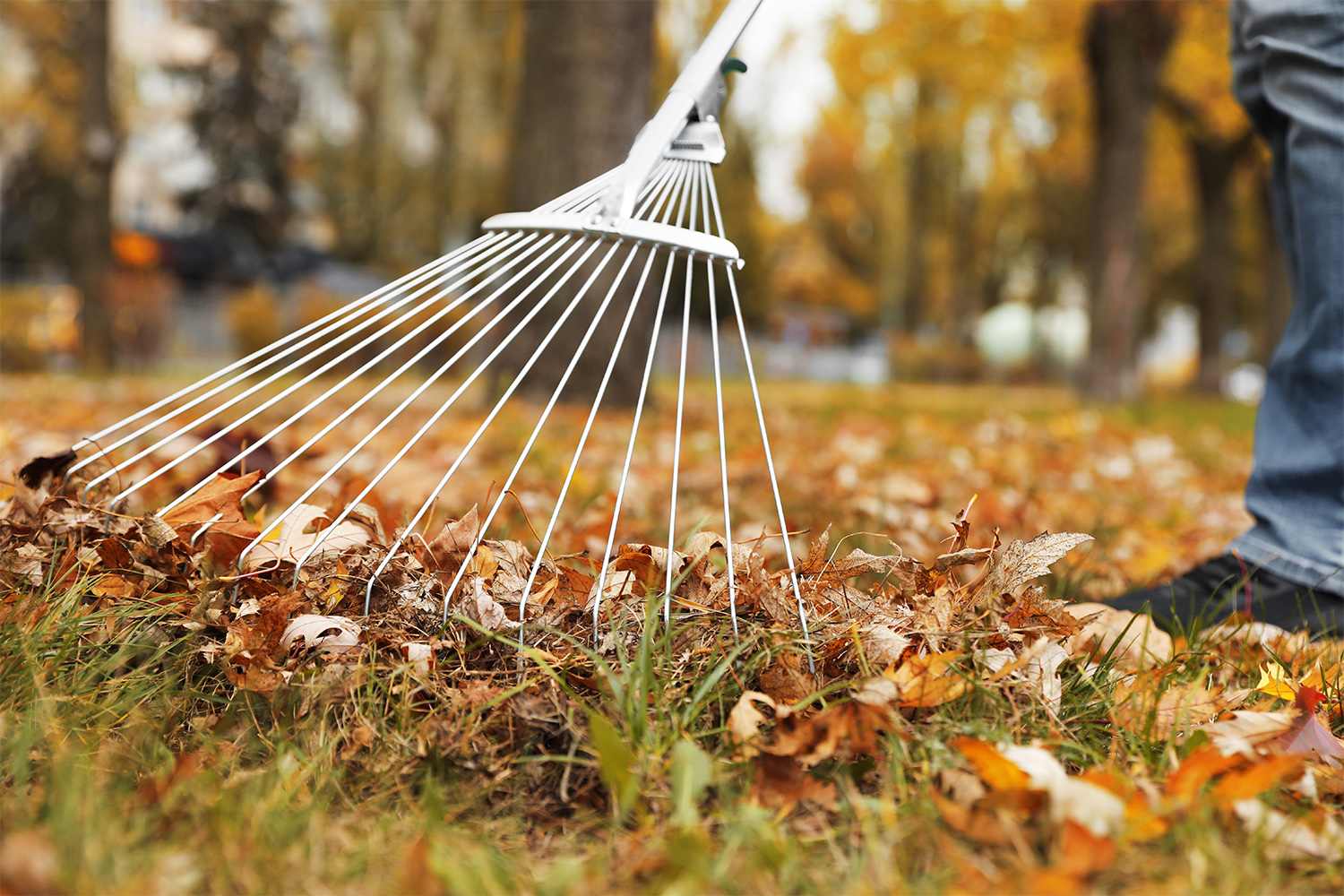
Raking leaves can be a tiring task. Learn the best way to rake leaves to make the job easier and benefit the environment.

Raking leaves can be such a chore. Learn how to get rid of leaves without raking with these fail-safe methods.
Learn about the most popular kinds of rakes for gardening and home care to find the perfect tool for your outdoor projects.
Determining how to clean up fallen leaves can be a real chore. Consider time, tools, and environment when choosing between raking or mulching leaves.
Learn how to get leaves out of mulch with minimal mess or equipment in this simple guide. All it takes is a little sweat equity and a few tools and supplies.