
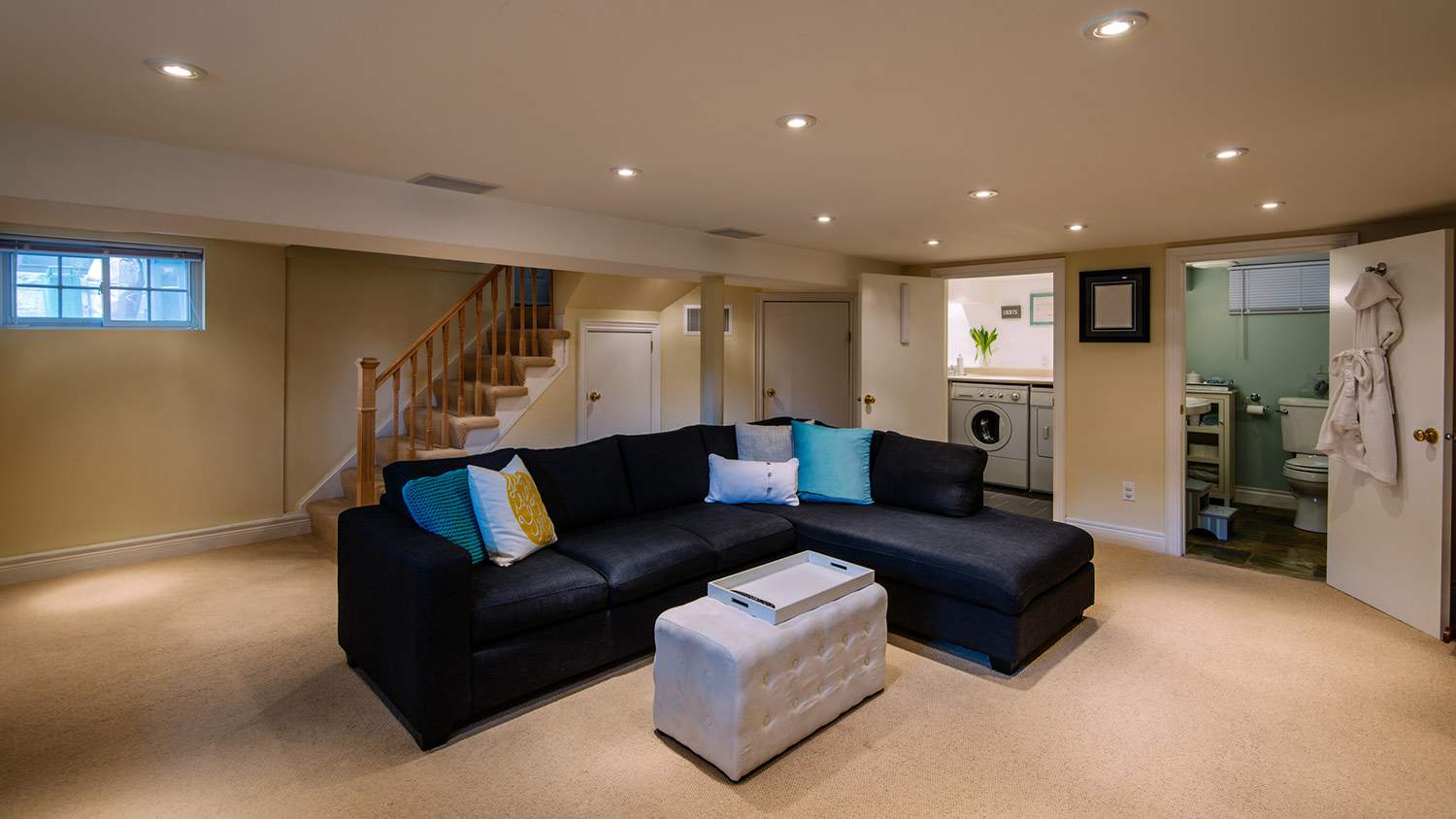
If your basement ceiling is low, there are ways to raise it. Learn more about the cost to raise a basement ceiling to be able to enjoy your basement and create a more usable space in your home.
The basement may be underground, but its ceiling still matters

Your basement ceiling options include drywall for a traditional look, drop tiles for easy access, wood panels for style, PVC for moisture resistance, metal for unique design, and paint for budget-friendly simplicity.
Professional basement finishing costs range from $15,000 to $75,000, while DIY drop ceiling installation can save you about $1,200 compared to hiring a pro for the work.
Drywall provides the best soundproofing and matches your home's upper floors, while PVC panels resist moisture in damp basements and drop tiles allow quick access to pipes and ductwork.
Hiring a local basement finishing professional removes the guesswork from material selection and installation challenges, helping you create a polished space that matches your vision and budget.
Covering basement ceilings with the right material can be challenging with exposed joists, beams, pipes, ductwork, and conduit to work around. Fortunately, you have a few ceiling options for basements that work beautifully. The six primary basement ceiling options are drywall, tiles, wood panels, PVC panels, metal, and paint. Each basement ceiling option has pros and cons that you can weigh to find the perfect material for your design.
| Basement Ceiling | Biggest Benefit |
|---|---|
| Drywall | Traditional look |
| Tiles | Easy to install |
| Wood panels | Sharp and stylish |
| PVC panels | Resists moisture |
| Metal | Unique design |
| Paint | Easy and inexpensive |
According to data from Angi, most homeowners are looking for input from a professional, with around 57% wanting a recommendation and 37% of homeowners wanting sketches or a basic idea for a project.

When you want your basement ceiling option to fit in with the rest of the home, drywall is the go-to material. Modern homes use drywall in ceilings and walls almost exclusively on the upper floors. Using drywall in the basement ceiling maintains that consistency. You can easily paint it or add a texture. However, working over your head to hang and finish drywall can be tiring work to do yourself. You may wonder who to hire to finish a basement ceiling with drywall. A local drywall contractor is the right professional to do this work.
| Pros | Cons |
|---|---|
| Looks consistent | Tough to install |
| You can add paint or texture | No access panels |
| Good noise reduction | Not good in dampness |
Best for: Those who want to match the basement to the rest of the home’s ceilings.
One of the most popular alternatives to drywall in a basement ceiling is tiles. Many people will select drop tiles for a basement ceiling option when they want something they can install quickly. Older drop tiles didn’t offer much style. However, newer models have multiple colors and designs available that create a high-end look that wasn’t possible in the past.
Drop tiles often fit inside a hidden metal grid that hangs a couple of inches below the lowest part of the ceiling. Tiles you glue directly to the ceiling are available, too, but they don’t work on uneven ceiling surfaces.
| Pros | Cons |
|---|---|
| Easy to install | May not look appealing |
| Decorative designs | Some lost headroom |
| Easy access to pipes | Not very durable |
Best for: An easy-to-install option where you can access pipes and ductwork later.

Wood panels and planks can create a unique design for your basement ceiling. Whether you choose to install planks, beadboard, shiplap, or another type of wood, these materials give the basement a cozier feel. Darker stained wood may fit better with a basement bar or game room, while shiplap and beadboard deliver a casual style. You can create access panels naturally in the wood design to reach pipes or ductwork inside the ceiling.
| Pros | Cons |
|---|---|
| Can be painted or stained | Tough installation |
| Create access panels | Pricier than others |
| Prefinished options | Issues with moisture |
Best for: Those who want a highly stylish option that’s paintable.
PVC panels are a durable basement ceiling option that can withstand moisture. Manufacturers can make PVC panels with simple textures to enhance the overall design. Reflective white is the most common color, which can brighten up a basement without windows. However, some people do not like the look of PVC material as a basement ceiling option.
| Pros | Cons |
|---|---|
| Waterproof material | Can look unattractive |
| Easy to install | No access panels |
| Reflects light | Only simple textures |
Best for: Those who need a waterproof basement ceiling option.
Metal may not be the first material you think of for ceiling options for basements, but this uniqueness is part of the appeal. A tin ceiling may remind you of an old pub, while a corrugated metal ceiling has a rustic feel. Some people may choose to use metals like copper as an accent to other basement ceiling options. Metal can be challenging to work with because of sharp edges and the possibility of creating dents during the installation. It also can be pricier than some other materials.
| Pros | Cons |
|---|---|
| Striking design | Challenging install |
| Use varying metals | Pricey materials |
| Good for accents | No access panels |
Best for: Those who want a striking design in the basement ceiling.

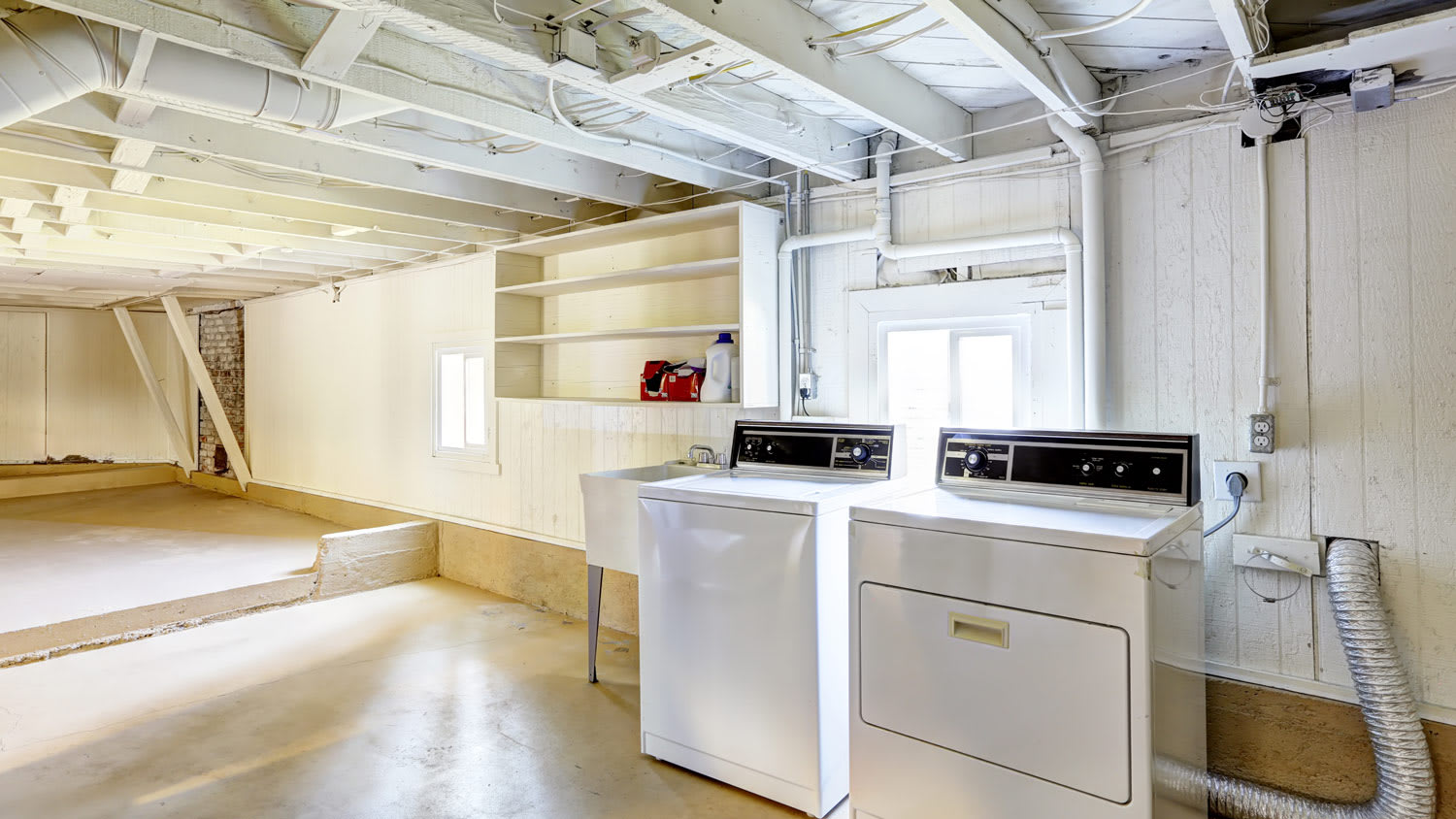
Don’t just dismiss the idea of simply painting the exposed basement ceiling. Paint is an inexpensive option, giving you more money to spend on other aspects of finishing the basement. Using black or white paint across all the pipes, ductwork, beams, and joists is a common choice. Solid colors allow the pipes and ducts to blend into the ceiling. By leaving these materials exposed, you still have a slight industrial feel in the space. Black paint hides these items better than white paint.
| Pros | Cons |
|---|---|
| Simple application | Leaves pipes visible |
| Inexpensive option | Requires a sprayer |
| Easy access to pipes | You may dislike the look |
Best for: Creating an inexpensive ceiling covering with a slightly industrial feel.
If you have some experience with DIY projects, you certainly could install your basement ceiling yourself. Doing at least some of the tasks required to finish a basement yourself can save you quite a bit of money. The cost to finish a basement runs $15,000 to $75,000 for a pro to do the work. However, you could save about $1,200 by installing a drop ceiling yourself, which is about half the average cost to install a drop ceiling using a pro.
Of course, it’s also important to install the ceiling and finish the basement properly. Keep in mind that a finished basement adds value to a home. When completed in a professional manner, the return on investment for a finished basement is between 50% and 80% of your cost. With that idea in mind, it’s worth reaching out to a local basement finishing professional for an estimate.
Finished Basements Plus was wonderful from beginning to end! First, they came out quickly for an estimate. I had 4 estimates and theirs was by far the best. (2 of the estimates were more than $20K higher than for the exact same work). Beyond their fair pricing, the work was excellent. They...
 Finished Basements Plus Inc.
1st Choice Renew is simply the best! We hired them for a complete home renovation, and they transformed our space into something truly amazing. The team attention to detail and commitment to quality were evident throughout the project. They were easy to work with, very responsive, and always...
 Save A Dime
Amazing job. Efficient and quick without compromising quality. Basement feels brand new. Would use them again in a heartbeat.
 AffordaPro Restoration
Window Depot did an amazing job installing the windows in my basement! The process from start to finish was by far more than what I expected. I would highly recommend Window Depot if you want professionalism from the the consultation to the installation. Dont settle for mediocre when you can...
 Window Depot USA of Central Ohio
Look forward to them getting started in our basement here soon. Extremely professional, very detailed and was a pleasure to have around. Anything we needed to work on or change in the middle of the project, they were open and willing to work with me.
 Jones & Sons Construction LLC
They cleaned my very dirty basement. They were prompts, quick, thorough and their price was fair.
 JDE House Cleaning LLC
I am very pleased with the services performed by OTS. Bless my late Mother, but she was a bit of a pack-rat. The basement of her home was crammed with 40+ years of "stuff," and the other companies I contacted were concerned with possible mold contamination of the items due to the musty smell...
The company was very easy to work with. My family is now able to enjoy a space that at one point, only collected junk!!!! I feel like i have a whole new addition to the house!!! Wonderful work Blurock on our basement, will recommend!
 BluRock Services, Inc.
first time using home advisor and Grace Remodel was positively the right choice!!!! it was a large job and mark did an excellent job. the price was right, he worked long and hard every day, his attention to detail is impressive, and he finished on time. i have worked with many contractors...
 Grace Remodel & Paint, LLC
We met with Matt on July 1 to discuss a kitchen and bath remodel. We spent over an hour taking about what we wanted and shared our thoughts about timelines and budgets. It’s been over 3 months and we haven’t heard from him since. We would understand if there had been some communication, but...
 Elite Home Remodeling Inc
From average costs to expert advice, get all the answers you need to get your job done.
If your basement ceiling is low, there are ways to raise it. Learn more about the cost to raise a basement ceiling to be able to enjoy your basement and create a more usable space in your home.
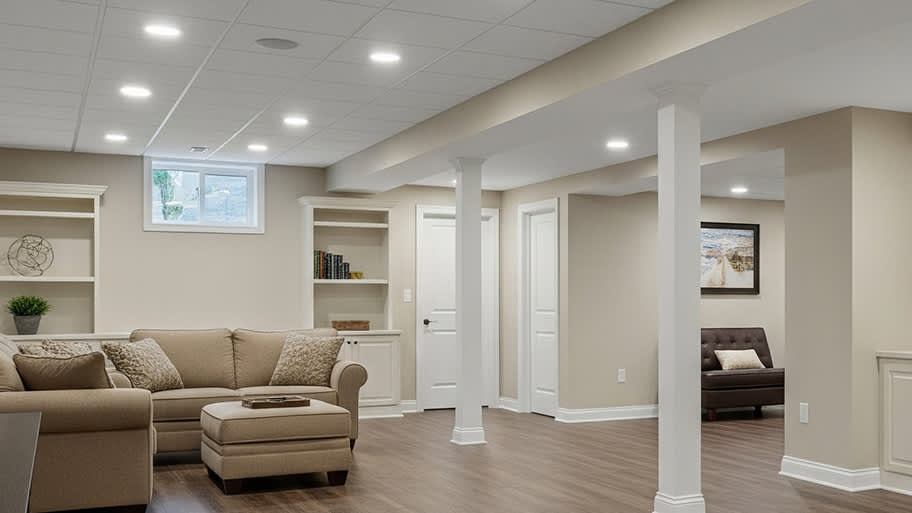
Drop ceilings are an affordable way to finish your room while maintaining access to utilities. Use this drop ceiling cost guide to estimate your project total.

A basement isn’t truly finished without a ceiling touch-up. From wood beams to shiplap, let these beautiful ceiling design ideas inspire your basement reno.
Discover several exposed basement ceiling ideas, whether yours is low or high, for inspiration to make your home's lowest level a place to enjoy.
Wondering what’s considered a finished basement? Learn what distinguishes a finished basement from an unfinished one and which is right for you in this guide.
You can paint your basement ceiling to brighten up a dark space while leaving the beams open, but you won’t get added insulation. There are the pros and cons of painting a basement ceiling.