


Top-rated pool table assembly pros.

Get matched with top pool table assembly pros in Moundsville, WV

Enter your zip and get matched with up to 5 pros

Need a pro for your pool table assembly project in Moundsville, WV?

Select your specific project to find the pro for you.

TRUSTED BY MOUNDSVILLE, WV HOMEOWNERS

  • Average homeowner rating star icon3.9
    Average homeowner rating
  • Verified reviews icon19
    Verified pool table assembly services reviews

Find Pool table assembly pros in Moundsville

Avatar for Hamners contracting
Hamners contracting
New to Angi
Handyman for Multiple Small Projects

Serving Moundsville, WV and surrounding areas

Approved

Free estimates

Emergency services offered

Small jobs welcome

Hello, I am a 29 year old husband and father. I have a vast range of experience with home care, construction, and remodeling. \n\nI am determined to get my business rolling and get away from the coal mines so I’m more available for my family. \n\nHelp me, help you with all your needs! \n\nI am also a licensed electrician. \n\nNo job to big or small! We do them all!

Showing 1-10 of 45
Pool Table Assembly questions, answered by experts

The regulations for pool fence heights vary by state, so be sure to research what the legal, minimum height is in your area before purchasing or installing a fence. Though every region is different, generally a pool fence must be at least 4 and ½ feet high. If you’re unsure whether you need a fence around your pool, and how high that fence should be, contact a local pool enclosure expert to help you successfully, and safely, move forward.

If you put too much chlorine in your pool, it can make the pH level more acidic, creating a health risk. You might experience symptoms like nausea, dizziness, vomiting, skin rashes, and irritation in the eyes, nose, throat, and lungs. To lower the chlorine level, you can turn off your chlorinator or chlorine feeder, add more water to dilute the pool, or remove the cover to let sunlight naturally reduce the chlorine.

Yes, pool pumps use a significant amount of electricity, making them one of the biggest energy consumers in a home. A pool pump can use up to three times as much electricity as a refrigerator. Typically, a residential pool pump consumes about 1 kilowatt-hour (kWh) for every hour it runs. Because pumps often need to run for about eight hours a day to properly filter the water, this can add up to an annual consumption of 3,000 to 5,000 kWh, which can cost between $480 and $800 per year based on average electricity rates.

The amount of electricity your pump uses depends on its size, energy efficiency, and daily run time. To lower your energy consumption, you can choose an energy-efficient or variable-speed pump, ensure it is correctly sized for your pool, and run it only for the minimum time required to keep the water clean.

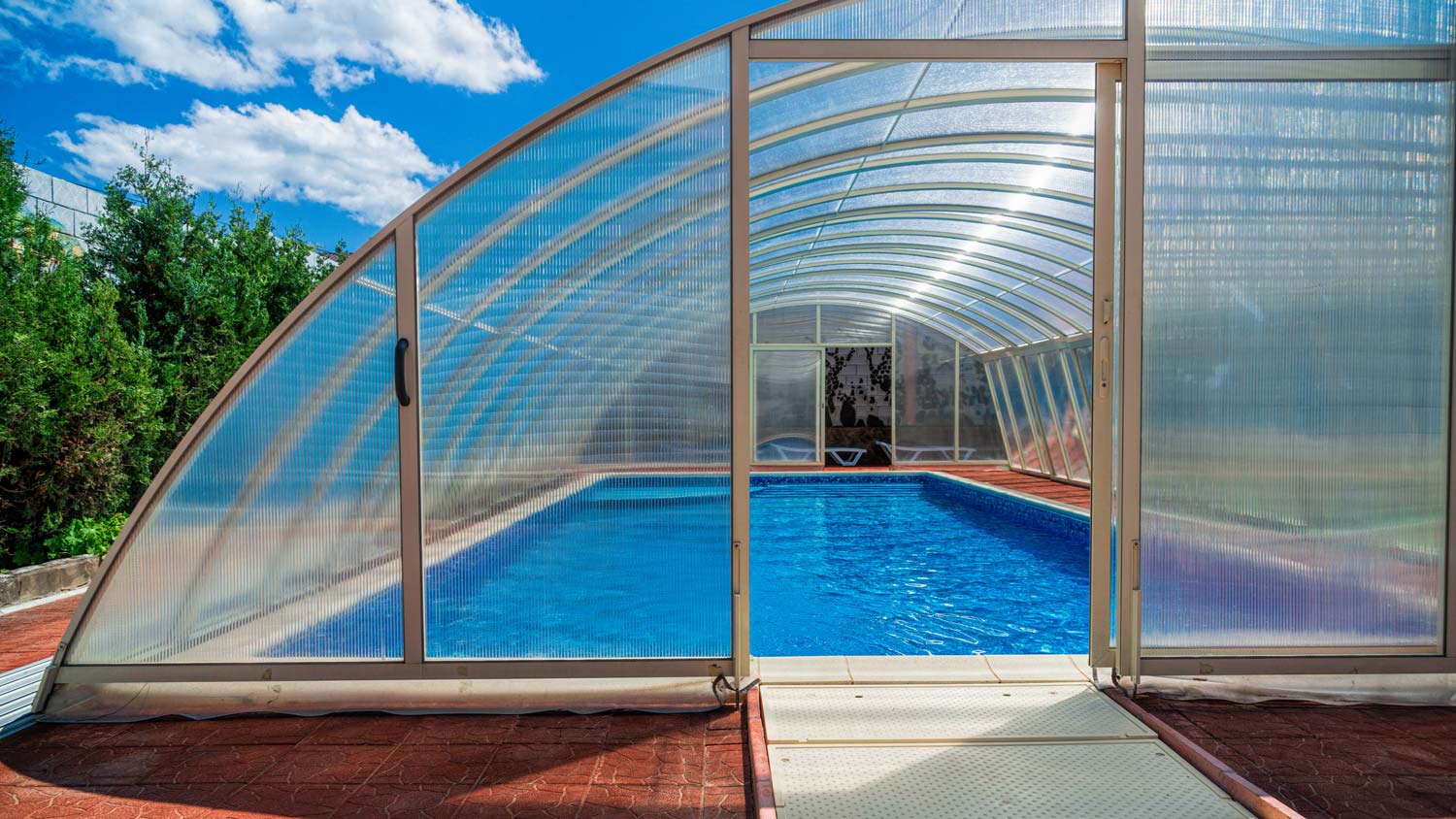
Your indoor pool can be heated or unheated, but the decision depends on your local climate. In regions with freezing temperatures, heating your pool will keep it warm during the winter, especially if it’s only covered with a greenhouse enclosure. 

If you keep your swimming water warm and toasty, budget between $300 and $5,700 for the cost of installing a pool heater.

A solar cover can heat your pool anywhere from 5 to 15 degrees Fahrenheit over the course of 6 to 12 hours, depending on how much full sun your pool gets and how big it is. When used in conjunction with a solar pool heater, your pool will heat up even faster, all while using less energy than a traditional pool heater.

The Moundsville, WV homeowners’ guide to pool table assembly services

From average costs to expert advice, get all the answers you need to get your job done.