


"Mike was able to fit me in the same day for an estimate which surprised me because I'm sure a lot of people are needing his services with all the rain lately but he was in the area that day and came by. Although the company is a nation wide chain, its a franchise and a small business. He is an honest Vermonter with Vermont values which I appreciate. He gave me options but didn't try to talk me into something I couldn't afford and is doing the work within two weeks which I was also happy about being a very busy time for this type of thing."
"The company representative stated to me that they only do commercial properties and not residential homes. I was not aware of that from the company's description. They did respond to my calls."
At Five Star Masonry Works, we specialize in custom natural stone patios, retaining walls, outdoor kitchens, and architectural veneer installations throughout Massachusetts and Connecticut.\n\nWe take pride in delivering high-end craftsmanship with clear communication and accurate pricing from start to finish.\n\nWhether you’re upgrading your backyard or building your dream home, or a conmercial project, our goal is to create masonry work that adds lasting value and beauty to your property.\n\nContact us today for a consultation and detailed estimate.
Concrete Mudjacking questions, answered by experts
The average cost for mudjacking is around $1,200, though prices can range from $300 to $3,400. On a per-square-foot basis, you can expect to pay between $3 and $8, with an average of about $5 per square foot. The final cost depends on several factors, including the square footage of the concrete, the type of slab, its accessibility, whether it is load-bearing, and the type of material used to lift it. Generally, lifting a driveway, small patio, or sidewalk is less expensive than lifting a slab foundation or garage floor.
Yes, expanding foam (also known as polyurethane foam) can lift concrete. This approach, called polyjacking, involves injecting the foam rather than concrete slurry to fill voids and raise the concrete slab back into place. It’s often faster and requires smaller drill holes than traditional mudjacking, though it may come at a higher cost. Some contractors also prefer polyjacking over mudjacking for more damaged and delicate slabs.
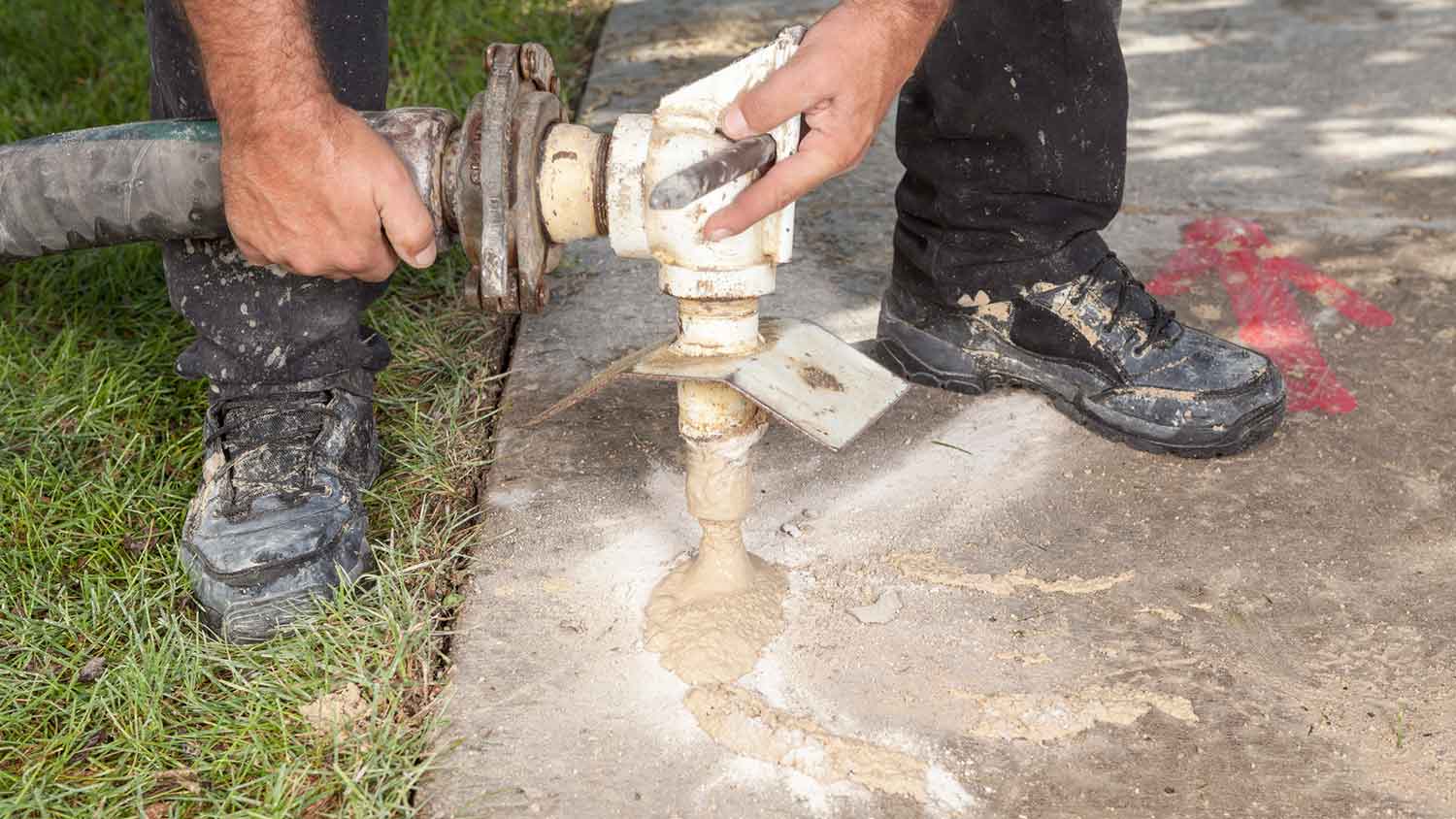
The method involves lifting settled concrete using pressurized cement slurry via drilled holes. This solves uneven surfaces and prevents further settling.
Mudjacking typically takes 24 to 72 hours (one to three days) to dry and cure completely before you can resume normal use. The total drying time can vary depending on the size of the project. Because the slurry mixture contains cement, it needs to harden fully to prevent the concrete slab from shifting under added weight. You should avoid walking on the concrete or placing heavy items like furniture or vehicles on the surface until it has fully set. Your concrete contractor can provide a precise timeline. As a point of comparison, if you opt for polyjacking, the polyurethane foam can dry in minutes, but it's recommended to wait about an hour before use.
On average, a mudjacking repair lasts between five and 10 years, though it can sometimes last for well beyond a decade under ideal conditions. Its longevity depends heavily on several factors, including the condition of the underlying soil, environmental conditions like freeze/thaw cycles and erosion, and whether the root cause of the sinking, such as drainage issues, is resolved. Because it doesn't always fix the underlying problem of loose soil, mudjacking is often considered a temporary solution. Proper maintenance and evaluation can help extend its lifespan.
The Grafton, VT homeowners’ guide to concrete mudjacking services
From average costs to expert advice, get all the answers you need to get your job done.
DIY mudjacking is an advanced task, but learning how to raise a concrete slab is great to know for many scenarios. Let's take a look at how to DIY mudjack.