We take great pride in our extreme professionalism, timeliness and superior customer service on every job. We make sure to develop a lasting relationship so there will be no question on who to call the next time service is needed. Your satisfaction is guaranteed!
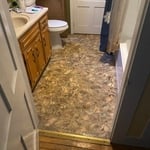
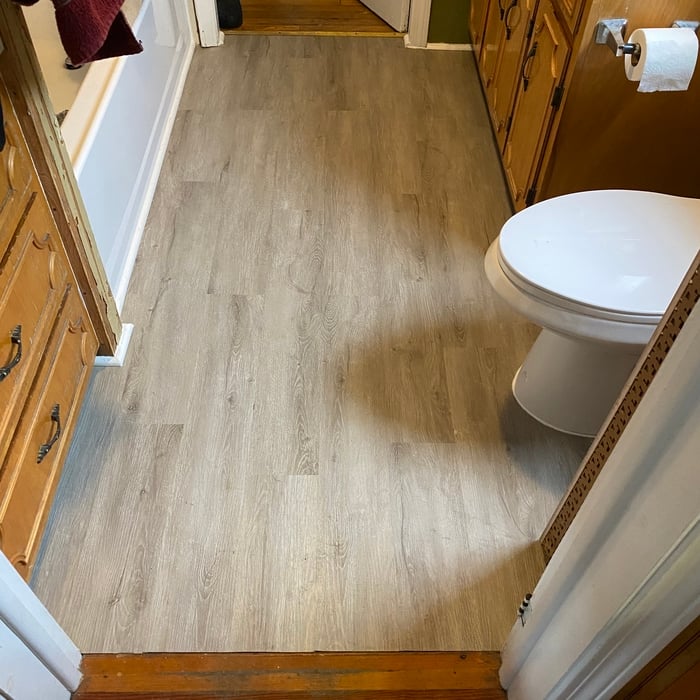
Finish carpenter serving Chittenden County VT and beyond. Some of my specialties include but are not limited to; interior trim, cabinet installs, tile, flooring, accent walls, built ins, windows, doors, siding and exterior trim. With 10+ years experience in finish carpentry there are no jobs too large or small. We pride ourselves on quality craftsmanship, honest timelines and pricing and an end result that you will be proud of for years to come!
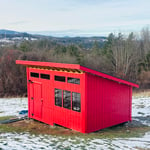
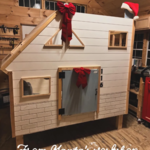
I am the owner of Stowebury Home & Grounds, a Waterbury, VT-based property care and construction company proudly serving clients within 50 miles of Waterbury. I bring hands-on craftsmanship — trained through Yestermorrow Design/Build School — to everything from handyman repairs and seasonal grounds care to custom carpentry and outbuildings. Our carpentry work spans interior and exterior projects, with a focus on sustainable materials wherever we can.\n\nWe do both structural builds and interior finish work — from custom workshops and barns built from the ground up, to interior carpentry including siding, decking, and flooring installation and repair. We also handle drywall installation and repair, from full rooms to patch-and-match jobs on existing walls, along with custom cabinetry and furniture built to fit each client's specific space and needs.
We are committed to excellence in every aspect of our business. We uphold a standard of integrity bound by fairness, honesty, and personal responsibility. Our distinction is the quality of service we bring to our customers. Accurate knowledge of our trade combined with ability is what makes us true professionals. Above all, we are watchful of our customers' interests, and make their concerns the basis of our business.
We take great pride in our experience, expertise, quality and customer service, that we provide to meet the consumer's needs. It is our mission to provide excellent workmanship, and complete customer satisfaction, from start to completion of a project. In order to understand the needs and expectations of our customers, we take great care to work and communicate, with every customer in a professional manner. Our reputation is based on service, safety and quality, regardless of how large, or small the job. Call us today!
Peter Ryan has been providing lawn care services in Burlington since 1999. In the early days, with little more than a push mower and broom, Peter's company began with a handful of small residential customers. Now he is armed with the best commercial equipment, a fleet of trucks, and a well trained staff. Peter continues to provide the highest quality service around, and continually exceeds the expectations of all of his customers.
"Excellent, professional and friendly! Arrived on time, took care of the various shelves I needed to have hung AND even finished assembling furniture that was delivered night before on the spot! Highly recommend Bob."
Pool Table Assembly questions, answered by experts
The average 12-by-24-foot in-ground pool costs $48,500, but depending on the features and materials, prices can trend even higher. You’ll spend less on a rectangular vinyl or fiberglass pool than on a concrete pool in an elevated style (think infinity pool or lagoon pool). Added features like heating, lighting, diving boards, or decking will increase your overall cost.
No, pool jets should not have air coming out. While it’s a common problem, making it seem like air coming out is the norm, bubbling pool jets are a sign of loose bearings or fittings, or low water levels. You should get to the bottom of your jets releasing air bubbles because it could be a sign that there’s air entering the pump, which can shorten the lifespan of your pump or lead to costly repairs.
Any number between 7.2 and 7.8 is an ideal pH for swimming pools or 80 to 120 ppm. Your pool testing kit should be able to measure both of these numbers. If your pool’s pH is below this range, the water is too acidic and can cause scaling and damage to pool equipment. If the water’s pH is above this range, it can decrease the effectiveness of necessary chemicals, like chlorine.
It takes more electricity to run one, so it’s not necessarily cheaper to run a salt water pool. However, the cost difference is relatively minor; it may cost an extra $50 over the course of a year. However, salt costs a lot less than chlorine sanitizers. This lowers the overall maintenance costs for a salt water pool compared to chlorine pools.
Draining a pool with a garden hose can take between eight and 14 hours depending on the depth of your pool and whether you use a sump pump. Be sure to stay close to the pool during this time to ensure the structure of your pool remains unharmed and that the water drains properly.
The Fayston, VT homeowners’ guide to pool table assembly services
From average costs to expert advice, get all the answers you need to get your job done.
Learning how much it costs to refelt a pool table is the first step to getting your game back in top shape. Here's what to know about each type of table.
If you’re not keen on spending your afternoon assembling flat-pack furniture, bring in the professionals. How much does furniture assembly cost? It can be shockingly affordable.
Pool tables and billiard tables come in a variety of sizes and designs. Read our buying guide to ensure you purchase the right one for your family’s gaming room.
Learn about home items that are nearly impossible to move without movers, either because they are awkwardly shaped, too heavy, or require special equipment.