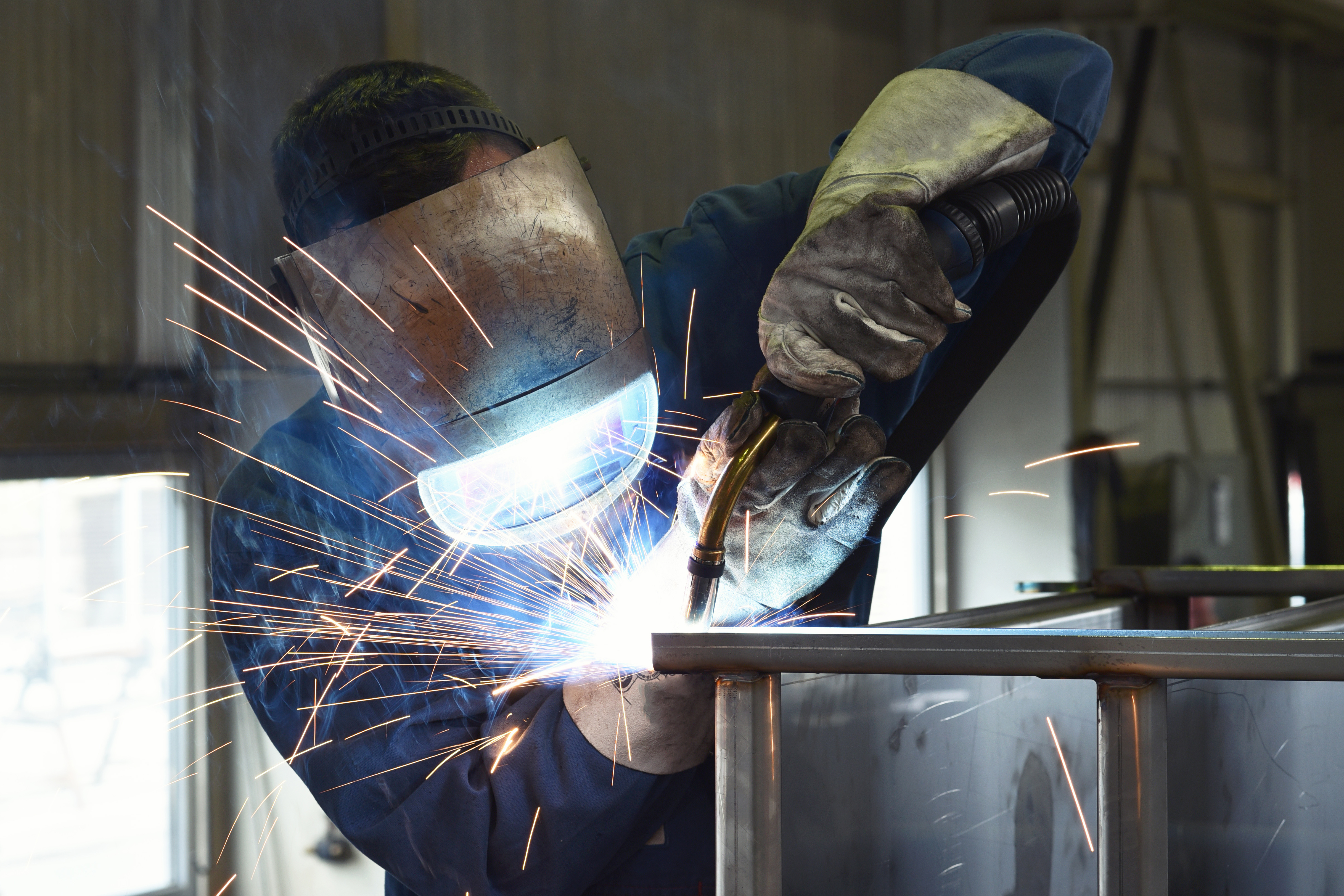


Top-rated welders.

Best welders near South Webster, OH

Enter your zip and get matched with up to 5 pros

Need a pro for your welding project in South Webster, OH?

Select your specific project to find the pro for you.

Top-Rated Welders in South Webster - Updated Nov 2026

L&L Welding
New to Angi
Metal Structure or Object - Create CustomMetal Structure or Object - Weld or CutWrought Iron Fence - Repair or Weld

Serving South Webster, OH and surrounding areas

In business since 2021

Free estimates

Offers commercial services

We pride our company on reliability, great communication, integrity, and quality work. We are experts in our trade and will do our best to keep you as educated as we can on your particular task or project. We look forward to earning your business! Book with us online or feel free to give us a call today! \n

Leiner Welding Services
New to Angi
Metal Stairs and Railings - RepairMetal Structure or Object - Create CustomMetal Structure or Object - Weld or Cut+3 more

Serving South Webster, OH and surrounding areas

In business since 2023

Free estimates

Credit card accepted

We take great pride in our experience, expertise, quality, and customer service that we provide to meet the consumers needs. It is our mission to provide excellent workmanship and complete customer satisfaction from start to completion of a project.

Showing 1-10 of 31
Welding FAQs, answered by experts

Welders use a variety of methods in their trade. Different types of welding are better suited for different purposes and contexts. For example, stick welding is a versatile form suitable for most metals and alloys. The most common types of welding include:

  • Stick welding: $100–$1,000

  • Metal Inert Gas (MIG) welding: $250 and up

  • Tungsten Inert Gas (TIG) welding: $250 and up

  • Gas welding: $150 and up

  • Forge welding: $15–$25 per hour

Cutting rectangular ductwork requires careful measurements and the right technique. Use a measuring tape and pencil to mark the cutting lines accurately. Tin snips are excellent for straight cuts on smaller ducts. For more extensive or thicker rectangular ducts, a reciprocating saw with a metal-cutting blade is effective. 

Ensure the duct is well-supported and secure while cutting to prevent wobbling and maintain precision. After cutting, use a metal file to smooth any sharp edges, ensuring safety during installation. 

Since water heaters are primarily made of metal, they’re commonly accepted by scrap yards and collectors. Don’t expect to fetch a high price, though—water heaters are mostly steel and aluminum, which aren’t high-value metals. Some components are made of more valuable metals, like brass and copper, but they’re a small portion of the heater and won’t affect the price much.

Welding is the process of using extreme heat—and, sometimes, pressure—to attach two pieces of metal. In contrast, metal fabrication is a more involved process that can include welding, sheet metal work, bending, and other forms of metal manipulation. Metal fabrication is a large-scale project that may or may not involve welding, while welding is more often a step in larger fabrication projects.

This all depends on the tools you have on hand and whether you’re trying to cut a straight line or shapes. 

The best tool to use for straight lines is either a circular saw or table saw. When cutting shapes, a jigsaw will be the easiest and most precise tool to use. 

The South Webster, OH homeowners’ guide to welding services

From average costs to expert advice, get all the answers you need to get your job done.