We pride our company on reliability, great communication, integrity, and quality work. We are experts in our trade and will do our best to keep you as educated as we can on your particular task or project. We look forward to earning your business!
Poitra Flooring, is committed to excellence in every aspect of our business. We uphold a standard of integrity bound by fairness, honesty, and personal responsibility. Our distinction is the quality of service we bring to our customers. Accurate knowledge of our trade combined with ability is what makes us true professionals. Above all, we are watchful of our customers' interests, and make their concerns the basis of our business.
We have 16+ years of experience on our staff. I back company produced warranties. There is no job to big or to small that we cant handle in a very timely manner.
With over 25 years of experience, I take pride in my quality craftsmanship. We are owner operated, and believe in building long-term relationships with our clients by delivering honesty along with exceptional work. We pride our company on reliability, great communication, integrity, and customer service. We are experts in our trade and will do our best to keep you as educated as we can on your particular project. Give us a call today! We look forward to working with you!
We are a locally owned and operated company that values honesty and integrity and treats your home as if it were our own. We offer a variety of quality cleaning and janitorial services. You will find us to be competitively priced with close attention to the details of each and every project that we are involved with. We look forward to building lasting relationships and guarantee your satisfaction!
We take great pride in our experience, expertise, quality, and customer service that we provide to meet the consumer's needs. It is our mission to provide excellent workmanship and complete customer satisfaction, from the start to the completion of a project. In order to understand the needs and expectations of our customers, we take great care to work and communicate with every customer in a professional manner. Our reputation is based on service, safety, and quality, regardless of how large or small the job.
Carpet Installation questions, answered by experts
Installing carpet tile takes a pro a few hours per room, while experienced DIYers may take a little longer. However, that does not factor in the time needed to remove the old carpet. Also, if there are issues with the subfloor, fixing it will add to the overall time it takes to complete the installation.
The cost to install carpet is $1,780 on average for 330 square feet, the size of an average living room. This cost could range from $200 to $5,000, depending on the amount of carpet, material, and type of carpet.
If you need 500 square feet of carpet, it’ll cost $1,500 to $5,500, while 1,000 square feet of carpet costs $3,000 to $11,000. Polyester is one of the more affordable options, ranging from $1 to $3 per square foot. Wool is a more luxurious option, ranging from $4 to $20per square foot.
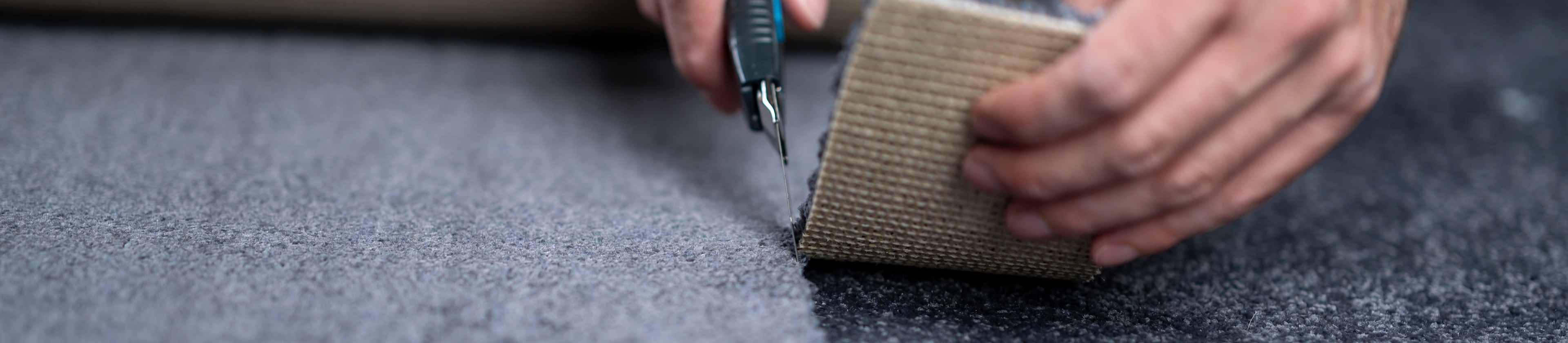
Installing carpet padding is mostly a matter of measuring the room and cutting the carpet pad to size with a utility knife. You can save some money on carpet installation costs by doing it yourself. Before installing the carpet padding, you should install the tack strips around the room’s perimeter and prepare the subfloor by cleaning and making any necessary repairs. Then, unroll the carpet pad and cut sections as needed. Staple the carpet pad to the subfloor along the edges, leaving the tack strips exposed.
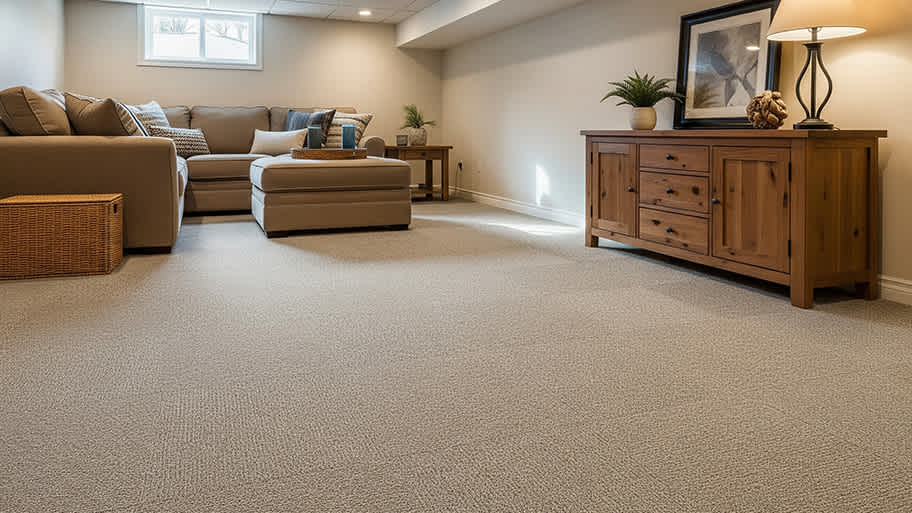
New carpet installation offers warmth, comfort, and aesthetic appeal. It can improve indoor air quality by trapping dust particles and provides a sound-dampening effect, which is beneficial for creating quiet environments.
No, it isn’t less expensive to install carpet compared to vinyl floors. The cost of installing carpet can range between $3 and $11 per square foot, so it falls just over the cost of installing vinyl flooring, at an average of $3 to $7 per square foot. High-quality carpeting can also range much higher, even up to $20 per square foot.
The Hettinger, ND homeowners’ guide to carpet installation
From average costs to expert advice, get all the answers you need to get your job done.
Not only are carpet tiles easier to install than carpet, but they’re often more affordable. So, how much does carpet tile installation cost? Let’s take a look.