You should avoid using a pressure washer on any surface or item that could be damaged by the high-pressure spray, as some materials are too delicate to withstand the force.
Key items and surfaces to avoid include:
Electrical Components: Never pressure wash electrical systems, as water can cause short-circuits and create a safety hazard. This includes utility meters, breaker boxes, electrical outlets, generators, and HVAC or air conditioner units.
Delicate and Fragile Materials: Fragile items can crack, shatter, or be stripped by the pressure. Avoid pressure washing windows, glass, light fixtures, shingled roofs (especially asphalt), and stucco.
Painted, Stained, or Sealed Surfaces: Unless your goal is to strip the finish, do not pressure wash painted surfaces, stained wood (like decks), or anything with a protective seal that could be stripped away. Be especially cautious with older surfaces that may contain lead paint.
Soft Woods and Certain Decking: Delicate surfaces like softwood, composite decking, and antique or wooden patio furniture can be etched or damaged. If you must wash wood, use a lower-powered pressure washer with a wide-angle nozzle to prevent damage.
Living Things: Never use a pressure washer on people, pets, or plants. The force can cause serious injury and will destroy landscaping.
You’ve stored your coats away all summer long, but now that the temperatures drop, you notice they smell weird as you pull them from storage. What’s the deal? If your clothes smell weird after you stored them, they may have been in a moist, dark environment for several weeks or months. This environment is ideal for mildew growth, which can make clothes smell musty.
Hydrogen peroxide can be a good option for removing dried blood stains, but it’s an aggressive solution that could discolor or damage your carpet. It’s often a better option to call in a professional to deal with dried blood stains. A pro will have commercial cleaning solutions that do a better job as well as the experience necessary to get the stain out without doing irreparable damage to your carpet.
First, ensure your clothes are clean before you pack them. When packing, make sure they’re folded and stored within the container with enough room to breathe. For extra protection, try using cedar chips or lavender sachets, which naturally repel bugs. Lastly, periodically checking in on your clothes will help you stay aware of their condition.
The recommended frequency for professionally cleaning drapes varies. As a general guideline, aim for every four to five years. However, you should consider more frequent cleanings in specific circumstances. For homes with pets, heavy soiling, or residents with severe allergies, cleaning every two to three years—or even two to four times per year—is beneficial. Light-colored drapes may need cleaning every one to two years to maintain their appearance. Some also follow a biannual schedule, cleaning in the spring to remove winter dust and in the fall to remove summer pollen. In between professional services, lightly vacuum your drapes with a special attachment to remove surface debris, but avoid abrasive brushes on delicate fabrics like silk and linen.
The Bowman, ND homeowners’ guide to drapery cleaning services
From average costs to expert advice, get all the answers you need to get your job done.
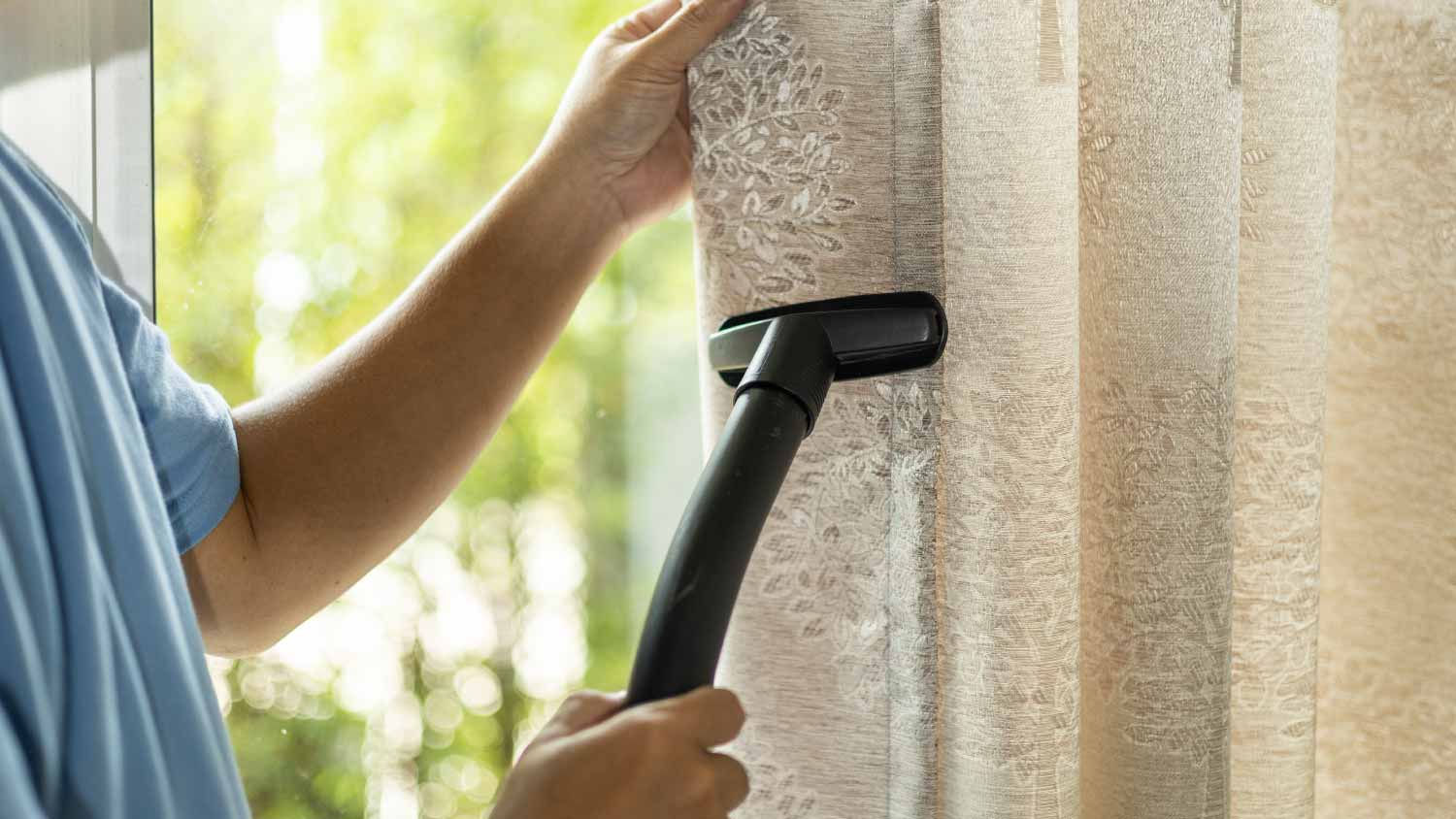
Call in the professionals when your delicate drapes need a deep clean. Let's take a look at drapery cleaning costs and which factors can sway the price tag.

Cleaning window treatments can make a world of difference in how bright and clean your room looks. Use this guide on how to clean curtains to make a big impact.
Trying to decide whether curtains or blinds are best for your space? This article compares seven key features and gives you our choice for what’s best. While the ultimate decision is yours to make, we shed light on the pros and cons.